
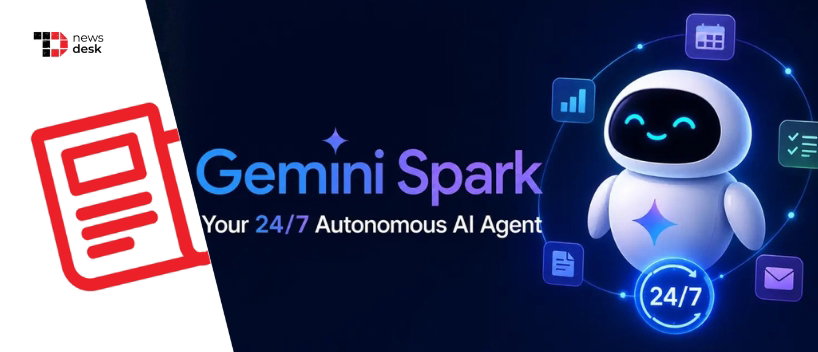
Google is expanding Gemini Spark to India, giving Google AI Pro and Ultra subscribers access to a cloud-based personal agent that can perform recurring digital tasks across Gmail, Docs, Sheets and other connected services.
TL;DR
- Gemini Spark will roll out to Google AI Pro and Ultra subscribers in India over the coming weeks.
- Powered by Gemini 3.6 Flash, the agent can continue working when a user’s phone is locked or laptop is closed.
- Users control which apps Spark can access.
- Spark requests approval before actions such as sending emails or spending money.
Google Expands Gemini Spark To India
Google has officially launched Gemini Spark in India, marking the latest expansion of its always-available personal AI agent after unveiling it at Google I/O 2026 on May 19.
The phased rollout begins on July 29, 2026, and is expected to reach Google AI Pro and Ultra subscribers in India over the following weeks. This means eligible users may not see the feature immediately in their Gemini app.
Gemini Spark is powered by Gemini 3.6 Flash and runs through Google’s secure cloud infrastructure. As a cloud-based agent, it can continue completing assigned tasks after a user locks their phone, closes their laptop or steps away from the Gemini app.
This differs from a conventional chatbot interaction, where the system generally waits for a new prompt before doing anything. Spark can manage longer workflows, respond to scheduled triggers and monitor certain events under instructions provided by the user.
At Google I/O 2026, Google and Alphabet CEO Sundar Pichai described Spark as an important part of the company’s move towards consumer-facing AI agents.
“I’m particularly excited for Gemini Spark, your personal AI agent in Gemini app that helps you navigate your digital life,” said Pichai.
What Can Gemini Spark Do?
Gemini Spark connects natively with Google services including Gmail, Calendar, Drive, Docs, Sheets, Slides, YouTube and Google Maps.
These connections allow it to collect relevant information and perform multi-step tasks across a user’s digital workspace. The app connections are disabled by default, meaning users must choose which services Spark is permitted to access.
Google provided several starter use cases for Indian subscribers. These include automatically adding flight and hotel confirmations to a travel spreadsheet, finding weekend events, organising wedding RSVPs and dietary requirements, reviewing invoices for subscription increases and drafting responses to customer enquiries.
Users can also ask Spark to analyse their previous emails and create a reusable writing skill based on their communication style. Google’s example asks the agent to examine 50 previously sent emails and use the findings when preparing future drafts.
Tasks, Schedules And Skills Explained
Spark workflows are built around three components: Tasks, Schedules and Skills.
A Task represents the overall result a user wants Spark to deliver. A Schedule defines when it should run, while a Skill provides reusable instructions covering how the agent should complete a particular type of work.
Schedules can operate at set times or respond to conditions such as the arrival of an email matching a Gmail filter. Spark can also monitor topics across areas such as news, finance, sports and local events, although Google warns that monitoring may not be suitable for extremely time-sensitive activities.
Topics For More Insights
Google Gives Users Control Over High-Stakes Actions
Google says users decide whether Spark is activated and which connected apps it can use. The agent is designed to request approval before performing higher-risk actions, including sending an email or spending money on a user’s behalf.
However, greater access to emails, documents and signed-in websites also introduces privacy and security considerations.
Google acknowledges that prompt injection attacks can attempt to manipulate an AI agent through malicious instructions hidden in emails, documents or online content. The company says Gemini uses security systems to detect suspicious material and may block all or part of the affected content.
An independent test by Wired demonstrated both sides of the experience. Spark quickly created a detailed birthday itinerary using the reviewer’s inbox and calendar, but it also misunderstood personal relationships and failed to complete a restaurant reservation through its remote browser.
Who Can Access Gemini Spark In India?
Google’s July 29 India announcement says Spark is expanding to Google AI Pro subscribers and is available to Google AI Ultra and Pro subscribers.
Gemini Spark is Google’s attempt to move its consumer AI experience beyond generating answers and towards completing ongoing work. Its success in India will depend not only on what the agent can automate, but also on whether users are comfortable granting an always-running AI system access to their personal communications and files.
