

Google’s artificial intelligence-powered search experience is moving from an optional feature to a routine part of finding information online, with new Similarweb data showing that AI Overviews now appear in more than two out of every five US searches.
TL;DR
- AI Overviews appeared in 43% of US searches in May 2026, up from 15% roughly a year earlier.
- Visits to Google AI Mode rose from 126 million in June 2025 to 279 million in May 2026.
- Google says AI Mode has surpassed one billion monthly users, but publishers continue to warn that answer-first search reduces referral traffic.
AI Search Is Becoming Part Of The Default Google Journey
TechCrunch, citing Similarweb’s 2026 Generative AI Landscape report, said Google AI Overviews expanded from appearing in 15% of searches to 43% within a year. Similarweb’s report separately states that more than 40% of US searches now trigger an AI Overview and that average Google search length has increased by 5.4% since AI Mode arrived.
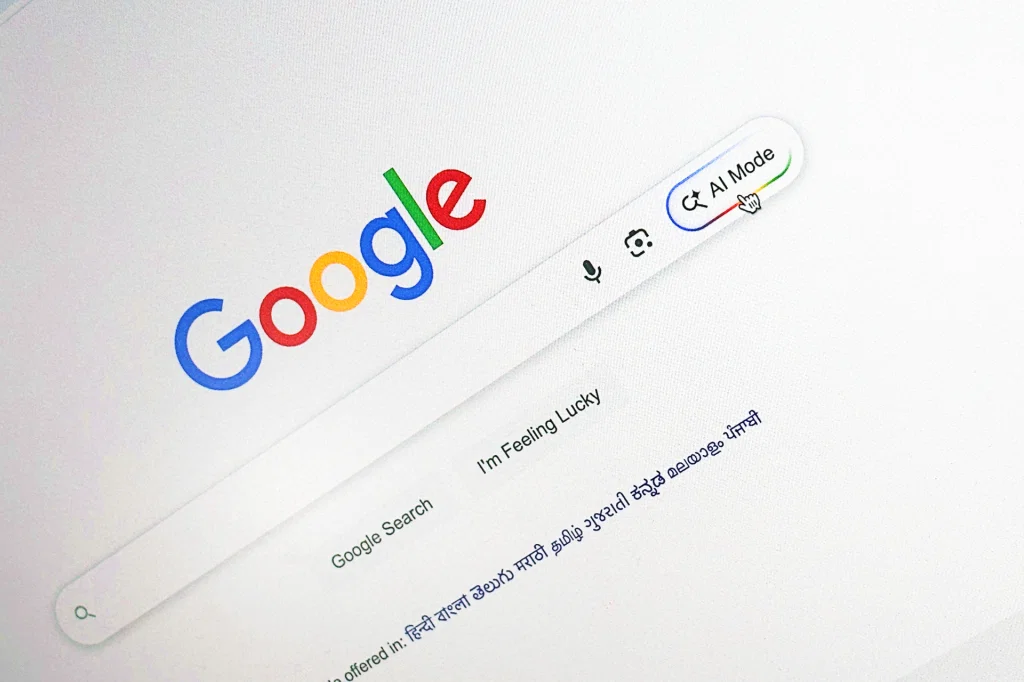
The shift suggests users are replacing short keyword searches with longer, conversational prompts. Instead of only receiving a list of links, users can now read a synthesized response, ask follow-up questions, and move directly into Google’s chatbot-style AI Mode without leaving Search.
TechCrunch reported that AI Mode visits increased from 126 million in June 2025 to 279 million by May 2026. That is more than double in under a year and supports Similarweb’s view that generative AI is becoming an integral layer of the search journey rather than a separate destination.
Google’s own numbers point in the same direction. During Alphabet’s Q2 2026 earnings call, CEO Sundar Pichai said people were adopting “one seamless search experience across AI Overviews and AI Mode.” He added that AI Mode had surpassed one billion monthly active users following its global expansion and was contributing to increased search activity.
Alphabet also reported 17% year-over-year growth in Google Search and other advertising revenue, which reached $63.3 billion during the quarter. Google said users were asking more detailed questions through AI search, giving the company additional opportunities to place relevant advertisements.
What Does This Mean For Publishers?
The growing use of AI answers changes Google’s role from a gateway to other websites into a destination where users can complete more of their research. TechCrunch noted that publishers are losing referral traffic when citations inside AI responses do not produce clicks.
Independent research supports those concerns, although the measured scale varies according to methodology and query type. A 2026 study covering 11,500 representative queries found AI Overviews appeared for 51.5% of searches, while another study of 55,393 trending queries measured an overall activation rate of 13.7%, rising to 64.7% for question-form searches.
Topics for more insights:
A separate study examining 161,382 matched Wikipedia article-language pairs estimated that exposure to AI Overviews reduced daily traffic to English-language articles by around 15%. This suggests that synthesized answers can satisfy informational searches without users visiting the original source.
Google presents a different view of the effect on the wider web. Pichai said Google’s AI features send billions of clicks to websites every week. Still, the Similarweb data makes one point increasingly difficult to ignore: for a growing share of searches, the AI-generated answer is no longer an experiment sitting beside Google Search. It is becoming Google Search.
