
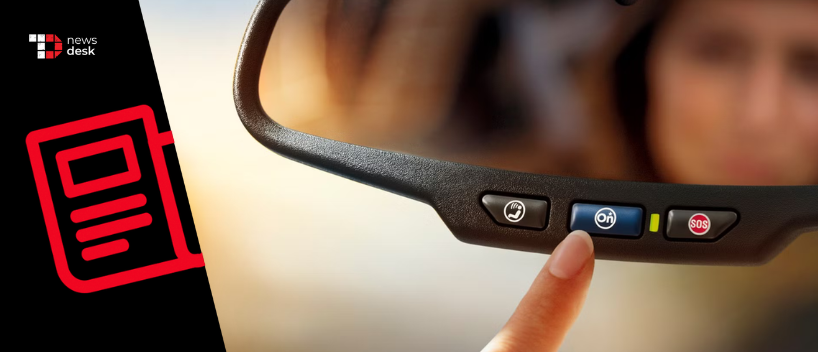
General Motors (GM) will pay $220 million to settle allegations that it sold drivers' private location and driving behavior data without their knowledge, potentially increasing their insurance premiums.
Interestingly, the data came from a program designed to help drivers become safer on the road. Now, the automaker faces tighter privacy restrictions after reaching an agreement with 35 US states and Washington, D.C.
Here's what happened.
TL;DR
- GM agreed to a $220 million settlement over allegations that it sold drivers' personal information to data brokers.
- Insurers allegedly used the information to determine and sometimes increase premiums.
- The Smart Driver program operated from 2016 until its discontinuation in 2024.
- GM must obtain express consent before collecting or sharing certain driving data and undergo independent privacy compliance assessments.
How Did GM's Smart Driver Program Share Drivers' Data With Insurers?
The settlement follows allegations that GM collected detailed driving information through Smart Driver, a connected-vehicle feature marketed as a tool to improve driving habits and personal safety.
According to the multistate settlement reporting, millions of drivers enrolled in the program between 2016 and 2024, including customers using GM's OnStar safety, navigation, and diagnostic services.
However, state attorneys general alleged that GM shared personal information with data brokers, which subsequently sold it to insurance companies.
The information included individual trip timings, driving frequency, sudden braking, rapid acceleration, speeding, and vehicle location.
Washington Attorney General Nick Brown said the information was personally identifiable and detailed enough to reveal drivers' individual habits.
The consequences reportedly extended beyond privacy.
A March 2024 investigation revealed that some drivers experienced unexpected increases in insurance premiums despite having no accidents, while others reportedly struggled to obtain coverage.
Moreover, over 370,000 drivers were allegedly incorrectly informed through GM's OnStar app that they were not enrolled in Smart Driver, even though they were.
GM's $220 Million Settlement Brings New Driver Data Privacy Restrictions
The agreement was reached through a bipartisan coalition led by Oregon Attorney General Dan Rayfield and Washington Attorney General Nick Brown.
“People bought a car, not a tracking device,” Rayfield said.
GM did not admit wrongdoing as part of the settlement.
Beyond the financial penalty, the agreement requires GM to limit its collection of driving data and obtain express permission before collecting or sharing certain driving and location information.
It also introduces independent third-party assessments of the automaker's privacy compliance program.
GM said the agreement reinforces privacy improvements introduced since it discontinued Smart Driver in 2024. The automaker has also updated its privacy policies and introduced a customer-facing Privacy Center.
However, this is not GM's first encounter with regulators over driver information.
In May 2026, GM agreed to pay $12.75 million to resolve a California investigation into alleged unauthorized data sales, as TechDogs previously reported.
Meanwhile, the Federal Trade Commission (FTC) took action in January 2025, leading to restrictions on disclosing certain driving and location data to consumer reporting agencies for five years.
Texas, which filed a separate lawsuit against GM in 2024, was not part of the latest settlement. Its case remains ongoing.
Topics For More Insights
- GM’s $12.75M California Settlement Puts Connected Car Data Privacy In The Spotlight
- Verizon, T-Mobile And AT&T Challenge FCC’s Fines Over Selling Users’ Location Data
- New Mexico Court Orders Meta To Pay $25 Billion Over Facebook Privacy Violations
- Texas Attorney General Sues Netflix For Allegedly Tracking Users And Addicting Children!
What Did GM Say About The $220 Million Driver Privacy Settlement?
GM maintained that connected-vehicle data remains important for improving vehicle safety, personalization, and customer experiences.
“This agreement addresses Smart Driver, a product we ended in 2024, and reinforces steps we’ve taken to strengthen our privacy practices,” a GM spokesperson said.
The company also emphasized greater transparency around what information it collects, how that information is protected, and the choices available to customers.
GM has said it will no longer sell identifiable vehicle, location, or driving behavior information, although certain anonymized data may still be shared with partners.
For drivers, the settlement puts consent at the center of connected-car data collection, particularly when information originally gathered for safety features could influence something as financially consequential as insurance pricing.
