
Social Media
Big Changes In Social Media: Meta, Threads & Australia Take New Directions
Updated on Wed, Nov 12, 2025
Share
It’s clearly the moment of change that reminds us that social media isn’t just evolving but maturing. Here’s what’s changing in the world of social media right now. Read on!
Meta is officially discontinuing two of its oldest Facebook Social Plugins: the Like button and the Comment button, from February 10, 2026. The company mentioned the reason behind this decision is to focus on tools that bring more value to developers and businesses today.
The Like button was there so people could react to content on external websites, while the Comment button allowed Facebook users to leave comments outside the platform. After February 10, both plugins will simply stop showing up, turning into invisible 0x0 pixel elements, without breaking any site features or causing errors.
Meta clarified that “this is not a breaking change and no developer action is required.” Still, developers can remove the plugin code themselves if they prefer a cleaner setup.
It’s truly the end of an era for Facebook’s classic web tools that once shaped how people connected with content online. Meta says it’s now shifting its focus toward building a “modern, efficient platform” that fits today’s developer needs and sets the stage for what’s next in social technology.
Developers can find more details and support through Meta’s official FAQs and help channels.
As Meta phases out some of its oldest Facebook tools, it’s shifting its attention to creators.
Meta’s rival to X, Threads, is turning its attention to podcasters! The platform announced plans to make the app a go-to space for podcast discussions and show promotion.
A Meta spokesperson said that more podcast-focused features will roll out in the coming months. The objective is to make Threads the main place where people talk about their favorite shows and have conversations with creators that are currently scattered across Reddit, X, and Spotify.
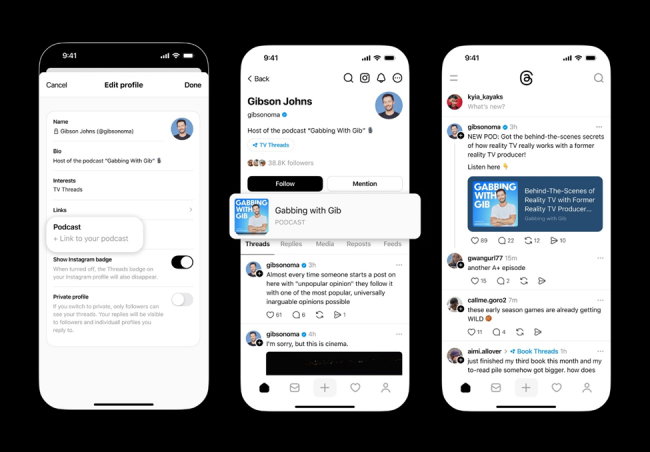
Podcast links on Threads will soon feature colorful backgrounds and image previews, which will help them stand out in the feed. Creators will also have a new profile section to showcase their podcast links and connect with more listeners.
Meta isn’t planning to host podcasts directly, but it will give creators better insights into how fans engage with their shows and help users discover new ones. With over 400 million monthly users, Threads aims to connect with the podcast community, hoping to close the gap with X and build a stronger, creator-driven platform.
Meta may be opening new doors for creators and online conversations, but Australia is taking a very different path by tightening the rules on how young people use social media.
Starting December 10, Australia will ban users under 16 from platforms like TikTok, Snapchat, Facebook, Instagram, and Threads.
This is something no other country has implemented before. Notably, the move builds on months of preparation. It all started last year when the government introduced a bill from Prime Minister’s official website, setting 16 as the minimum age for social media use.
Early trials of age-checking software by tech firm KJR showed the system works well, but clever teens might still find ways to outsmart it.
After months of debate, it seems the rollout will be smoother than expected. The law comes after growing concerns about the impact of social media on young people’s mental health.
As part of the next phase, tech companies will start reaching out to teenagers with over a million accounts in total with choices to download their data, freeze their profiles, or lose access once the ban begins.
Platforms won’t be asking everyone for IDs or endless logins. Instead, they will use their existing systems to estimate age based on activity patterns, such as likes and engagement.

If users believe they’ve been wrongly blocked, they will be directed to age assurance apps, which utilize selfies or ID checks to verify age. Still, some hiccups are expected, especially for 16- and 17-year-olds, where age detection isn’t always accurate.
While tech companies once said the ban was too strict or unreliable, most are now quietly complying to avoid fines of up to A$49.5 million ($32 million).
“The rest of the world is looking at Australia for this new weapon to deal with the apparent problems that some digital platforms are presenting us with,” said Stephen Wilson, founder of identity verification consultancy Lockstep.
If the plan works, experts say Australia’s approach could be a model for other countries and show that it is possible to balance connection and caution online.
Do you think setting a minimum age of 16 will effectively protect teens from social media’s negative impacts?
Will Facebook really be better without the buttons we’ve been clicking for over a decade?
Let us know your thoughts in the comments section below!
First published on Wed, Nov 12, 2025

Enjoyed what you've read so far? Great news - there's more to explore!
Stay up to date with the latest news, a vast collection of tech articles including introductory guides, product reviews, trends and more, thought-provoking interviews, hottest AI blogs and entertaining tech memes.
Plus, get access to branded insights such as informative white papers, intriguing case studies, in-depth reports, enlightening videos and exciting events and webinars from industry-leading global brands.
Dive into TechDogs' treasure trove today and Know Your World of technology!
Disclaimer - Reference to any specific product, software or entity does not constitute an endorsement or recommendation by TechDogs nor should any data or content published be relied upon. The views expressed by TechDogs' members and guests are their own and their appearance on our site does not imply an endorsement of them or any entity they represent. Views and opinions expressed by TechDogs' Authors are those of the Authors and do not necessarily reflect the view of TechDogs or any of its officials. While we aim to provide valuable and helpful information, some content on TechDogs' site may not have been thoroughly reviewed for every detail or aspect. We encourage users to verify any information independently where necessary.
Loading comments...