

Financial Management Solutions
Why The World's Top Banks Are Racing To Hire Chief AI Officers?
Share
TL;DR
-
Organizations with a Chief AI Officer jumped from 26% in 2025 to 76% in 2026, per an IBM survey of 2,000 CEOs.
-
Senior AI leaders at HSBC, Commonwealth Bank of Australia, and Lloyds began their roles within a three-month period in 2026.
-
CAIO compensation carries a median of about $1.6 million, with top pay packages approaching $3.5 million, per Equilar.
-
Bank of America says $4 billion of its annual technology spending supports new initiatives, including AI, rather than AI alone.
-
Some current and former AI leaders say the standalone role may shrink once AI is embedded across every business function.
Introduction
Picture transfer deadline day in football. Clubs that ignored the market all season suddenly panic, phones ring off the hook, and a handful of proven names get bid up to absurd fees because everyone needs a marquee signing before the window shuts.
That is roughly what is happening in banking right now, except the marquee signing is not a striker. It is a Chief AI Officer (CAIO).
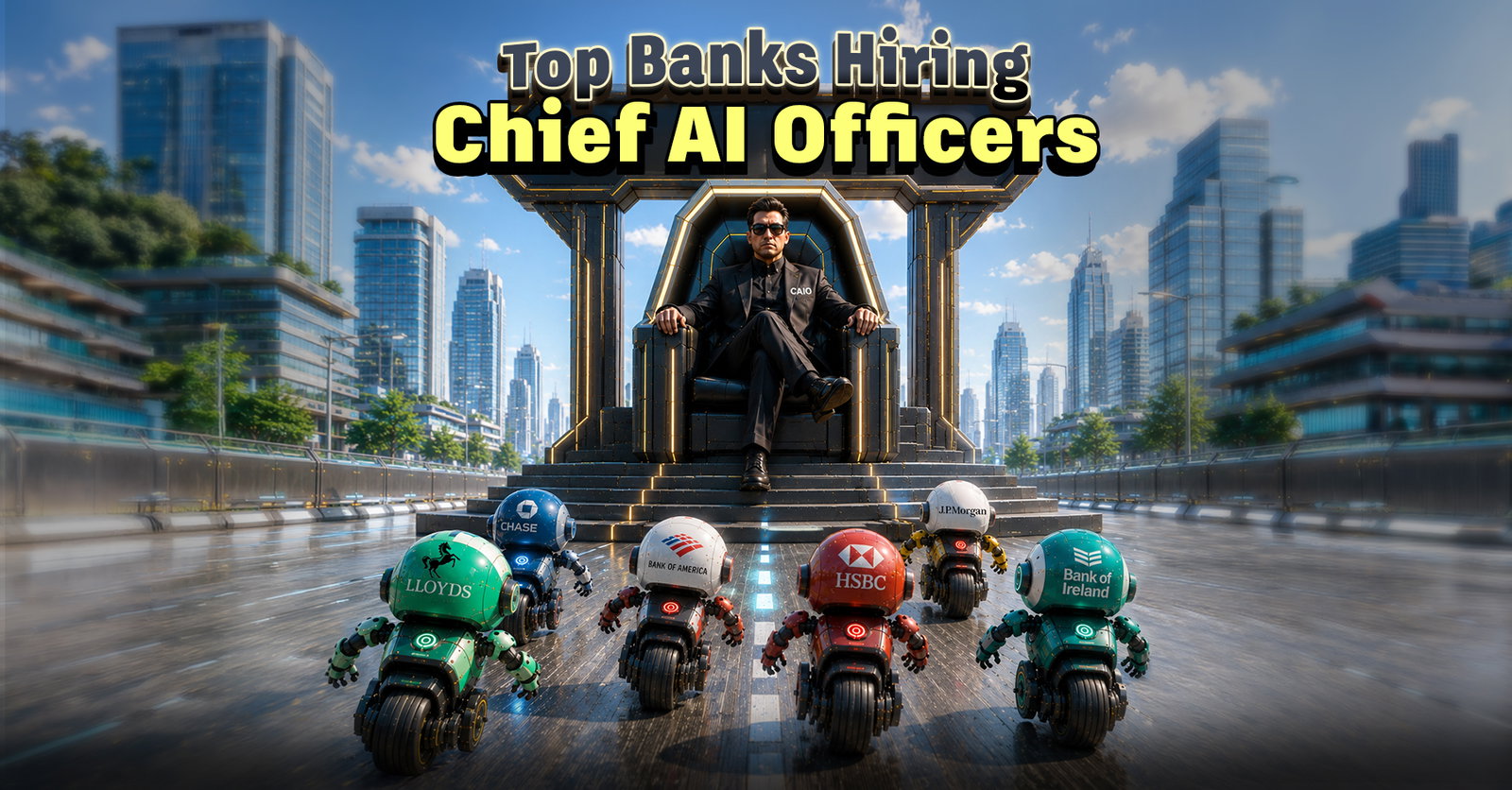
In recent months, HSBC, Commonwealth Bank of Australia, and Bank of Ireland have appointed Chief AI Officers, while Lloyds, Citigroup, and Bank of America have strengthened AI leadership under other titles. Some have recruited from rivals, showing how scarce experienced talent remains.
So, why is the world's banking elite suddenly focused on this one hire? Let's dig in.
What Is A Chief AI Officer, And Why Is This Seat New?
A Chief AI Officer, sometimes called a chief artificial intelligence officer, owns how a company builds, governs, and scales Artificial Intelligence (AI), from strategy and budget to customer use cases. In banking, that can cover fraud models, employee copilots, customer tools, and AI platforms under one accountable leader instead of scattered ownership across IT, risk, data, and business lines.
The role is not entirely new, but it gained visibility quickly as generative AI moved from experiments into daily operations. Its purpose is to connect business strategy, technology, governance, and measurable value under a company-wide mandate.
That matters because many banks historically placed AI oversight within the Chief Technology Officer's or Chief Data Officer's remit.
HSBC described its standalone CAIO as providing clear enterprise leadership for AI adoption, showing why some banks believe existing structures are no longer enough.
The Numbers Behind The CAIO Hiring Trend
The scale of the wider shift shows up clearly in the data. The IBM Institute for Business Value surveyed 2,000 CEOs globally and found that organizations reporting a Chief AI Officer nearly tripled in a single year, rising from 26% in 2025 to 76% in 2026.
Banking reflects that wider movement. Bloomberg reported that senior AI executives can receive pay packages approaching $3.5 million, with median compensation around $1.6 million, according to Equilar. Exact salaries are rarely disclosed, but the figures point to a thin talent pool and strong competition for leaders who understand technology, regulation, operations, and strategy.
Spending tells a related story. Bank of America says it invests $13.5 billion annually in technology, with $4 billion dedicated to new initiatives such as AI. The full $4 billion is not an AI-only budget, but the figure shows AI being funded within major modernization programs.
Hiring data supports the shift. American Banker reported, citing PwC, that US banks' AI job postings were up 77.4% over 2025. Separate research found that high AI adopters expanded headcount while low adopters did not, suggesting that investment can change hiring needs rather than simply eliminate jobs.
Why Are Banks Racing To Hire Chief AI Officers?
There is no single answer, but a few forces are converging at once.
-
Competitive Pressure Is Real, Not Theoretical
When 76% of organizations in a global CEO survey report having a CAIO, banks without clear AI ownership can appear slower than peers. Executives worry that rivals will scale products faster, improve efficiency sooner, and attract scarce talent. The survey is cross-industry, not banking-specific, but it helps explain boardroom pressure.
-
AI Is Now Tied Directly To Financial Targets
HSBC has made AI part of its wider transformation story. The bank is targeting return on tangible equity of 17% or better in each year from 2026 to 2028, excluding notable items. Separately, Group CEO Georges Elhedery said AI plays a key role in building a future-ready bank and delivering personalized services safely and at scale. HSBC has not said AI alone will deliver the financial target, but it treats the technology as an important operational lever.
-
Scattered AI Ownership Becomes A Risk Problem
As AI spreads across fraud detection, underwriting, customer service, software development, and internal tools, having no single owner can become a governance headache. Banks must coordinate data, model risk, cybersecurity, privacy, vendors, and regulation. A CAIO can establish common controls and stop business units from building incompatible or poorly governed systems.
-
Boards Want One Accountable Executive
CAIOs are also expected to justify spending. Their remit often spans business partnerships, legal and risk policy, enterprise standards, and proof of financial impact. That breadth is why boards may prefer one accountable leader, even when delivery remains distributed across technology and business units.
So, that explains why banks need clearer AI leadership. Which institutions have actually made the move?
Which Major Banks Have Already Hired A Chief AI Officer?
The list keeps growing, although titles and reporting lines differ.
-
HSBC named David Rice as its first CAIO, effective April 1, 2026, after he served as Chief Operating Officer for Corporate and Institutional Banking.
-
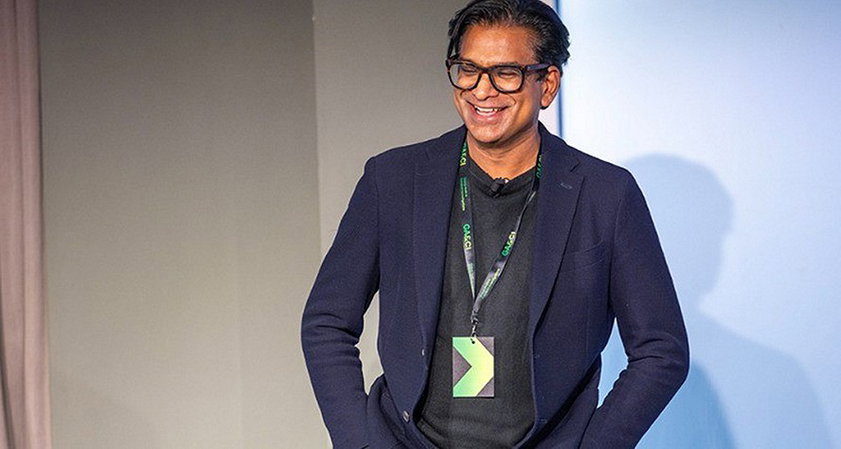
Commonwealth Bank of Australia named Ranil Boteju Chief AI Officer, starting in early 2026. He joined from Lloyds, where he led AI, data, and machine learning strategy for more than 2,000 people.
-
Lloyds Banking Group appointed Sameer Gupta as Chief Data and AI Officer in April 2026, with the role beginning in June, to scale AI across the group.
-
Bank of Ireland appointed Prag Sharma as Chief AI Officer, starting in October 2026. He previously led Citigroup's Global AI Centre of Excellence across 96 countries.
-
Bank of America named Kevin Milsom Head of Platforms AI Transformation in global markets in July 2026. It is a divisional role, not an enterprise CAIO appointment, but it signals stronger AI leadership.

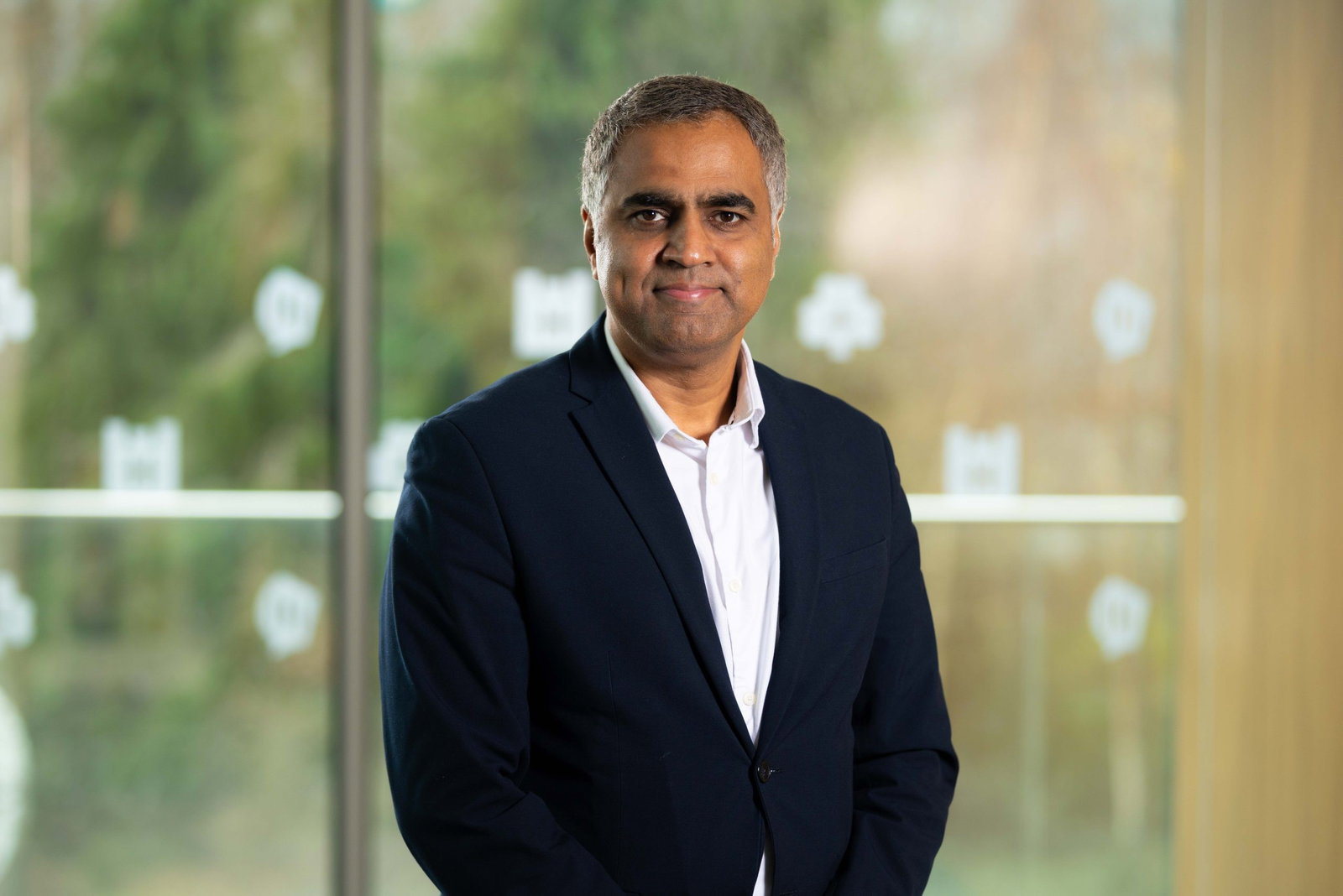
Other major banks use different structures. JPMorgan placed data and AI strategy for its commercial and investment bank under COO Guy Halamish.
Citigroup appointed David Griffiths as Group Head of Artificial Intelligence, while Goldman Sachs keeps firm-wide AI strategy under CIO Marco Argenti.
The trend is broader than the CAIO title: banks are centralizing accountability without one standard job name.
What Does A Chief AI Officer In Banking Actually Do?
The job description varies by bank, but the core mandate is consistent: turn scattered AI experiments into a governed, scalable operating practice.
That typically covers AI strategy, funded use cases, common platforms, and work with risk and compliance teams to keep models controlled, explainable, and auditable. It also means deciding which workflows can use more automation and which high-impact decisions, including credit or financial-crime processes, need human oversight.
Where the CAIO sits also differs. Some report through technology, some through operations, and some sit closer to the CEO. That explains why similar responsibilities appear under titles such as Chief Data and AI Officer, Group Head of AI, or AI Transformation Head.
Is The Chief AI Officer Role Built To Last?
Here is the twist: some AI leaders question whether the title will remain necessary forever.
David Hardoon, who left Standard Chartered in March 2026 after serving as Global Head of AI Enablement, told Bloomberg, “Any chief AI officer should operate on the premise that they should not have a role in the future.” As AI becomes part of daily work, he argues, the specialist role could shrink or be absorbed into technology, data, risk, or operations leadership.
That outcome is not guaranteed. Banking governance may remain complex enough to require an accountable executive as regulation, model risk, data controls, and autonomous systems evolve. The title may change even if the need for senior AI accountability remains.
That does not make the hiring race pointless. Banks are betting that, during rapid adoption, a leader who aligns technology, governance, talent, and commercial priorities provides an advantage before those capabilities become standard across the C-suite.
Conclusion
Back to that transfer window. Banks may not know whether the Chief AI Officer title will exist forever, but weak AI ownership carries an immediate cost. HSBC, Commonwealth Bank of Australia, Bank of Ireland, Lloyds, Citigroup, and Bank of America have strengthened senior AI leadership, although titles and mandates differ.
Proven AI talent is expensive because the mix of technical depth, regulatory judgment, operational experience, and business credibility remains extremely rare. Whether the CAIO title survives the decade or its responsibilities spread across senior leadership, no major bank wants to enter the next stage of AI adoption without someone accountable for controlled, measurable execution.
Frequently Asked Questions
Why Are Banks Suddenly Hiring Chief AI Officers?
Banks are formalizing AI ownership because AI use cases have moved past small pilots into fraud detection, underwriting, and customer-facing tools that touch regulated decisions. A single accountable executive helps banks set consistent AI strategy, manage risk, and justify AI budgets to the board, rather than leaving AI scattered across IT, data, and individual business units.
How Much Do Chief AI Officers In Banking Get Paid?
Equilar data reported by Bloomberg put median CAIO pay packages at around $1.6 million, with top packages approaching $3.5 million. These are not bank-specific salary disclosures; exact compensation varies by company, region, role scope, and executive experience.
Will The Chief AI Officer Role Still Exist In A Few Years?
It is uncertain. David Hardoon, formerly Standard Chartered's Global Head of AI Enablement, said the role should eventually disappear as AI becomes part of everyday work. Others argue banks will still need senior accountability for governance, model risk, data controls, and regulation, even if the CAIO title changes.
Wed, Sep 16, 2026

Enjoyed what you've read so far? Great news - there's more to explore!
Stay up to date with the latest news, a vast collection of tech articles including introductory guides, product reviews, trends and more, thought-provoking interviews, hottest AI blogs and entertaining tech memes.
Plus, get access to branded insights such as informative white papers, intriguing case studies, in-depth reports, enlightening videos and exciting events and webinars from industry-leading global brands.
Dive into TechDogs' treasure trove today and Know Your World of technology!
Disclaimer - Reference to any specific product, software or entity does not constitute an endorsement or recommendation by TechDogs nor should any data or content published be relied upon. The views expressed by TechDogs' members and guests are their own and their appearance on our site does not imply an endorsement of them or any entity they represent. Views and opinions expressed by TechDogs' Authors are those of the Authors and do not necessarily reflect the view of TechDogs or any of its officials. While we aim to provide valuable and helpful information, some content on TechDogs' site may not have been thoroughly reviewed for every detail or aspect. We encourage users to verify any information independently where necessary.
Loading comments...