

Artificial Intelligence
What You Need to Know Before Letting AI Agents Run Your Life
Share
TL;DR
-
Meta's Muse and Google's CC show how agents can manage purchases, emails, calendars, forms, and household logistics.
-
AI agents generally plan, use tools, observe results, and adjust their next actions.
-
Prompt injection, excessive permissions, memory poisoning, and data leakage remain important security risks.
-
Visa found roughly 85% of surveyed consumers want control over what data shopping agents can access.
-
High-impact actions such as purchases, emails, deletions, and payments should retain human approval.

Introduction
The Jetsons had Rosie the Robot. Most of us have a grocery list, six unread school emails, three calendar conflicts, and a reminder to cancel a subscription we forgot existed.
That gap is exactly where autonomous AI agents in daily life are beginning to appear.
Meta's new Muse personal AI agent can send emails, book travel, fill forms, make purchases, and work across connected services. Google's experimental CC family agent can coordinate household calendars, tasks, school communications, meal planning, and forms for groups of up to six people.
The Rosie dream is becoming less fictional. The catch is that convenience increases alongside access.
So, before handing an agent your inbox, calendar, credit card, and family schedule, what should you actually know?
What Are Autonomous AI Agents?
Traditional chatbots mostly respond. Autonomous AI agents can act.
OpenAI describes agents as systems that independently complete workflows using an AI model to make decisions and tools to interact with external systems. Anthropic makes a similar distinction: agents dynamically direct their own processes and tool use instead of following only predetermined steps.
That can mean researching flights, checking availability, opening websites, filling forms, comparing products, sending messages, or updating calendars.
This shift makes automating daily tasks with AI agents much more useful than asking a chatbot for a to-do list. It also means an error can move from being a bad answer on a screen to becoming an action taken in the real world.
How Do AI Agents Make Decisions On Behalf Of Users?
So, how do AI agents make decisions on behalf of users?
Anthropic describes agents as operating through a self-directed loop: they plan, act, observe what happened, adjust, and repeat until the task is complete or human input is required.
In everyday terms, the process looks something like this:
-
Understand the goal: "Find me a hotel near the conference under $250."
-
Make a plan: Search hotels, compare locations, check availability, and review prices.
-
Use tools: Access a browser, booking platform, email account, calendar, or payment service.
-
Evaluate results: Compare the available information with the user's preferences.
-
Take or propose action: Recommend an option, reserve it, or ask the user for approval.
The crucial point is that agents do not magically know what matters to you. Their choices depend on your instructions, available context, stored memory, external information, and the permissions they have been granted.
That is why more access can improve personalization while simultaneously increasing risk.
The Household AI Chief Of Staff Is Already Arriving
The idea of a household AI chief of staff is no longer just a startup pitch.
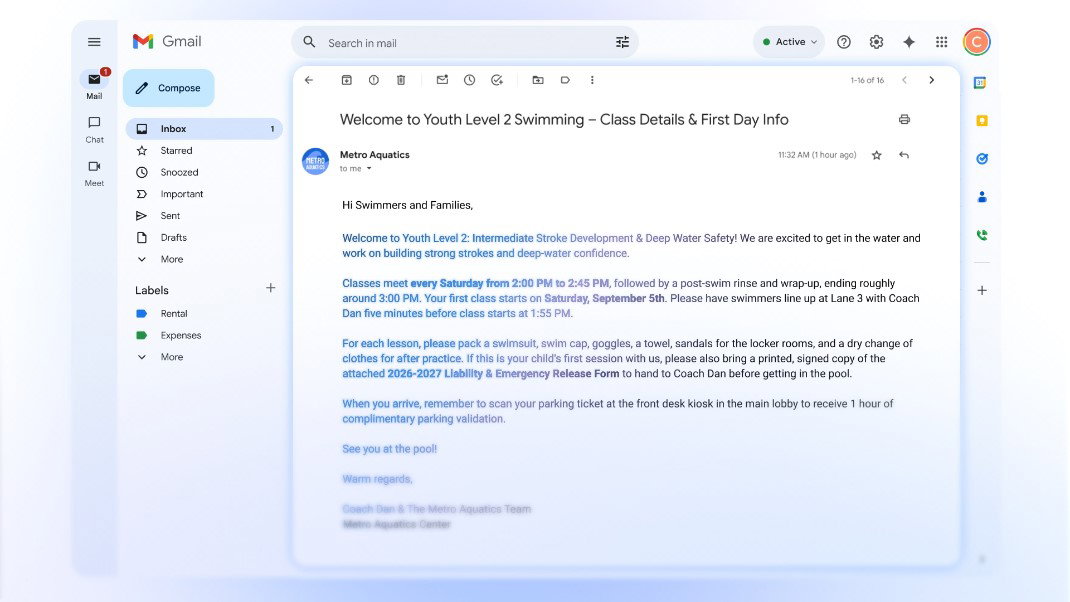
Google's expanded CC experiment gives families a shared agent with its own Google account and permissions model. Members decide what information to share, such as school emails, vet messages, Calendar events, or Tasks. CC can then create a common daily brief and help coordinate household logistics.
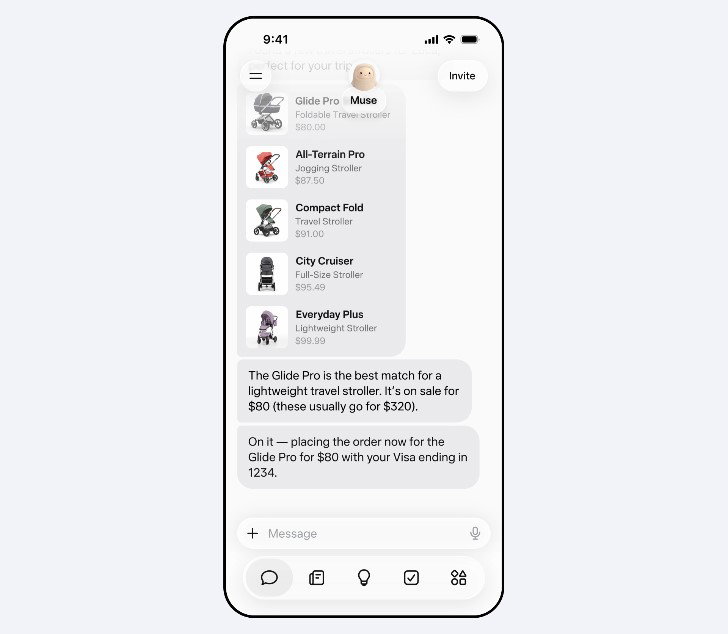
Meta's Muse goes further into individual life management. According to Meta, it can work inside a dedicated virtual machine, use a browser, remember user preferences, negotiate, book appointments, handle customer service, and request approval before sensitive actions such as sending emails or purchasing products.
That sounds convenient because it is.
The question is how much authority should accompany that convenience.
Biggest Security And Privacy Risks Of Letting AI Agents Run Your Life
The biggest security and privacy risks of letting AI agents run your life are not limited to someone stealing your password.
OWASP's AI Agent Security guidance identifies several classes of AI agent security vulnerabilities that become particularly important when agents have access to personal accounts.
-
Prompt injection: Malicious instructions can be hidden inside emails, websites, documents, or other material an agent reads.
-
Excessive permissions: An agent given more access than necessary may be able to send, delete, purchase, or change information when it only needed to read it.
-
Data exfiltration: Sensitive information may leak through external requests, APIs, tool calls, or other agent actions.
-
Memory poisoning: Malicious or inaccurate information stored in an agent's memory can influence what it does later.
-
Excessive autonomy: High-impact actions may occur without enough human oversight.
Prompt injection is especially tricky because the harmful instruction may never appear in the user's request.
OpenAI explains prompt injection as a security problem in which third-party content introduces malicious instructions into an AI system's context. It therefore recommends limiting what agents can access and maintaining safeguards around consequential actions.
These agentic AI privacy risks grow as more services become connected.
AI Personal Assistant Trust Is Really About Control
Consumers appear to understand that tradeoff.
A 2026 Gartner survey found only 11% of U.S. consumers were willing to let AI independently make purchase decisions even in relatively low-risk categories. Meanwhile, 31% were willing to let AI narrow choices for household supplies. Gartner analyst Kate Muhl summarized the distinction simply: "Consumers are not looking to outsource shopping decisions to AI."
Visa's consumer research produced a similar pattern. Across surveys in the United States, Australia, and New Zealand, around 85% of respondents said control over the data an agent could access was important, while about half worried about decisions being made without them.
That suggests AI personal assistant trust may depend less on how human an agent sounds and more on whether users can see, restrict, approve, and reverse what it does.
What Should You Check Before Automating Daily Tasks With AI Agents?
The safest starting point is not "Can this agent do everything?" It is "What is the minimum access it needs to do this particular job?"
Before connecting an agent deeply into daily life:
-
Give it read-only access when it only needs to summarize or organize information.
-
Keep human approval for payments, messages, account changes, deletions, and other irreversible actions.
-
Check whether you can view an audit history of what the agent did.
-
Review what the service stores in long-term memory and whether you can edit or delete it.
-
Avoid broad instructions such as "handle whatever needs doing" when a narrower task will work.
-
Disconnect integrations you no longer use.
These measures line up closely with OWASP's recommendations around least privilege, human approval, isolated memory, monitoring, and reversible controls.
Conclusion
AI agents are becoming capable enough to remove genuine friction from everyday life. They can chase appointments, organize family schedules, research purchases, manage inboxes, and turn a pile of digital chores into something closer to a coordinated plan.
That does not mean every chore deserves the same level of autonomy.
The useful distinction is between delegating effort and delegating authority. Let an agent compare ten flight options or organize twenty school emails. Think harder before letting it independently spend money, send messages, delete information, or make decisions that are difficult to reverse.
Rosie the Robot made automated help look effortless because the Jetsons could trust her to handle the household without turning it upside down. Real-world AI agents will need to earn that same kind of trust too.
Frequently Asked Questions
Can AI Agents From Different Companies Work Together?
Yes. Google’s Agent2Agent (A2A) protocol is designed to let AI agents built by different vendors or frameworks communicate, exchange information, and coordinate tasks. This could eventually allow one agent handling travel, for example, to work with another agent managing expenses or scheduling.
How Can A Website Know An AI Agent Is Really Acting For You?
Visa’s Trusted Agent Protocol uses cryptographic signatures so participating merchants can verify that an AI agent is legitimate, linked to an authorized consumer, and interacting with the site for a genuine commerce purpose. The goal is to help merchants distinguish trusted agents from malicious bots.
Can Websites Block AI Agents From Shopping On Your Behalf?
Yes. Automated traffic has traditionally been treated much like bot traffic, which means websites or their security providers may restrict it. Visa says this creates a challenge as shopping agents become more common, which is one reason standards such as its Trusted Agent Protocol are being developed to help merchants recognize authorized AI agents instead of automatically blocking them.
Mon, Sep 21, 2026

Enjoyed what you read? Great news – there’s a lot more to explore!
Dive into our content repository of the latest tech news, a diverse range of articles spanning introductory guides, product reviews, trends and more, along with engaging interviews, up-to-date AI blogs and hilarious tech memes!
Also explore our collection of branded insights via informative white papers, enlightening case studies, in-depth reports, educational videos and exciting events and webinars from leading global brands.
Head to the TechDogs homepage to Know Your World of technology today!
Disclaimer - Reference to any specific product, software or entity does not constitute an endorsement or recommendation by TechDogs nor should any data or content published be relied upon. The views expressed by TechDogs' members and guests are their own and their appearance on our site does not imply an endorsement of them or any entity they represent. Views and opinions expressed by TechDogs' Authors are those of the Authors and do not necessarily reflect the view of TechDogs or any of its officials. While we aim to provide valuable and helpful information, some content on TechDogs' site may not have been thoroughly reviewed for every detail or aspect. We encourage users to verify any information independently where necessary.
Loading comments...