
Manufacturing Technology
Top Humanoid Robots You Need To Know About In 2026
Share
TL;DR
-
AGIBOT X2: A compact, interactive humanoid with retail-facing deployments; the X2 Neo is listed at $25,600.
-
Unitree G1: A comparatively accessible biped for education and research, starting at $13,500.
-
UBTECH Walker S2: An industrial humanoid built around autonomous battery swapping to reduce charging downtime.
-
Galbot S1: A wheeled, dual-arm industrial humanoid used for demanding material-handling work.
-
Agility Digit 5: A warehouse-focused humanoid designed for safer work alongside people, with enterprise pricing negotiated privately.
-
Figure 03: A general-purpose platform pairing dexterous hardware with Helix whole-body control, without a public list price.
-
Boston Dynamics Atlas: An electric, production-oriented industrial humanoid designed for adaptable factory tasks.
-
Apptronik Apollo 2: A modular platform offering legged or wheeled configurations for industrial training and tasks.
-
1X NEO: A household robot advertised at $20,000 for early-access ownership or $499 per month by subscription.
-
Tesla Optimus: An ambitious general-purpose humanoid program still without public sales or an official purchase price.
Introduction
Humans have been obsessed with robots since the invention of the first machine. It’s been our collective ambition to create a device that can complete our tasks without any intervention or instruction.
This includes dangerous activities that could cause us genuine harm, daily chores that we’re just too bored to do, or even delicate jobs that require highly skilled and intricate movements.
Yet, despite the numerous looks they come in—based on their use case—we’ve always focused on the ones that looked like us, AKA humanoid robots.
Even our cinema reflects this obsession. From TV shows from the 80s that had a robot family member—Small Wonder—to movies that have robots as the protagonist and antagonist—I, Robot—to emotional flicks that show robots becoming more like us—Chappie—and more, we’ve always looked to blend technology with humanity.
However, this dream is on track to become a reality, as robot manufacturers have stepped up their efforts to build humanoid robots capable of carrying out multiple applications.
So, which humanoid robots deserve your attention now? Let’s check out the standouts, with a clearer view of what they can do and how far they have progressed.
What Makes A Humanoid Robot Stand Out In 2026?
While humanoid robots were only showcased as concepts or prototypes until recently, the past few years have seen tremendous growth in the robotics industry, leading to numerous companies preparing to mass produce their humanoid robots.
A large part of this is down to the advancements made in artificial intelligence (AI), generative artificial intelligence (Gen AI), machine learning (ML) and allied technologies, which allows machines to better understand humans, their emotions, and their mannerisms.
It won’t be long before we have robots helping in the kitchen, tending to the garden, or embarking on dangerous missions.
The 2026 market is not one neat race with a single winner.
Top 10 Humanoid Robots You Need To Know About In 2026
Counterpoint Research’s first-half 2026 analysis reports more than 22,000 global humanoid robot shipments, nearly triple the year-earlier total. AGIBOT and Unitree led shipments, while manufacturing and logistics increased their share of applications.
The ten robots below were chosen for credible 2026 activity, technical significance, accessibility, or clear potential use cases.
So, let’s get to it!
AGIBOT X2 By AGIBOT
AGIBOT deserves a place at the front of the conversation.
The company led global humanoid shipments during the first half of 2026, and its compact, two-legged X2 shows why smaller robots can have a practical role in customer-facing work. Designed for interaction, performances, education, and research, the X2 is not pretending to be a heavyweight factory worker.
In September 2026, AGIBOT announced a deployment of 100 X2 robots across 100 retail stores with cookware manufacturer ASD. The company says the robots greet visitors, explain products, guide customers, and hand off conversations to staff. That is more concrete than a stage demo, although it does not establish that each store operates autonomously without supervision.
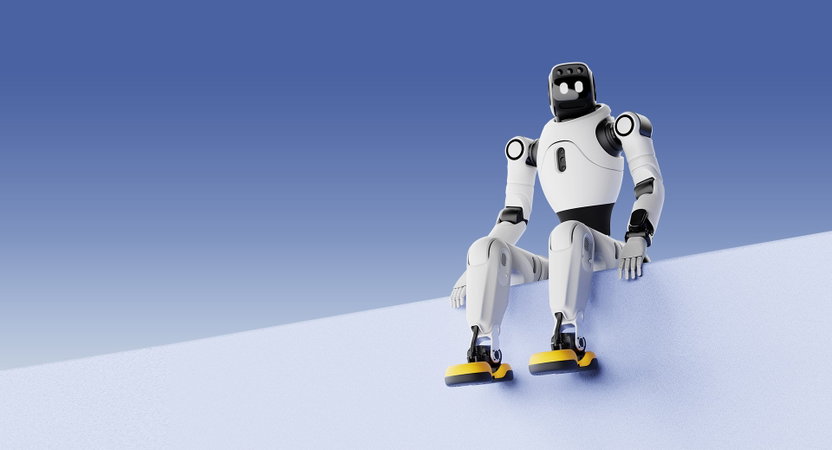
AGIBOT also has industrial-focused G2 platforms, so its broader importance goes beyond the X2. The takeaway: commercial use of humanoids does not always begin with spectacular backflips. Sometimes it starts with helping someone find a frying pan.
Price and availability: AGIBOT X2 Neo is advertised for $25,600. X2 Ultra is priced on request. See the AGIBOT product listing for configuration and delivery conditions.
G1 By Unitree Robotics
Unitree’s G1 is a widely recognized compact biped for robotics research and education. Its relatively accessible pricing, developer ecosystem, and configurable hardware make it a practical option for institutions and robotics teams.
The evidence is stronger than a highlight reel: according to the same industry analysis, Unitree shipped more than 7,000 humanoid robots in the first half of 2026, with the G1 series as its principal shipment driver. The 7,000-plus figure covers Unitree humanoids overall and should not be misreported as G1-only sales.
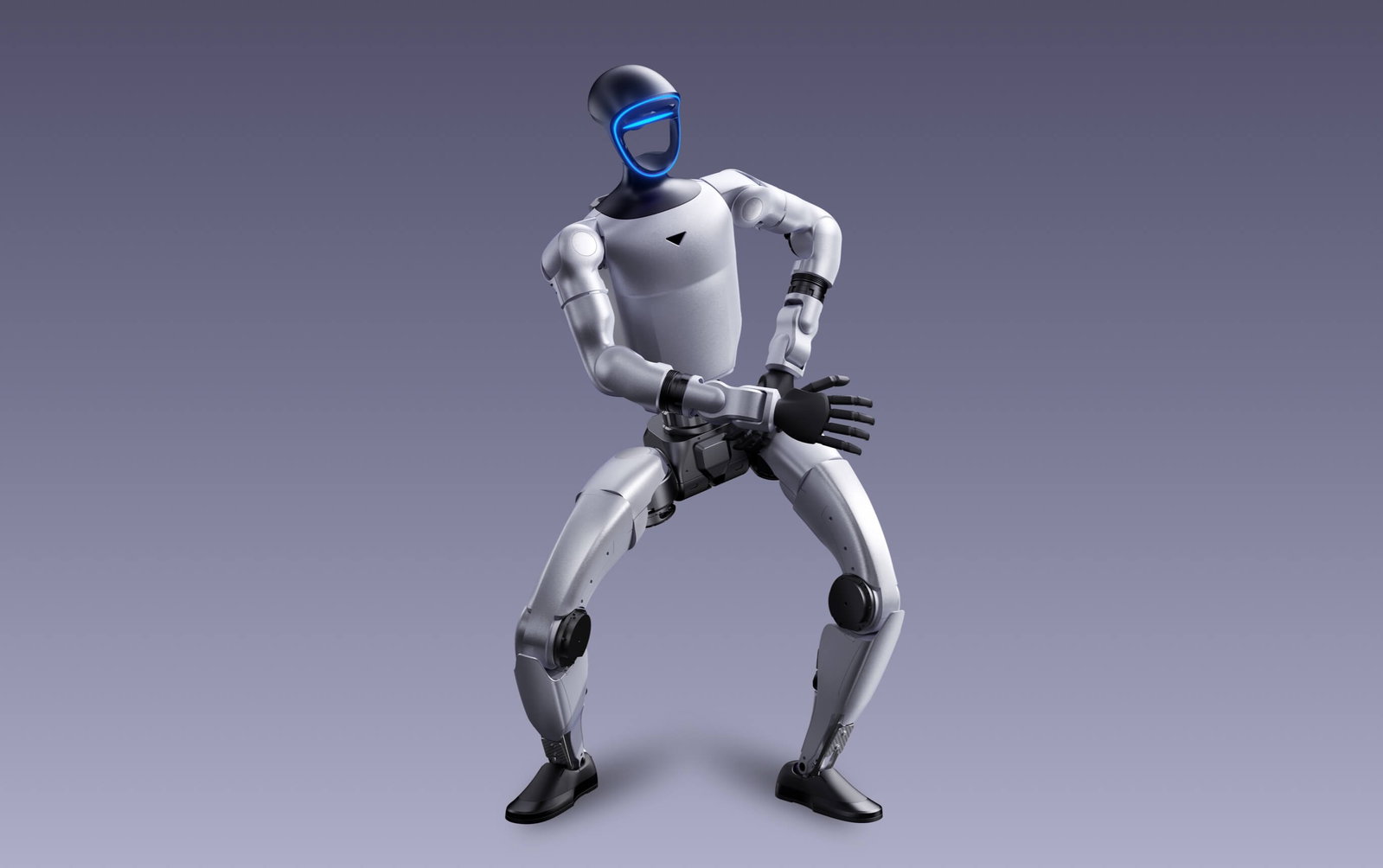
Unitree also introduced H2 Plus as an NVIDIA Isaac GR00T research reference design in June 2026, bringing advanced hands and computing hardware to its full-size H2 platform. G1 serves as an accessible research entry point, while H2 Plus targets more demanding experimentation.
Price and availability: The base G1 is advertised from $13,500, excluding shipping and applicable duties. G1 EDU requires a separate quote from Unitree.
Walker S2 By UBTECH
A robot that can change its own battery sounds like a tiny convenience until you imagine managing a factory full of them. That is the central selling point of UBTECH’s Walker S2, its industrial humanoid designed around autonomous battery swapping and continuous operation.
UBTECH says Walker S2 can complete a battery swap in roughly three minutes. That matters because a robot does not contribute much to production if it spends too long idle at the charger. Walker S2 is aimed at industrial deployments across automotive and electronics manufacturing.
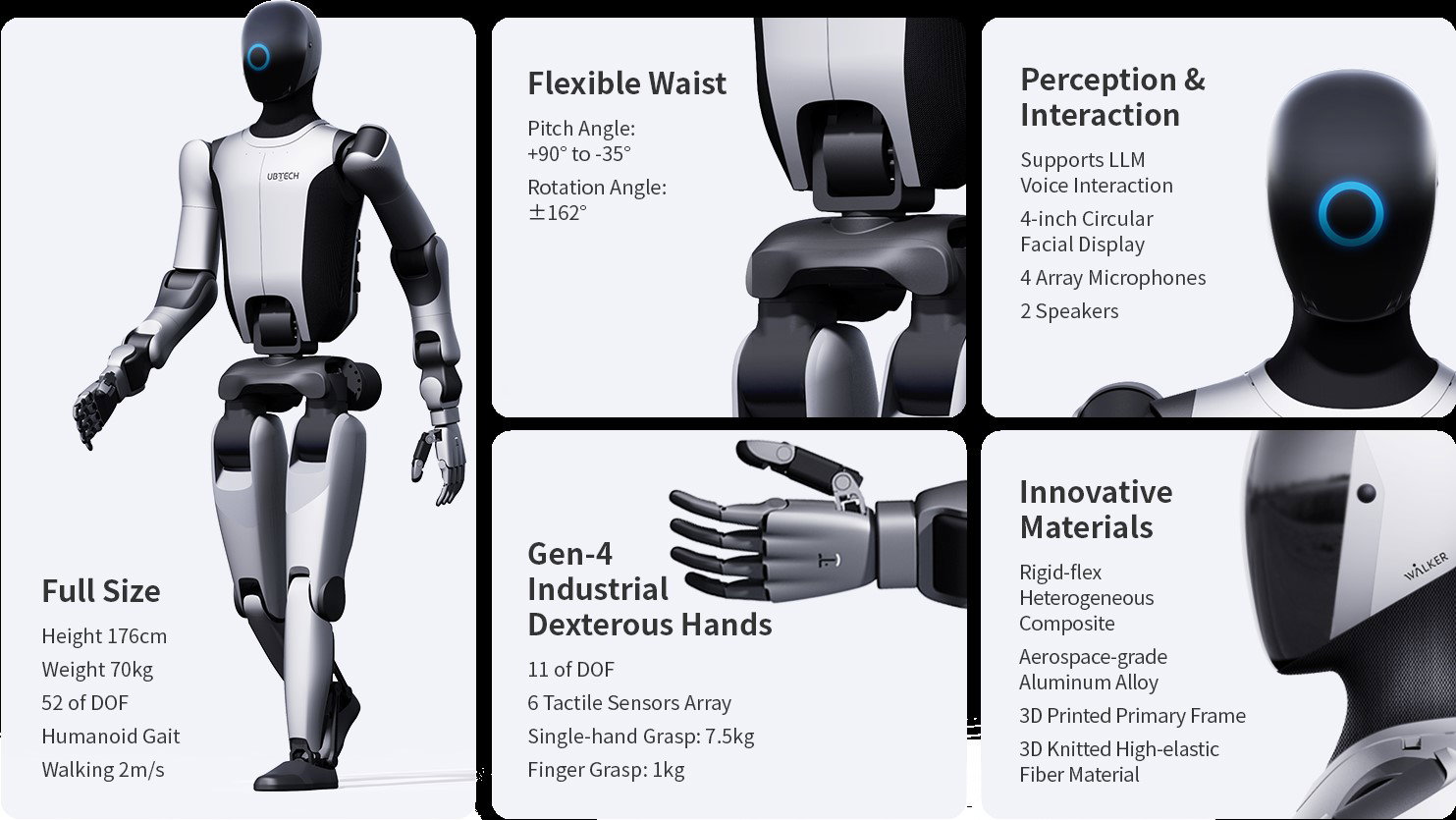
Counterpoint ranked UBTECH fourth by humanoid shipments in the first half of 2026 and reported that its Walker-series target for the year had increased to 5,000 units. This is a company guidance figure, not a completed shipment total. Walker S2 earns its position for its specific attempt to solve an operational problem, rather than for promising to do everything.
Price and availability: UBTECH has not published a verified list price for Walker S2. Pricing and enterprise purchasing terms require a sales inquiry.
Galbot S1 By Galbot
Not every humanoid needs two legs to do useful work.
Galbot S1 has a humanlike upper body and dual arms, but moves on an omnidirectional wheeled base. If you define humanoids strictly as bipeds, it belongs in a separate mobile-manipulator category. For an industrial list, however, its approach is worth watching.
In June 2026, battery maker CATL described the S1 operating on its production lines for demanding material-handling tasks. CATL cited a combined dual-arm payload of up to 50 kilograms and operation lasting up to eight hours. Those are manufacturer- and partner-reported capabilities, not results from an independent comparative test.
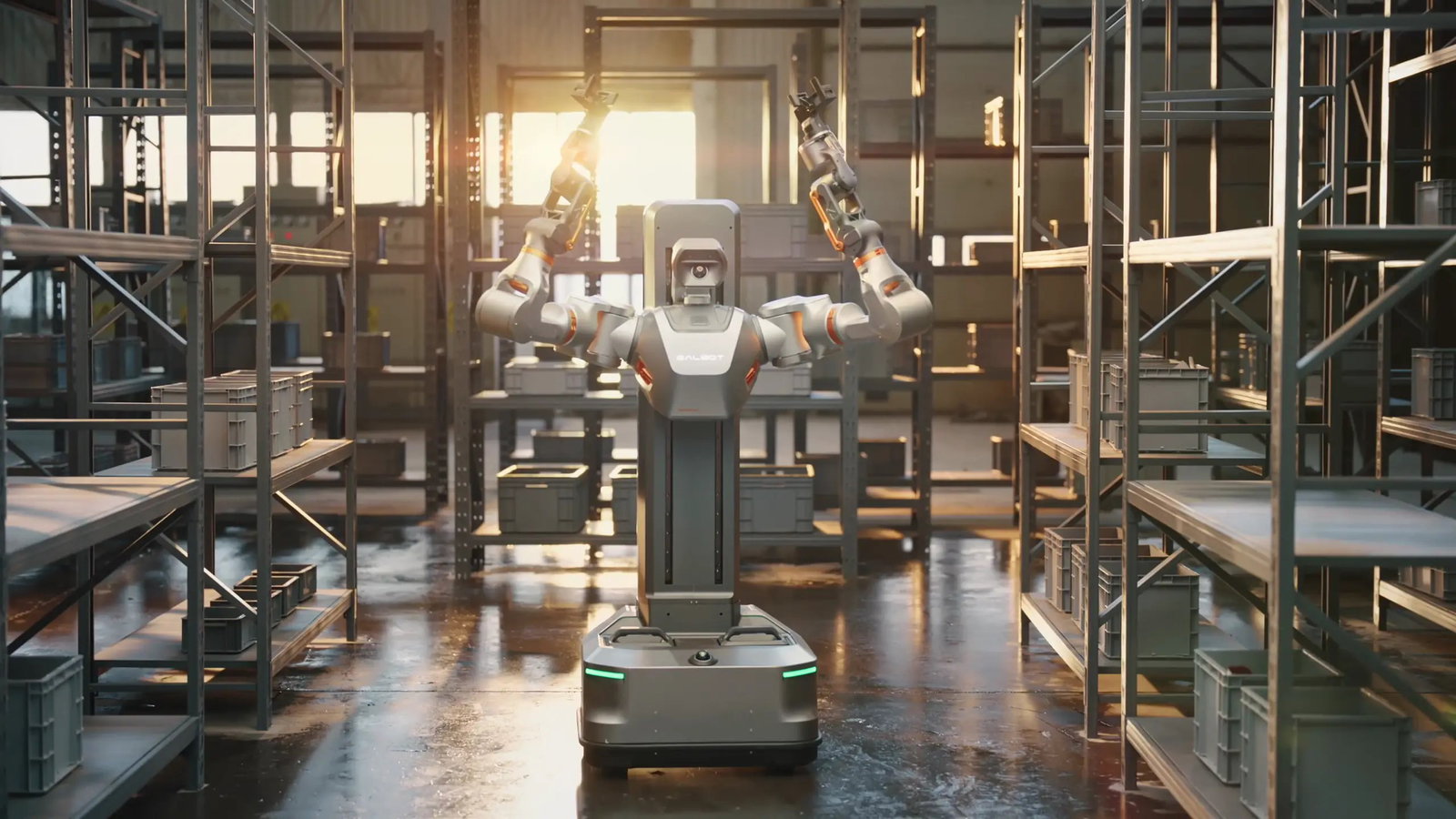
Galbot also ranked third in the global manufacturer shipment table for the first half of 2026. S1 illustrates a practical trade-off in physical AI: if the workplace has predictable floors, wheels may make more sense than teaching a robot to walk everywhere.
Price and availability: No verified public list price for the S1 is available on the manufacturer website; industrial terms should be requested from the manufacturer.
Digit 5 By Agility Robotics
Agility Robotics is focused on a practical assignment: moving items through warehouses and manufacturing operations. Its Digit 5, unveiled in September 2026, builds on extensive work with industrial customers and emphasizes reliable material movement.
Agility says Digit 5 is designed to operate close to people without the physical barriers often needed around industrial automation. The company links the new platform to more than 65,000 cumulative hours of robot operation and over $300 million in multi-year orders.
Crucially, those experience and order figures belong to Agility’s broader commercial program, not a claim that Digit 5 alone has logged them.
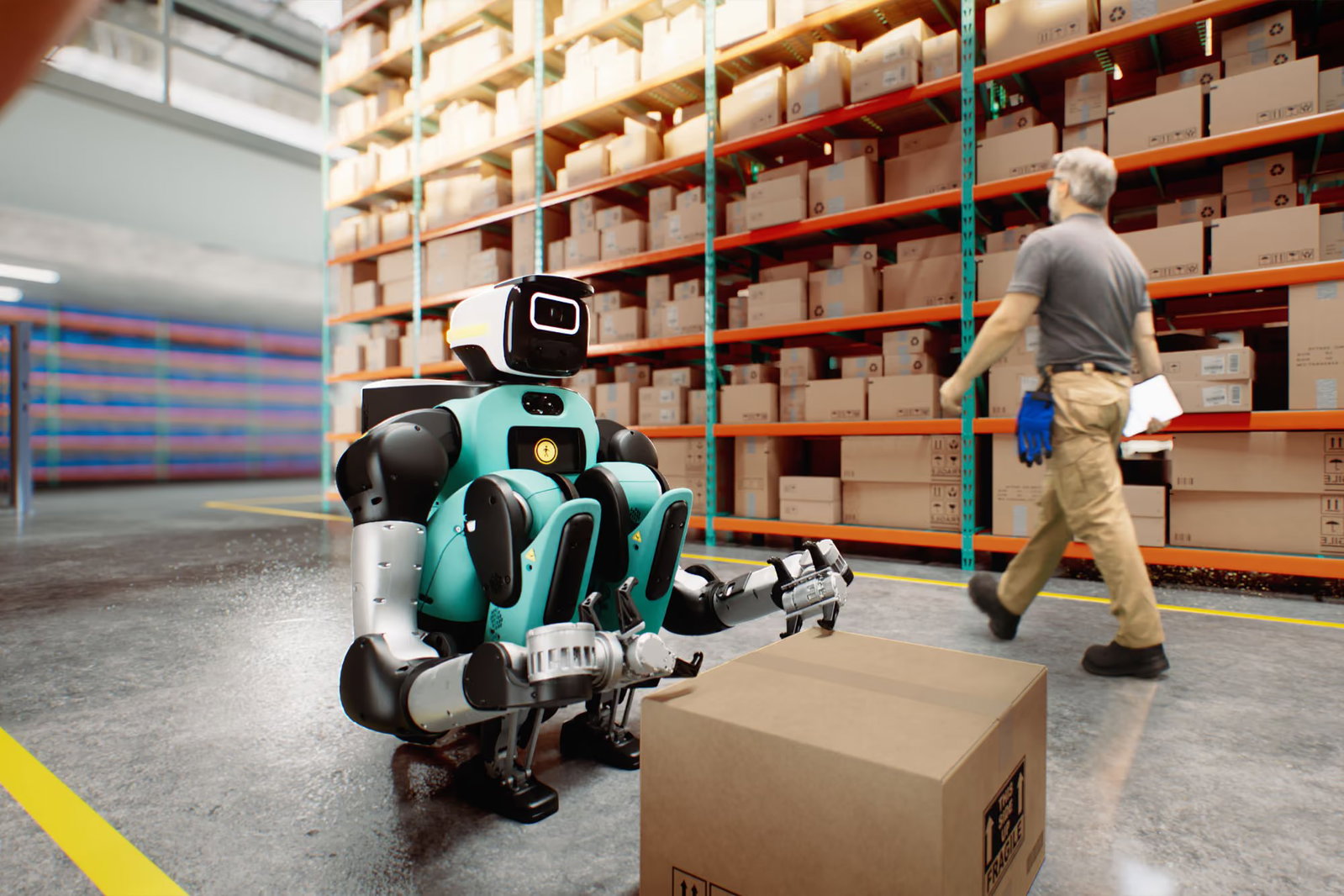
In 2026, Toyota Motor Manufacturing Canada signed a commercial robots-as-a-service agreement after a pilot using Digit. The agreement strengthens Agility’s enterprise credentials, but the distinction between existing Digit deployments and the newly unveiled Digit 5 should remain clear.
Price and availability: No fixed public selling price. An Agility investor presentation uses illustrative assumptions of approximately $200,000 for the robot and roughly $8,500 a month for a robotics-as-a-service option; these are financial modeling assumptions, not confirmed customer offers.
Figure 03 By Figure AI
Figure 03 combines redesigned hands, cameras, sensing, charging, and hardware intended for larger-scale production and broader use cases. The machine is built around Figure’s Helix system, which connects visual perception with whole-body motion and manipulation.
Its most interesting progress concerns the AI controlling the robot. Figure’s Helix 02 demonstrations in January 2026 showed whole-body control during extended household-style tasks, combining locomotion, manipulation, and balance. Figure describes the demonstrations as autonomous, but controlled demonstrations are not proof that the machine can reliably handle arbitrary homes.
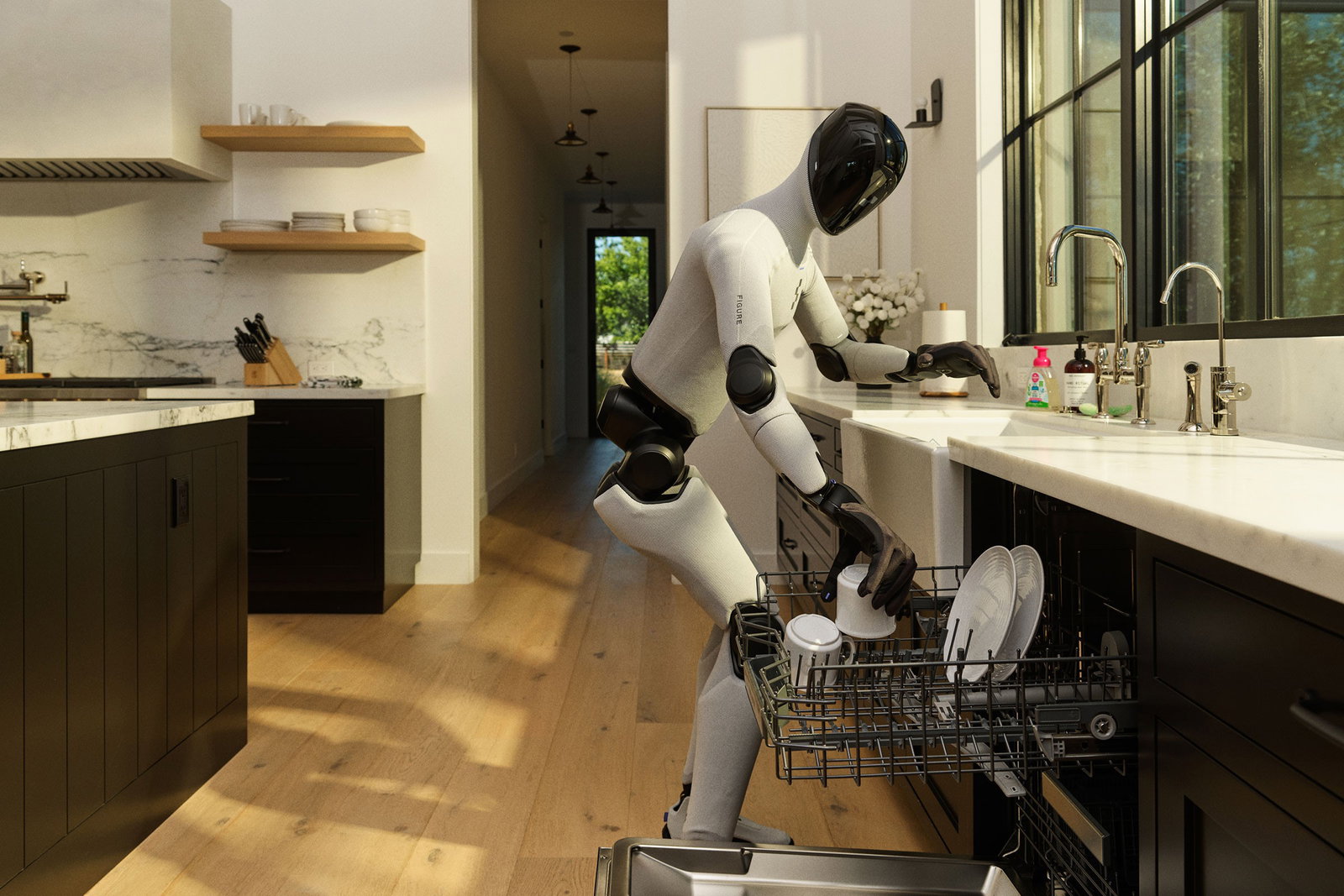
The manufacturer has also reported new Figure 03 activity at BMW and efforts to expand its production infrastructure. Figure 03 remains one of the more important humanoids to follow because it is trying to join capable manipulation with scalable manufacturing. That is a much more demanding problem than making a robot perform one carefully rehearsed action.
Price and availability: Figure AI has not published a public purchase price for Figure 03 on its product page. Access is primarily through company-led enterprise programs.
Atlas By Boston Dynamics
Boston Dynamics introduced the production-oriented electric Atlas in January 2026, positioning its distinctive agility and strength for industrial tasks. The company said manufacturing would begin immediately, marking a major step in its factory-focused robotics strategy.
Initial 2026 deployments were scheduled for Hyundai’s robotics operations and Google DeepMind, with work focused on industrial tasks and AI development. Boston Dynamics also announced a collaboration to explore Gemini Robotics foundation models on Atlas.
Those commitments matter, but a production-ready announcement should not be confused with independent proof of mature, fleet-scale results.
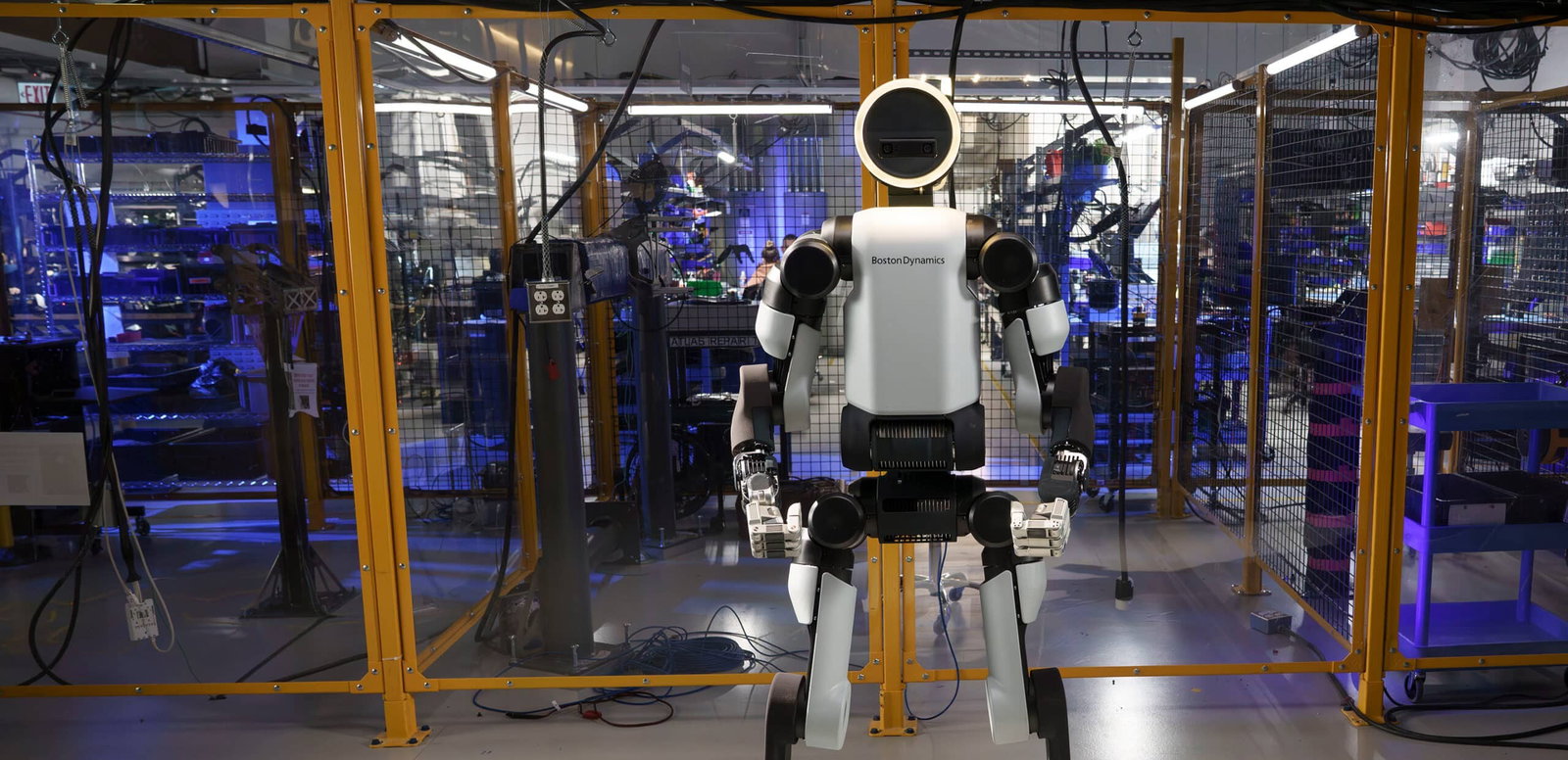
Atlas now has a more credible route from research spectacle to factory tool. Strength and agility still attract the headlines, but learnable workflows, serviceability, and integration with real production systems are what will ultimately decide its value.
Price and availability: Boston Dynamics has no public Atlas list price and directs organizations to its Atlas inquiry page for early-adopter discussions.
Apollo 2 By Apptronik
Apptronik’s Apollo platform is another contender moving from robotics demonstrations toward hands-on training for industrial work. In June 2026, the company introduced Apollo 2 at its expanded Robot Park and described fleets collecting real-world data at training sites and customer locations.
Apollo 2 comes in bipedal and wheeled-base versions. That flexibility is useful because companies may want humanlike manipulation without committing to bipedal locomotion for every job. Apptronik is also working with Google DeepMind on the learning systems behind these robots.
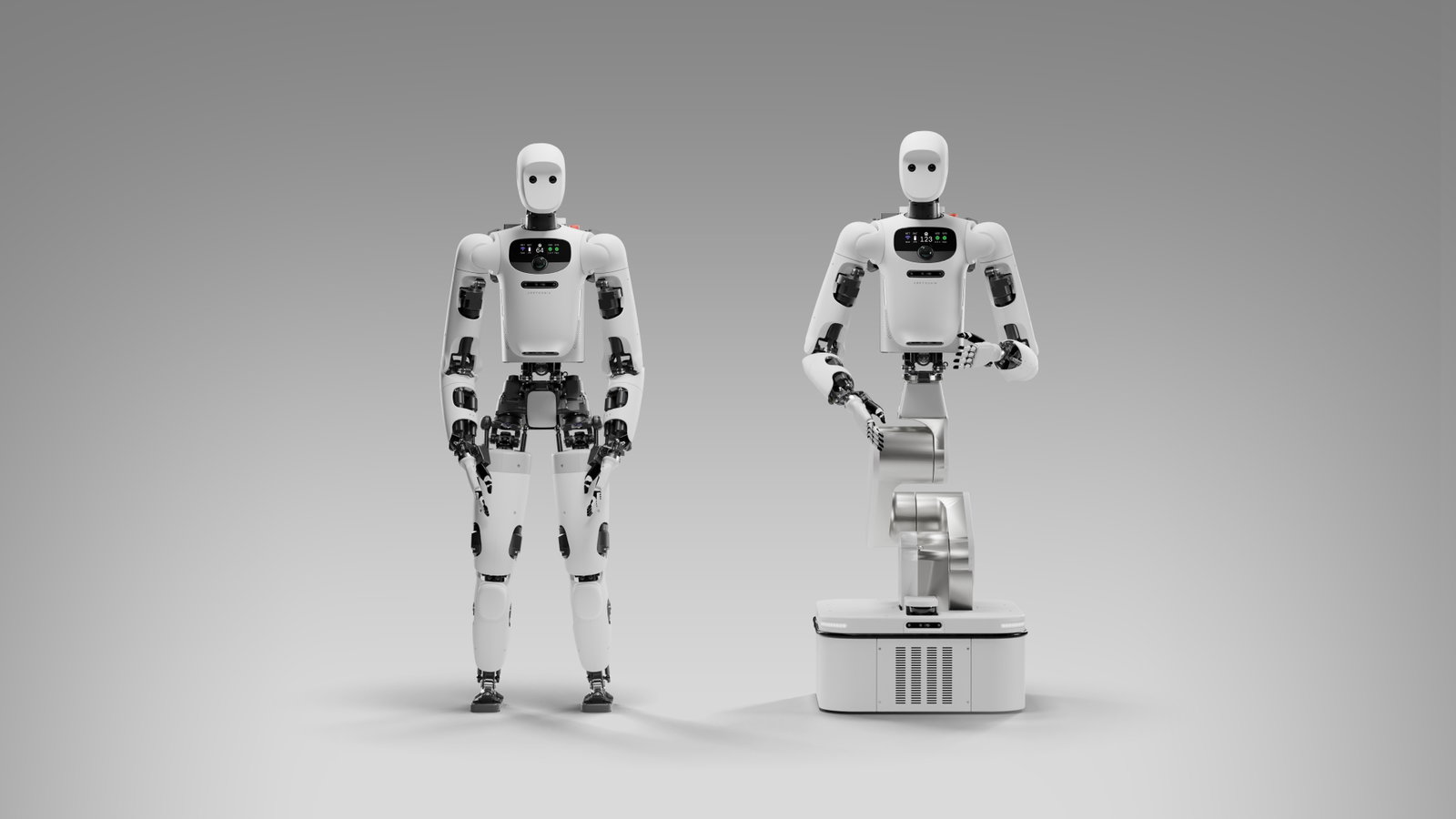
Apollo 2 makes the list for its updated platform and serious investment in robot training. Its current evidence is strongest around R&D infrastructure and customer-site learning, not a claim that thousands of Apollo 2 machines are already running production lines.
Price and availability: Apptronik has not published a verified public Apollo 2 price on its Apollo 2 page; access is organized through commercial and development engagements.
NEO By 1X Technologies
A robot for the home is a very different engineering challenge from one lifting boxes in a controlled warehouse. 1X’s NEO is designed for everyday environments, with a soft outer body, tendon-driven movements, natural-language interaction, and the ability to help with chores.
What makes it timely is the move toward a real consumer offering. 1X opened its NEO manufacturing facility in California in 2026 and says first U.S. customer deliveries are planned for the year. Early-access ownership is listed at $20,000, while a $499-per-month subscription is planned for later availability. Those are advertised terms, not confirmation that NEO is already broadly available in homes.
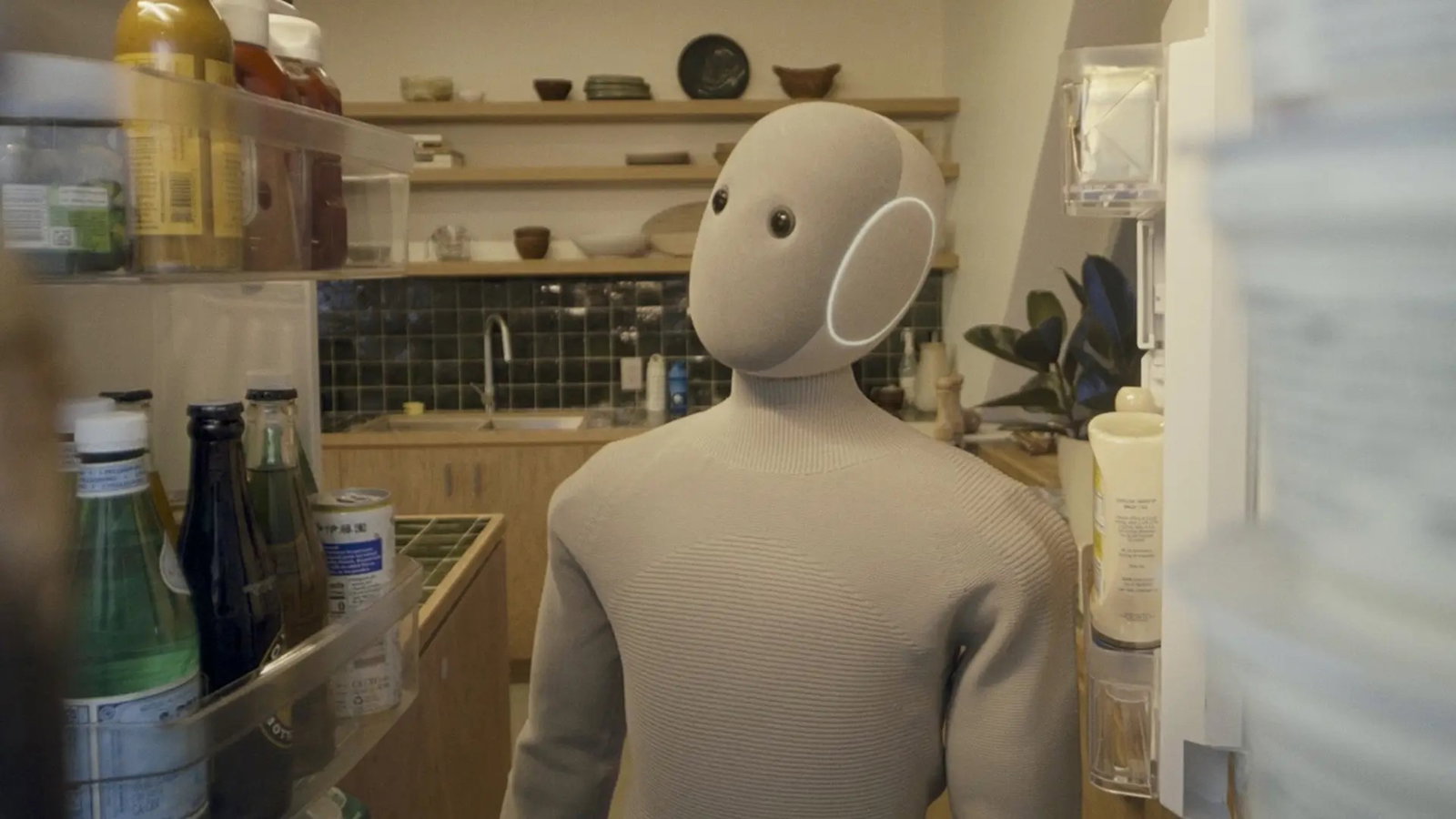
The autonomy story also needs context. For tasks outside its current ability, NEO can use a scheduled remote human expert to guide the robot. That transparency is important: human assistance may make early household robots useful, but it is not equivalent to fully independent household intelligence.
Price and availability: 1X lists NEO at $20,000 for early-access ownership or $499 per month under a subscription plan. Delivery timing and plan benefits differ; see the official order page.
Optimus By Tesla
Tesla’s Optimus remains one of the best-known humanoid robot projects, thanks to the company’s experience with motors, batteries, perception systems, and large-scale manufacturing. Tesla envisions a general-purpose robot that can eventually assist with repetitive work and household tasks.
Tesla continues to develop Optimus as part of its broader autonomy strategy. However, public visibility should not be mistaken for commercial leadership: as of October 2026, a comparable public shipment total or broad customer rollout has not been substantiated.
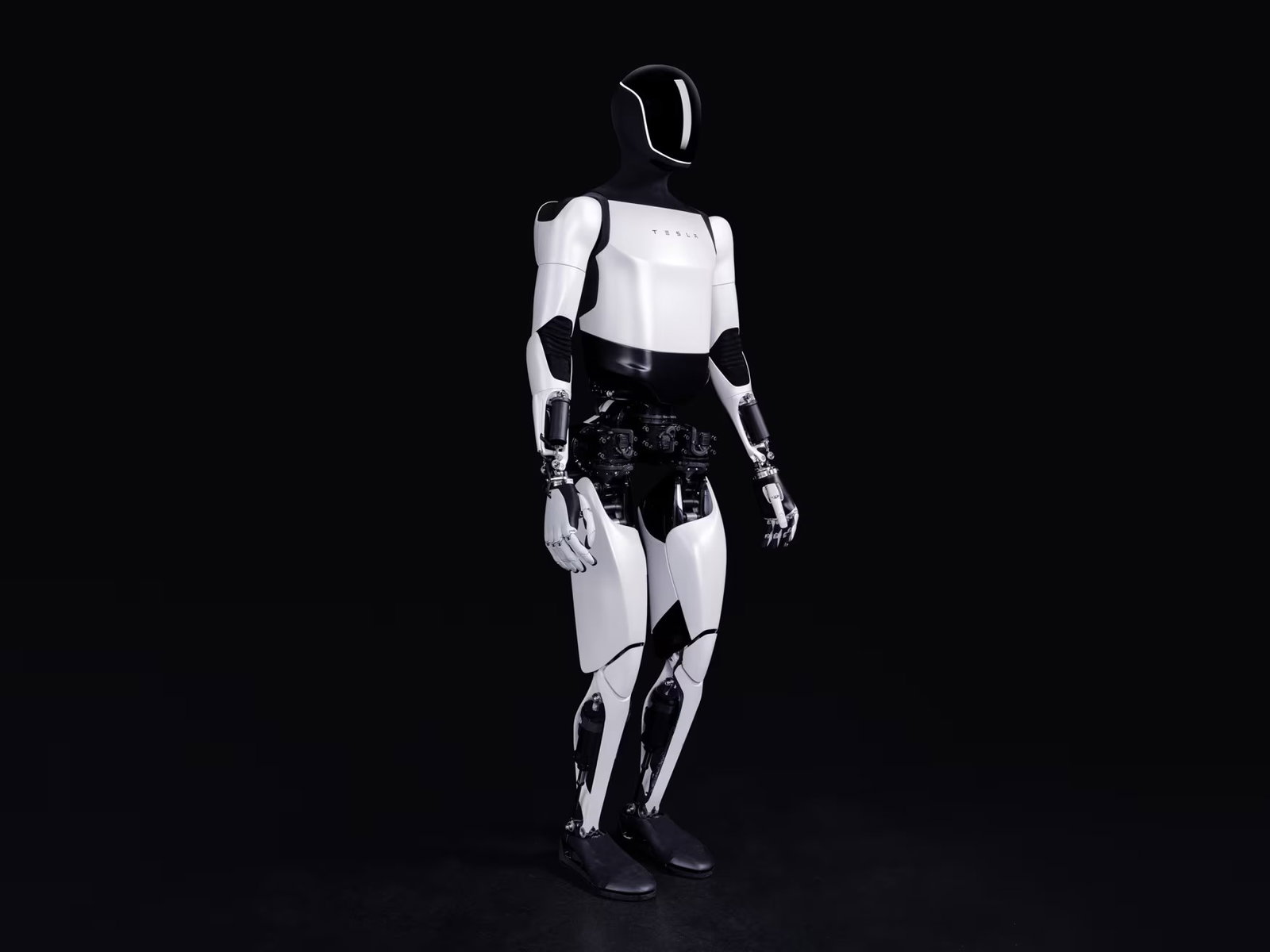
Optimus stays in the 2026 roundup because its potential industrial scale and ambition could influence the market. Its entry must be read as a major development program to watch, not a claim that it is already among the most widely deployed humanoid robots.
Price and availability: Tesla has not announced an Optimus retail price or public ordering process. The widely cited $20,000–$30,000 figure is a long-term high-volume target, not a confirmed selling price.
Conclusion
The humanoid robot race in 2026 is less about who looks the most human and more about who can perform valuable tasks repeatedly. AGIBOT, Unitree, Galbot, and UBTECH already have significant shipment momentum. Agility and other industrial developers are building on practical deployments, while Figure, Boston Dynamics, Apptronik, and 1X are pushing new hardware and learning systems toward commercial reality. Tesla’s Optimus remains a high-profile but less commercially substantiated contender.
Frequently Asked Questions
Which Companies Led Humanoid Robot Shipments In 2026?
Counterpoint Research reported that AGIBOT led global humanoid robot shipments in the first half of 2026, followed by Unitree, Galbot, UBTECH, and Leju Robotics. Shipments measure commercial volume, not necessarily autonomy, safety, or performance across different tasks.
Are Humanoid Robots Already Working In Factories?
Yes, some robots are operating in controlled industrial settings or under commercial agreements. Examples include Galbot S1 activity at CATL and Digit deployments with enterprise customers. However, many platforms remain in pilots, training environments, or early rollouts, so maturity varies sharply.
How Much Does A Humanoid Robot Cost In 2026?
Published prices range from $13,500 for the base Unitree G1 to $25,600 for AGIBOT X2 Neo, while 1X advertises NEO ownership at $20,000 or a $499 monthly subscription. Many industrial robots have no public price and require customized enterprise quotes; Tesla Optimus has no official retail price.
Mon, Jul 14, 2025

Liked what you read? That’s only the tip of the tech iceberg!
Explore our vast collection of tech articles including introductory guides, product reviews, trends and more, stay up to date with the latest news, relish thought-provoking interviews and the hottest AI blogs, and tickle your funny bone with hilarious tech memes!
Plus, get access to branded insights from industry-leading global brands through informative white papers, engaging case studies, in-depth reports, enlightening videos and exciting events and webinars.
Dive into TechDogs' treasure trove today and Know Your World of technology like never before!
Disclaimer - Reference to any specific product, software or entity does not constitute an endorsement or recommendation by TechDogs nor should any data or content published be relied upon. The views expressed by TechDogs' members and guests are their own and their appearance on our site does not imply an endorsement of them or any entity they represent. Views and opinions expressed by TechDogs' Authors are those of the Authors and do not necessarily reflect the view of TechDogs or any of its officials. While we aim to provide valuable and helpful information, some content on TechDogs' site may not have been thoroughly reviewed for every detail or aspect. We encourage users to verify any information independently where necessary.
Loading comments...