
Manufacturing Technology
Inside the Race To One Billion Humanoid Robots By 2050
Share
TL;DR
-
Around 90% are expected to work in industrial and commercial settings rather than homes.
-
A humanoid that cost about $200,000 in high-income markets in 2024 could fall toward $50,000 by 2050.
-
China has an early manufacturing and component-supply advantage.
-
AGIBOT currently leads reported global humanoid shipments.
-
The forecast still depends on progress in autonomy, dexterity, reliability, safety, regulation, and cost.
Introduction
In I, Robot, humanoids are everywhere by 2035. Reality is moving more slowly, but the direction is becoming harder to dismiss.
Factories are testing human-shaped robots because warehouses, tools, stairs, and workstations were designed around human bodies. The bet is that capable humanoids could eventually work inside infrastructure that already exists.
Morgan Stanley estimates the global humanoid population could approach one billion units by 2050, creating a market worth more than $5 trillion when supply chains, repair, maintenance, and support are included.
So, will there really be one billion humanoid robots by 2050, and who is closest to mass production?
Why Does Morgan Stanley See One Billion Humanoid Robots By 2050?
The Morgan Stanley humanoid robot report is heavily weighted toward work, not robot butlers.
By 2050, it expects roughly 930 million humanoids in repetitive, structured industrial and commercial tasks, while household adoption remains around 80 million units. China alone could have about 302.3 million humanoids in use, compared with 77.7 million in the United States.
The adoption curve is back-loaded. Morgan Stanley's Adam Jonas says, “Adoption should be relatively slow until the mid-2030s, accelerating in the late 2030s and 2040s.”
That gives the industry time to improve intelligence, safety, manufacturing, regulation, and economics before volumes rise sharply.
What Has To Change Before Humanoids Scale?
The race is not simply about making a robot walk convincingly on stage.
Manufacturers need better dexterity, higher uptime, safer human interaction, more real-world training data, and lower production costs. McKinsey estimates actuation alone can represent about 40% to 60% of a humanoid's bill of materials, making motors, gearboxes, joints, and related components a major cost-reduction target.
The Humanoid Robot Cost Curve May Decide The Race
Morgan Stanley estimates a humanoid cost around $200,000 in high-income countries in 2024. Its humanoid robot cost curve from 2024 to 2050 puts that figure near $150,000 by 2028 and around $50,000 by 2050. In lower-income markets using cheaper Chinese supply chains, costs could fall as low as $15,000.
That decline changes the business case. Morgan Stanley estimates that one humanoid leased at roughly $5 an hour could replace work equivalent to two employees earning $25 an hour, supporting an estimated net present value of about $200,000 per robot.
However, those economics only work if the machine performs useful tasks reliably. A cheaper robot that constantly needs human rescue is not cheap automation.
Why China Has A Humanoid Robot Supply Chain Advantage
China's humanoid robot supply chain dominance goes deeper than final assembly.
McKinsey's analysis of China's humanoid robot edge estimates China accounts for around 40% of capacity for precision bearings used in selected humanoid components, 40% for encoder and position sensors, and 90% for permanent magnets used in motors. The country also benefits from manufacturing networks built around electric vehicles, batteries, electronics, and industrial automation.
That advantage is already translating into volume.
Counterpoint Research estimates global humanoid shipments exceeded 22,000 units in the first half of 2026, with AGIBOT shipping about 9,700 units and taking more than 43% share. IDC data cited by AGIBOT also ranked the company first, although with a lower estimate of more than 8,600 units.
Which Company Is Currently Winning The Race To Mass-Produce Humanoid Robots?
If “winning” means units shipped, AGIBOT currently has the strongest claim.
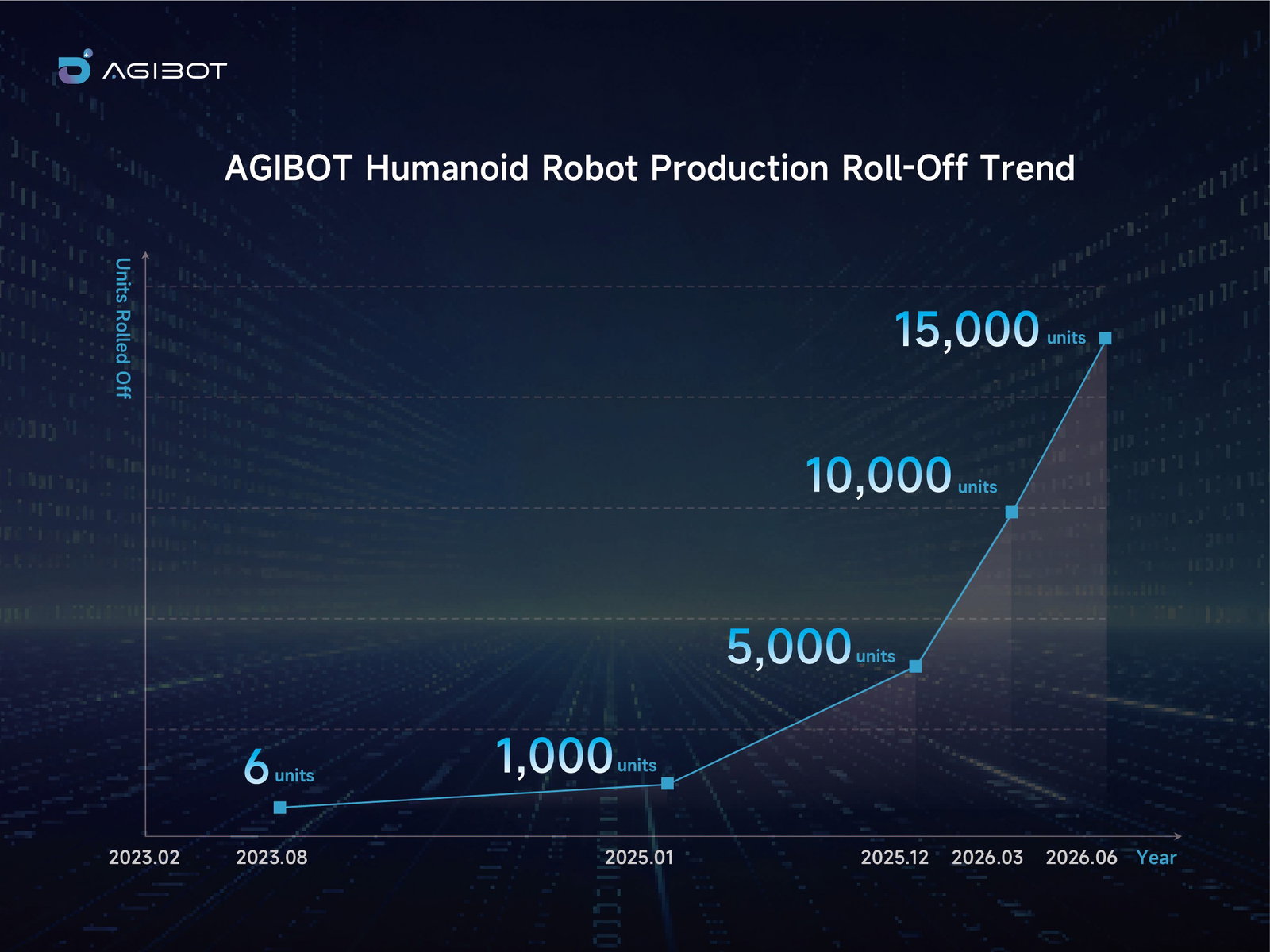
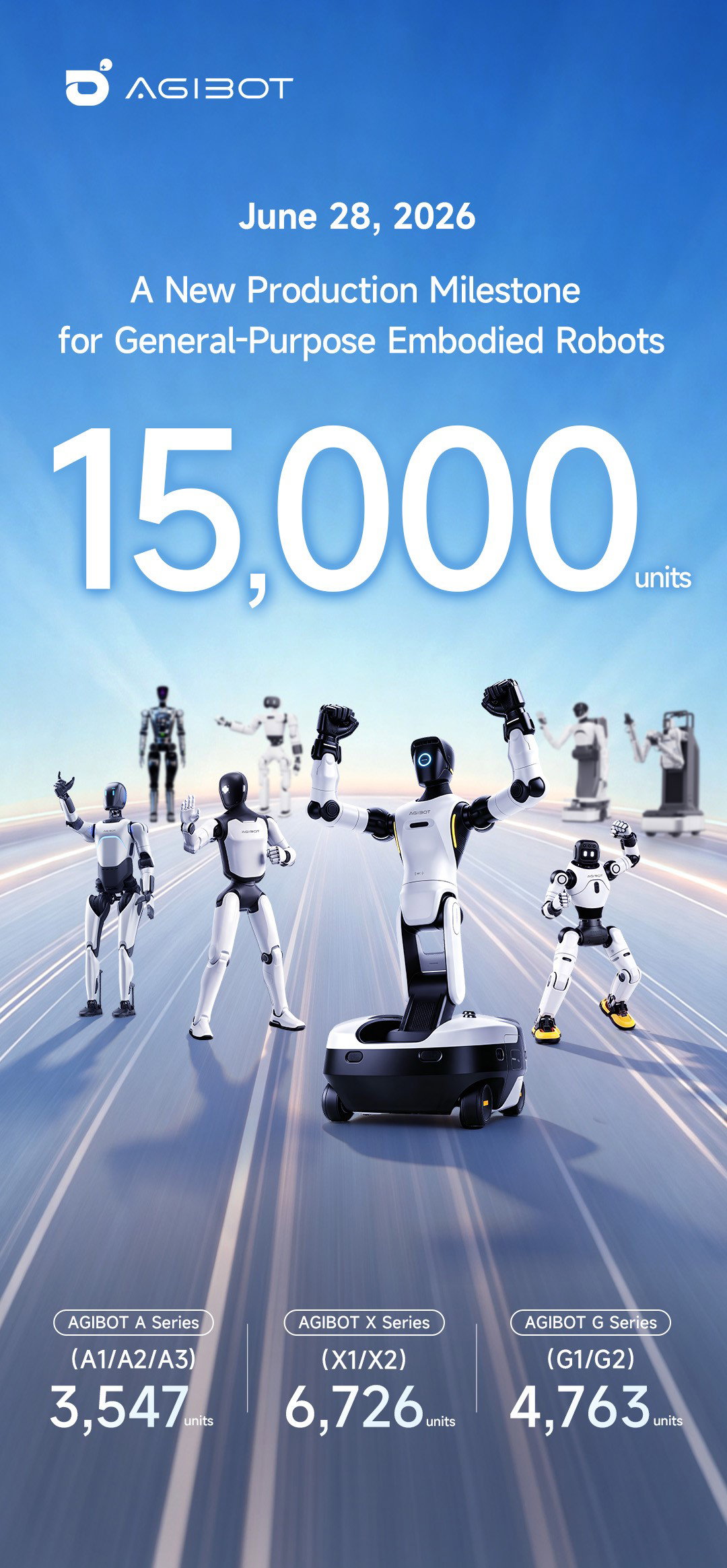
The Shanghai company said its 15,000th robot rolled off the production line in June 2026. Unitree says it shipped more than 5,500 humanoids in 2025. Figure says its BotQ factory raised Figure 03 production from one robot per day to one per hour and had delivered more than 350 units by April 2026.
Tesla remains earlier in its ramp. Its 2025 annual report says Optimus Gen 3 is its first design intended for mass production, with production planned before the end of 2026 and eventual annual capacity of one million robots.
So, AGIBOT leads current shipment volume. Tesla has the biggest stated production ambition, but ambition is not installed capacity.
The Robot Brain Is Still The Hard Part
Building thousands of robot bodies does not mean they are ready to replace millions of workers.
A Reuters investigation into China's humanoid industry found that many robots still struggle with dexterity, autonomy, and unpredictable factory situations. Some demonstrations depend on choreographed routines or substantial human supervision.
Humanoid models also need physical training data showing how bodies interact with objects, forces, people, and changing environments. That is why manufacturers are building data-collection systems alongside production.
The company making the most robots today may not win if another develops much better physical intelligence.
Will There Really Be One Billion Humanoid Robots By 2050?
Possibly, but one billion should be treated as a scenario, not a countdown.
The International Federation of Robotics says only about 7,000 humanoid robots were sold globally for industrial and professional service applications in 2025. Morgan Stanley's humanoid robot market forecast for 2050 therefore requires adoption to move from thousands to millions and eventually hundreds of millions. Reuters
Labor shortages and aging populations could create demand, but major bottlenecks remain in AI capability, safety, maintenance, component supply, regulation, and public acceptance.
The forecast is less a guarantee than a picture of what becomes possible if robotics follows a steep cost and capability curve.
Conclusion
The race to one billion humanoid robots will not be won by the robot with the best backflip.
It will be won through factories, supply chains, falling costs, reliable AI, and machines that can work for thousands of hours without becoming someone's full-time troubleshooting project.
China currently has the clearest manufacturing advantage, and AGIBOT leads reported shipments. Figure is proving faster U.S. production, while Tesla is aiming at a scale far beyond today's industry.
The I, Robot future is not here yet. If the next decade turns humanoids from impressive demonstrations into productive machines businesses can justify buying, one billion may stop sounding like science fiction.
Frequently Asked Questions
Are There Specific Safety Standards For Humanoid Robots Working Around People?
Industrial humanoids can fall under established robotics safety frameworks. ISO 10218-2:2025 covers the integration, operation, maintenance, and decommissioning of industrial robot applications and robot cells, helping manufacturers design safer deployments where robots work alongside people. ISO
Can Businesses Rent Humanoid Robots Instead Of Buying Them?
Yes. Robot-as-a-Service models are already emerging. AGIBOT has introduced robotics rental services in markets including Saudi Arabia, the UAE, Qatar, Kuwait, Turkey, Bahrain, and Oman, with advertised rental pricing starting from SAR 2,000 per day.
Are Humanoid Robots Being Tested Outside Factories?
Yes. AGIBOT has deployed robots in a UK retail environment to test jobs such as customer reception, guided interaction, brand promotion, and visitor engagement. The company is also exploring humanoid deployments across education, commercial services, logistics, and other real-world settings.
Thu, Oct 15, 2026

Enjoyed what you read? Great news – there’s a lot more to explore!
Dive into our content repository of the latest tech news, a diverse range of articles spanning introductory guides, product reviews, trends and more, along with engaging interviews, up-to-date AI blogs and hilarious tech memes!
Also explore our collection of branded insights via informative white papers, enlightening case studies, in-depth reports, educational videos and exciting events and webinars from leading global brands.
Head to the TechDogs homepage to Know Your World of technology today!
Disclaimer - Reference to any specific product, software or entity does not constitute an endorsement or recommendation by TechDogs nor should any data or content published be relied upon. The views expressed by TechDogs' members and guests are their own and their appearance on our site does not imply an endorsement of them or any entity they represent. Views and opinions expressed by TechDogs' Authors are those of the Authors and do not necessarily reflect the view of TechDogs or any of its officials. While we aim to provide valuable and helpful information, some content on TechDogs' site may not have been thoroughly reviewed for every detail or aspect. We encourage users to verify any information independently where necessary.
Loading comments...