
Health Care Technology
How AI Transformed Wearable Technology In The Medical Industry
Share
TL;DR
-
The global wearable medical device market is projected to reach $68.1 billion in 2026, according to Grand View Research.
-
AI filters out motion noise and skin-tone bias from raw sensor data, sharpening accuracy for heart rate, oxygen and glucose readings.
-
Devices like the Apple Watch's Irregular Rhythm Notification feature, AliveCor's Kardia 12L and Dexcom's Stelo now carry specific FDA clearances.
-
Clinical-grade wearables go through regulatory validation that most consumer-grade fitness trackers never attempt.
-
AI-supported remote monitoring programs have reported strong readmission reductions in specific cases, including a 50% reduction in 30-day heart failure readmissions at UMass Memorial Health-Harrington.
Introduction
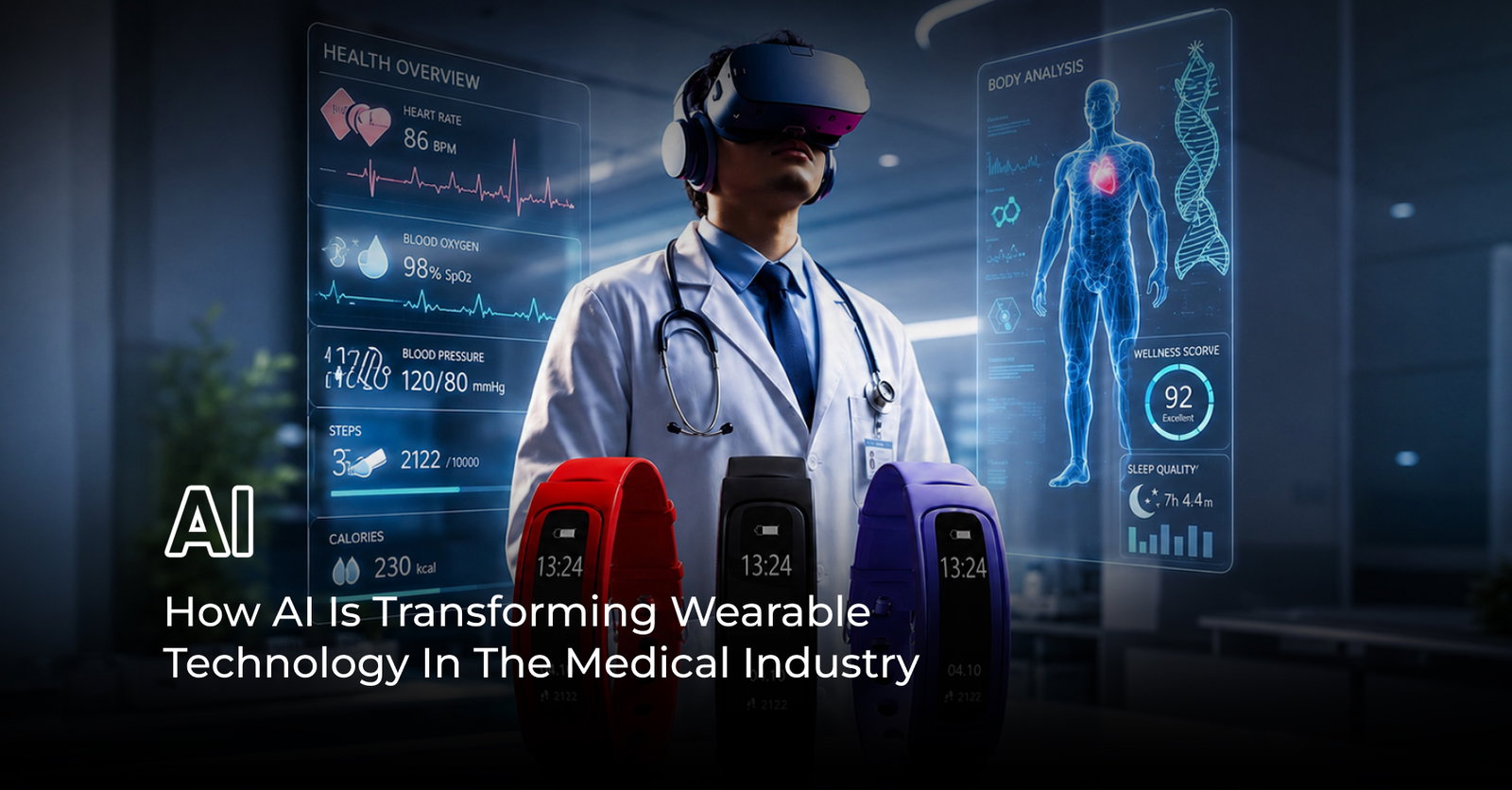
In Big Hero 6, Baymax scans Hiro, reads his vitals, and flags what is wrong before Hiro fully registers the pain. That once felt like science fiction. Today, a smartwatch warning someone about an irregular rhythm feels much closer to reality.
That shift did not happen by accident. Artificial intelligence (AI) moved wearable technology beyond step counts and closer to serious health monitoring. Grand View Research valued the global wearable medical device market at about $54 billion in 2025 and projects $330.5 billion by 2033.
So, how did a step counter learn to spot an arrhythmia?
What Is AI Doing To Wearable Tech In Healthcare?
The change starts with AI turning raw body signals into useful health context.
Wearable technology has existed for over a decade, but earlier devices mostly counted steps, estimated calories and generated sleep scores. AI wearable devices in healthcare add interpretation. Machine learning models trained on large biometric datasets can spot patterns in heart rhythm, blood oxygen, temperature and movement that static systems may miss.
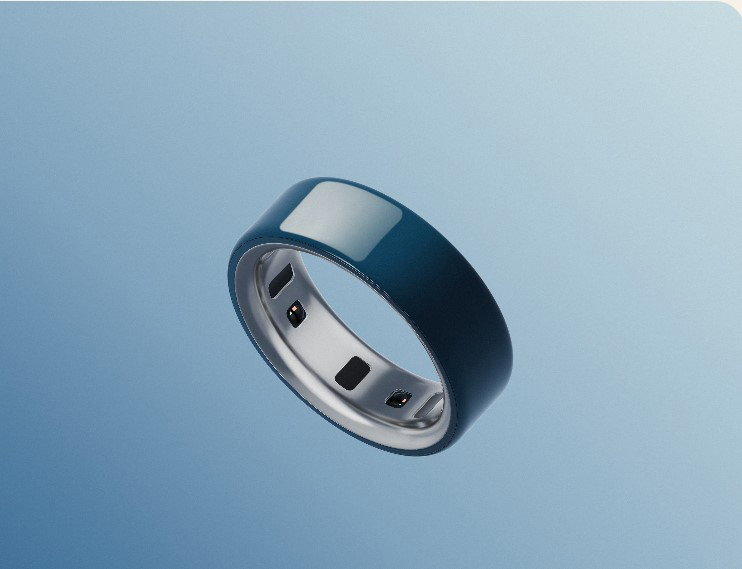
That is the difference between a device that shows your heart rate and one that warns something may be wrong. University of Arizona Health Sciences researchers have shown that deep neural networks trained on continuous wearable data can predict events such as labor onset days in advance, moving wearables from tracking toward early prediction.
Consumer-Grade vs Clinical-Grade Wearables: What Is The Real Difference?
This distinction matters because not every sensor is cleared to make a medical claim.
| Aspect | Consumer-grade wearables | Clinical-grade wearables |
| Primary purpose | General wellness, fitness, sleep, and lifestyle nudges. | Monitoring or decision support for a defined condition or metric. |
| Validation | Usually built around proprietary wellness algorithms and not FDA-reviewed if they avoid disease claims. | Validated against clinical reference standards and often cleared through FDA pathways before making medical claims. |
| Accuracy caveat | Useful for trends, but not always reliable for clinical thresholds. | Held to a higher bar, but only for the cleared indication. |
| Best use | Lifestyle guidance and alerts that may prompt a user to seek care. | Clinician-supervised monitoring and disease-specific data. |
| Bottom line | Helpful for healthy behavior, not medical testing. | Better suited when the exact feature is cleared or clinically validated. |
How Does AI Improve The Accuracy Of Health Trackers?
Accuracy improves when AI cleans messy sensor signals and adds personal context.
Optical sensors for heart rate and SpO2 can be affected by motion, ambient light, device fit, and skin pigmentation. AI helps by filtering noisy signals in real time and comparing new readings with a user's own baseline instead of relying only on fixed thresholds.
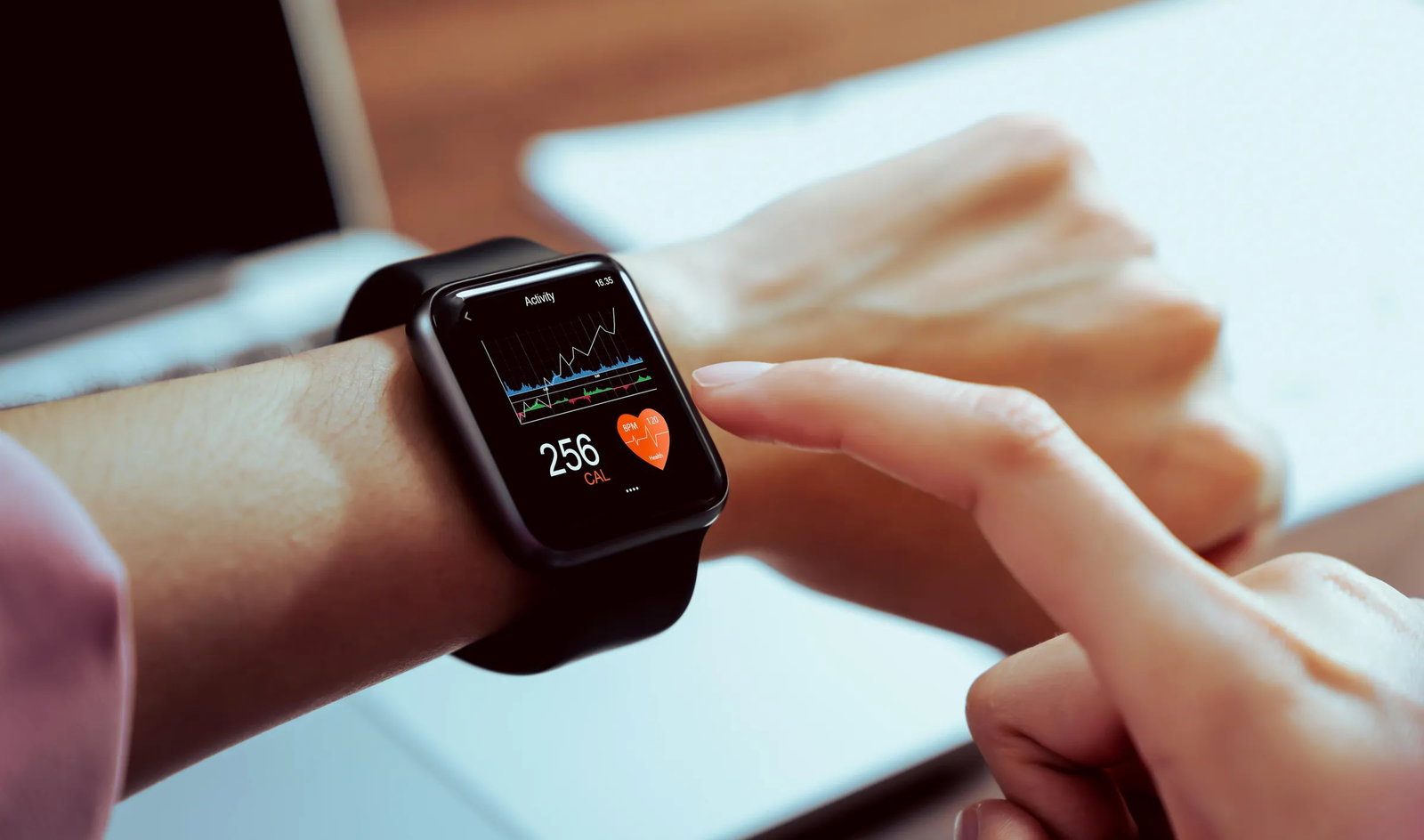
That helps models separate a workout-related spike from a potentially abnormal rhythm. Research on wearable sensor data has shown high activity-recognition accuracy, while another study using data from more than 14,000 users forecast all-cause hospitalizations with 91% accuracy. AI is shifting wearables from passive tracking toward earlier risk detection.
Which Wearable Medical Devices Have Received FDA Clearance For AI Diagnostics?
A growing list of wearable medical devices have cleared FDA review for specific AI-powered diagnostic functions rather than general wellness claims:
-
Apple Watch's Irregular Rhythm Notification Feature: Cleared to flag signs of atrial fibrillation via on-wrist ECG and PPG sensors.
-
AliveCor's KardiaMobile and Kardia 12L ECG System: AI-assisted ECGs cleared to detect 39 cardiac conditions including acute myocardial infarction.
-
iRhythm's Zio Watch: Under the ZEUS System, a continuous ECG wearable whose algorithm reaches roughly 99% physician agreement on arrhythmia reports.
-
Rune Labs' StrivePD: Cleared to use Apple Watch movement data to help monitor Parkinson's disease symptoms.
-
Dexcom's Stelo and Abbott's Lingo: Over-the-counter glucose monitors cleared following the FDA's 2024 OTC CGM approvals.
-
Hexoskin Medical System: An ECG-enabled smart garment cleared for long-term cardiac and respiratory monitoring.
This list keeps expanding because the regulatory path itself just shifted. In January 2026, the FDA updated its General Wellness and Clinical Decision Support guidance, easing premarket requirements for low-risk wearables while keeping a tighter watch on devices that make explicit diagnostic claims, according to IEEE Spectrum.
How AI Wearables Power Remote Patient Monitoring Systems
Remote patient monitoring systems are where AI wearable devices move from personal gadget to genuine healthcare infrastructure. Instead of a patient visiting a clinic for a single blood pressure reading, a connected wearable streams continuous data to a care team and AI sorts through that stream to flag what actually needs attention.
The clinical payoff shows up directly in hospital outcomes. UMass Memorial Health-Harrington reportedly cut all-cause 30-day readmissions for congestive heart failure patients by 50% using a combination of AI-powered technology and remote human care teams, per AJMC and the program announcement.
Dr. Salvatore Viscomi, CEO and Co-founder of Carna Health, captured why this matters. "In 2026, the measure of trust will be how clearly a system can explain itself," he told Chief Healthcare Executive, noting that wearable data is converging with health records to flag disease risk long before symptoms appear.
The Wearable Healthcare Devices Market By The Numbers
The numbers show why health systems and device makers are paying attention.
Grand View Research pegs the global wearable medical device market at $54 billion in 2025, rising to $68.1 billion in 2026 and $330.5 billion by 2033 at a 29.5% CAGR. Consumer-grade devices still dominate with roughly 76% of 2025 revenue, while clinical-grade devices form the smaller, regulated slice tied to clearance and reimbursement.
North America leads with over a third of global share, while India is projected to post the highest regional CAGR at 9.7% through 2036, according to Fact.MR.
What Are The Risks And Limitations?
None of this comes without real tradeoffs. An over-sensitive AI model that flags too many irregular readings can trigger alert fatigue, both for users who start ignoring notifications and for clinicians flooded with low-value alerts.
Bias is another open question. Optical sensors historically perform worse on darker skin tones, and FDA validation guidance now requires devices to include darkly pigmented participants making up at least 15% of clinical trial pools. Adaptive AI models that keep learning after deployment raise a separate concern, since regulators have not fully settled how to oversee outputs that can shift after a device ships.
Data privacy rounds out the list. Continuous biometric streams are valuable to insurers, employers and hackers alike, which is why consumers should know whether a device is rated wellness or medical before sharing its data.
Conclusion
The big takeaway is simple: AI wearables are useful when their limits are clear.
Baymax never needed FDA clearance to scan Hiro and know what was wrong. Real wearables do, and that requirement separates a useful AI wearable device from a fitness tracker with stronger marketing. What began as step counting has become a quiet health companion that may flag a dangerous rhythm or glucose spike.
We are still far from a wrist-worn robot that can scan, diagnose, and treat in one motion. Yet every new FDA-cleared feature brings medical wearables closer to continuous health support. The next time a watch sends a heart rhythm alert, it is AI doing what Baymax was built for: noticing something is wrong before you do.
Frequently Asked Questions
Is AI In Medical Wearables Accurate Enough To Replace A Doctor?
No. Even FDA-cleared AI wearable devices are built to flag risk and support a diagnosis, not replace one. Every cleared device on the market today still routes a serious finding back to a licensed physician for confirmation.
What Should I Look For Before Trusting A Wearable Healthcare Device?
Check whether the specific feature you care about, such as ECG or glucose tracking, carries an actual FDA clearance rather than a general wellness label. The difference between consumer-grade and clinical-grade often comes down to that one detail.
How Are AI Wearables Used In Remote Patient Monitoring?
AI wearables collect continuous health data such as heart rate, glucose levels, ECG signals, or movement patterns and send it to care teams through remote patient monitoring systems. AI then helps flag unusual patterns early, so doctors can review possible risks before they become serious.
Mon, Aug 10, 2026

Enjoyed what you read? Great news – there’s a lot more to explore!
Dive into our content repository of the latest tech news, a diverse range of articles spanning introductory guides, product reviews, trends and more, along with engaging interviews, up-to-date AI blogs and hilarious tech memes!
Also explore our collection of branded insights via informative white papers, enlightening case studies, in-depth reports, educational videos and exciting events and webinars from leading global brands.
Head to the TechDogs homepage to Know Your World of technology today!
Disclaimer - Reference to any specific product, software or entity does not constitute an endorsement or recommendation by TechDogs nor should any data or content published be relied upon. The views expressed by TechDogs' members and guests are their own and their appearance on our site does not imply an endorsement of them or any entity they represent. Views and opinions expressed by TechDogs' Authors are those of the Authors and do not necessarily reflect the view of TechDogs or any of its officials. While we aim to provide valuable and helpful information, some content on TechDogs' site may not have been thoroughly reviewed for every detail or aspect. We encourage users to verify any information independently where necessary.
Loading comments...