
Media and Entertainment
How AI Is Impacting Hollywood And Filmmaking In 2026
Share
TL;DR
-
Hollywood uses AI for planning, visual effects, de-aging, crowd generation, dubbing, localization, and marketing.
-
The Lord of the Rings used Massive software in 2001 to create digital crowd agents with limited decision-making.
-
Tilly Norwood, created by Xicoia, will lead Particle6’s AI-focused feature film Misaligned.
-
SAG-AFTRA says synthetic performers raise serious questions about consent, compensation, and training data.
-
A 2024 industry study estimated that 203,800 US entertainment jobs could be disrupted by generative AI by 2026.
Introduction
Hollywood has reached its Jurassic Park moment. The industry is excited by what it can create, then immediately forced to ask whether it should create it at all.
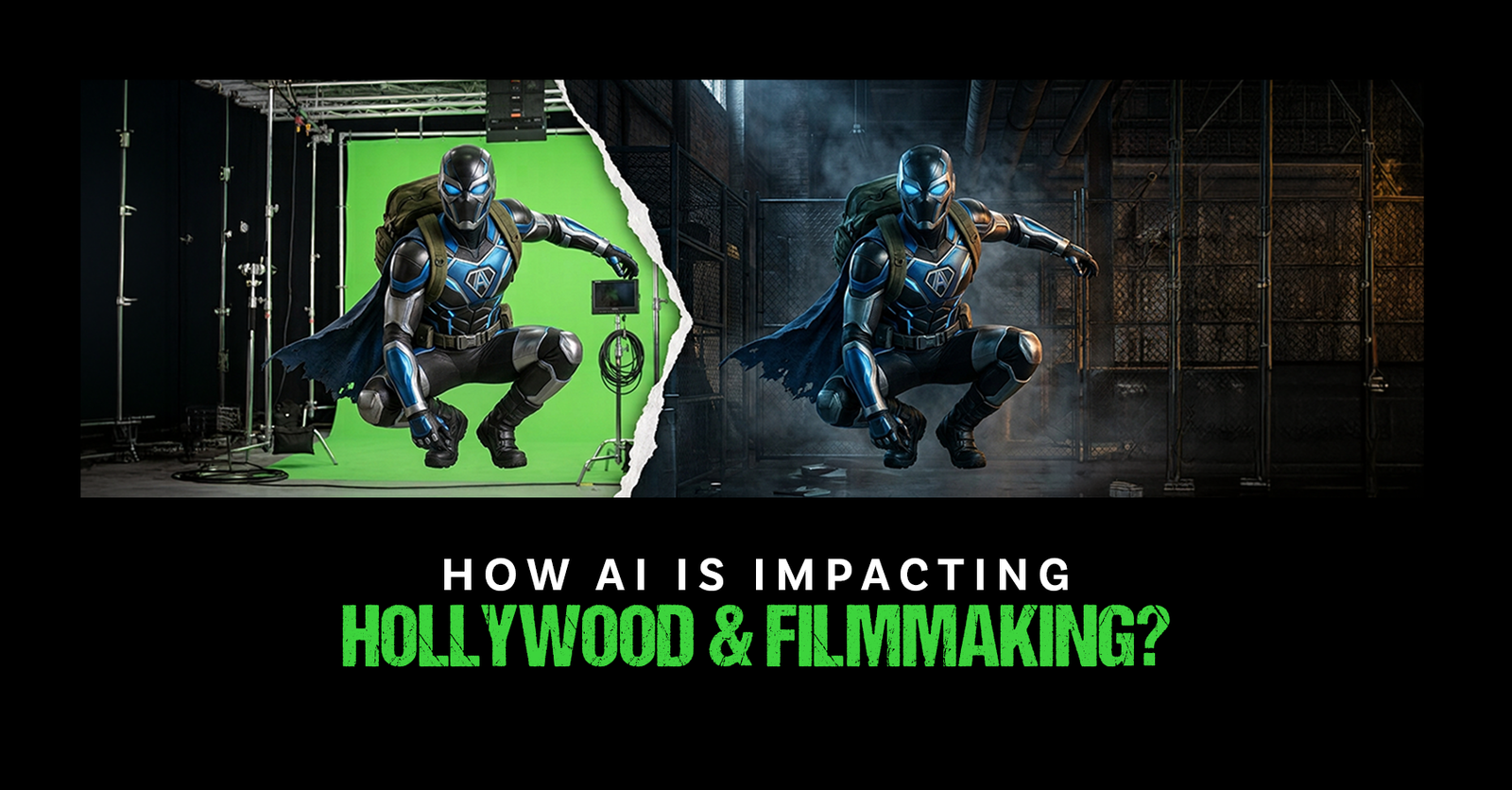
Artificial Intelligence (AI) already helps plan shots, clean footage, generate crowds, alter faces, and localize dialogue. Runway’s 2025 AI Film Festival received around 6,000 submissions, compared with roughly 300 in its first year.
The debate became sharper when Tilly Norwood, a synthetic character promoted like working talent, secured a feature-film lead. AI in Hollywood is therefore no longer only about technology. It is about authorship, consent, compensation, jobs, and whether audiences connect with synthetic performance.
How Is AI Used In Hollywood?
AI in Hollywood appears across the filmmaking pipeline rather than as one system making an entire movie.
-
Development And Pre-Production
Tools can summarize scripts, identify locations and characters, create breakdowns, produce reference art, and build early storyboards.
-
Production And Visual Effects
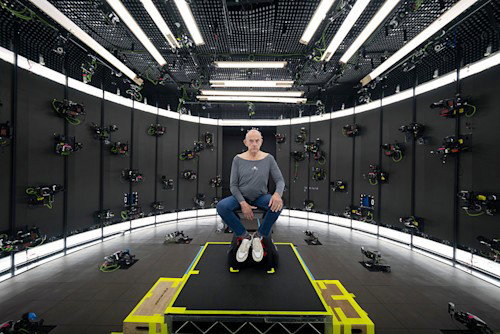
Machine learning assists with tracking, rotoscoping, facial modification, crowd generation, background replacement, and cleanup. Netflix’s Eyeline combines artists, virtual production, and AI-enabled tools instead of presenting AI as an artist substitute.
-
Post-Production And Localization
AI supports noise removal, transcripts, subtitles, dubbing, lip synchronization, voice matching, and market-specific versions.
-
Marketing And Distribution
Studios can test trailers, adapt campaign assets, and analyze audience signals.
The best applications remove repetitive work or make difficult shots affordable. Lionsgate expanded its Runway partnership in 2026, while Amazon MGM began testing AI production tools designed to increase efficiency without removing filmmakers from creative decisions.
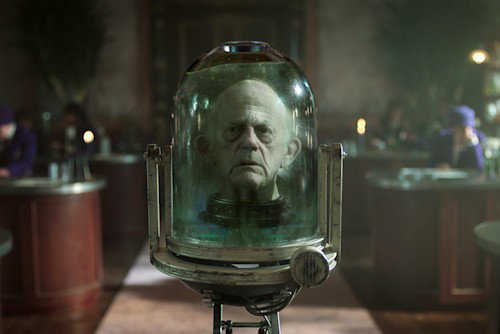
Those tools look new, but Hollywood’s AI story began decades before generative video.
When Was AI First Used In Hollywood?
There is no single uncontested date because computer-generated imagery (CGI) is not automatically AI, and modern generative models differ from older rule-based systems.
A major landmark came in 2001 with The Lord of the Rings: The Fellowship of the Ring. Weta used Massive software to create huge digital crowds whose individual agents could react to their surroundings and make limited behavioral decisions. It was an early use of AI-driven digital actors, not text-to-video generation.
Another milestone arrived in 2016 with Sunspring, a short film based on a screenplay generated by a recurrent neural network. The answer to “when was AI first used in Hollywood?” depends on whether the question means intelligent visual effects, machine-written scripts, or today’s generative video.
That history makes Tilly feel both familiar and fundamentally different.
Why AI-Generated Actress Tilly Norwood Sparks Debate In Hollywood?
Tilly Norwood was introduced in 2025 by Xicoia, the AI talent studio created by Particle6 founder Eline Van der Velden. She was promoted through social media, screen appearances, and talk of agency representation, borrowing the language of human celebrity.
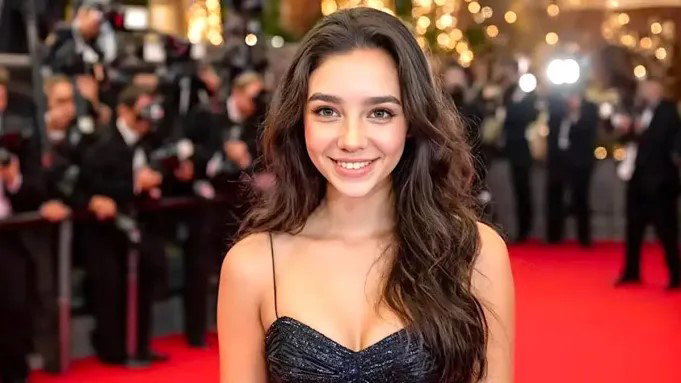
In July 2026, Particle6 announced that Norwood would lead Misaligned, an AI-focused comedy-drama. The AI actress in Hollywood had moved from publicity experiment to feature-film lead.
Calling her the first AI actress in Hollywood is misleading. Virtual performers, digital humans, and AI-generated characters existed earlier. Norwood is notable because she is being marketed through the business machinery used for human talent.
SAG-AFTRA said Tilly is not an actor but a computer-generated character trained on professional performers’ work without permission or compensation. Van der Velden has defended her as a creative work rather than a replacement. Because Particle6 has not publicly identified the complete training dataset, critics cannot independently assess which performance influenced the output.
The controversy therefore reaches far beyond one synthetic performer.
Why The AI Actress In Hollywood Debate Is Bigger Than Tilly?
The Writers Guild of America says generative AI is not a writer and cannot reduce a human writer’s credit or rights. Its 2026 agreement preserved those rules and added notice requirements when companies license covered work for commercial AI training.
SAG-AFTRA contracts require consent and compensation for many digital-replica uses, and the union’s 2026 agreement added further restrictions on synthetic replacements. The US Copyright Office also concluded that new federal protection is urgently needed for unauthorized digital replicas.
Employment concerns are real, although projections are not confirmed losses. A 2024 CVL Economics study estimated that 203,800 US entertainment jobs could be disrupted by generative AI by 2026. “Disrupted” includes changed tasks and fewer opportunities, not only eliminated jobs. Assistants, background actors, dubbing performers, and routine post-production roles may face the earliest pressure.
What AI In Hollywood Can Improve And Where It Still Fails?
AI can lower barriers for independent filmmakers, shorten iteration cycles, improve accessibility, and make expensive shots achievable. It can also help films reach more markets through faster subtitles and dubbing.
Current systems still struggle with character continuity, precise direction, believable physics, emotional subtlety, and long-form consistency. Outputs may also reproduce copyrighted material, biased patterns, or unauthorized likenesses from training data.
Hollywood’s awards rules reflect this middle position. For the 99th Oscars, the Academy said generative AI does not automatically help or harm eligibility, but human authorship remains central. Acting contenders must be demonstrably performed by consenting humans, while screenplay categories require human-authored work. As Academy president Lynette Howell Taylor said, “Humans have to be at the center of the creative process.”
The likely future is not human filmmaking or AI filmmaking. It is human-led filmmaking with clearer rules for where automation belongs.
Conclusion
Hollywood’s Jurassic Park problem is not that AI exists. It is that capability often arrives before governance.
Used with consent, traceable training data, fair compensation, and human direction, AI can reduce drudgery and widen creative possibilities. Used to imitate unlicensed work or avoid paying people, it will invite lawsuits, labor conflict, and audience distrust.
Tilly Norwood is not the future by herself. She is a stress test for rules Hollywood has not finished writing. The decisive questions are who controls the model, whose work shaped it, who receives credit, and whether viewers feel anything when the performer is synthetic.
Hollywood survived sound, color, CGI, and streaming. AI will also enter the toolkit, but the credits should still show which humans created the magic.
Frequently Asked Questions
Is Tilly Norwood The First AI Actress In Hollywood?
No. Digital actors and AI-generated characters predate Tilly. Her significance comes from being marketed like human talent and receiving the lead role in a film.
Can An AI-Written Movie Win An Oscar?
A film using AI tools is not automatically disqualified. However, screenplay contenders for the 99th Oscars must be human-authored, and acting performances must come from consenting human performers.
Will AI Replace Hollywood Actors And Filmmakers?
AI is more likely to replace or reshape specific tasks before complete professions. Repetitive work faces pressure, while directing, performance, taste, accountability, and audience trust still depend heavily on people.
Tue, Aug 11, 2026

Enjoyed what you read? Great news – there’s a lot more to explore!
Dive into our content repository of the latest tech news, a diverse range of articles spanning introductory guides, product reviews, trends and more, along with engaging interviews, up-to-date AI blogs and hilarious tech memes!
Also explore our collection of branded insights via informative white papers, enlightening case studies, in-depth reports, educational videos and exciting events and webinars from leading global brands.
Head to the TechDogs homepage to Know Your World of technology today!
Disclaimer - Reference to any specific product, software or entity does not constitute an endorsement or recommendation by TechDogs nor should any data or content published be relied upon. The views expressed by TechDogs' members and guests are their own and their appearance on our site does not imply an endorsement of them or any entity they represent. Views and opinions expressed by TechDogs' Authors are those of the Authors and do not necessarily reflect the view of TechDogs or any of its officials. While we aim to provide valuable and helpful information, some content on TechDogs' site may not have been thoroughly reviewed for every detail or aspect. We encourage users to verify any information independently where necessary.
Loading comments...