
Customer Service
Here's How Chatbots Are Changing The Customer Service Experience
Share
Overview
It’s 9:32 PM.
You ordered headphones during the Great Amazon Prime Day Sale—a deal too good to pass up. They were supposed to arrive today. You even got that reassuring “Out for Delivery” notification this afternoon, but now it’s late, the doorbell never rang, and your package is nowhere to be found.
Panic mode activated.
You open the app and hit “Need Help?”
There's no hold music or “Please wait while we connect you with a human representative.”
Instead, a chatbot appears. It already knows your order number, checks the last scanned location, confirms your delivery address, and—without skipping a beat—offers you a partial refund for the delayed delivery. All within 60 seconds.
You sit back and think: that was smoother than 90% of my human conversations with customer support.

Well, folks, this isn’t customer support from the future, it’s happening right now—powered by AI chatbots.
If you're already used to this process, you'll know there's no way you get stuck in a customer service time warp. Those days of waiting on hold, and repeating your issue to multiple people is now a thing of the past.
Although chatbots are changing how retail and ecommerce businesses interact with customers, it's about time every business started using them.

You see, chatbots are becoming increasingly popular, but what makes them so special, and how are they changing the customer service game specifically?
That's what this article is about. We'll talk about what chatbots are, how they're making customer service better, some real-life examples, the challenges, and what the future holds.
Ready to dive in? Keep reading!
What Is A Chatbot?
Chatbots are software applications designed to mimic human conversations by typing or talking like us. They simulate human conversation using text or voice, are powered by AI, and are often designed to help users by answering questions, solving problems, or guiding them through tasks. Talk about instant and automated!
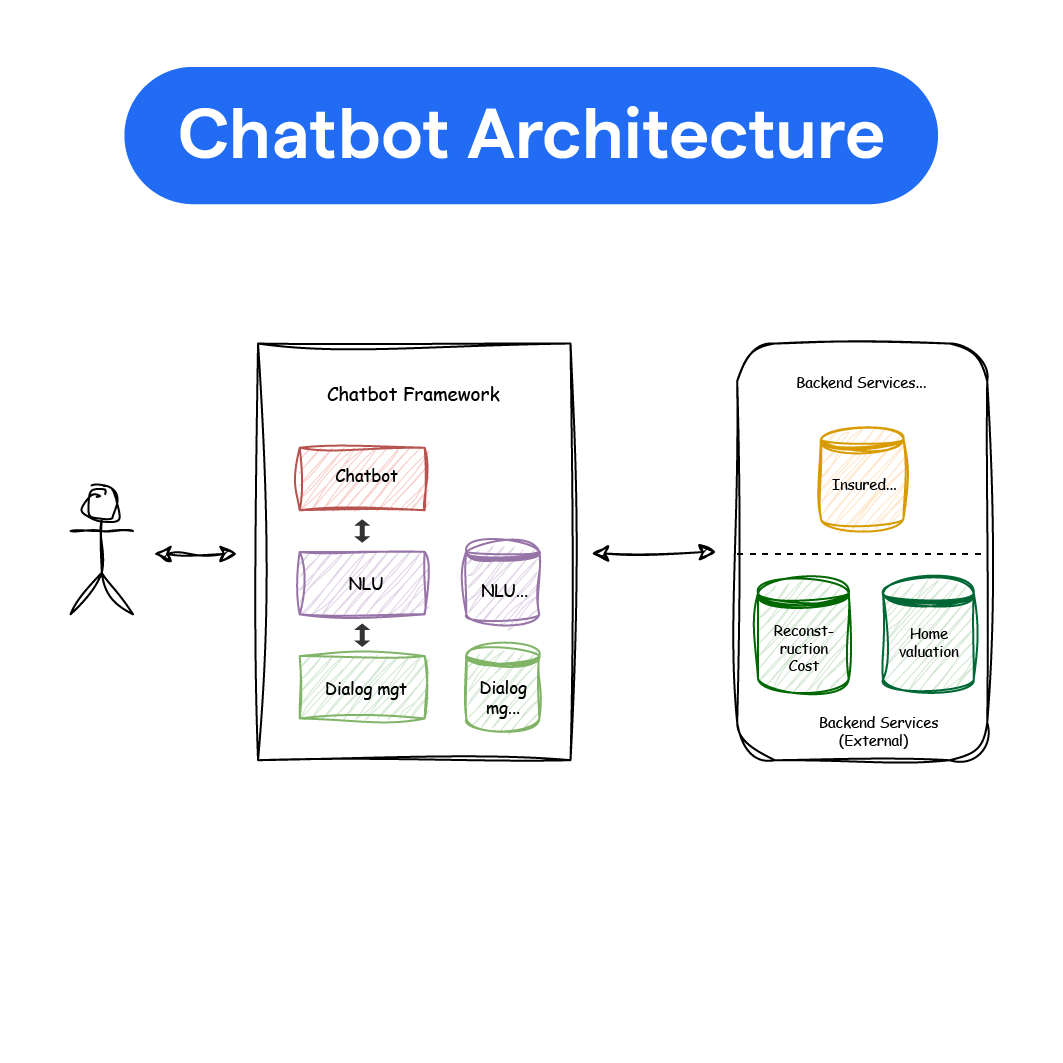
Remember Clippy from Microsoft Office? Chatbots are like Clippy, but way smarter and less annoying!
They are super common now as they can automate a bunch of tasks. Need an answer to a quick question? A chatbot can handle it. Want to order something online? A chatbot can walk you through the process. Need help with your Amazon order? They can help with that, too.
Gartner says that by 2025, 80% of customer service teams will use Generative AI (GenAI) to make agents more productive and improve the customer experience. To put it another way, your next issue might be taken care of faster by an AI chatbot than by a human agent "looking into it."
Now this is how it works, simply speaking...
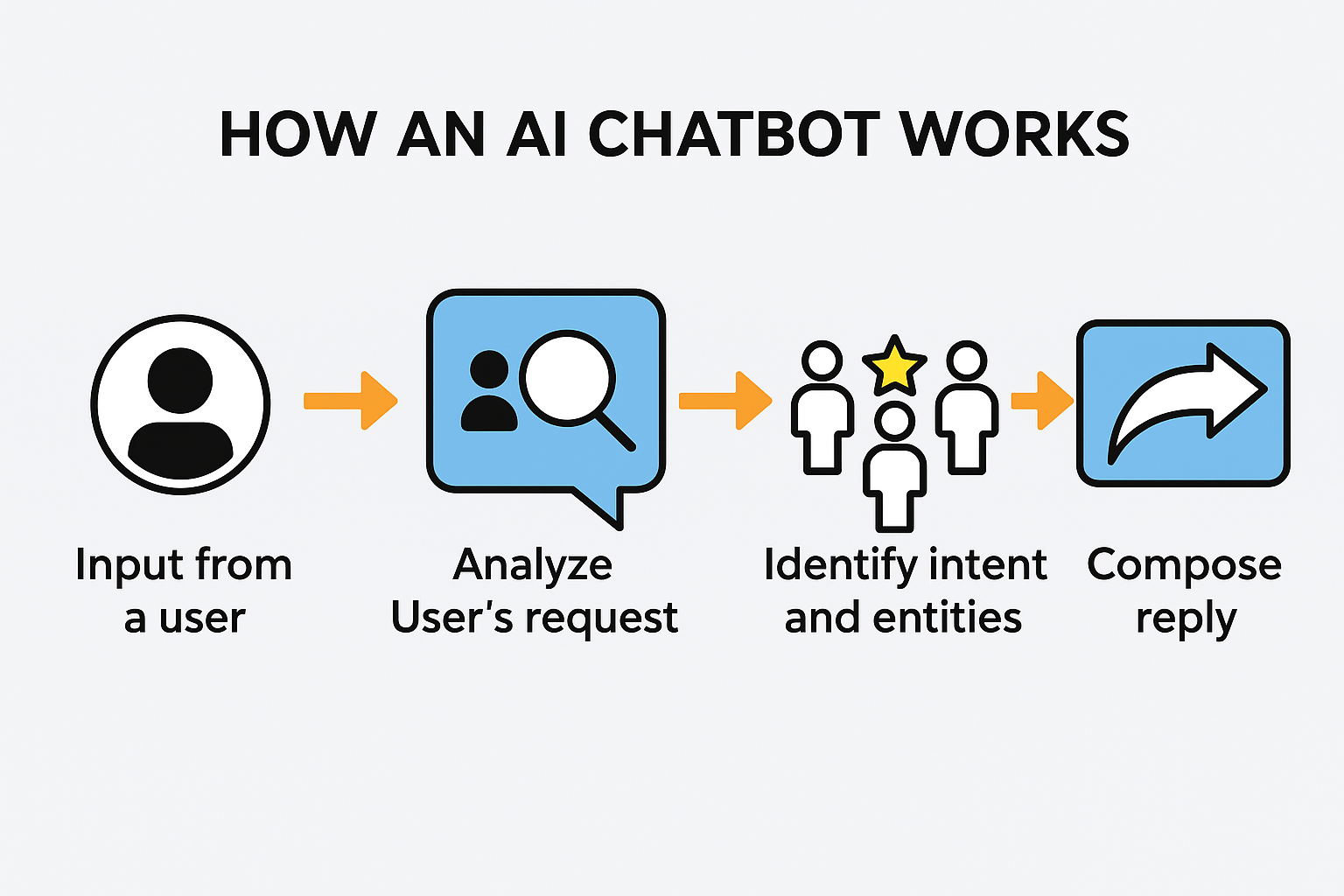
Chatbots use more than one method to do their job. There are easy ones that use keyword recognition and more complex ones that use AI like natural language processing (NLP) to understand what you say. The more advanced ones can even learn from past conversations and get better over time.
Think of it like this: the simplest chatbots are like those old-school choose-your-own-adventure books. They follow a script. The AI-powered ones? They're more like improvisational actors, able to respond to almost anything you throw at them.
Which leads us to the next question...
How Are Chatbots Enhancing Customer Service Experience?
So, how are chatbots actually making things better for customers? Turns out, in a bunch of ways!
Let's get into the specifics.
1. 24/7 Availability
One of the biggest chatbot benefits is that they offer round-the-clock assistance. Customers don't have to wait for business hours to get answers. Need help at 3 AM? No problem! A chatbot is ready to assist. In fact, Master Of Code conducted a study that found the use of chatbots for customer service saving businesses up to 30% on costs.
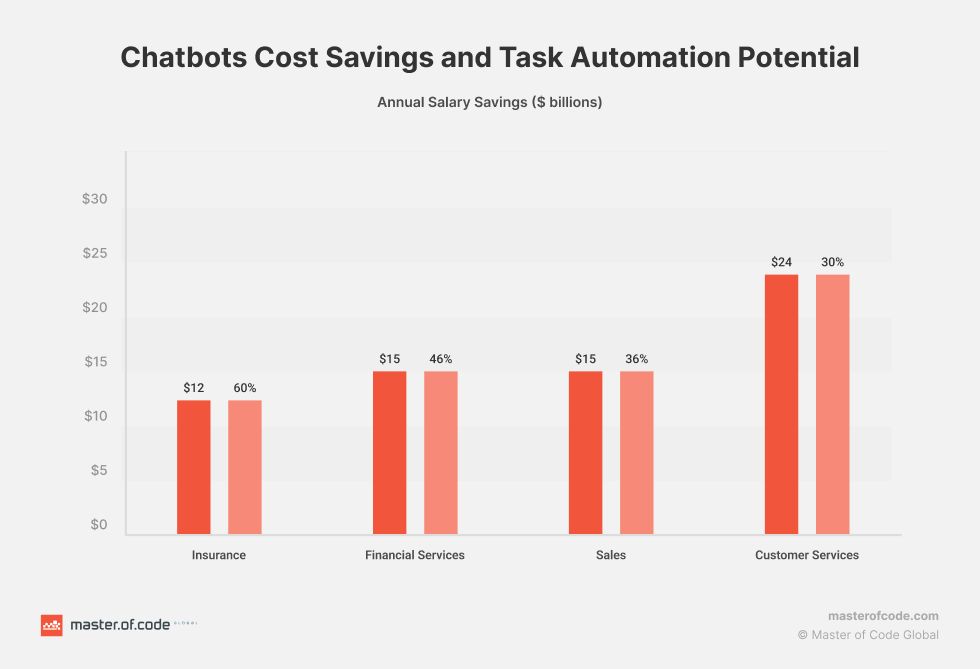
They don't need rest, breaks, or time off and are always available to help whenever needed. This constant access makes the whole experience for customers much better.
2. Personalization
Also, chatbots can offer personalized customer service by looking at user data to glean insights. For example, if you always order the same brand of coffee on a website, the chatbot can suggest you "add to cart" each time without any prompting. This level of personalization makes customers feel valued and understood. Besides that, it can also lead to more sales and customer trust. Feeling unique is something everyone loves!
3. Efficiency
Chatbots are efficient at reducing response times and handling multiple queries at the same time. No more waiting on hold for ages!
A chatbot can answer your question in seconds, automating customer service interactions with a recent study from Juniper Research saying that, by 2025, chatbots will have saved businesses up to 2.5 billion hours of customer care time.
That being said, chatbots are not meant to completely replace talking to real people. These machines are made to do simple jobs and give quick answers. When a customer has a complicated problem, the chatbot can easily connect them to a real person, ensuring that customers always get the best help possible.
With all of these benefits, it's clear that chatbots have changed customer service, but what are some examples of chatbots in action?
What Are Some Examples Of BusinessChatbots?
So, where is the chatbot revolution really happening? It looks like a lot of industries are already on board. Allow us to show you some case studies:
1. KLM Royal Dutch Airlines–Your Friendly Flight Buddy

KLM built a chatbot called BlueBot to help passengers deal with the usual travel chaos. It lives on Messenger and Google Assistant, and it can check you in, share your boarding pass, or update you on delays. It even speaks multiple languages. No need to wait on hold or refresh five different screens—BlueBot just quietly takes care of things while you figure out what to pack. It's like having a chill airport assistant that’s always awake.
2. Starbucks–Your Coffee, Your Way (Thanks to AI)
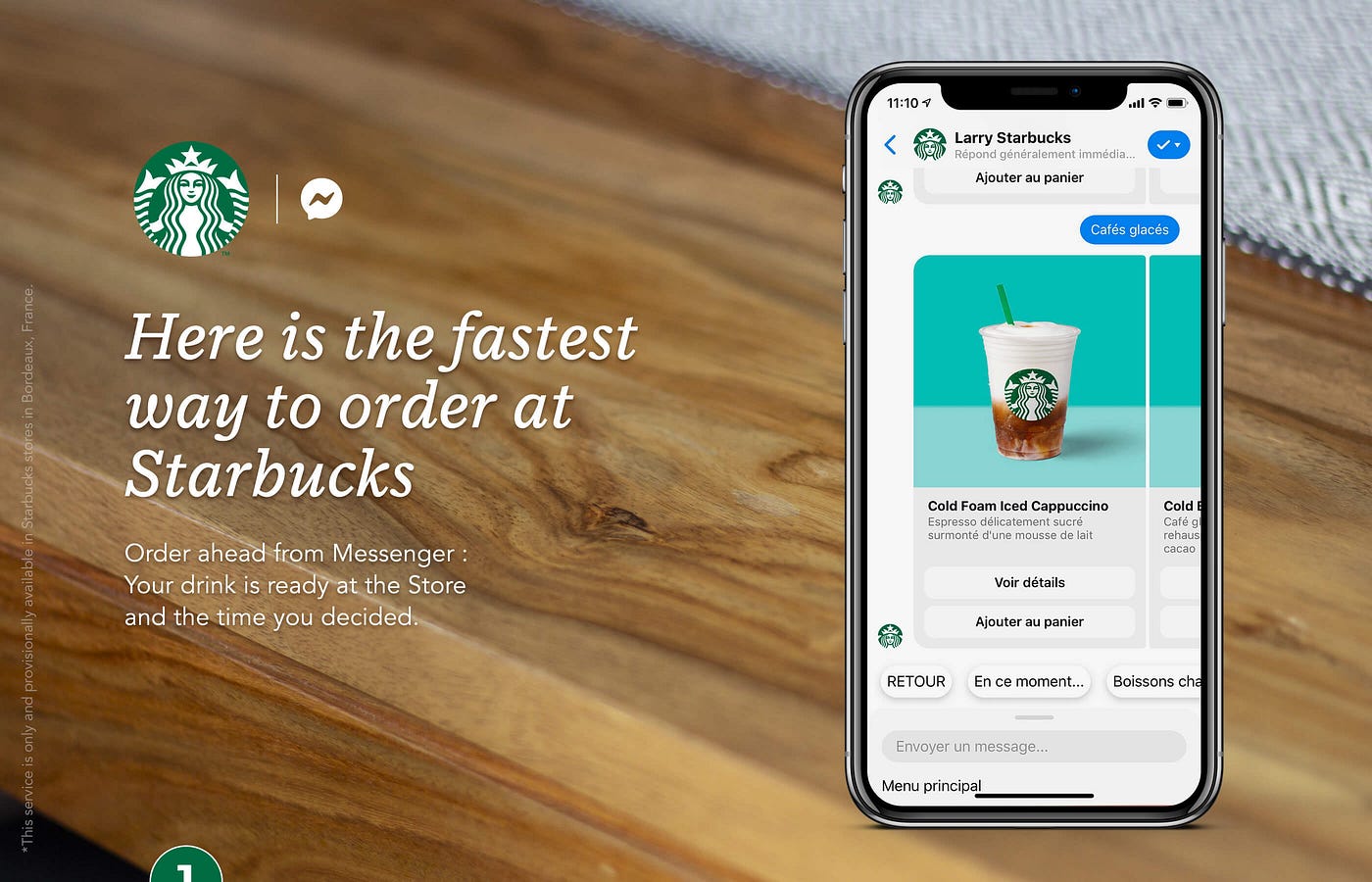
Starbucks introduced an AI system called Deep Brew that knows how you like your coffee. Over time, it learns your favorite orders, when you usually order them, and then suggests drinks or deals that actually make sense. It also helps stores manage everything from staffing to inventory, so things run smoother behind the counter too. You just open the app, and it feels like the barista already knows what you’re in the mood for—even if you didn’t.
3. Domino’s Pizza–Meet Dom, Your Pizza Pa
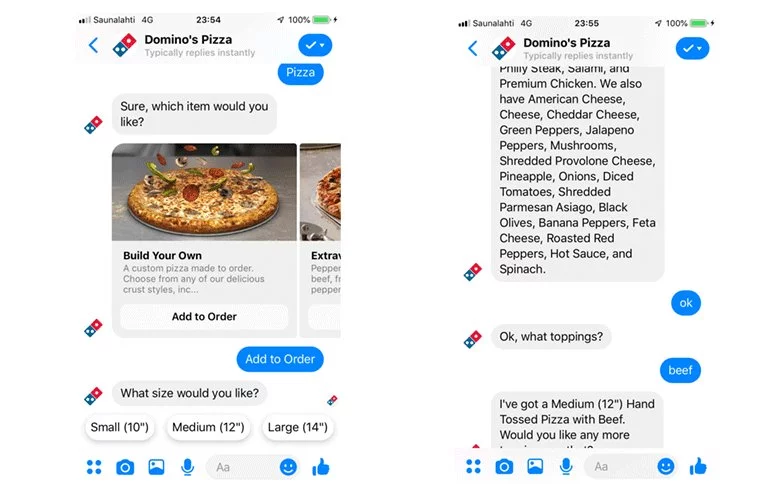
Domino’s created “Dom,” a chatbot that takes your pizza order without the back-and-forth. You type in what you want, it gets the address, confirms everything, and lets you track the delivery in real time. It even reminds you about deals if there’s a way to save a little. No matter if you order through the website or Messenger, Dom makes sure that your hot pizza arrives without any problems.
These cases show how useful chatbots can be in changing how companies interact with customers in areas such as travel, fashion, and beauty. A Salesforce study shows that 77% of customers think chatbots will change how they expect companies to work in five years!
Chatbots aren't just for big companies, though. Small businesses can use them to automate customer service, answer FAQs, and even generate leads. It's all about finding the right fit for your budget and business needs!
So, will chatbots take over the world? This is likely not the case, but they're here to stay and will only get better and more useful over time.
They're great, but they also have some problems. So, let's look at some of those problems when using chatbots for customer service.
Challenges And Considerations Of Chatbots In Customer Service
Even though chatbots are cool, the road to customer service perfection isn't completely smooth. These are some of the key problems we need to solve:
1. Complex Query Handling
Can chatbots handle the tough stuff? What happens when a customer throws a curveball question outside the FAQ playbook? Early chatbots were like those old-school IVR phone systems, "Press 1 for English, press 2 for Spanish...", super rigid and frustrating. If you didn't follow the plan, you were out of luck. The AI-based chatbots of today are better, but they're still not perfect. Gartner did a study that said, "Poorly designed bots or those without human handover options can frustrate customers."
2. Data Privacy
Securing customer data is critical as chatbots collect a ton of user data. So, are companies doing enough to protect user confidentiality and comply with regulations like GDPR or CCPA? Well, it's a bit like trusting a stranger with your diary and wanting to be sure they won't spill your secrets. Most AI chatbot providers are compliant, as maintaining user confidentiality is the key to building trust.
3. User Trust
It can be hard to trust things that chatbots say as most consumers think they are cold or untrustworthy. So, what should you say to people to make them believe that a bot really cares about them? One way is to always make it easy to get in touch with a person. Assuring people that real people are available to help while they talk to a bot helps build trust and reduces doubt.
Keep in mind that chatbots are only tools and not replacements for real people. They should be made to help and improve human agents, not take their place totally.
So, chatbots aren't a geniw, but have limitations despite constant improvements. So, what does the future hold? Let's talk about that!
The Future Of Chatbots In Customer Service
Chatbots are changing how businesses interact with customers, but what's next for conversational AI? Let's look at some potential advancements.
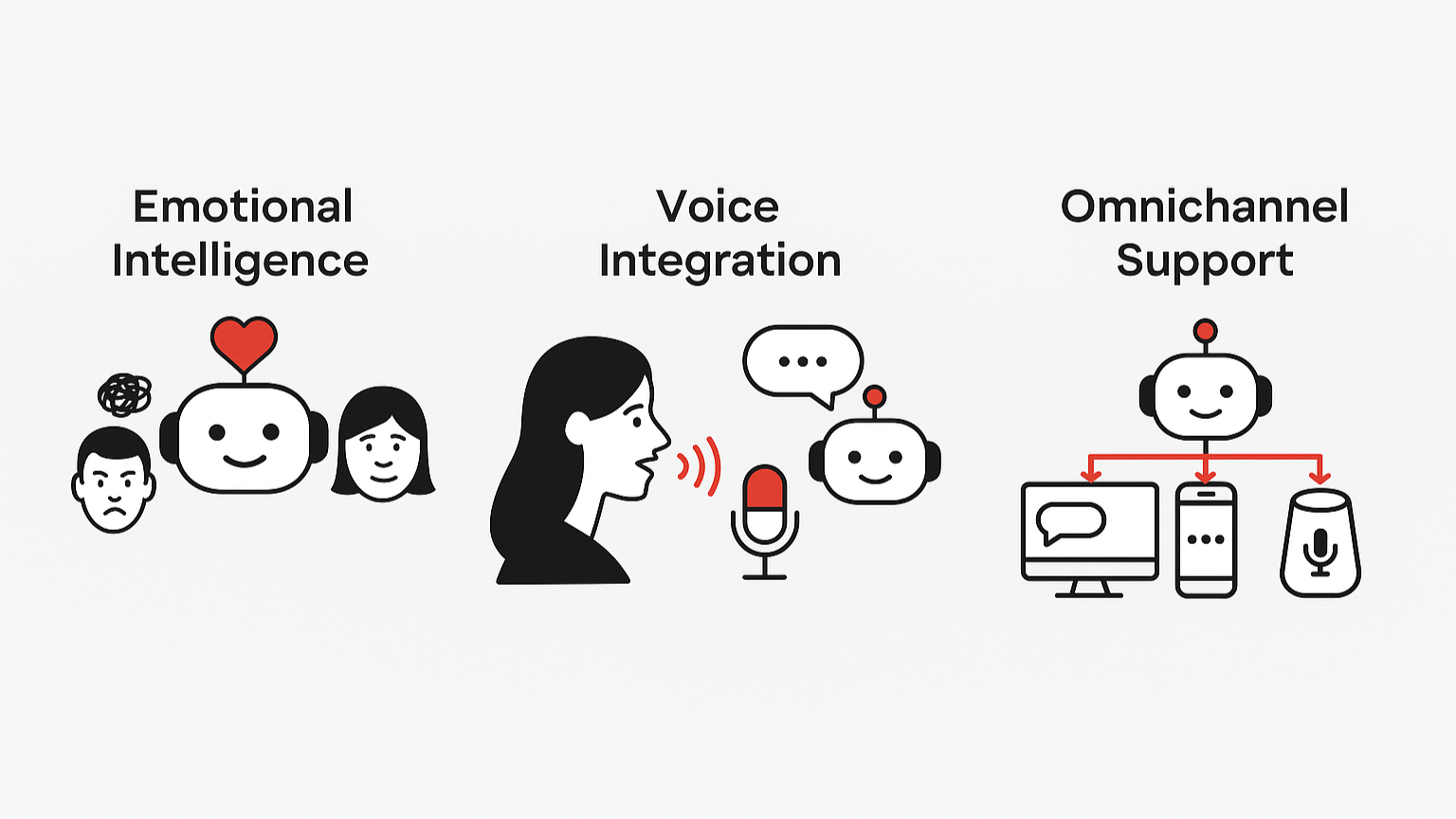
1. Emotional Intelligence
Imagine new-age chatbots that don't just understand what you're saying, but also how you're feeling. That's the promise of emotional intelligence in chatbots. They could detect frustration, excitement, or confusion, and adjust their responses accordingly. This means relationships that are more understanding and useful. A recent report from Gartner says that organizations that implement emotional AI will see a 25% increase in customer satisfaction scores.
2. Voice Integration
Typing is so last decade! In the near future, customer service agents will be chatbots you can talk to just as a real person. Voice integration makes interactions more natural and accessible, especially for users who prefer speaking over typing.
3. Omnichannel Support
Imagine you could talk to a chatbot on a business's website, carry it on through their mobile app, and end it over a call without having to say the same thing twice. That's what omnichannel support is meant to do. It's about making sure that the experience is the same on all devices. Forrester says that companies that focus on their customers, even those with good online service, grow their sales 41% faster than their peers.
In the end, what does this all mean for customer service? Chatbots make things faster, more personalized, and easier for both customers and companies. Everyone wins, and AI chatbots are still changing for good.
Wrapping It Up!
In customer service, chatbots are changing things up like a kid with a juice box. They won't take over the world or replace your favorite customer service rep, but they do make things easier for everyone.
With their ability to answer questions faster than you can say "customer satisfaction," chatbots are helping businesses keep up with the customer demands in our fast-paced world. Chatbots might not understand sarcasm or our love for pineapple on pizza, but they can handle customer service like a champ!
These digital helpers will only get smarter and more useful over time. So, who knows? They might become our go-to friend to talk to before making any purchase!
Frequently Asked Questions
How Are Chatbots Changing Customer Service?
Chatbots are revolutionizing customer service by offering instant, 24/7 support, handling high volumes of inquiries simultaneously, and providing consistent responses. Advanced AI-powered chatbots can understand context, personalize interactions, and escalate complex issues to human agents when necessary, leading to increased efficiency and customer satisfaction.
How Do Chatbots Affect Customer Experience?
Chatbots enhance customer experience by delivering prompt, personalized assistance, reducing wait times, and ensuring consistent service across channels. Their ability to learn from interactions allows them to improve over time, meeting customer expectations for quick and efficient support.
How Is AI Changing the Customer Experience?
AI is transforming customer experience by enabling hyper-personalization, predictive support, and emotion-aware interactions. By analyzing real-time data, AI anticipates customer needs, automates solutions, and provides seamless, omnichannel engagement, thereby enhancing satisfaction and setting new standards for brand interactions.
Thu, May 8, 2025

Enjoyed what you read? Great news – there’s a lot more to explore!
Dive into our content repository of the latest tech news, a diverse range of articles spanning introductory guides, product reviews, trends and more, along with engaging interviews, up-to-date AI blogs and hilarious tech memes!
Also explore our collection of branded insights via informative white papers, enlightening case studies, in-depth reports, educational videos and exciting events and webinars from leading global brands.
Head to the TechDogs homepage to Know Your World of technology today!
Disclaimer - Reference to any specific product, software or entity does not constitute an endorsement or recommendation by TechDogs nor should any data or content published be relied upon. The views expressed by TechDogs' members and guests are their own and their appearance on our site does not imply an endorsement of them or any entity they represent. Views and opinions expressed by TechDogs' Authors are those of the Authors and do not necessarily reflect the view of TechDogs or any of its officials. While we aim to provide valuable and helpful information, some content on TechDogs' site may not have been thoroughly reviewed for every detail or aspect. We encourage users to verify any information independently where necessary.
AI-Crafted, Human-Reviewed and Refined - The content above has been automatically generated by an AI language model and is intended for informational purposes only. While in-house experts research, fact-check, edit and proofread every piece, the accuracy, completeness, and timeliness of the information or inclusion of the latest developments or expert opinions isn't guaranteed. We recommend seeking qualified expertise or conducting further research to validate and supplement the information provided.
Loading comments...