

Audio and Visual Technology
CDs Are Making An Unexpected Comeback The Physical Media Boom Explained
Share
TL;DR
-
RIAA says US CD revenue jumped 58.6% to $171.1 million in the first half of 2026.
-
Luminate measured 16.3 million US CD sales, up 16%, with growth still at 6.7% without K-pop.
-
Roughly half of Gen Z and Millennial CD buyers do not own a CD player.
-
Collectible editions, lower prices, retailer exclusives, and artist support are giving CDs value.
-
Streaming still dominates, so the physical media boom is growing alongside digital consumption rather than defeating it.
Introduction
If 2026 technology were a reboot season, compact discs would be the side character nobody expected to return, then somehow steal the episode.
Streaming still rules music, but the shiny plastic disc that spent years being treated like obsolete clutter is suddenly moving serious numbers again.
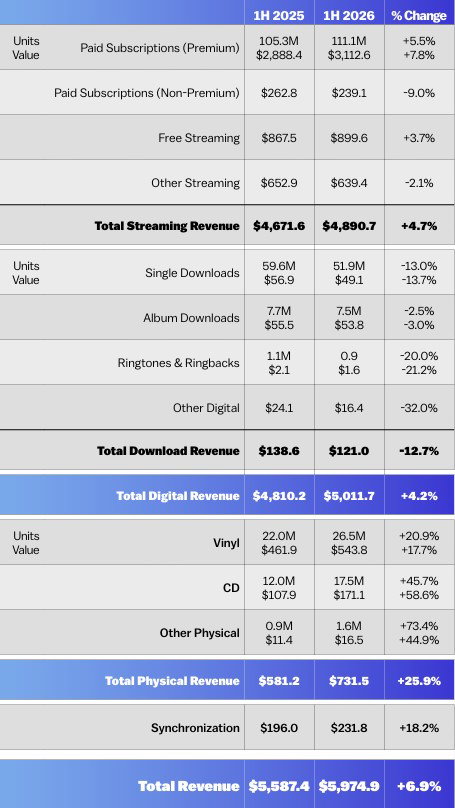
The surprise is not anecdotal. The RIAA Mid-Year 2026 report says US CD revenue reached $171.1 million in the first half of 2026, up 58.6% year over year, while units rose 45.7% to 17.5 million. Luminate separately found retail CD sales up 16% to 16.3 million units.
So, are CDs making a comeback? Yes, but not because streaming is collapsing. The compact disc comeback is being powered by collectors, superfans, younger buyers, K-pop, and a wider appetite for physical ownership.
CD Sales Resurgence 2026: Why US CD Revenue Surged
The headline number needs context.
According to the RIAA, total US recorded music revenue rose 6.9% year over year to nearly $6 billion in the first half of 2026. Physical music revenue climbed 25.9% to $731.5 million, with CD revenue growing faster in percentage terms than vinyl revenue.
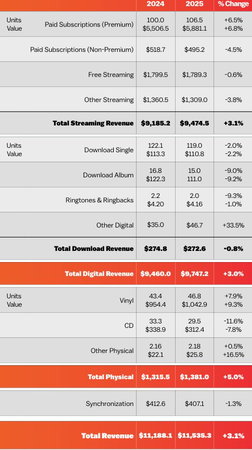
That represents a sharp reversal from 2025. The RIAA's 2025 year-end report showed CD revenue falling 7.8% to $312.4 million while shipments declined 11.6% to 29.5 million units.
In other words, the CD sales resurgence 2026 story is not simply another year of uninterrupted growth. CDs stumbled in 2025 before snapping back this year.
There is another detail worth clearing up. You may see two different 2026 sales numbers:
-
RIAA reports 17.5 million CD units, based on industry shipments and wholesale value net of returns.
-
Luminate reports 16.3 million units, using consumer sales and consumption data.
They are different measurements rather than conflicting versions of the same statistic. That distinction matters when assessing how large this comeback really is.
Why CD Sales Are Surging Again
The Luminate 2026 Midyear Report offers some of the clearest clues. Apparently, CDs have discovered that playing music is no longer their only job.
-
Collecting has become a major use case. Roughly half of Gen Z and Millennial CD buyers do not own a CD player, according to Luminate data reported by The Verge. For these buyers, a CD can function as memorabilia rather than their main listening format.
-
K-pop is a powerful accelerator. BTS' ARIRANG and the wider K-pop release calendar helped propel physical purchases. Yet this is not solely a K-pop effect. Luminate calculated that US CD sales would still have increased 6.7% without K-pop.
-
Price accessibility works in the CD's favor. Luminate specifically identified affordability and collection building as factors behind the increase, making CDs a lower-barrier physical purchase for fans.
-
Superfans are spending differently. Luminate found that 22% of US music listeners qualify as purchase-based superfans and Gen Z and Millennials represent 63% of engagement-based superfans.
-
Retail is responding. Mass-market sellers captured nearly 30% of the physical sales market in H1 2026, helped by K-pop fandom and collectible releases.
So, the CD is no longer fighting Spotify track for track. It is competing for shelf space, fandom value, and the satisfaction of owning something.
The Physical Media Boom Is Bigger Than CDs
Here is where the story gets interesting: physical music is rising without digital music falling.
Streaming generated $4.89 billion during the first half of 2026, up 4.7%, and still accounted for roughly 82% of US recorded music revenue. Vinyl revenue also increased 17.7% to $543.8 million. Meanwhile, Luminate found combined CD, vinyl, and cassette album sales up 7.8%.
That makes the physical media boom part of a wider retro technology market rather than an anti-streaming revolt. Younger users have also been rediscovering digital cameras, wired devices, basic phones, and other single-purpose hardware. The attraction can be intentionality, aesthetics, collectability, or simply having a device that does one thing without demanding your attention every few seconds.
TechDogs has previously looked at a new optical storage breakthrough that could make discs relevant again and the changing role of hardware in its 2026 consumer technology guide.
The lesson is useful beyond music: an older technology does not need to defeat its successor to find a profitable second life. Sometimes it only needs a new purpose.
Why Are CDs Making An Unexpected Comeback Instead Of Vinyl Taking Everything?
Vinyl remains the physical heavyweight.
RIAA recorded 26.5 million vinyl units and $543.8 million in revenue during H1 2026, comfortably ahead of CDs. Yet CDs are showing faster percentage growth and occupy a different part of the collecting market.
Their smaller format and price accessibility work particularly well for alternate covers, photobooks, photo cards, box sets, and retailer exclusives. That makes CDs unusually compatible with modern fan merchandising.
It also explains the strange sight of people buying albums they will continue streaming on their phones.
Luminate's Jaime Marconette, VP of Music Insights & Industry Relations, described the wider change as “culture-driven growth and community engagement.”
That phrase gets to the heart of the comeback. The disc itself is becoming part of the relationship between artist and fan.
Will The Compact Disc Comeback Last?
There are good reasons not to declare the 1990s restored just yet.
First-half results can be magnified by blockbuster releases, while 2025 demonstrated that CD demand can decline quickly. Vinyl still generates substantially more physical-format revenue and streaming remains in another league altogether.
However, one figure makes the trend harder to dismiss: Luminate still found CD sales up 6.7% after removing K-pop. That does not prove CDs are entering decades of uninterrupted growth, but it suggests the market runs deeper than one BTS album or one collector community.
The next test is consistency. If labels keep producing collectible editions, retailers continue dedicating space to them, and younger fans keep treating music ownership as part of fandom, CDs could establish a durable secondary market.
That is far more realistic than expecting them to reclaim their old position as music's default format.
Conclusion
So, are CDs making a comeback? Yes, with an important asterisk.
Nobody appears ready to cancel Spotify and rebuild a six-disc changer tower in the living room. What has changed is what people believe a CD is for.
Streaming solved access. CDs now offer ownership, artwork, collectability, identity, and a physical connection to an artist. That makes today's physical media boom less of a rebellion against digital music and more of an economy being built around it.
The funniest part of this technology reboot is that CDs did not have to become futuristic to matter again. A new generation simply gave an old disc a new job.
Frequently Asked Questions
Is The CD Comeback Limited To The United States?
No. The trend extends beyond the US. According to IFPI’s Global Music Report 2026, global CD revenues increased 3.7% in 2025, while overall physical music revenue grew 8%. The 2026 US surge is unusually strong, but renewed demand for physical music is visible internationally too.
Do CDs Actually Sound Better Than Music Streaming?
Not automatically. Standard CD-quality audio is 16-bit/44.1 kHz, which provides lossless playback without depending on an internet connection. However, services such as Apple Music now offer lossless audio up to 24-bit/192 kHz, technically exceeding CD resolution on supported equipment. Sound quality alone, therefore, does not explain the current CD revival.
How Long Can A Music CD Last?
A well-made CD can potentially remain readable for decades when stored and handled correctly. Library of Congress research found that around 70% of the CD-ROM samples it tested had estimated lifespans exceeding 100 years, although manufacturing quality, heat, humidity, scratches, and handling can significantly affect durability.
Tue, Sep 8, 2026

Enjoyed what you've read so far? Great news - there's more to explore!
Stay up to date with the latest news, a vast collection of tech articles including introductory guides, product reviews, trends and more, thought-provoking interviews, hottest AI blogs and entertaining tech memes.
Plus, get access to branded insights such as informative white papers, intriguing case studies, in-depth reports, enlightening videos and exciting events and webinars from industry-leading global brands.
Dive into TechDogs' treasure trove today and Know Your World of technology!
Disclaimer - Reference to any specific product, software or entity does not constitute an endorsement or recommendation by TechDogs nor should any data or content published be relied upon. The views expressed by TechDogs' members and guests are their own and their appearance on our site does not imply an endorsement of them or any entity they represent. Views and opinions expressed by TechDogs' Authors are those of the Authors and do not necessarily reflect the view of TechDogs or any of its officials. While we aim to provide valuable and helpful information, some content on TechDogs' site may not have been thoroughly reviewed for every detail or aspect. We encourage users to verify any information independently where necessary.
Loading comments...