
Artificial Intelligence
Can AI Really Catch A Fake Review?
Share
TL;DR
-
Fake reviews are a growing problem that can mislead consumers and damage trust.
-
AI analyzes language patterns, review timing, and user behavior to spot suspicious reviews.
-
Machine learning models improve detection by learning from millions of real and fake reviews.
-
Major platforms use AI to flag, filter, and remove fraudulent reviews at scale.
-
AI is effective, but human review is still essential for accurate review evaluation.
Introduction
We have all been there. You are about to buy a product online, maybe book a hotel, or download a new app. Everything looks good until you start reading the reviews. Some sound too perfect, while others might sound way too negative.
All of a sudden, you find a pattern in the reviews. You see, some of the reviews have the same choice of words and sentence structure, and then the doubt emerges. Can we actually trust these reviews?
Online reviews were once seen as honest opinions from real people.
Today, they are also a place where brands, competitors, bots, paid users, and even AI-generated content can influence decisions. This is where detecting AI-generated fake reviews becomes important. Well, can AI really catch a fake review, or are fake reviews becoming too clever to spot?
The answer is not a simple yes or no. Fake review detectors might detect reviews better than humans in many cases, but it is not perfect. To understand why, we need to look at how fake reviews work, how AI identifies them, and why human reviews still matter. Shall we?
What Are Fake Reviews And Why Are They A Growing Concern?
Fake reviews are reviews that do not show a genuine customer experience. They can be written to promote a product, damage a competitor, improve ratings, or manipulate buyers. A fake review can be positive, negative, short, long, emotional, detailed, or even written by AI.
The biggest problem is trust. People rely on reviews because they feel more real than advertising. A five-star rating can push someone to buy. A one-star review can make them leave the page. When fake reviews enter this space, the decision-making process becomes unfair.
For consumers, fake reviews can lead to poor purchases, wasted money, and disappointment. For businesses, they can damage their reputation, reduce customer confidence, and create an unfair playing field. Honest brands may lose visibility while businesses using fake review tactics appear more reliable than they actually are.
As online shopping, food delivery, travel booking, app downloads, and local business searches grow, fake review detection is becoming more important. Reviews are not just comments anymore. They influence search rankings, product recommendations, SEO, brand trust, and customer conversion.
Why Fake Reviews Are Getting Harder To Trust?
Fake reviews are becoming harder to trust because they no longer look obviously fake. Earlier, many fake reviews were easy to spot. They used poor grammar, copied lines, overused praise, or sounded robotic. Now, fake reviews can be written in a natural tone, include personal details, and even mention small flaws to look realistic. Of course, you are in the ChatGPT world!
AI-generated reviews have made this even more complicated. A person can now generate hundreds of different-looking reviews in minutes. These reviews may sound human, use emotional language, and avoid obvious repetition to make it harder for regular users to separate real feedback from manipulated content.
Another reason is review farming. Some sellers pay people to write fake positive reviews or give free products in exchange for high ratings. In other cases, competitors may do negative marketing of the products through fake reviews. There are chances that these reviews may come from real accounts, which makes detection more difficult.
This is why platforms, marketplaces, and review websites are using AI detectors for fake reviews at scale. Human moderators cannot manually check millions of reviews every day. AI can scan patterns, language, user behavior, timing, and review history much faster.
What Are Some Common Types Of Fake Reviews?
There is no universal classification for fake reviews, but these are some frequently observed types:
-
Overly Positive Fake Review
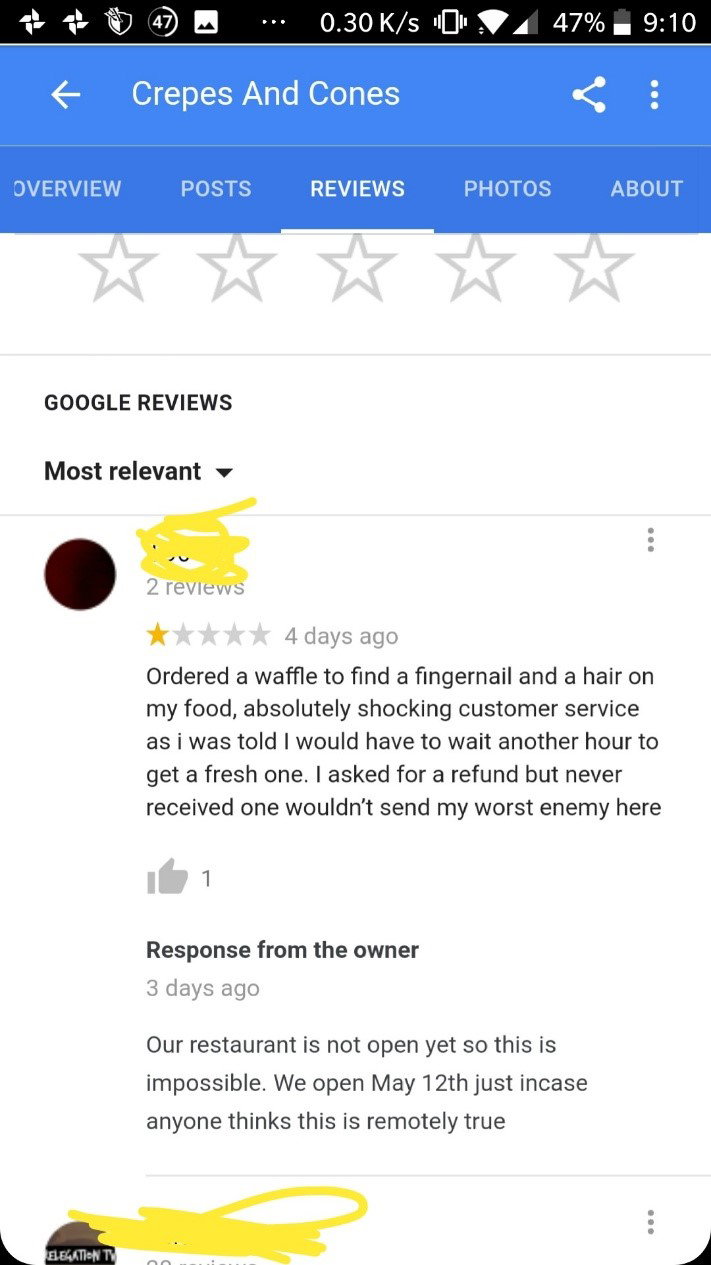
The most common type is the overly positive fake review. These reviews usually praise a product or service without giving useful details. They may say things like “Best product ever” or “Amazing quality,” but do not explain why.
-
Fake Negative Review
This may be posted by competitors, unhappy ex-employees, or users who never actually bought the product. These reviews are designed to reduce trust and lower ratings.
-
Incentivized Reviews
These are written by people who receive money, discounts, free products, or rewards in exchange for positive feedback. Not every incentivized review is fake, but if the reward is hidden and the review is biased, it becomes misleading.
-
Bot-Generated Reviews
These are posted automatically using fake accounts. They may appear in large numbers over a short time. AI-generated fake reviews are also increasing because they can sound more natural than older bot reviews.
In fact, some fake reviews are copied from other websites. Others are written by real people who never used the product. The format may change, but the goal is usually the same. To influence trust and buying decisions.
The problem is not just that fake reviews exist. It is what they do to trust, choices, and businesses.
How Fake Reviews Impact Consumers And Businesses?
Fake reviews affect consumers first. A buyer may choose a low-quality product because it has hundreds of fake five-star reviews. Someone may avoid a good local business because of fake negative reviews. In both cases, the customer is deciding based on false information.
This creates frustration and reduces trust in online platforms. When people feel reviews are unreliable, they may stop depending on them altogether. That hurts the entire review ecosystem.
Businesses are also affected. Honest businesses can lose customers to competitors using fake review strategies. Small businesses may suffer badly from a few fake negative reviews because they do not always have enough real reviews to balance the damage.
Fake reviews can also affect SEO and local search visibility. Search engines and platforms often consider ratings, review volume, freshness, and user engagement when ranking businesses or products. If fake reviews manipulate these signals, users may see less trustworthy results.
For brands, the long-term risk is reputation damage. Once customers believe a company is using fake reviews, rebuilding trust can be difficult. That is why fake review monitoring is now important for businesses, marketplaces, and review platforms.
Can AI Detect Fake Reviews?
Yes, AI can detect fake reviews, but it cannot catch every fake review with complete accuracy. AI fake review detection works best when it can study large amounts of data and identify patterns that humans may miss.
AI can look beyond the words in a review. It can analyze how often a user posts, whether multiple reviews appear at the same time, whether the language sounds unnatural, whether the account has suspicious activity, and whether review behavior matches real customer patterns.
For example, if a new product suddenly gets hundreds of five-star reviews within a few hours, AI may flag that as suspicious. If different accounts use similar phrases, review lengths, or emotional tone, AI may detect coordinated activity. If a reviewer posts only extreme ratings across unrelated products, that can also be a warning sign.
However, AI is not magic. A well-written fake review from a real account can be difficult to detect. A genuine review that sounds emotional or vague may be wrongly flagged. This is why AI is useful, but not perfect.
How Can AI Spot Fake Reviews?
AI identifies fake reviews by analyzing patterns in language, behavior, and timing that are difficult for humans to consistently detect in real-world conditions. In fact, researchers have developed a new system that can detect fake online reviews with over 94% accuracy, according to a report from Digital Trends, as cited by WeRSM.
Here are some key red flags AI typically picks up:
-
Natural language processing (NLP)
NLP helps AI understand review text. It can detect unusual wording, repeated phrases, overly generic praise, exaggerated claims, and unnatural sentence patterns.
-
Sentiment
Fake reviews often sound too positive or too negative without balanced details. A real review usually includes a mix of experience, context, and specific observations. For example, “The headphones were comfortable, but the battery drained faster than expected” sounds more useful than “Perfect product, everyone should buy now.”
-
Review Comparison
AI may also compare reviews across platforms. If the same review text appears on multiple websites under different names, it may be copied or fake. Advanced systems can also detect AI-generated reviews by looking for patterns common in machine-written text.
-
Reviewer behavior
AI can check whether the reviewer has a normal history. Does the account review many unrelated products in a short time? Are all reviews five stars? Does the account only review one brand? Was the account recently created? These patterns can help AI detect fake review activity.
-
Timing
A sudden spike in reviews may suggest manipulation. AI can compare review timing with sales activity, product launches, promotions, and user behavior.
Once AI knows what suspicious reviews look like, the next question is where this technology is actually being used today.

Where Is AI Used To Detect Fake Reviews Today?
AI is already used across many places where reviews influence decisions.
-
E-commerce platforms
Digital platforms use AI to monitor product reviews and detect suspicious rating patterns. Travel booking websites use it to protect hotel, flight, and experience reviews. App stores use review detection systems to identify spam, fake ratings, and coordinated review attacks.
-
Local Business Platforms
Local businesses also rely on fake review detection. Restaurants, salons, clinics, repair services, and local stores depend heavily on ratings. A few fake reviews can change how customers see them. AI helps platforms identify review spam before it damages trust.
-
Brands
Brands these days use review monitoring tools to track suspicious reviews about their products. These tools can help businesses understand whether negative reviews are genuine customer complaints or part of a spam campaign.
-
Search Engines And Marketplaces
Search engines and marketplaces care about fake reviews because they affect the quality. If users are shown products or businesses with manipulated ratings, the platform loses trust. This is why AI review analysis is becoming a part of online reputation management, customer experience, and digital trust.
Well, even with all these use cases, AI is not flawless. Fake reviews are evolving, too, and some still slip through the cracks.
Topics For More Insights:
Where AI Still Gets Fake Reviews Wrong?
AI still struggles with context. A short review like “Loved it” may look fake because it lacks detail, but it could be a genuine customer reaction. A long review with balanced details may look real, but it could be carefully written by someone who never used the product. Let’s see where things get tricky:
-
Sarcasm
A customer may write, “Great, it broke in two days,” which is clearly negative to a human. AI may misunderstand the tone if it only looks at certain positive words.
-
Language And Cultural Nuance
AI can also struggle with cultural language, slang, regional expressions, and multilingual reviews. A genuine review written in simple English by a non-native speaker might be wrongly flagged. Similarly, local phrases or informal writing can confuse the system.
-
Bias In Training Data
If an AI model is trained mostly on reviews from one region, industry, or language style, it may not perform well everywhere. Fake review detection for electronics may not work the same way for restaurants, hotels, healthcare, or mobile apps.
The biggest weakness is that fake review tactics keep changing. As detection systems improve, spammers also adapt. They use better accounts, more natural language, slower posting patterns, and AI tools to avoid detection. This makes fake review detection an ongoing challenge, not a one-time solution.
That is where human judgment earns its seat at the table. AI can catch the clues, but humans understand the context.
Why Human Review Still Matters?
Human review still matters because trust is not only a data problem; it is also a judgment problem. AI can flag suspicious reviews, but humans are better at understanding context, tone, fairness, and unusual situations.
-
How Human Moderators Assess Reviews
A human moderator can look at a review and ask practical questions. Does this sound like a real experience? Is the complaint specific? Is the praise believable? Is the reviewer making claims that need evidence? Is this part of a larger pattern?
-
Protecting Fairness In Review Decisions
Human review is especially important when the decision affects a business unfairly. Removing reviews, lowering ratings, or penalizing accounts can have serious consequences. Businesses should have a way to appeal decisions, and users should not feel their honest feedback is being erased by an algorithm.
-
AI And Human Collaboration
The best fake review detection systems use both AI and human review. AI handles scale and speed. Humans handle judgment and context. Together, they can make online reviews more trustworthy.
-
What Consumers Should Look For
For consumers, this means it is still worth reading reviews carefully. Do not trust only the star rating. Look for specific details, balanced opinions, verified purchases, review dates, and patterns across multiple reviews. If every review sounds too perfect or too similar, that is a warning sign.
-
Best Practices For Businesses
For businesses, the best strategy is to encourage real customer feedback, respond professionally to reviews, avoid fake review shortcuts, and monitor suspicious activity. Trust is easier to protect than rebuild.
Final Thoughts
Five stars, zero details, and a review that sounds like it was written by a product’s proud parent? That is your cue to slow down.
Fake reviews are getting smarter, but so is AI. It can catch suspicious patterns, repeated language, odd reviewer behavior, and sudden rating spikes quickly. Still, AI is not perfect. It can miss clever fakes and sometimes doubt honest customers.
That is why the most reliable fake review systems do not choose between AI and humans; they use both. AI spots the smoke, humans check for fire. For shoppers, the rule is to read beyond the stars, trust your gut, and question anything that sounds too perfect!
Frequently Asked Questions
Can AI Detect Fake Reviews Accurately?
AI can detect many fake reviews by analyzing language, timing, reviewer behavior, and suspicious patterns. However, it is not 100% accurate and may sometimes miss fake reviews or flag real ones.
Can AI detect AI-generated reviews?
AI can sometimes detect AI-generated reviews, but it is becoming harder as AI writing tools improve. Behavior patterns and account history are often more useful than text alone.
Can Fake Reviews Affect Search Rankings?
Yes, fake reviews can influence search and marketplace rankings because many platforms use ratings and review signals to decide visibility. This is why platforms actively use AI to detect manipulation.
Tue, Jun 16, 2026

Enjoyed what you read? Great news – there’s a lot more to explore!
Dive into our content repository of the latest tech news, a diverse range of articles spanning introductory guides, product reviews, trends and more, along with engaging interviews, up-to-date AI blogs and hilarious tech memes!
Also explore our collection of branded insights via informative white papers, enlightening case studies, in-depth reports, educational videos and exciting events and webinars from leading global brands.
Head to the TechDogs homepage to Know Your World of technology today!
Disclaimer - Reference to any specific product, software or entity does not constitute an endorsement or recommendation by TechDogs nor should any data or content published be relied upon. The views expressed by TechDogs' members and guests are their own and their appearance on our site does not imply an endorsement of them or any entity they represent. Views and opinions expressed by TechDogs' Authors are those of the Authors and do not necessarily reflect the view of TechDogs or any of its officials. While we aim to provide valuable and helpful information, some content on TechDogs' site may not have been thoroughly reviewed for every detail or aspect. We encourage users to verify any information independently where necessary.
Loading comments...