

Wearable Technology
The Best Smart Glasses In 2026
Share
TL;DR
-
Ray-Ban Meta (Gen 3): Best suited to everyday AI assistance, hands-free 12MP photos, 3K video, and open-ear audio in familiar eyewear styles.
-
VITURE Beast: A strong all-around XR display pick for gaming, streaming, and travel, with a 174-inch virtual screen, sharp 1200p-per-eye visuals, and built-in screen anchoring.
-
Meta Ray-Ban Display: The choice for glanceable information, live captions, messages, and navigation through a full-color in-lens display controlled with the Meta Neural Band.
-
Oakley Meta Vanguard: Designed for athletes who want durable wraparound eyewear, hands-free workout footage, and Garmin and Strava integrations.
-
XREAL 1 Pro+: A premium spatial viewing option for games, movies, and work, featuring brighter Micro-OLED displays, 3DoF screen positioning, and AI HDR.
-
Rokid Glasses: Best suited for real-time translation and AI-powered AR, featuring dual-eye Micro-LED displays, a 12MP camera, navigation prompts, and hands-free assistance in lightweight frames.
-
Even Realities G2: Ideal for discreet, camera-free productivity, offering a private binocular display, live translation, AI-powered conversation support, and teleprompter capabilities without built-in speakers.

Introduction
If you’re a fan of modern spy movies, we bet you’ve seen the Kingsman movie series and have been awestruck by the futuristic technology used, stuff people can only dream of!
However, some technology shown in Kingsman is accessible to the common people (albeit less powerful), and one such technology is smart glasses.
This piece of wearable technology served two purposes for the Kingsman. For one, they were extremely stylish, and for the other, they helped agents view information privately, with people in front of them being none the wiser.
Smart glasses were used to debrief agents, provide them with key information in real time during missions, and were also used during staff meetings where each Kingsman spy agent could attend remotely but appear as though they were right in the room!
Suffice it to say, smart glasses can provide users with a myriad of benefits and advantages and make them look fashionable.
Although, how do smart glasses hold up in the real world in 2026?
What Are Smart Glasses?
Smart glasses are a kind of wearable technology that combines the look and feel of regular eyeglasses with digital capabilities. Depending on the device, these may include cameras, audio, AI assistance, or displays that deliver enhanced visual experiences using augmented reality (AR).
AR smart glasses can place digital information in the wearer’s field of view, while display glasses create a virtual screen for gaming, movies, or work.
Not every pair includes a display: camera and audio glasses can instead provide hands-free recording, calling, and assistance. Virtual reality (VR) blocks out the physical surroundings to create immersive environments and is usually delivered through headsets, sometimes alongside mixed reality (MR) features.
Some smart glasses host onboard processors and sensors, while others depend heavily on connected smartphones, laptops, or cloud-based applications to complete daily personal and professional tasks.
Depending on the model, this includes making calls, searching the web, browsing social media platforms, watching movies, receiving navigation assistance, accessing live translations, using AI assistants and more. Smart glasses also find applications in healthcare, manufacturing, education, and live events.
With such diverse use cases, and more being added every year, it’s no surprise that buyers have a growing selection of smart glasses to consider. In fact, reports indicate that the global smart glasses market is expected to grow from $878.8 million in 2024 to $4,129.3 million by 2030 with a CAGR of 29.4%.
However, with such a wide range of products available, which ones are the best?
The Best Smart Glasses Of 2026
The short answer is there is no single best pair of smart glasses. No, we didn’t trick you into reading this blog. The reason there is no straight answer is that different devices offer distinct use cases, and the best choice is subjective.
If you need smart glasses primarily for communication but instead pick ones best suited for gaming, you might feel misled about the technology. Even though some capabilities overlap, particular models stand out for specific uses.
Similarly, your decision could vary based on features, budget, fit, device compatibility, privacy preferences, and the environment in which you plan to use them. However, for the most part, there are a few standout options, and these are seven of the strongest options available today, including models launched earlier that remain competitive today.
Please note: Prices may vary depending on promotions, configurations, accessories, and regional availability.
Ray-Ban Meta AI Glasses (Gen 3)
The first brand on our list is a collaboration between the king of social media, Meta, and the king of eyewear, Ray-Ban.
The third-generation Ray-Ban Meta AI Glasses bring together Meta’s AI capabilities in a sleeker blend of fashion and function. They are a compelling option for hands-free first-person recording, voice assistance, and discreet audio playback, rather than putting a screen in front of your eyes.
Users can say “Hey Meta” to ask questions or carry out supported tasks, capture moments without taking out a phone, listen to music, and take calls. The Gen 3 lineup offers Wayfarer, Aviator, and Zena styles with a range of lens options, including prescription-ready configurations.

Meta says the glasses include a 12MP camera with 3K Ultra HD video recording, a six-microphone array with noise reduction, adjustable temple tips, and a customizable action button. Meta rates battery life at up to nine hours per charge, although actual endurance depends on use. A capture indicator light is built in to notify people nearby when recording.
The standout feature remains convenient, AI-powered assistance combined with content capture and familiar eyewear styling. However, this is not an AR-display product, and buyers should consider camera privacy, audio leakage, and the limits of assistant features before deciding.
Ray-Ban Meta (Gen 3) starts at $449, with prices varying by frame and lens options.
VITURE Beast XR Glasses
VITURE knows how to make a virtual screen feel bigger than the device carrying it. The VITURE Beast XR Glasses are built for professionals, gamers, and media lovers who want a private big-screen experience wherever they go.
VITURE’s Beast combines Sony Micro-OLED displays with up to 1920 × 1200 resolution per eye, a 120Hz refresh rate, a 58-degree field of view, and up to 1,250 nits of perceived brightness. The company describes the virtual screen as equivalent to 174 inches when viewed at four meters. That is some serious screen time without a television!
There is more to the experience than the impressive specifications. Built-in three-degrees-of-freedom (3DoF) tracking helps keep the display anchored, while nine levels of electrochromic dimming let users adjust how much of their surroundings they see. The glasses also include HARMAN-tuned spatial audio and connect over USB-C to supported devices.
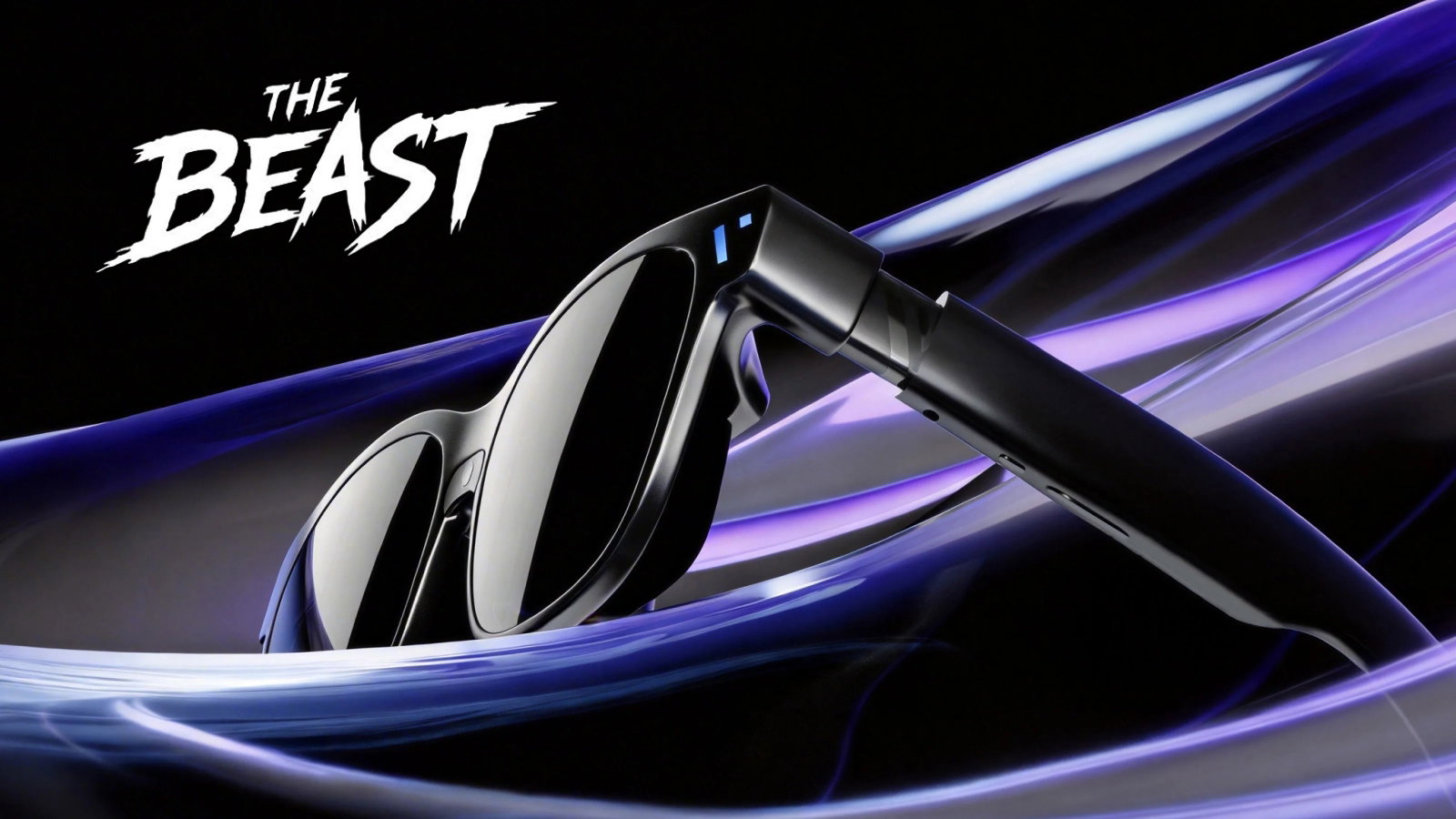
Its standout feature is the balance of image quality, gaming flexibility, and convenient screen positioning. It has received praise for has praised the visuals, although the 88-gram regular frame, edge clarity, and fit may not work equally well for everyone. Unlike the older Pro XR models, the Beast does not have built-in myopia adjustment, so some buyers will need prescription inserts.
For gaming handhelds, entertainment on a flight, or a portable personal monitor, these are a compelling pick.
The VITURE Beast starts at $549.
Meta Ray-Ban Display
What if your smart glasses could show you the information you need instead of merely reading it aloud?
That is where Meta Ray-Ban Display enters the picture, pairing familiar eyewear with a small, full-color in-lens display.
The display is designed for quick glances rather than replacing a laptop screen. It can show messages, photo previews, live captions, supported translations, Meta AI responses, and walking directions while allowing wearers to keep an eye on what is happening around them.
What sets the glasses apart is the included Meta Neural Band.
This electromyography (EMG) wristband translates subtle muscle signals from finger and hand movements into commands, so users can navigate certain functions without touching the frame or taking out a phone. Meta rates the glasses at up to six hours of mixed use, with up to 30 hours including the charging case.
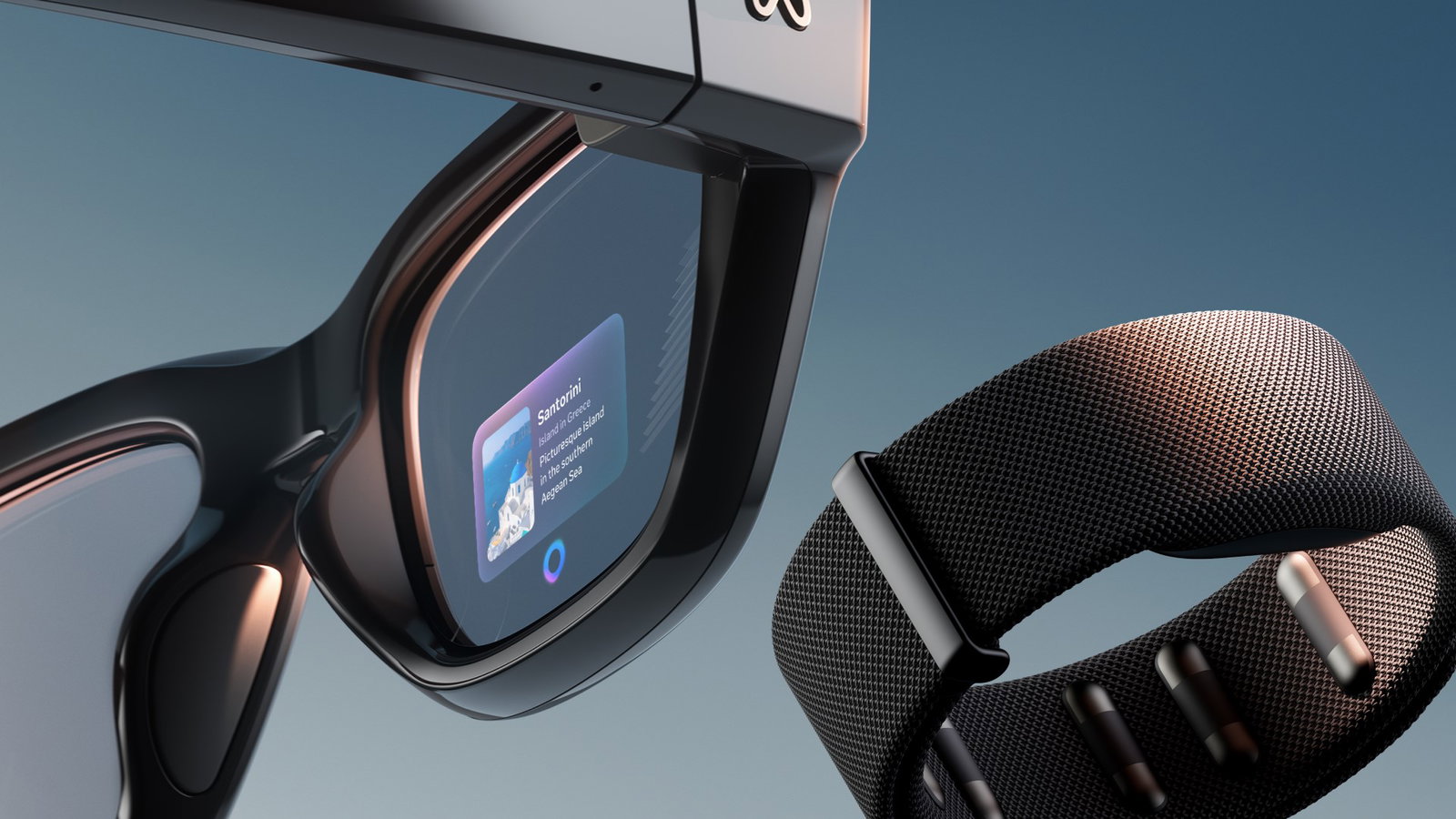
In September 2026, Meta expanded online ordering and announced further navigation features, including cycling and public transit directions in supported markets. However, feature availability and rollout timing vary by country, and the display is meant for brief interactions rather than all-day visual overlays. Camera privacy and finding the right fit remain important considerations.
For professionals and early adopters who want visible, glanceable AI assistance, the combination of display and wrist control is the standout.
Meta Ray-Ban Display starts at $799, including the Neural Band.
Oakley Meta Vanguard
If you are on the move more often than not, Oakley Meta Vanguard deserves a close look.
Built for running, cycling, and other high-intensity activities, these smart glasses focus on sports performance rather than floating virtual screens.
The wraparound frames combine Oakley PRIZM lenses with an IP67 dust and water resistance rating, open-ear audio, and a centered 12MP camera. Meta says the camera offers a 122-degree wide-angle view and up to 3K video recording. Slow Motion, Hyperlapse, and video stabilization provide additional ways to capture workouts hands-free.
The performance integrations are the real draw. Compatible Garmin devices can provide workout data through voice assistance, while Garmin and Strava connections support highlights and performance overlays in shared footage. Apple Health and Health Connect can also contribute activity summaries through supported app connections.

Oakley rates the glasses at up to nine hours of battery life, or six hours of continuous audio, with an additional 36 hours available through the charging case. They are built for demanding activity, but the protective wraparound style is less discreet for daily office use, and sports integrations depend on compatible devices and services. These are camera-and-audio glasses, not an AR display.
Starting at $499, Oakley Meta Vanguard is a strong contender as it brings athletes seeking hands-free footage, voice assistance, and practical training connections.
XREAL 1 Pro+ AR Glasses
One of the more popular names in the world of display glasses, XREAL continues to push the category forward. The XREAL 1 Pro+ adds a more refined display experience for users who want movies, gaming, and productivity on a large virtual screen.
Announced in October 2026, the XREAL 1 Pro+ brings 0.55-inch Sony Micro-OLED panels with up to 1,200 nits of peak brightness, a 57-degree field of view, and built-in three-degrees-of-freedom (3DoF) spatial screen positioning. It also introduces AI HDR image processing and 2D-to-3D conversion at up to 60 frames per second for compatible content.
The design includes refreshed nose pads for a more comfortable fit and viewing modes aimed at different activities. Compatible devices can connect over USB-C, although users may need adapters or accessories depending on their smartphone, computer, or console.
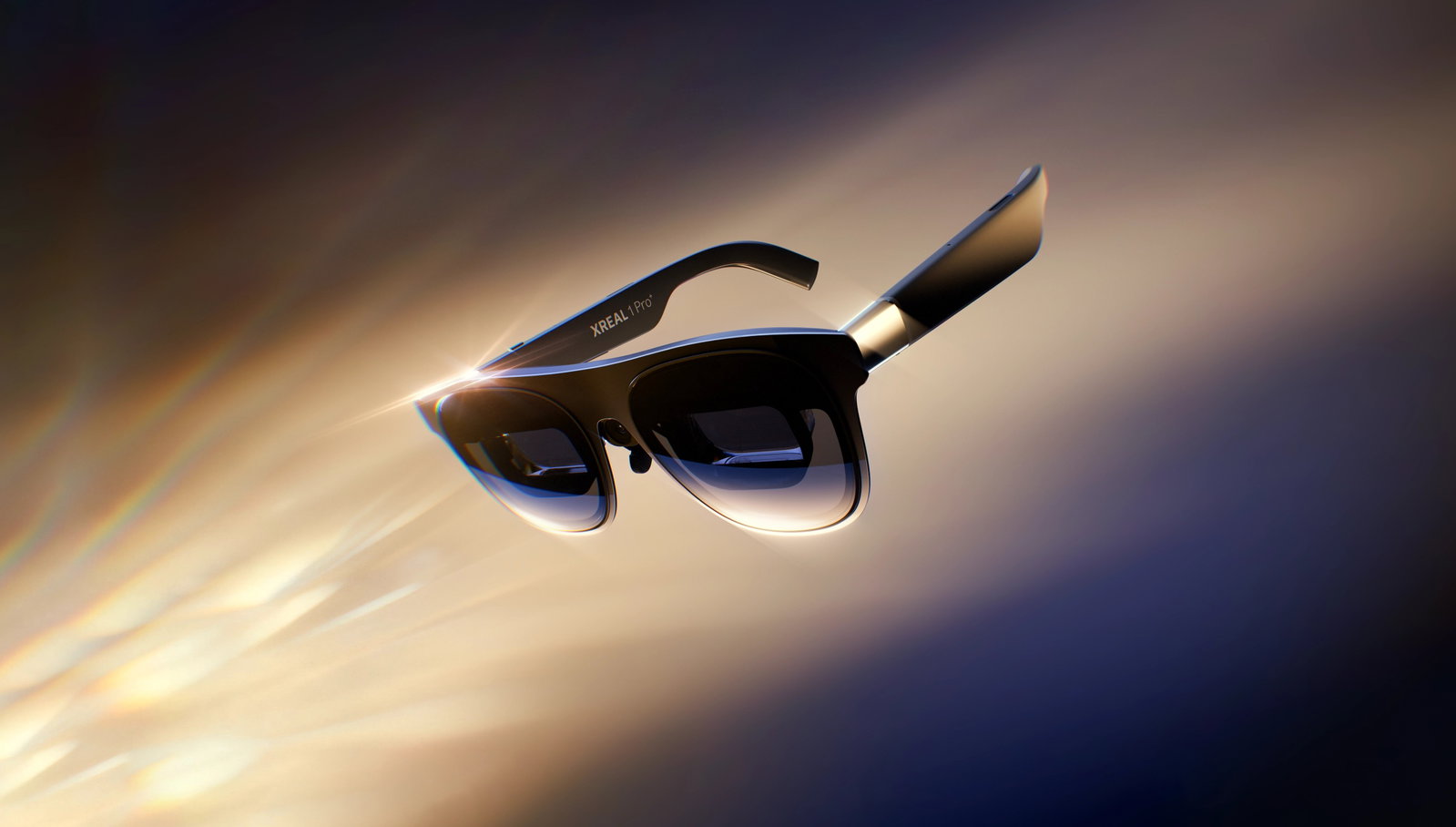
Of course, these glasses are better suited to media enthusiasts and mobile workers who want an immersive virtual screen than to people looking for hands-free photos, camera-driven AI, or standalone smartphone replacement capabilities.
For those looking for premium spatial display glasses, the 1 Pro+ deserves consideration, especially if they value brighter visuals and screen positioning without a dedicated headset. However, it launched only in October 2026, so longer-term independent testing is still developing.
The XREAL 1 Pro+ is listed at $599.
Rokid Glasses
What if your glasses could translate conversations, guide you through unfamiliar streets, and answer questions about your surroundings?
Well, Rokid Glasses bring these possibilities closer to everyday reality by combining artificial intelligence (AI) with augmented reality (AR) capabilities in a lightweight design.
Weighing approximately 49 grams, the glasses feature dual-eye Micro-LED displays with up to 1,500 nits of brightness and a 30-degree field of view. Rokid's glasses include a 12MP camera, Qualcomm Snapdragon AR1 processor, four microphones, directional speakers, and IPX4 splash resistance.
However, their standout feature is real-time translation.
Rokid supports up to 89 languages through online translation, along with six offline languages after downloading the necessary language models. Users can also access navigation prompts, teleprompter functionality, meeting transcription, and AI-powered object recognition without constantly checking their phones.
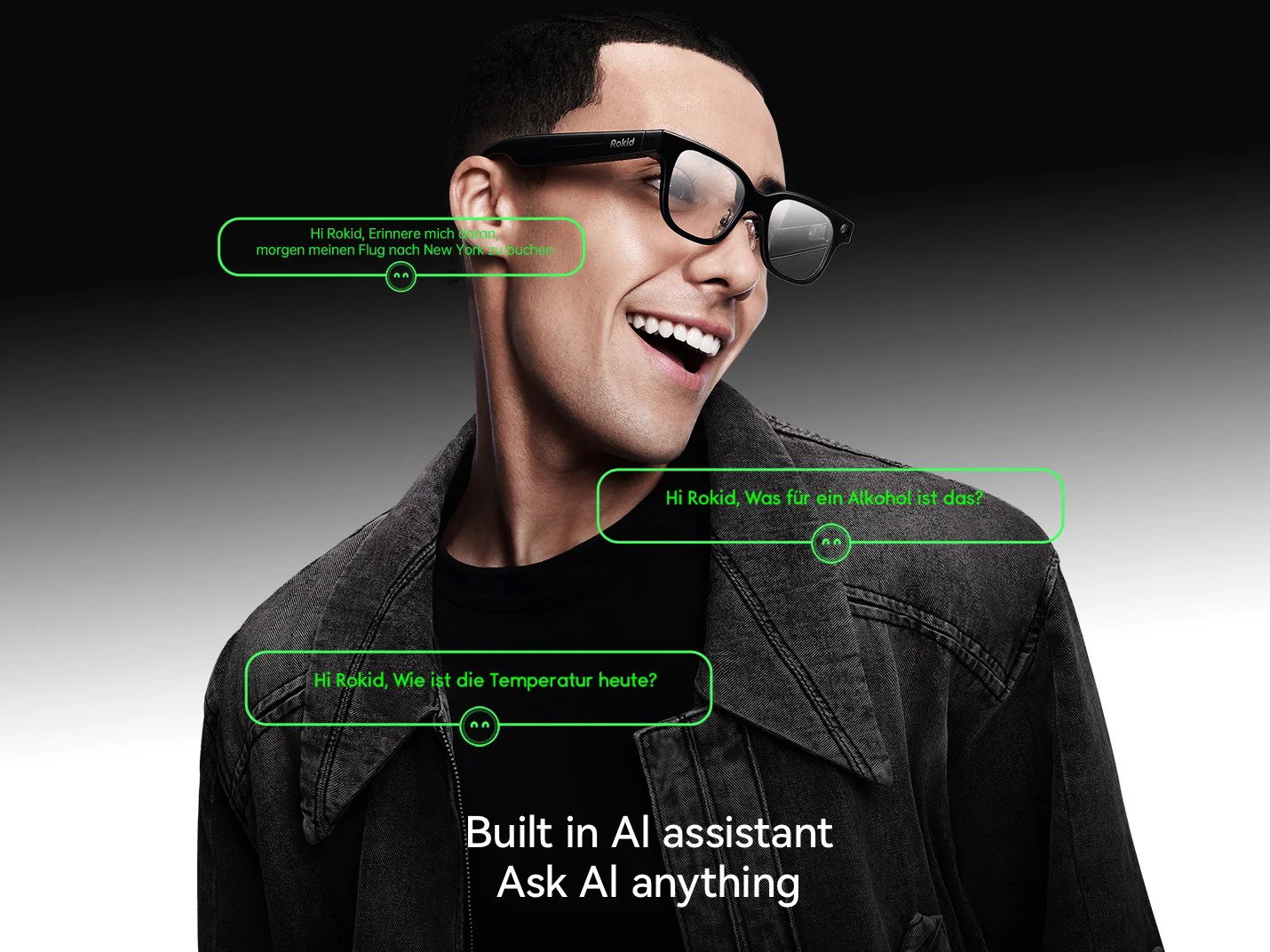
Of course, there are trade-offs. The monochrome display is designed for concise information rather than immersive visuals, and testing found that the camera struggles in low light. Battery life also varies considerably depending on how frequently its AI and display features are used.
For travelers, multilingual professionals, and technology enthusiasts, Rokid Glasses provide a compelling combination of visual assistance and everyday practicality.
The Rokid Glasses are currently listed at $699, discounted from their regular price of $799.
Even Realities G2
Not every pair of smart glasses needs a camera recording the world around it. The Even Realities G2 takes a more discreet approach, combining minimalist eyewear with digital information that appears directly within the wearer's field of view.
The glasses feature binocular Micro-LED waveguide displays with a 640 × 350 resolution, up to 1,200 nits of brightness, and a 27.5-degree field of view. They also offer IP65 dust and water resistance, along with up to two days of battery life under regular usage conditions.
What makes them particularly interesting is their focus on professional productivity. The Conversate feature provides live transcription, translation, contextual AI prompts, and conversation summaries.
Meanwhile, the built-in Teleprompt feature allows users to read prepared scripts during presentations without repeatedly looking at another screen. Notifications and navigation guidance add further everyday utility.
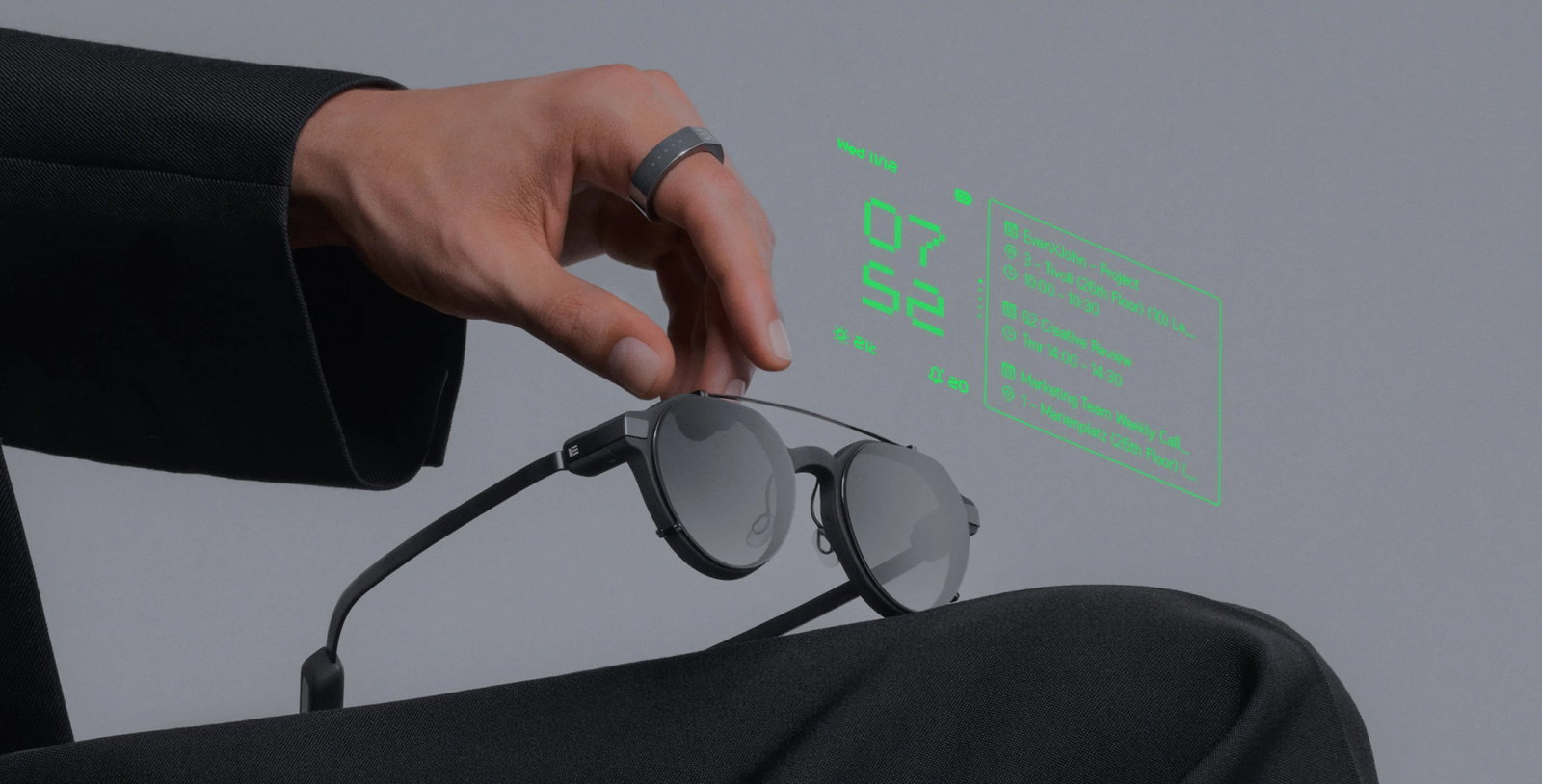
Even G2 also supports the optional Even R1 smart ring, enabling discreet gesture-based navigation through its interface. However, unlike camera-equipped AI glasses, the G2 cannot capture photos or videos, and its lack of speakers limits audio playback. Tests noted occasional software inconsistencies, although updates have improved the experience.
For professionals seeking subtle digital assistance without distracting cameras or bulky displays, Even G2 offers an interesting alternative.
Even Realities G2 starts at $599, while the optional R1 ring costs an additional $249, and prescription lenses cost extra.
Conclusion
Smart glasses are no longer trying to do the same job. Some simplify everyday AI assistance and hands-free recording, while others offer immersive entertainment, sports integrations, real-time translation, or discreet information displays. So, there's never a clear winner. Before choosing, consider comfort, privacy, battery life, device compatibility, and the features you will genuinely use. After all, the smartest glasses are the ones that fit your life.
Frequently Asked Questions
What Are The Key Features To Look For In Smart Glasses?
When choosing smart glasses, consider whether you need an in-lens display, hands-free AI and camera features, or simply open-ear audio. Check battery life, connectivity, device compatibility, fit, prescription support, and privacy controls. The best option depends on how you intend to use it.
How Do Smart Glasses Compare To Traditional VR Headsets?
Smart glasses generally have lighter frames and may offer audio, AI assistance, or a display while keeping you aware of your surroundings. VR headsets are usually larger and designed to immerse users in digital environments. Some XR display glasses provide virtual screens rather than full mixed-reality experiences.
What Are The Best Smart Glasses Available In 2026?
The best smart glasses depend on your requirements. Ray-Ban Meta (Gen 3) excels at everyday AI assistance, while VITURE Beast is ideal for immersive entertainment and gaming. Meta Ray-Ban Display offers hands-free digital interaction, Oakley Meta Vanguard serves sports and fitness enthusiasts, and XREAL 1 Pro+ focuses on premium spatial viewing. Meanwhile, Rokid Glasses combine real-time translation with AI-powered AR assistance, and Even Realities G2 offers discreet, camera-free productivity features.
Wed, Mar 12, 2025

Enjoyed what you read? Great news – there’s a lot more to explore!
Dive into our content repository of the latest tech news, a diverse range of articles spanning introductory guides, product reviews, trends and more, along with engaging interviews, up-to-date AI blogs and hilarious tech memes!
Also explore our collection of branded insights via informative white papers, enlightening case studies, in-depth reports, educational videos and exciting events and webinars from leading global brands.
Head to the TechDogs homepage to Know Your World of technology today!
Disclaimer - Reference to any specific product, software or entity does not constitute an endorsement or recommendation by TechDogs nor should any data or content published be relied upon. The views expressed by TechDogs' members and guests are their own and their appearance on our site does not imply an endorsement of them or any entity they represent. Views and opinions expressed by TechDogs' Authors are those of the Authors and do not necessarily reflect the view of TechDogs or any of its officials. While we aim to provide valuable and helpful information, some content on TechDogs' site may not have been thoroughly reviewed for every detail or aspect. We encourage users to verify any information independently where necessary.
Loading comments...