
Financial Management Solutions
Best Business Budgeting Tools Of 2026
Share
TL;DR
-
Forbes estimates 88% of spreadsheets contain errors, making manual budgeting a high-risk exercise for growing businesses.
-
QuickBooks Online and Xero lead the small business tier, with built-in budgeting starting at $29/month.
-
Planful and Vena serve growing mid-market teams needing FP&A automation without full enterprise complexity.
-
Workday Adaptive Planning and Pigment dominate the enterprise tier, offering scenario modeling and workforce planning.
-
AI features like anomaly detection and conversational forecasting are fast becoming standard in 2026's best tools.
Introduction
Remember Moneyball?
Back in 2003, Oakland A’s general manager Billy Beane changed professional sports by doing something that sounded almost impossible at the time. With a payroll of $44 million against the New York Yankees’ $125 million, he used data analytics to build a team that went on a record 20-game winning streak.
The secret was sabermetrics, a data-driven approach that helped a constrained budget compete against a much larger one.
Finance teams in 2026 are having their own Moneyball moment. Businesses of every size are moving beyond Excel-based budget trackers and adopting AI-powered budgeting platforms that catch errors, model scenarios, update plans in real time, and help teams make smarter financial decisions before problems grow.
That shift matters because budgeting mistakes are not harmless anymore. Forbes estimates that 88% of all spreadsheets contain at least one error, which is a risk no CFO wants sitting quietly inside a financial plan.
So, let’s explore the best business budgeting tools of 2026, matched to different business sizes, finance needs, and planning use cases. However, before that, let’s understand what one should be looking for in Business Budgeting Software.
What To Look For In Business Budgeting Software
Not every budgeting platform is right for every business. Picking the wrong one can create as much friction as the spreadsheet it's meant to replace. Before looking at specific tools, here are the capabilities that matter most in 2026:
-
Real-time data sync: The platform should connect directly to your accounting software and update automatically, not require manual data exports.
-
Scenario planning: Look for tools that let you model multiple financial outcomes simultaneously, especially for headcount and revenue changes.
-
Collaboration workflows: Budget approvals, department submissions, and version control should live inside the platform, not across email chains.
-
Native AI features: Anomaly detection, variance commentary, and forecasting automation are increasingly standard; prioritize tools where these are native, not added on later.
-
Integration depth: Your budgeting tool needs to connect fluently with your ERP, CRM, payroll, and HRIS systems.
With those criteria set, let's look at the platforms that deliver them.
Best Budgeting Tools For Small Businesses
-
QuickBooks Online
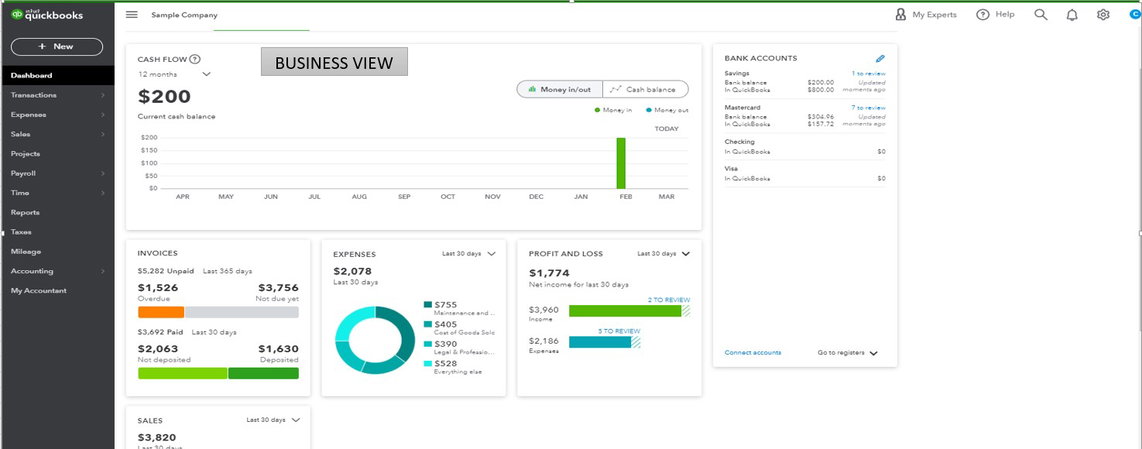
QuickBooks Online is the most widely used small business accounting platform in the US, and its built-in budgeting capabilities make it a natural starting point for teams not yet ready for a dedicated FP&A tool. The Plus plan, priced at $115/month for up to five users, covers budget creation against the chart of accounts, project profitability tracking, and budget versus actual reporting. Over 800 third-party integrations connect QuickBooks to payroll, POS, and CRM systems. Intuit Assist, the platform's native AI layer, handles expense categorization and transaction matching automatically.
QuickBooks won't replace a purpose-built FP&A platform as the business scales, but for a small team that needs solid accounting and a functional budget tracker in one place, it remains the most pragmatic entry point on this list.
-
Xero
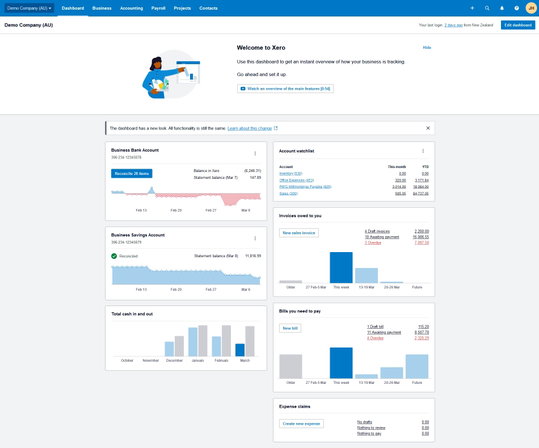
Xero earns its spot here for two reasons: every pricing tier allows unlimited users, and its multi-currency support is among the best in this category. Starting at $29/month, Xero lets businesses set annual budgets by account and generate monthly variance reports without needing a separate tool. Its ecosystem covers more than 1,000 third-party app integrations spanning payroll, inventory, and cash flow forecasting.
The limitation worth noting is that Xero does not offer advanced scenario modeling or driver-based forecasting natively. Teams that want those capabilities typically pair Xero with Float for cash flow visibility or PlanGuru for rolling forecasts.
Small businesses covered. The mid-market is where budgeting complexity really starts to climb.
Best Budgeting Tools For Mid-Market Teams
-
Planful
Planful is the platform most mid-market FP&A teams reach for when they're ready to move beyond spreadsheets into a proper planning system. Trusted by more than 1,400 customers, including Boston Red Sox, Del Monte, and Five Guys, it delivers end-to-end financial close, consolidation, and analysis in a single cloud-based environment. The platform's Planful Predict module provides AI-driven forecasting by analyzing historical patterns across the business. Workflow automation covers approvals, month-end close steps, and dynamic report generation, significantly cutting the manual overhead that slows most mid-market finance teams.
The trade-off: implementation requires meaningful time investment, and the platform's learning curve is steeper than some newer mid-market alternatives.
-
Vena
Vena takes a different approach to mid-market budgeting. Rather than replacing Excel, it keeps Microsoft Excel as the working interface while layering in version control, audit trails, workflow approvals, and automated data consolidation from the back end. The platform's native Microsoft 365 integration includes a Copilot for FP&A, enabling AI-assisted variance analysis, inventory management, and report generation. This makes Vena the right choice for finance teams that have built substantial Excel-based models and want to add governance and automation without rebuilding those models from scratch.
The tools above handle complexity at scale. Enterprise finance takes that complexity several levels higher, and the platforms below are built for it.
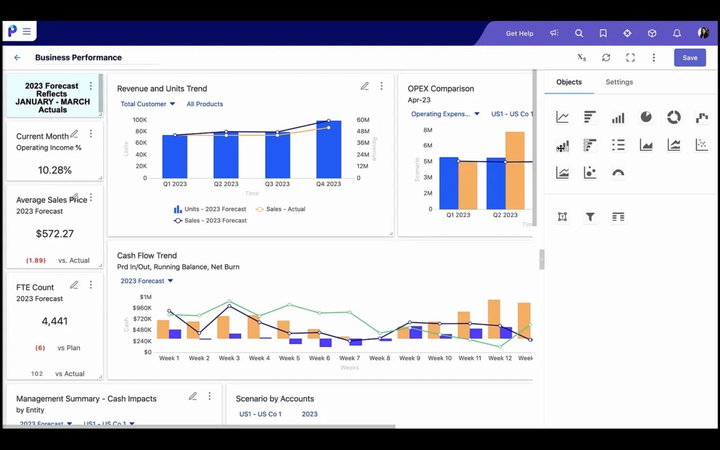
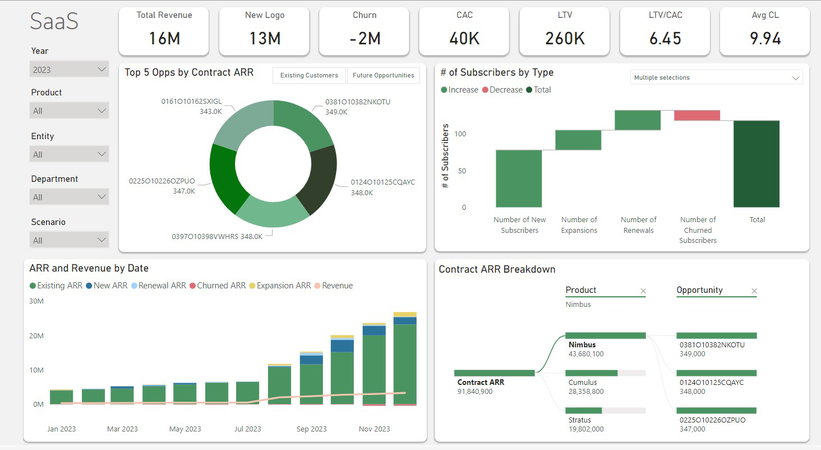
Best Budgeting Tools For Enterprise Finance
-
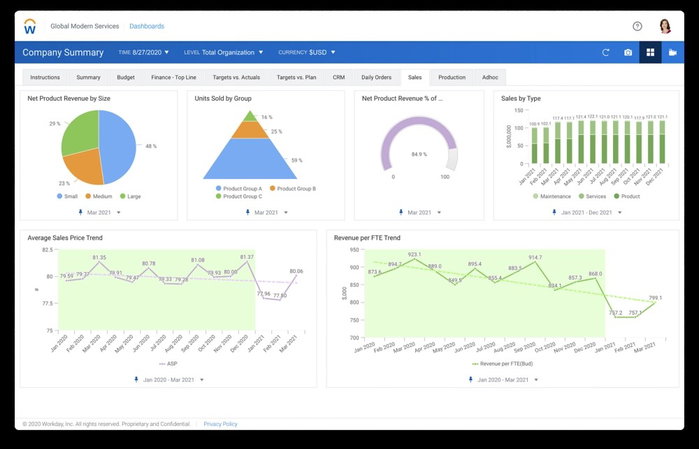
Workday Adaptive Planning
Workday Adaptive Planning is the standard choice for large organizations that need to align financial planning with workforce planning across multiple entities. It supports zero-based, driver-based, and incremental budgeting methodologies and connects to major ERP systems, including SAP, Oracle, NetSuite, and Microsoft Dynamics 365. The platform's multi-entity consolidation is its strongest capability, making it well-suited for companies managing subsidiaries across geographies.
Pricing is custom and begins at approximately $15,000 per license, with total year-one costs often running significantly higher once platform fees, viewer seats, and implementation services are included. Finance teams evaluating Adaptive Planning should model viewer-to-planner ratios carefully at the quote stage, as underbudgeting for that line item is a documented pattern in deployments.
-
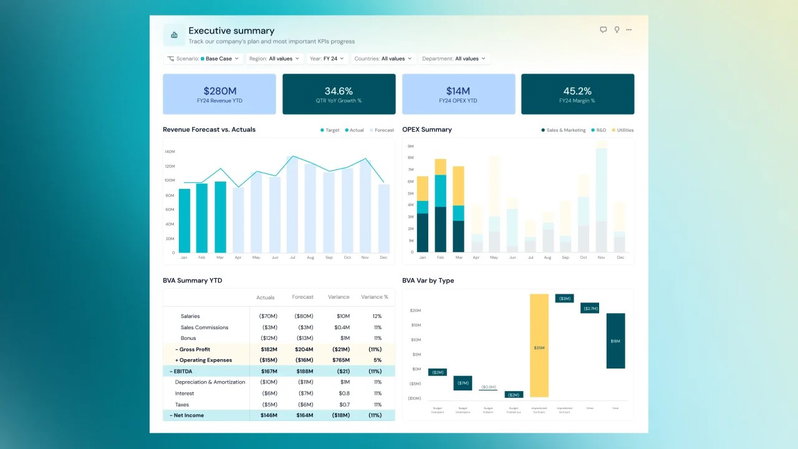
Pigment
Pigment has been winning competitive deals against Workday Adaptive Planning and Anaplan on three factors. First, implementation timelines of two to four months versus the industry average of four to twelve. Second, a modern no-code interface that reduces dependence on technical specialists. Third, a total year-one cost of ownership that typically runs 40 to 50 percent lower than Anaplan.
According to CFO Shortlist, the platform handles model complexity at enterprise scale, supports up to 500 million cells with real-time recalculation, and includes AI agents for formula writing, trend detection, and scenario recommendations. For large organizations that want serious planning capability without a painful implementation, Pigment is the most compelling option in the market right now.
AI is already built into many of these platforms. Here’s how it makes budgeting easier.
How AI Is Changing Business Budgeting In 2026
Budgeting has traditionally been a backward-looking exercise. Finance teams close the books, compare actuals to plan, and write explanations for the variances. AI is restructuring that cycle by moving the focus forward.
Organizations using AI in financial planning are now reporting up to a 40% increase in forecast accuracy, according to 2026 industry benchmarks. Platforms like Planful, Pigment, and Drivetrain surface anomaly alerts mid-cycle rather than at month end, flagging expense deviations before they grow into missed targets. Conversational analytics tools let finance teams query their data in plain language and receive instant breakdowns, without navigating multiple reports. AI-powered variance commentary, once a multi-hour manual task, is now generated automatically and pre-formatted for leadership review.
The shift isn't about replacing FP&A professionals. It's about removing the mechanical parts of the role so analysts can spend their time on the decisions that actually move a business forward. In 2026, the question isn't whether your budgeting tool uses AI. It's whether it uses AI well.
Conclusion
When Billy Beane turned a $44 million payroll into a record-breaking season, the lesson was not that money does not matter. It was that smarter tools, when paired with the right data, can help a constrained budget perform far beyond what the numbers suggest is possible.
Finance teams in 2026 have a similar opportunity. The right budgeting platform does far more than track what has already been spent. It helps teams model what should be spent, catch problems before they compound, and coordinate across departments without relying on one fragile shared spreadsheet.
From QuickBooks Online for lean startups to Pigment for global enterprises, the tools covered here support different stages of business growth and financial maturity.
The real question is simple: is your team still running its finances on a 2006-style process in a 2026 market? We think the answer writes itself.
Frequently Asked Questions
Where Can I Download Trial Versions Of Leading Business Budgeting Tools?
You can access free trial versions directly on the official websites of leading platforms like QuickBooks Online, PlanGuru, and Budgyt. Most vendors offer a 14 to 30-day free trial requiring only an email signup to test their features.
Where Can I Find Reviews Comparing Popular Business Budgeting Apps?
You can find comprehensive reviews and side-by-side comparisons of popular business budgeting applications on major software review platforms like G2, Capterra, and TrustRadius, as well as tech publications such as PCMag and Forbes Advisor.
What Is The Typical Cost Of Popular Financial Management Tools For Startups?
Popular startup financial management tools like QuickBooks Online and Xero typically cost $25 to $55 per month for standard growth tiers. Advanced plans with deep reporting or multi-currency support range from $90 to $250+ monthly.
Fri, Jun 19, 2026

Enjoyed what you read? Great news – there’s a lot more to explore!
Dive into our content repository of the latest tech news, a diverse range of articles spanning introductory guides, product reviews, trends and more, along with engaging interviews, up-to-date AI blogs and hilarious tech memes!
Also explore our collection of branded insights via informative white papers, enlightening case studies, in-depth reports, educational videos and exciting events and webinars from leading global brands.
Head to the TechDogs homepage to Know Your World of technology today!
Disclaimer - Reference to any specific product, software or entity does not constitute an endorsement or recommendation by TechDogs nor should any data or content published be relied upon. The views expressed by TechDogs' members and guests are their own and their appearance on our site does not imply an endorsement of them or any entity they represent. Views and opinions expressed by TechDogs' Authors are those of the Authors and do not necessarily reflect the view of TechDogs or any of its officials. While we aim to provide valuable and helpful information, some content on TechDogs' site may not have been thoroughly reviewed for every detail or aspect. We encourage users to verify any information independently where necessary.
Loading comments...