
Wearable Technology
Apple vs Whoop Can A Screenless Apple Band Disrupt Health Wearables
Share
TL;DR
-
Apple has reportedly developed prototypes featuring a fabric band and sensor-equipped computing module.
-
The project remains experimental, with no confirmed launch and a reported release no earlier than 2028.
-
WHOOP 5.0 already offers 14+ days of battery life and continuous health, recovery, sleep, and strain tracking.
-
Apple’s new Readiness and Health Age features show growing overlap with WHOOP’s health-focused approach.
-
IDC expects screenless health bands to establish a durable niche despite an overall decline in traditional wristband shipments.
Introduction
Apple may be developing a wearable defined by something Apple Watch users normally expect to see immediately: absolutely nothing.
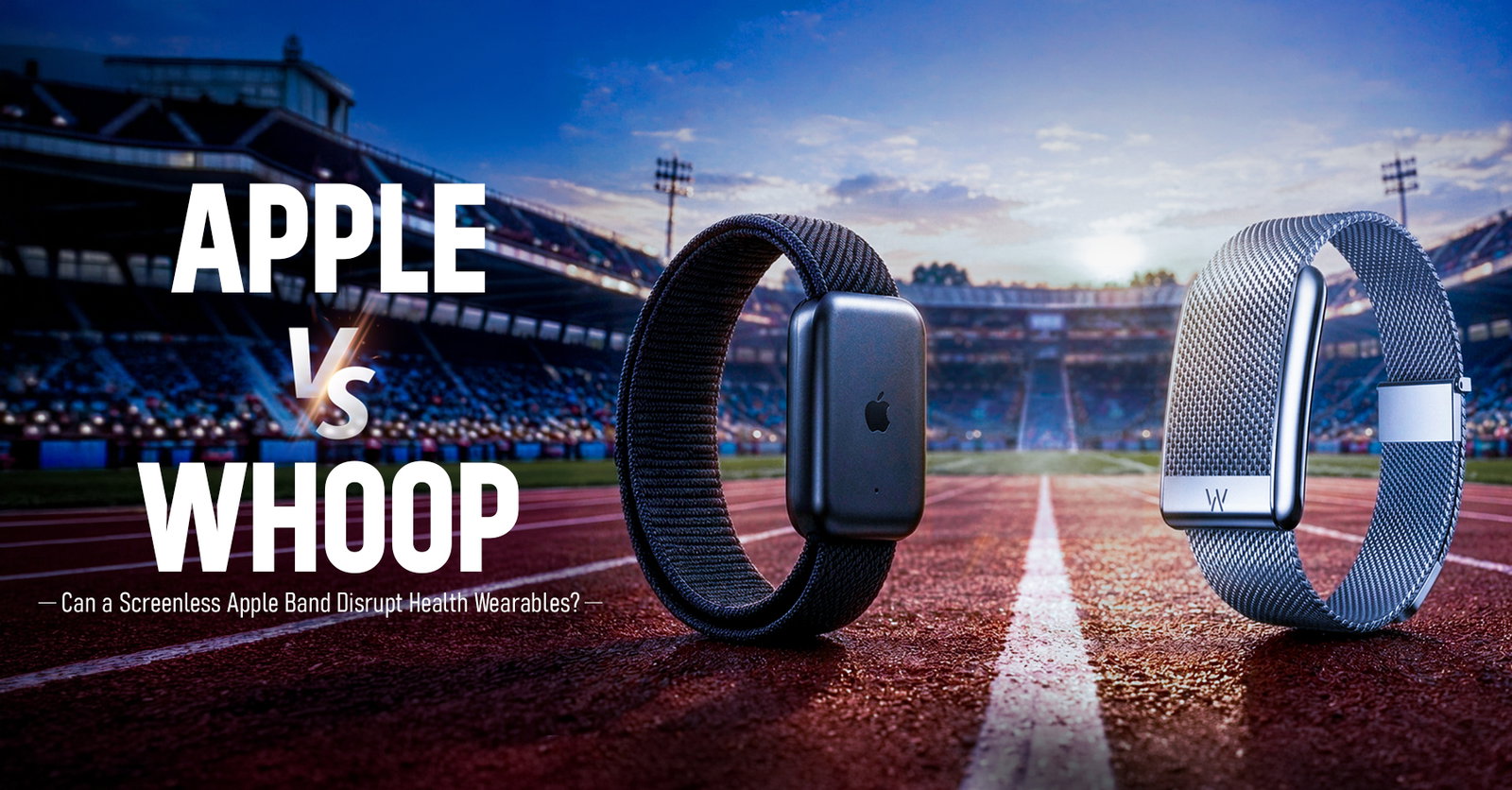
According to reports summarized by MacRumors and The Verge, Apple has been experimenting with a screenless health and fitness tracker built around a fabric band and sensor-equipped module. The prototype is being compared with WHOOP, whose entire philosophy revolves around continuous tracking without a display.
That makes the potential Apple vs. WHOOP rivalry particularly interesting. Apple spent years turning the wrist into another screen. WHOOP spent years proving that health tracking might work better without one.
So, is Apple making a screenless fitness tracker like WHOOP, and what would it actually need to compete?
Is Apple Making A Screenless Fitness Tracker Like WHOOP?
For now, the answer is: Apple is reportedly exploring one, but there is no confirmed commercial product.
The reported Apple fitness band prototype consists of a fabric strap connected to a computing module that rests against the wrist. Sensors are said to monitor heart rate and other health metrics, but Apple has not announced specifications, pricing, branding, battery life, or a launch date. Reports suggest Apple has not even decided whether the project will proceed, and a commercial release would probably not arrive before 2028.
That distinction matters because calling it an upcoming Apple product would be premature.
What is less speculative is Apple’s changing approach to health. The Apple Watch Series 12 introduced higher-frequency heart rate and heart rate variability measurements alongside a new Readiness score. Apple’s redesigned Health app is also adding Health Age, which considers metrics including VO2 max, resting heart rate, sleep, and HRV.
Those features move Apple closer to territory WHOOP has occupied for years.
Why Would Apple Remove The Screen?
The obvious question is why Apple would build an Apple fitness band without the defining feature of the Apple Watch.
WHOOP provides a useful answer.
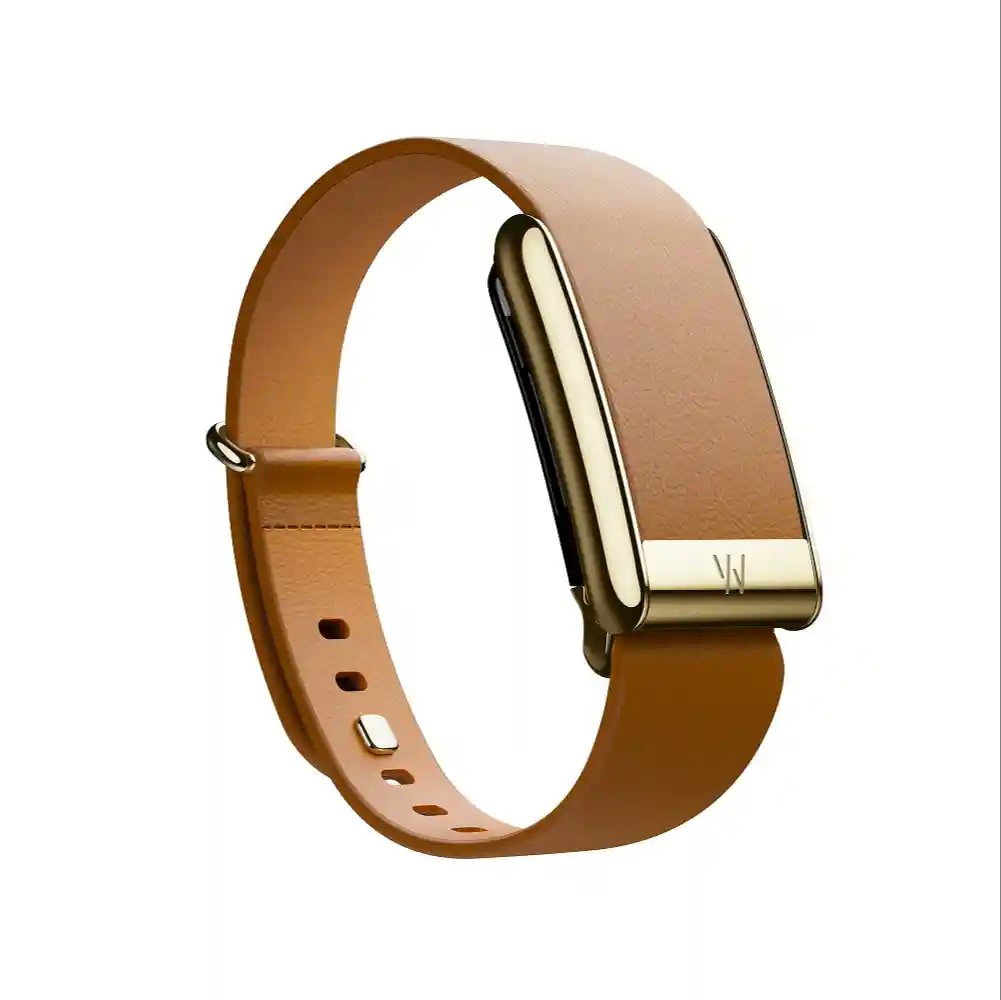
WHOOP says its screenless design is intentionally distraction-free, while automatic activity detection allows the tracker to work without requiring constant interaction. Founder Will Ahmed has explained that adding a display would effectively turn WHOOP into another watch, undermining its ability to coexist with traditional watches and remain focused on continuous physiological measurement.
A screenless Apple band could potentially offer similar advantages:
-
Longer wear time by reducing the need to interact with another display.
-
Less distraction from notifications, apps, messages, and alerts.
-
More opportunity to optimize the hardware around sensors rather than interface components.
-
A lighter form factor that could be easier to wear while sleeping.
-
A product that could potentially coexist with a traditional watch.
The category also appears to have momentum. IDC forecasts wristband shipments of 40.2 million units in 2026 and expects screenless health-tracking wristbands to carve out a durable niche even as the wider wristband category contracts.
WHOOP 5.0 Vs. Apple: What Would The Competition Look Like?
Any direct Whoop 5.0 vs. Apple comparison has a major limitation: WHOOP is shipping today, while Apple’s device remains an unconfirmed prototype.
| Area | WHOOP 5.0 | Reported Apple Prototype |
| Display | None | None |
| Design | Compact screenless sensor and fabric band | Reportedly fabric band with computing module |
| Battery | 14+ days | Not disclosed |
| Main Focus | Recovery, sleep, strain, health, and coaching | Health and fitness tracking reported |
| Heart Rate Tracking | Continuous health tracking | Heart rate reportedly included |
| Recovery/Readiness | Recovery system | Apple already offers Readiness through Apple Watch |
| Health Age | WHOOP Age | Apple Health Age exists for Apple Watch |
| Business Model | Annual membership | Unknown |
| Availability | Available now | No launch confirmed, reportedly 2028 at earliest |
So, Apple would not be entering an empty category.
Where Apple Could Have An Advantage
An Apple screenless fitness band would arrive with something most new wearable companies cannot replicate: an existing health ecosystem.
Apple already connects Apple Watch data with the Health app, iPhone, clinical health records, third-party apps, and other devices. Its redesigned Health experience uses Apple Intelligence to generate personalized insights across heart health, sleep, readiness, fitness, vitals, and longevity.
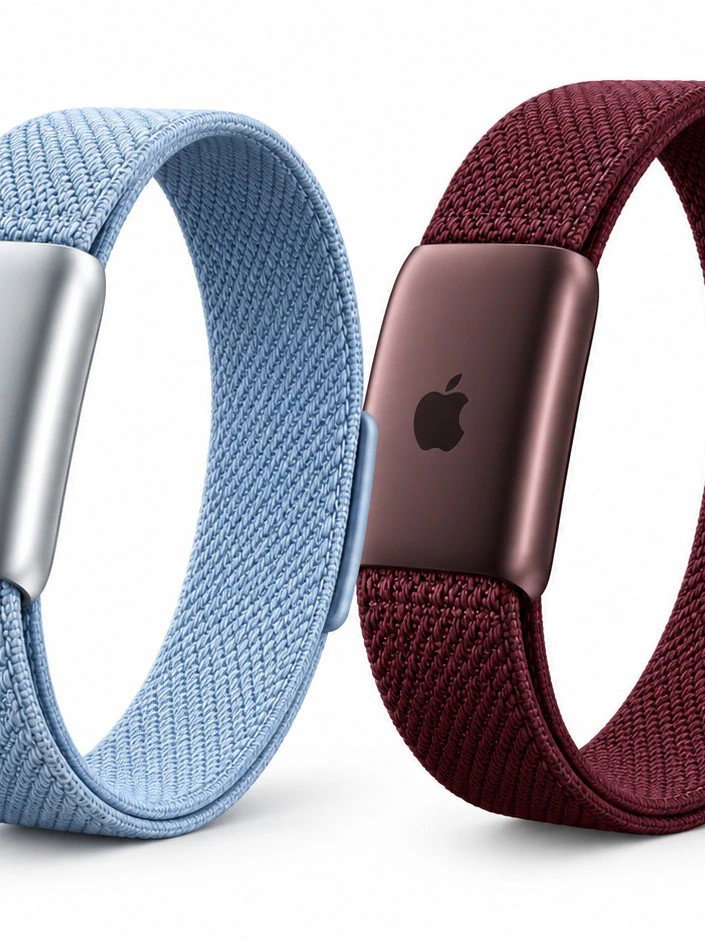
A screenless tracker could theoretically expand that ecosystem without asking every user to buy another smartwatch.
Apple also leads the smartwatch market. IDC put Apple at 21.5% of global smartwatch unit shipments in Q1 2026. That existing customer base could give a future Apple fitness band considerable visibility from day one.
However, those advantages only matter if Apple can preserve what makes screenless fitness bands appealing rather than turning one into an Apple Watch without a display.
Where WHOOP Still Has A Head Start
WHOOP’s advantage is not simply that its device lacks a screen. Its software, hardware, and business model have been built around continuous physiological tracking from the beginning.
WHOOP 5.0 offers 14+ day battery life, while compatible plans include a Wireless PowerPack that lets users charge the device while continuing to wear it. WHOOP also supports off-wrist placement through compatible apparel, giving users options beyond wearing the sensor like a conventional watch.
Its membership structure also bundles hardware with analytics and coaching. Current U.S. annual pricing ranges from $199 for WHOOP One to $239 for Peak and $359 for Life, with the higher tiers adding capabilities such as Healthspan and cardiovascular features.
That gives WHOOP years to deepen its platform before any Apple Whoop competitor could realistically arrive.
Could Apple Disrupt Screenless Fitness Bands?
The screenless fitness tracker market is becoming less of an odd corner of wearables and more of a distinct philosophy.
Google entered the category in 2026 with the $100 Fitbit Air, positioned around simplicity, comfort, and 24/7 health tracking. WHOOP continues expanding beyond sports performance into longevity and cardiovascular insights. Meanwhile, Apple has already introduced Readiness and Health Age into its existing ecosystem.
That means Apple does not necessarily need to invent the category.
It would need to prove that an Apple fitness band offers a reason to exist beside the Apple Watch rather than underneath it.
The bigger question may therefore be less “Can Apple copy WHOOP?” and more “Can Apple embrace WHOOP’s restraint?”
Conclusion
The reported Apple fitness band prototype suggests Apple is at least considering a wearable future where every health device does not need to double as another screen.
WHOOP already demonstrates what that philosophy can deliver: long battery life, continuous wear, recovery insights, and a device designed to disappear into everyday life. Apple brings a different strength through its Health ecosystem, massive installed base, and increasingly sophisticated health analytics.
For now, though, Apple vs. WHOOP remains more concept than contest. Apple has not confirmed the product, its specifications remain unknown, and reports suggest a launch would not happen before 2028.
If it does arrive, the most interesting thing about Apple’s next wearable may not be what Apple adds to it.
It may be what Apple is willing to leave out.
Frequently Asked Questions
Can WHOOP 5.0 Sync With Apple Health?
Yes. WHOOP supports Apple Health integration, allowing compatible health, fitness, and recovery information to be shared between the services. WHOOP also supports integrations such as Strava and TrainingPeaks, which makes its data usable beyond the WHOOP app itself.
Can You Wear WHOOP 5.0 While Swimming?
Yes. WHOOP 5.0 carries an IP68 water-resistance rating and can be worn while swimming, showering, or bathing. WHOOP specifies resistance up to 10 meters for two hours, but does not recommend the device for diving, scuba, or high-pressure water activities.
Does WHOOP 5.0 Need A Smartphone To Work?
WHOOP requires its app on a compatible iOS or Android device for setup and accessing its services. WHOOP currently recommends iOS 18 or later for iPhone users and Android 11 or later for WHOOP 5.0 users, with Bluetooth connectivity required for syncing.
Thu, Sep 24, 2026

Enjoyed what you've read so far? Great news - there's more to explore!
Stay up to date with the latest news, a vast collection of tech articles including introductory guides, product reviews, trends and more, thought-provoking interviews, hottest AI blogs and entertaining tech memes.
Plus, get access to branded insights such as informative white papers, intriguing case studies, in-depth reports, enlightening videos and exciting events and webinars from industry-leading global brands.
Dive into TechDogs' treasure trove today and Know Your World of technology!
Disclaimer - Reference to any specific product, software or entity does not constitute an endorsement or recommendation by TechDogs nor should any data or content published be relied upon. The views expressed by TechDogs' members and guests are their own and their appearance on our site does not imply an endorsement of them or any entity they represent. Views and opinions expressed by TechDogs' Authors are those of the Authors and do not necessarily reflect the view of TechDogs or any of its officials. While we aim to provide valuable and helpful information, some content on TechDogs' site may not have been thoroughly reviewed for every detail or aspect. We encourage users to verify any information independently where necessary.
Loading comments...