

Artificial Intelligence
6 AI Skills That’ll Actually Get You Hired
Share
TL;DR
-
LinkedIn says US job postings requiring AI literacy skills grew more than 70% year over year.
-
Prompt engineering remains useful, but employers increasingly value broader AI literacy, evaluation, and context engineering.
-
AI Agents were LinkedIn’s fastest-growing AI engineering skill of 2025, making agentic workflows a major 2026 addition.
-
Machine learning, deep learning, RAG, and computer vision remain relevant rather than becoming obsolete.
-
Portfolios, model evaluation, critical thinking, and measurable project outcomes help turn technical knowledge into hireable skills.

Introduction
If The Matrix were a career guide, Neo would plug in, say “I know kung fu,” and walk into an interview with a brand-new skill set. Unfortunately, 2026 hiring still requires the slower version: learn, build, prove.
LinkedIn's 2026 Labor Market Report says US jobs requiring AI literacy skills, including prompt engineering, grew 70% year over year, while 1.3 million new AI-enabled jobs emerged globally over the previous two years. The World Economic Forum still ranks AI and big data as the fastest-growing skill area through 2030.
So, which AI Skills In Demand are worth learning now? Most of the 2025 list still holds, but one major shift cannot be ignored: AI agents.
Why AI Skills Matter More In 2026?
The market is moving from "Can you use AI?" to "Can you make AI useful?"
LinkedIn's Skills on the Rise 2026 places AI Engineering & Implementation at the top of its US list. Oxford researchers analyzing more than 10 million UK job vacancies also found that AI skills carried a 23% wage premium.
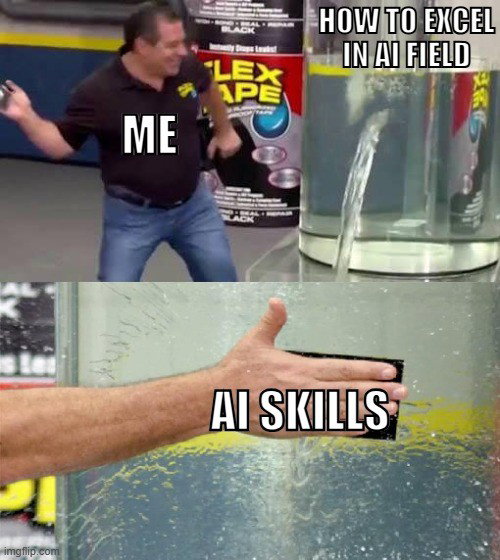
That does not mean collecting certificates guarantees a job. Employers increasingly want evidence that you can apply AI to a real problem.
Matt Sanchez, Chief Operating Officer at Coursera, captured the shift well: "AI sparks a mindset shift so significant that it can no longer live solely within technical teams." Coursera's 2026 report is based on learning data from six million enterprise learners across nearly 7,000 organizations.
6 AI Skills That’ll Actually Get You Hired In 2026
-
Prompt Engineering And AI Literacy
Prompt engineering remains relevant, but it is becoming part of broader AI literacy: knowing how to instruct models, structure context, select tools, evaluate outputs, and recognize limitations.
LinkedIn says job postings requiring AI literacy grew more than 70% year over year. Prompt Engineer also appears among LinkedIn's Jobs on the Rise 2026 in India.
Prompt Engineering Jobs still exist, but stronger candidates connect prompting to business workflows, testing, evaluation, and domain knowledge rather than relying on clever instructions alone. -
Machine Learning And MLOps
Machine Learning Careers remain central because recommendation systems, fraud detection, forecasting, computer vision, and many AI products still depend on machine learning fundamentals.
In 2026, employers increasingly need the full lifecycle: preparing data, training and evaluating models, deploying them, monitoring performance, and updating them safely. That makes Machine Learning Operations (MLOps) an important companion skill.
LinkedIn continues to list Machine Learning among commonly added AI engineering skills, while MLOps appears within its rising AI Engineering & Implementation category. Relevant roles include Machine Learning Engineer, Data Scientist, Applied Scientist, and MLOps Engineer. -
LLM Fine-Tuning, RAG And Context Engineering
LLM Fine-Tuning And RAG remain useful, but the skill has expanded.
Fine-tuning adapts a model using targeted training data. Retrieval-Augmented Generation (RAG) brings external information into responses. Context engineering manages the broader mix of instructions, retrieved data, tools, memory, and history available to a model.
Anthropic describes context engineering as the natural progression of prompt engineering as AI applications move toward longer-running agents.
Employers need people who can build grounded AI systems, manage retrieval quality, connect vector databases, evaluate hallucinations, and decide whether fine-tuning is actually necessary. -
AI Agents And Workflow Orchestration
This is the biggest 2026 addition.
LinkedIn found AI Agents were the fastest-growing AI engineering skill of 2025, with AI Strategy and Large Language Model Operations (LLMOps) also growing quickly.
The shift is from AI that generates an answer to AI that can plan, call tools, retrieve information, and execute multi-step work.
Useful capabilities include tool calling, Application Programming Interfaces (APIs), memory, permissions, agent loops, evaluation, and human approval points. Roles increasingly include AI Engineer, Agentic AI Developer, Automation Engineer, and AI Solutions Architect. -
Deep Learning
Deep Learning Jobs remain relevant because modern generative AI, speech systems, image recognition, and multimodal models rely on neural networks.
What matters is not memorizing architecture names but understanding how models are trained, evaluated, fine-tuned, and optimized. Coursera's updated 2026 guidance still identifies machine learning and deep learning as core Generative AI competencies, while LinkedIn lists Deep Learning among commonly added AI engineering skills.
Technical candidates benefit from practical knowledge of PyTorch, transformers, neural networks, transfer learning, and model evaluation. -
Computer Vision And Multimodal AI
The original Computer Vision (CV) recommendation still holds, although 2026 applications increasingly combine vision with language, audio, and other modalities.
Computer vision lets systems classify, detect, segment, and interpret visual information. Multimodal AI extends that ability across images, text, video, and audio.
These skills matter in robotics, healthcare imaging, manufacturing inspection, autonomous systems, retail, security, and augmented reality. Relevant capabilities include object detection, segmentation, vision transformers, preprocessing, deployment, and evaluation.

What Makes AI Skills Hireable?
Knowing the vocabulary is not enough. Build something that proves the skill.
A RAG system should show how retrieval quality was evaluated. An AI agent should explain where human approval is required. A computer vision project should document accuracy and failure cases.
Critical thinking matters too. Coursera's Job Skills Report 2026 recorded a 120% average year-over-year increase in critical-thinking enrollments across the career areas it analyzed. The World Economic Forum also keeps analytical thinking among employers' most important core skills.
The strongest candidate can explain what an AI system does, where it fails, and why it creates value.
Final Thoughts
Neo never had to build a portfolio after downloading kung fu. You do.
Prompt engineering, machine learning, LLM systems, AI agents, deep learning, and computer vision remain valuable, but their hiring value comes from application rather than labels. The biggest change since 2025 is that companies are moving from experimenting with AI outputs to building AI systems inside real workflows.
Learn the fundamentals, build projects that solve real problems, test them honestly, and show employers how you made the tradeoffs.
In an AI job market, knowing the tool gets attention. Knowing what to do with it gets you hired.
Frequently Asked Questions
Is Prompt Engineering Still A Good Career Skill In 2026?
Yes, but it is increasingly part of broader AI literacy and engineering. Combine prompting with context engineering, evaluation, domain knowledge, APIs, or workflow automation.
Do I Need To Know Coding To Get An AI Job?
Not for every AI-enabled role. AI literacy is spreading into marketing, sales, design, and HR. Technical AI engineering roles, however, generally require programming, data, and software-development skills.
What Is The Best Way To Prove AI Skills To Employers?
Build portfolio projects that show an end-to-end problem, technical decisions, evaluation methods, limitations, and measurable outcomes. A working project usually demonstrates more than listing an AI tool on a resume.
Fri, Aug 29, 2025

Enjoyed what you've read so far? Great news - there's more to explore!
Stay up to date with the latest news, a vast collection of tech articles including introductory guides, product reviews, trends and more, thought-provoking interviews, hottest AI blogs and entertaining tech memes.
Plus, get access to branded insights such as informative white papers, intriguing case studies, in-depth reports, enlightening videos and exciting events and webinars from industry-leading global brands.
Dive into TechDogs' treasure trove today and Know Your World of technology!
Disclaimer - Reference to any specific product, software or entity does not constitute an endorsement or recommendation by TechDogs nor should any data or content published be relied upon. The views expressed by TechDogs' members and guests are their own and their appearance on our site does not imply an endorsement of them or any entity they represent. Views and opinions expressed by TechDogs' Authors are those of the Authors and do not necessarily reflect the view of TechDogs or any of its officials. While we aim to provide valuable and helpful information, some content on TechDogs' site may not have been thoroughly reviewed for every detail or aspect. We encourage users to verify any information independently where necessary.
Loading comments...