
Data Management
Top 5 Database Management Software In 2026
Share
TL;DR
-
dbForge Edge: Provides a versatile, multi-database environment that unifies development and administration tasks into a single, automated platform.
-
Oracle AI Database: Delivers an AI-native engine designed for large enterprises requiring high-performance, secure, and converged data workloads.
-
MySQL: Offers an exceptionally reliable and cost-effective open-source solution that remains a favorite for application-driven teams and startups.
-
Microsoft SQL Server: Features deep integration with the Microsoft ecosystem, providing robust security and high availability for mission-critical corporate applications.
-
Snowflake: Supplies a powerful cloud-native platform that allows teams to scale compute and storage independently for real-time analytics.
Introduction
Think about the simple actions that define your morning: checking the weather on your smartphone, mapping out the fastest commute, or letting a streaming service pick the perfect playlist for your mood. Behind each of these seamless moments is the invisible force of data, quietly guiding your decisions and simplifying your life. Just as a disorganized closet makes it impossible to find your favorite shirt, data requires a meticulous organizational system to remain useful. Database Management Software acts as that essential digital organizer, keeping vast oceans of information sorted and ready for immediate action.
As we move into 2026, the sheer volume of global data makes having a sophisticated "smart assistant" more critical than ever for business growth. These advanced tools now use automation to transform raw numbers into actionable opportunities without the manual headache. To help you stay ahead of the curve, we have identified the Top 5 Database Management Software to keep your operations running smoothly.
What Is Database Management Software?
Database Management Software (DBMS) serves as a digital organizer for your data, helping you store, manage, share, and retrieve it effortlessly. It’s like a smart assistant, letting you query, update and control vast datasets seamlessly.
These processes are further enhanced thanks to automation capabilities powered by machine learning (ML), artificial intelligence (AI), and generative artificial intelligence (GenAI).
As we move into 2026, these tools are set to become even more innovative, transforming how organizations manage and use their data to unlock new opportunities for efficiency and growth. In short, simplifying data transitions like never before!
Top 5 Database Management Software Of 2026
The Top 5 Database Management Software of 2026 list features our top picks, their unique features, and other must-know details. Dive in and choose the best fit for your database management needs!
 |
 |
 |
 |
 |
dbForge Edge: Best Overall
dbForge Edge is a powerful and capable database management software developed by Devart, a global provider of professional database management and connectivity tools since 1997. Boasting over 500,000 users, the company earned Gold, Silver, and Bronze at the 2025 DBTA Awards for excellence in data security, DBA productivity, and database development, highlighting the capabilities of its database solutions, including dbForge Edge.
Why We Chose dbForge Edge In 2026
Designed to support database development, administration, automation, and analysis across multiple environments, dbForge Edge stands out as a versatile database management solution for teams that operate across diverse database ecosystems. It is built for professionals who work with multiple database systems, supporting platforms such as SQL Server, MySQL, MariaDB, Oracle, PostgreSQL, Amazon Redshift, and cloud databases. It’s available on Windows, Linux, and macOS. Instead of relying on separate tools for each database, dbForge Edge brings development, administration, management, and data analysis capabilities into a single, integrated platform with built-in automation.
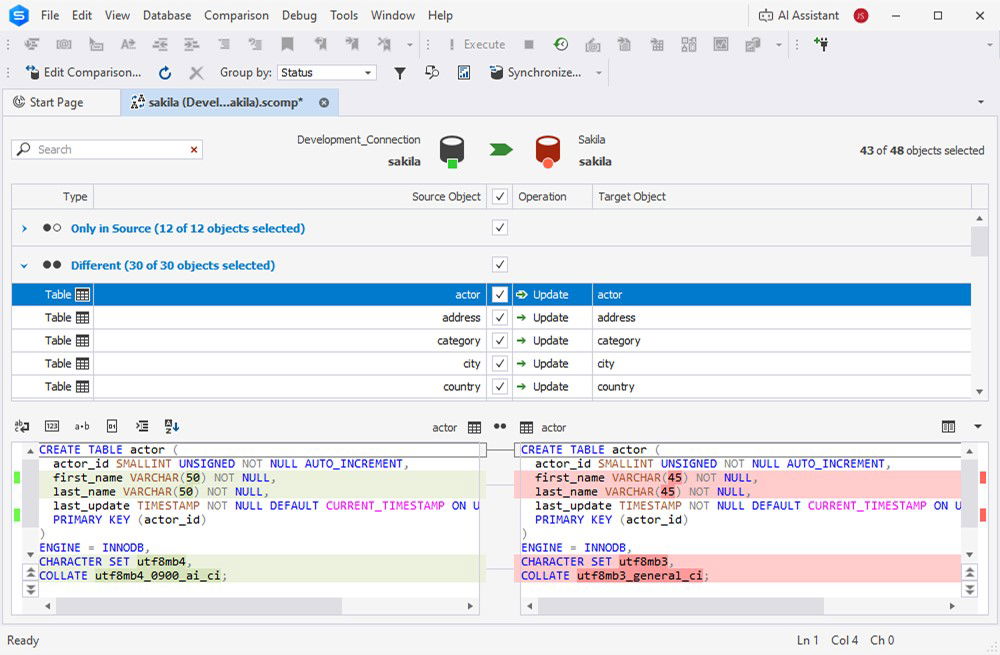
It offers advanced SQL coding, editing, and debugging tools, along with visual database design, schema management, and reporting features. Built-in comparison and synchronization tools help teams manage schema changes and data consistency efficiently, reducing manual effort and errors across environments.
Its key highlight is its strong multi-database support combined with automation capabilities. Users can automate routine tasks such as data generation, backups, and maintenance, helping teams save time on repetitive operations. Its ability to work seamlessly across premises and cloud databases makes it especially valuable for teams managing complex database landscapes, where consistency, speed, and accuracy are critical.
Pricing
dbForge Edge is offered through subscription-based pricing plans, with users able to choose annual licenses, with pricing varying by subscription term and number of licenses. Pricing starts at $699.95, but users can avail a discount when buying multiple licenses. The plans provide access to the full dbForge Edge toolset, covering supported databases and features. Devart also offers a customizable perpetual (lifetime) plan, allowing users to choose between 1, 2, or 3 years of extended support and an upgrade period.
What Works & What Doesn't
| Pros | Cons |
| Supports multiple databases | Learning curve for beginners |
| Strong productivity tools | Can feel feature-heavy |
| Good automation capabilities | Features or options are hidden |
Our Final Take
dbForge Edge is best suited for database developers, DBAs, and teams managing multiple database platforms who need a unified and productivity-focused DBMS toolset. It’s well-suited for Windows, Mac, and Linux users, and its rich features, automation, and multi-database support make it a strong choice for database management, especially in complex, multi-environment setups. Its strong focus on productivity, visual tooling, and cross-database support makes it a practical choice for modern database management needs.
Oracle AI Database: Best For Enterprise
Oracle is a global technology company best known for its enterprise software, cloud infrastructure, and database technologies. Founded in 1977, it serves hundreds of thousands of customers worldwide, including businesses, governments, and institutions across almost every industry. Oracle has long been recognized as a leader in database innovation, powering many of the world’s most critical applications, and it continues to receive strong industry recognition for its cloud and data platforms.
Why We Chose Oracle AI Database In 2026
Oracle AI Database, known for its high availability, brings AI directly into the core of database management. Features such as AI Vector Search and in-database machine learning remove the need to manage separate systems for transactional data, analytics, and AI workloads, all while preserving security, availability, and performance. Its converged architecture supports relational, JSON, graph, spatial, and vector data, simplifying development and ensuring data consistency across workloads. It includes built-in security features such as SQL Firewall, RAFT replication, and seamless deployment across multiple environments.
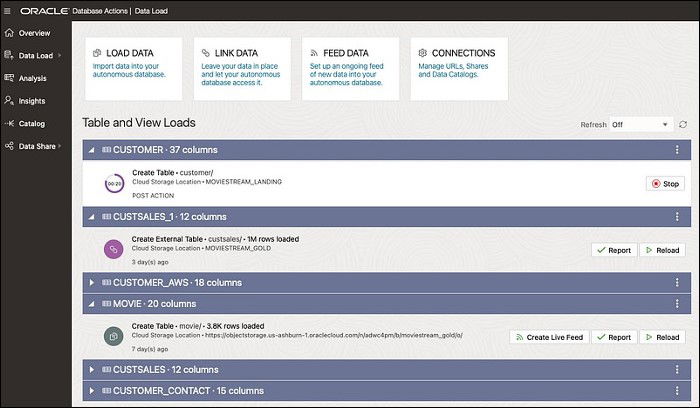
The standout highlight is Oracle AI Database 26ai, which transforms this foundation into a fully AI-native database platform. This enables unified hybrid vector search across structured and unstructured data, supports governed AI agents within the database, and enables the flexible use of enterprise LLMs without exposing sensitive data.
Pricing
Oracle Database pricing depends on deployment type and selected management services. Oracle offers database management pricing based on usage, typically charged per OCPU (Oracle CPU) per hour for cloud-based database management services. Costs vary depending on the choice of basic or advanced management features, as well as database size, usage levels, and enabled capabilities.
What Works & What Doesn't
| Pros | Cons |
| High performance at scale | High licensing costs |
| Strong security and reliability | Complex initial setup |
| Automation reduces admin work | Requires skilled DBAs |
Our Final Take
Oracle AI Database is best suited for large enterprises and regulated industries that require a highly reliable, secure, and scalable database management system. While it may be expensive and complex for smaller teams, organizations running mission-critical applications will find it a powerful and dependable choice for 2026.
MySQL: Best Value
MySQL, the world's most popular open-source database, is used by names such as Facebook, Twitter, Booking.com, Verizon, and more. MySQL is developed by Oracle Corporation, which serves millions of users worldwide across various industries. It has consistently been recognized for its performance and reliability, earning several awards, including the “2024 DBMS of the Year” award from Database Trends and Applications. It also holds a top position in the DB-Engines Ranking, frequently listed as the most popular database among developers and businesses alike.
Why We Chose MySQL In 2026
MySQL offers a powerful set of features that make it a go-to database management system for businesses of all sizes. It comes with integrated, automated, and secure ML and GenAI capabilities. Its scalability allows users to handle growing data volumes with ease, while maintaining high availability to ensure uptime in mission-critical data applications. With its data manipulation capabilities, MySQL excels at efficiently handling complex queries, ensuring smooth operations even in high-demand environments. The Enterprise Edition offers a comprehensive set of advanced features, management tools, and technical support that boost scalability, security, reliability, and uptime.
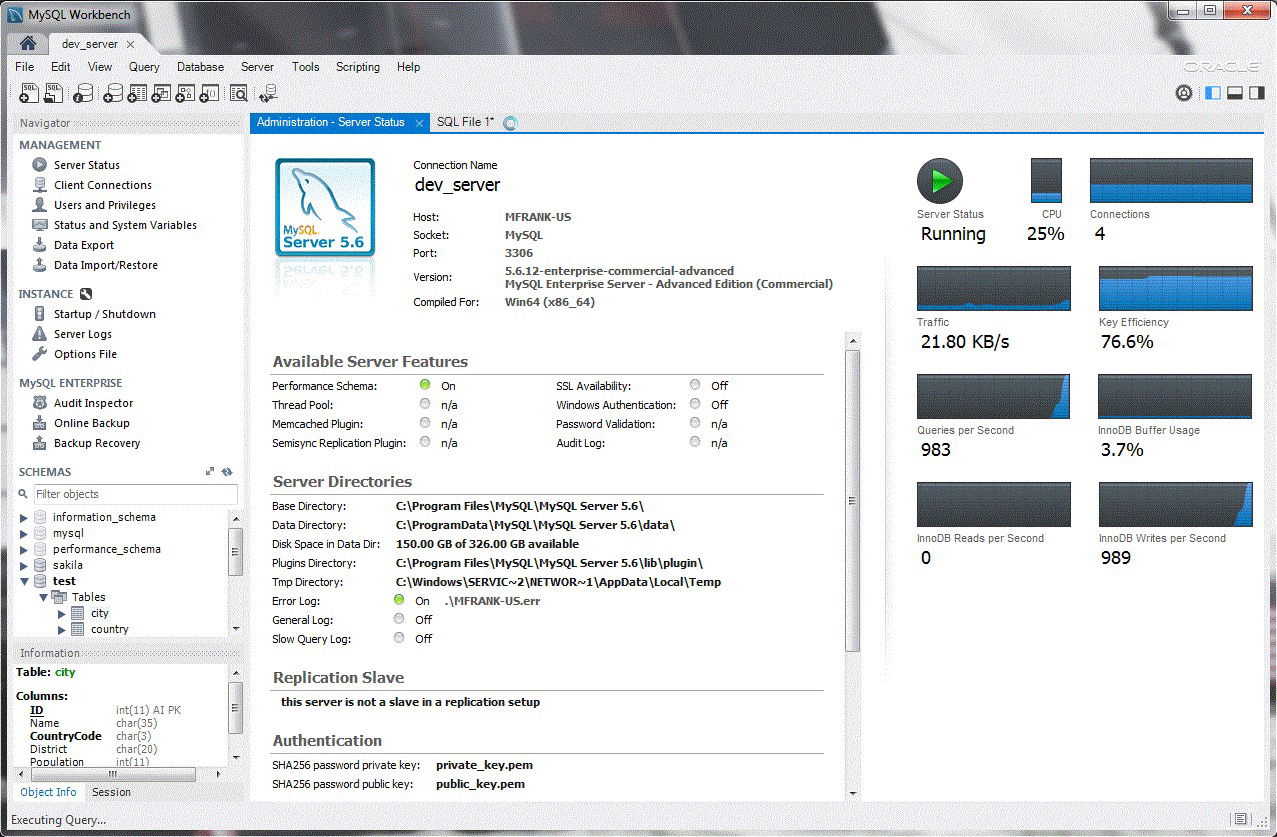
MySQL’s support for text search and multiple data types provides versatility in managing diverse data, whether structured or unstructured. It also supports integration with various programming languages and is compatible with a range of operating systems, including Linux, Windows and macOS, by ensuring it aligns with your tech stack. On the security front, MySQL provides database locking and detailed access control mechanisms, ensuring sensitive information remains secure from unauthorized access.
Pricing
MySQL offers multiple pricing options, including the Cluster Carrier Grade Edition, the Enterprise Edition, and the Standard Edition, each with separate variants for 1-4-socket and 5+ socket servers, ranging from $2,140 to $64,200 across these six options. It also offers the MySQL AI Subscription, a set of ML and GenAI capabilities on enterprise-grade MySQL, priced between $625 to $1,875.
What Works & What Doesn't
| Pros | Cons |
| Easy to set up | Limited advanced analytics |
| Strong community support | Manual tuning required |
| Reliable for applications | Scaling can be complex |
Our Final Take
MySQL is ideal for small- to mid-sized organizations, startups, and application-driven teams that need a reliable, cost-effective database management system. Yet, its paid versions are good options for large enterprises, too. While it may lack some advanced analytics features found in modern cloud-native platforms, its stability, flexibility, and large ecosystem make MySQL a solid DBMS choice.
Topics For More Insights
Microsoft SQL Server: Best For Security
Microsoft SQL Server is used by thousands of businesses worldwide and has earned multiple awards, including being recognized as a "Transaction Data Store" winner at the 2023 Data Quadrant Awards by Software Reviews. Microsoft has also been named a Leader in the Gartner Magic Quadrant for its Database Management Software multiple times.
Why We Chose Microsoft SQL Server In 2026
Microsoft SQL Server comes in strong with top-quality built-in AI and developer-first enhancements that enable developers to build AI apps consistently across cloud and on-premises environments, including native JSON support, REST APIs, and others. It offers a range of powerful features that make it a top choice for businesses. It provides reliable data storage, high availability, and excellent stability, while being highly scalable to grow with the business. Security is a major strength, offering encryption, user access controls and advanced threat protection to keep the data safe. Microsoft SQL Server simplifies data manipulation with a query language, enabling efficient data analysis, management, and retrieval.
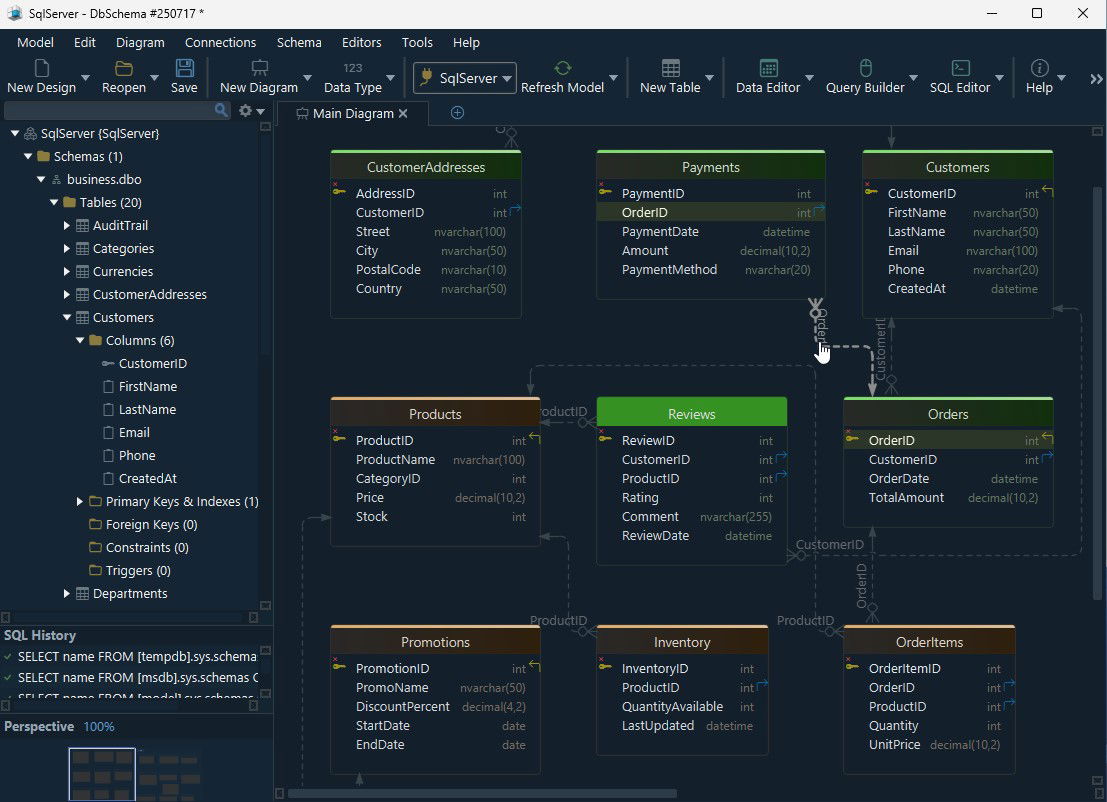
The tool also offers automated backup and recovery options for data protection. With seamless data migration capabilities, it’s easy to move data across environments. Additionally, SQL Server supports multi-user environments, enables smooth collaboration, and strengthens data security. It also works effortlessly with other Microsoft products, such as Azure, Power BI, and Microsoft Excel, allowing enhanced analytics, reporting, and cloud-based collaboration.
Pricing
Microsoft SQL Server offers four pricing plans: the Enterprise plan for $15,123, the Standard per-core plan for $3,945, the Standard server plan for $989, and the Standard CAL plan for $230, all with one-time payments. All these plans include volume licensing and channel availability for hosting. Standard CAL, the lowest tier, offers a free version and a free trial for businesses to explore before committing to a paid plan. Microsoft also offers free versions of the Developer (Standard & Enterprise) and Express plans.
What Works & What Doesn't
| Pros | Cons |
| Strong performance and stability | Licensing can be expensive |
| Deep Microsoft ecosystem integration | Resource intensive |
| Reliable security features | Limited cross-platform flexibility |
Our Final Take
Microsoft SQL Server is a great database management system example for mid-size to large enterprises that rely heavily on the Microsoft ecosystem and require a secure, high-performance database management system. While licensing costs and resource usage may be concerns for smaller teams, its reliability, governance, and hybrid deployment flexibility make SQL Server a strong contender as a DBMS.
Snowflake: Best For Scalability
Snowflake is a leading cloud data warehousing platform that serves over 11,000 companies globally. Snowflake has received remarkable industry recognition, including being named a Leader in the 2023 Gartner Magic Quadrant for Cloud Database Management Systems and Morgan Stanley’s 2025 Strategic Partner of the Year. In 2024, it was ranked among the best tools for cloud data integration and earned a spot in G2’s Top 50 IT Infrastructure Products at its Best Software Awards.
Why We Chose Snowflake In 2026
Snowflake takes the hassle out of data ingestion by automating the continuous flow of real-time data with smooth, effortless ETL. With built-in support for machine learning and data science workflows, it helps businesses turn diverse data into insights faster. Its independent compute and storage scaling ensures optimized performance at a cost-effective rate. Additionally, its automatic query optimization eliminates the need for manual fine-tuning, saving your data-driven teams time.
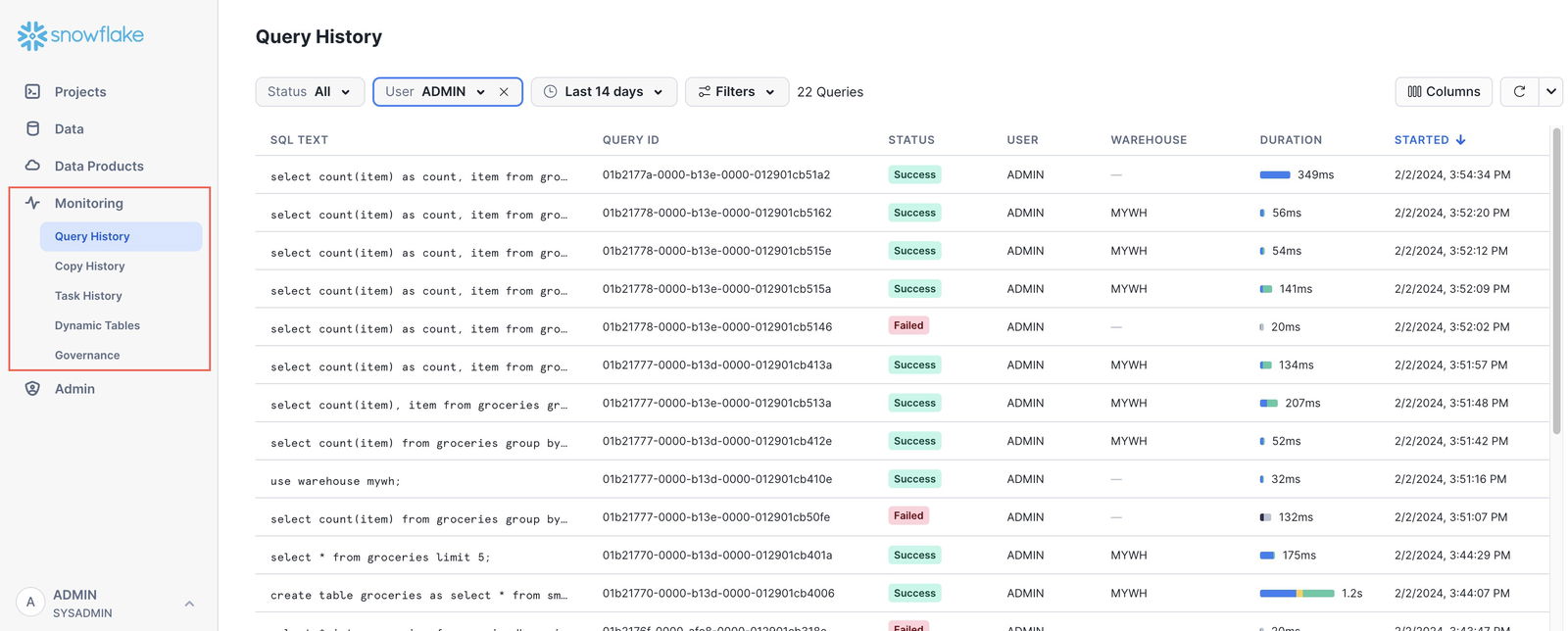
What sets Snowflake apart is its cloud-native design that offers businesses the flexibility to work across AWS, Azure and Google Cloud, whether you’re managing data warehouses, lakes or pipelines. Snowflake integrates easily with ETL platforms, business intelligence tools, and data science apps by centralizing data and analytics workflows.
Pricing
Snowflake uses a flexible pay-as-you-go pricing model and charges based on actual compute and storage usage. Businesses only pay for what they need while benefiting from highly scalable storage at competitive rates. Pricing tiers include Standard ($2/credit), Enterprise ($3/credit), and Business Critical ($4/credit), each offering additional features such as secure data sharing, encryption, and extended time travel.
What Works & What Doesn't
| Pros | Cons |
| Easy to scale compute | Can become expensive |
| Strong performance and speed | Limited native visualization |
| Simple SQL-based usage | Learning curve for advanced features |
Our Final Take
Snowflake is best suited for small to mid-size enterprises that need a highly scalable, cloud-native database management platform for analytics and data warehousing. It also works for large enterprises with data-driven teams operating across multiple cloud environments. While cost management can be a concern for smaller teams, Snowflake remains a strong choice for organizations prioritizing performance, flexibility, and modern data workloads.
Top 5 Database Management Software Comparison
P.S.: Always remember to visit the vendor's site for the latest information!
| Criteria |  |
 |
 |
 |
 |
| Starting Price | $699/year/license | NA | NA | $230/year | $2.00/credit |
| Avg. User Rating | 4.8 | 4.3 | 4.4 | 4.4 | 4.6 |
| Trial Period/Demo | 30-Day Free Trial | Free Demo | Free Demo | Free Demo | 30-Day Free Trial |
| Key Features | Multi-database support, SQL automation, and schema comparison | AI-native engine, converged data types, in-database ML, and enterprise security | Open-source RDBMS, high availability, and strong security | Advanced security, hybrid deployment, and Microsoft ecosystem integration | Cloud-native platform, independent scaling, and multi-cloud analytics |
| Integrations | Google Cloud, AWS, Microsoft Azure, and more | AWS, Azure, Oracle Cloud, and more | Debezium, AWS Glue, GCP, and more | Talend, Fivetran, Skyvia, and more | Adobe, Qlik, Tableau, and more |
Conclusion
As we step into 2026, it’s clear that data is no longer just the silent force shaping our decisions—it’s the lifeblood of innovation. Managing this data effectively requires software that goes beyond the basics, and these Top 5 Database Management Software deliver exactly that!
So, as you gear up for the year ahead, ask yourself. Is your database management system software up for the challenge? If not, explore these tools because the right choice today can be the key to unlocking tomorrow’s possibilities.
Frequently Asked Questions
What Are The Top Database Management Software Options To Consider In 2026?
In 2026, some of the most widely considered database management software include dbForge Edge, Oracle AI Database, MySQL, Microsoft SQL Server, and Snowflake. These tools are chosen based on their ability to handle modern workloads, including AI-driven analytics, multi-cloud deployments, security requirements, and scalability needs. Each caters to different business sizes and technical priorities, ranging from enterprise-grade reliability to cost-effective open-source flexibility.
How Do I Choose The Right Database Management Software For My Business In 2026?
Choosing the right database management software depends on factors like business size, data volume, security needs, deployment preferences, and in-house expertise. Enterprises running mission-critical workloads may prioritize security, availability, and AI-native capabilities, while startups and mid-sized teams often look for ease of use, cost efficiency, and community support. It’s also important to consider whether the tool supports cloud, on-premises, or hybrid environments and how well it integrates with existing analytics, application, and AI stacks.
Is Cloud-Native Database Management Software Better Than Traditional Databases?
Cloud-native database management software is often better suited for businesses that require rapid scalability, flexible pricing, and support for modern analytics and AI workloads. These platforms reduce infrastructure management overhead and allow teams to scale compute and storage independently. Traditional databases, however, still play a critical role for organizations that need strict control, predictable performance, or compliance-driven on-premises deployments. In 2026, many businesses adopt a hybrid approach, combining cloud-native flexibility with traditional database reliability.
Tue, Jan 20, 2026

Enjoyed what you've read so far? Great news - there's more to explore!
Stay up to date with the latest news, a vast collection of tech articles including introductory guides, product reviews, trends and more, thought-provoking interviews, hottest AI blogs and entertaining tech memes.
Plus, get access to branded insights such as informative white papers, intriguing case studies, in-depth reports, enlightening videos and exciting events and webinars from industry-leading global brands.
Dive into TechDogs' treasure trove today and Know Your World of technology!
Disclaimer - Reference to any specific product, software or entity does not constitute an endorsement or recommendation by TechDogs nor should any data or content published be relied upon. The views expressed by TechDogs' members and guests are their own and their appearance on our site does not imply an endorsement of them or any entity they represent. Views and opinions expressed by TechDogs' Authors are those of the Authors and do not necessarily reflect the view of TechDogs or any of its officials. While we aim to provide valuable and helpful information, some content on TechDogs' site may not have been thoroughly reviewed for every detail or aspect. We encourage users to verify any information independently where necessary.
Loading comments...