
Financial Management Solutions
Top 5 Accounting Software Of 2026
Share
TL;DR
Modern accounting software streamlines business growth by automating complex financial workflows, improving accuracy, and providing real-time cash flow insights.
-
Sage Intacct: Provides powerful multi-entity consolidation and AI-driven insights for large-scale enterprise financial management.
-
QuickBooks Online: Offers an intuitive user experience with AI agents that automate bookkeeping and forecasting for small businesses.
-
Acumatica: Delivers deep customization through a flexible cloud-native ERP designed for industry-specific compliance and resource-based pricing.
-
Xero: Features high-impact integration with Melio to provide a unified, end-to-end invoicing and payment tracking workflow.
-
Zoho Books: Supplies the best overall value with affordable plans and tight integration across the entire Zoho ecosystem.
Introduction
If you have ever seen Hayao Miyazaki’s Spirited Away, you probably remember the chaotic bathhouse run by the witch Yubaba. While Chihiro had to navigate magical creatures and strange rules to earn her tokens, modern business owners face a similarly overwhelming challenge managing their own financial "bathhouses." Instead of soothing spirits, you are dealing with a flood of vendor invoices, payroll, and complex operational expenses that can quickly turn into a nightmare without the right oversight. Just as a well-run bathhouse requires order to thrive, a growing company needs a digital backbone to keep its ledger from turning into a mess of "stink spirits."
What Is Accounting Software?
Accounting Software is a solution that makes financial chores easier for businesses by automating and managing them. It tracks transactions, generates reports, and helps people stick to their budgets by automatically tracking taxes, income, and spending. This solution simplifies the process and gives businesses a clear picture of their financial situation.
Now that you know what it means, let's get to the list, shall we?
Top 5 Accounting Software Solutions Of 2026
Accounting Software offers various features such as automated bookkeeping, financial reporting, expense tracking, and tax management. This not only simplifies tasks by eliminating manual data entry but also ensures accuracy and provides real-time financial insights.
As a result, businesses can save time, reduce human errors, and make informed decisions with clear, up-to-date reports. Eventually, this allows companies to grow with time and make better financial decisions.
Here are some of the best business accounting software for 2026, each offering unique benefits. We have listed them in no specific order to help you explore the best fit for your needs.
 |
 |
 |
 |
 |
Sage Intacct: Best For Enterprise
In 2026, Sage Intacct remains on our list as the best cloud-based financial management platform for growing companies. The platform was acquired by Sage in 2017 and now serves more than 17,000 businesses worldwide. Sage's latest move into AI with Copilot has made Sage Intacct even more useful for companies looking to automate their accounting and gain more insights. It was also recognized as a Leader in the 2025 G2 Grid® Report for Mid-Market Accounting and earned accolades from TrustRadius for Best Feature Set and Best Relationship.
Why We Chose Sage Intacct In 2026
Sage Intacct stands out for its modular, cloud-native architecture and robust financial features tailored to complex business environments. Intacct is adept at handling accounting for multiple entities, multiple currencies, and unique industries with real-time reporting, AI-enhanced dashboards, and Salesforce integrations. This makes it the financial engine of choice for many finance teams.
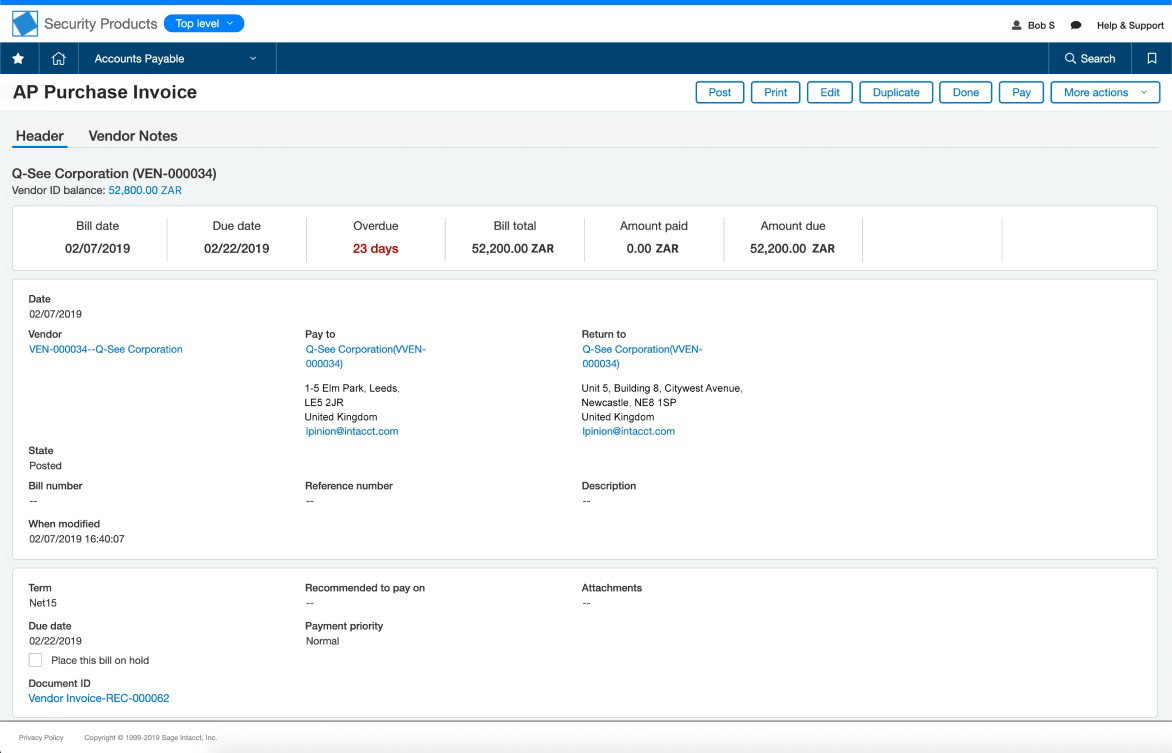
Beyond these features, what truly differentiates Sage Intacct in 2026 is its ability to automate time-consuming tasks such as consolidations, approvals, and closings. It offers SOC 2 compliance, strong customer service, an extensive partner ecosystem, and APIs for advanced customization—ideal for businesses navigating rapid growth or complexity.
Pricing
Sage Intacct offers custom quote-based pricing, including options for a product demo and a modular structure based on selected features.
What Works And What Doesn’t
| Pros | Cons |
| Modular, enterprise-ready design | Steep learning curve |
| Strong multi-entity support | Initial setup takes time |
| Powerful automation and analytics | Advanced features cost extra |
Our Final Take
In the end, Sage Intacct is best suited for mid-size to large organizations managing multiple entities or complex operations, looking for enterprise-grade accounting and automation. It may not be ideal for freelancers or SMBs due to the cost and learning curve. However, it’s a great choice if you want a future-ready, finance-first cloud solution with serious muscle.
QuickBooks Online: Best User Experience
QuickBooks Online by Intuit makes a powerful debut on our 2026 list, cementing its place as a frontrunner in AI-driven accounting for SMBs. With over 7 million users globally, the platform recently launched AI agents that automate bookkeeping, invoicing, and forecasting. It was also recognized as Best AI Accounting Software 2025 by Better Business Advice and earned top marks in Gartner Peer Insights for small-business finance tools.
Why We Chose QuickBooks Online In 2026
QuickBooks Online brings unmatched ease of use, AI-powered automation, and smart integrations under one umbrella. It's easy to use and flexible, with the platform offering small businesses an accounting tool that automates expense categorization and provides a real-time snapshot of their cash flow. Its community of 750+ apps and smooth bank syncing make it a flexible solution.
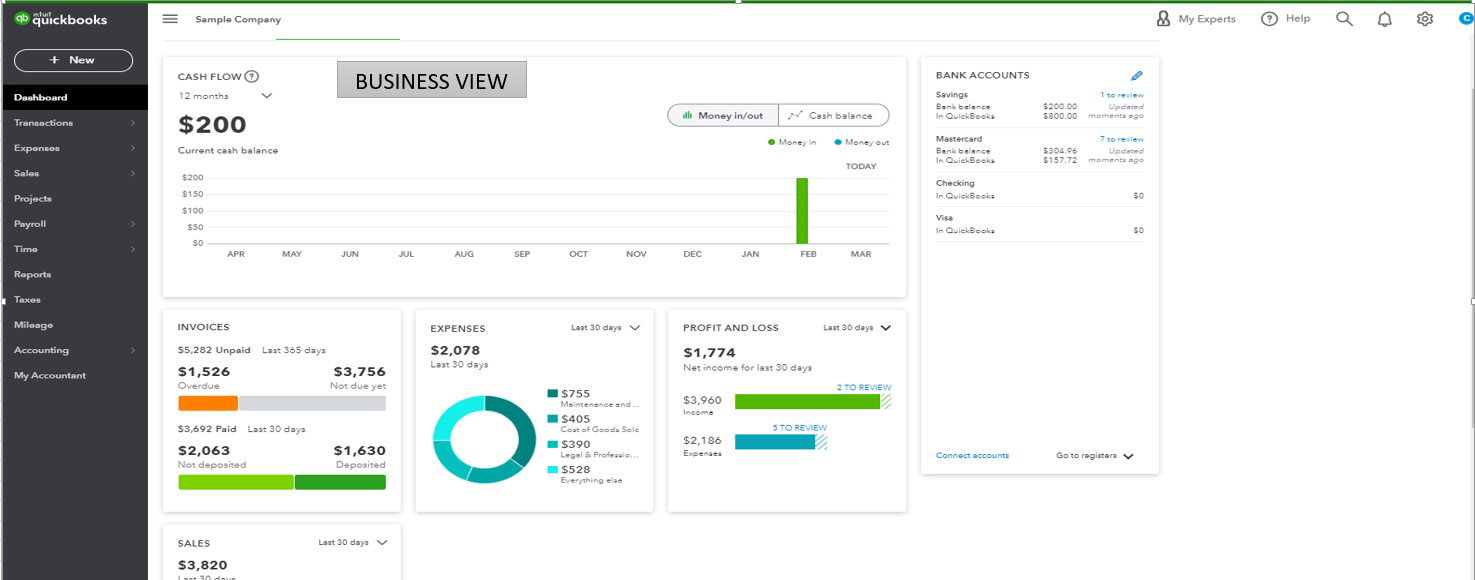
The 2026 edition introduces AI-enhanced reconciliation, proactive financial alerts, and seamless collaboration with accountants. Whether it's payroll, inventory, or sales tax filing, QuickBooks keeps it under one roof. Additionally, its strong knowledge base, customer support, and ProAdvisor network enhance usability, and its cloud-first compliance models and security are robust as well.
Pricing
Pricing of QuickBooks Online begins at $38 per month and can exceed $200 for advanced feature tiers. The platform offers a 30-day free trial, though there is no freemium plan. Users can access seasonal discounts and onboarding support from certified ProAdvisors.
What Works And What Doesn’t
| Pros | Cons |
| AI agents automate bookkeeping workflows | Becomes costly with feature add-ons |
| Seamless mobile experience with cloud-first design | Not suited for complex multi-entity setups |
| 750+ app integrations across 24K+ financial institutions | No permanent free plan |
Our Final Take
Overall, our new entrant, QuickBooks Online, is a great online accounting software for freelancers, solopreneurs, and small teams looking for an intuitive, AI-driven accounting experience. It may not be ideal for multi-entity or enterprise-level finance teams. It is a smart choice if you want speed, simplicity, and future-ready automation.
Acumatica: Best Customization
Acumatica remains on our 2026 list as a flexible, cloud-native ERP that continues to outpace market expectations. Founded in 2008 and acquired by Vista Equity Partners in 2025, the company has steadily strengthened its position across the SMB and mid-market segments. It earned Leader status in the 2024 IDC MarketScape for SMB and mid-market ERP and was named a Strong Performer on Gartner Peer Insights, backed by a 4.5 out of 5 rating and a 96 percent recommendation rate. Acumatica also featured G2’s Top 100 Global Software Companies for 2025, with additional recognition for usability, customer satisfaction, and partner excellence in G2 and CRN reports.
Why We Chose Acumatica In 2026
We picked Acumatica because it has a strong focus on mid-market, industry-specific cloud ERP, and flexible licensing. Unlike some of its competitors, Acumatica can be deployed in different ways. It has a scalable design and a licensing model that grows with businesses without charging them extra for more transactions or users. Its strengths lie across many fields, including manufacturing, retail, and construction.
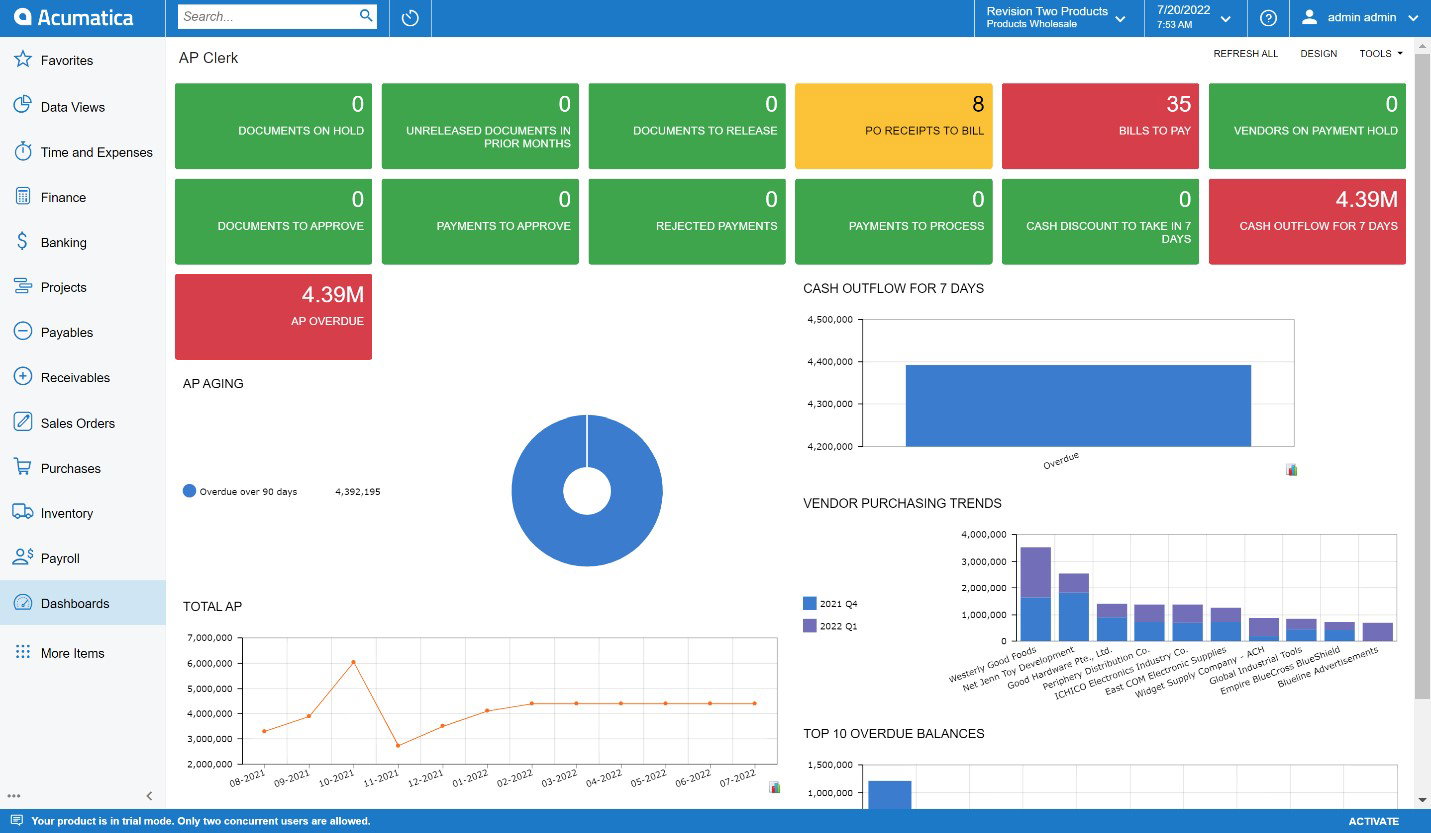
Acumatica shines in 2026 with its real-time dashboards, ability to work across multiple industries, and global regulations, such as SOC 1/2, GDPR, and PCI DSS. Users can deploy it in the cloud or in a hybrid environment, with APIs for easy collaboration. Also, the licensing model stands out for its fairness, with pricing based on resource usage, such as processing power, rather than the number of user seats.
Pricing
Acumatica does not publicly list its pricing, but it does offer a custom pricing plan based on modules and deployment, typically via subscription. Acumatica also offers product demonstrations to ensure you make the right decisions for the business.
What Works And What Doesn’t
| Pros | Cons |
| Industry-specific modules and global compliance | Licensing complexity for smaller firms |
| Resource-based fair pricing and flexible deployment | Implementation can be lengthy due to modular complexity |
| Modern UI with customizable dashboards and workflow automation | Steep learning curve for users new to the ERP environment |
Our Final Take
In a nutshell, Acumatica is best suited for mid-sized businesses across industries that require a scalable, industry-specific ERP with modern compliance at effective licensing costs. It may not be an ideal accounting software for small businesses due to its complexity and cost. However, it is a smart pick if you're after a future-proof, mobile-ready ERP that adapts as your business grows.
Topics For More Insights
Xero: Best For Integration
Xero makes a high‑impact debut on our 2026 list, freshly energized by its blockbuster $2.5 billion acquisition of Melio, a U.S. payments platform, signaling a strategic expansion into integrated accounting-and-payments solutions. Xero has earned recognition as a Global Fintech Breakthrough Award winner for Best Overall Accounting Platform and was named among the 2025 Equileap Top 100 for Women’s Equality in the Workplace.
Why We Chose Xero In 2026
We picked Xero because it has a vision for the future, bringing accounting and payments together on a single platform for small businesses. Xero is quickly growing its position in the U.S., with Melio processing $30 billion in payments and 80,000 clients onboarded. It offers small businesses unified cash flow, billing, and bookkeeping workflows.
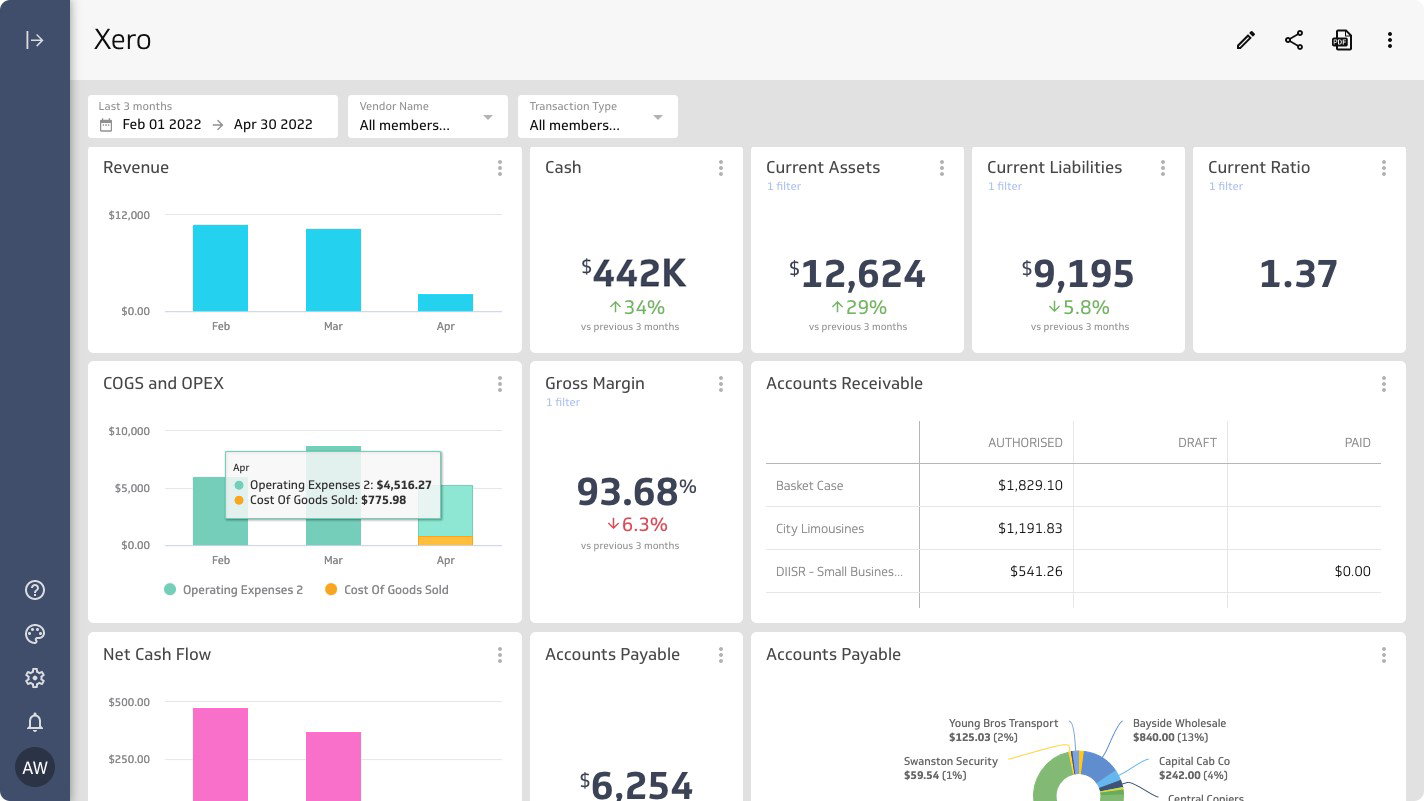
In 2026, Xero delivers advanced end-to-end invoicing‑to‑payments, enhanced cash flow forecasting, and automated reconciliation powered by Melio. Its platform ensures robust bank-level security, extensive customer support, and a thriving ecosystem of connected apps. This makes it an ideal choice for growing digitally native businesses aiming for operational efficiency and better financial insight.
Pricing
Xero’s subscription starts at around $29 per month for small businesses, with higher tiers unlocking payroll, project accounting, and payments capabilities as needs grow. A 30-day free trial lets teams explore the platform hands-on, and following its Melio integration, users now have more flexibility with transaction-based pricing options.
What Works And What Doesn’t
| Pros | Cons |
| Unified accounting and payments workflow with Melio integration | U.S. expansion and integration complexity may cause temporary disruptions |
| User-friendly cloud platform with strong app ecosystem | May lack depth for enterprise-level finance and ERP needs |
| Built-in invoicing, reconciliation, and payment tracking in one flow | Compliance and regulatory functions differ across regions |
Our Final Take
Overall, Xero is the best accounting software for small businesses, looking for a streamlined, all-in-one accounting and payments system. However, it may not suit large, highly regulated enterprises needing complex ERP functionality. In all, it’s a smart pick if you want a modern, efficient, award-winning fintech edge with unified financial workflows.
Zoho Books: Best Value
Zoho Books remains a dependable fixture on our 2026 list, consistently delivering robust, cloud-based accounting for small to mid-sized businesses. Built by Zoho Corporation, it's widely adopted and offers paid plans that scale for comprehensive enterprise options. It's consistently recognized as scalable and automation-rich, earning praise for its affordability and ease of use, earning the 2025 Emotional Footprint Champion award from SoftwareReviews.
Why We Chose Zoho Books In 2026
Zoho Books is unique because it combines full-fledged accounting, billing, expense tracking, inventory management, and client portals into a single environment. Moreover, its tight integration with Zoho's larger suite (CRM, Inventory, and Projects) makes it a flexible and cost-effective choice for growing businesses that need to manage multiple workflows.
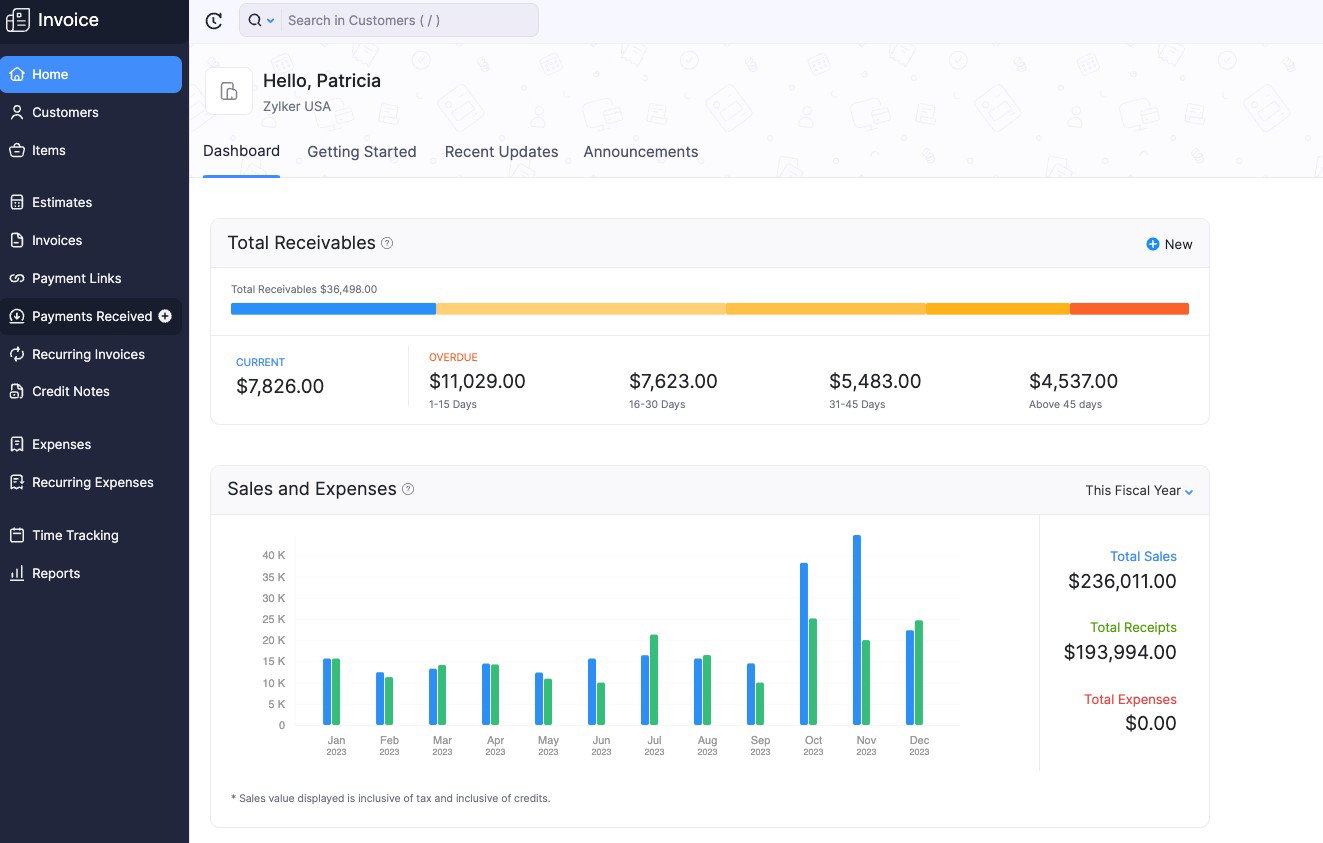
In 2026, Zoho Books offers advanced analytics and revenue recognition through its add-ons, enhanced workflow automation, and tight integration with the Zoho ecosystem. It adheres to security standards like SOC 2 Type II, HIPAA, and PCI-DSS, ensuring compliance and safeguarding sensitive financial data. This, combined with multi-channel support (chat, email, phone), makes it practical and secure for both startups and scaling businesses.
Pricing
Zoho Books offers flexible pricing plans to suit businesses of all sizes. A free version is available for solopreneurs and micro-businesses, while paid tiers start at $15 per month (billed annually) for Standard, $40 for Professional, and $60 for Premium. Each plan scales with added features and user capacity.
What Works And What Doesn’t
| Pros | Cons |
| Full workflow automation with inventory, invoicing, client portal, and reconciliation in a unified flow | Integration beyond the Zoho ecosystem can be limited |
| Flexible, free & affordable paid plans scale with business needs | Customer support is limited for free-tier users |
| Strong security compliance and mobile-friendly design | Interface can feel fragmented when using multiple Zoho apps |
Our Final Take
Overall, Zoho Books is the best option for small to medium-sized businesses and workers who want comprehensive accounting functionality in an easy-to-use interface. Still, it might not be the best choice for people who need third-party features that aren't part of the Zoho stack. It is a smart choice if you want an affordable, scalable tool that grows with your business across multiple functions.
Top 5 Accounting Software Comparison
P.S: Always remember to visit the vendor’s site for the latest information!
| Criteria |  |
 |
 |
 |
 |
| Starting Price | N/A | $38/month | N/A | $29/month | $15/month |
| Avg. User Rating | 4.3 | 4.4 | 4.5 | 4.3 | 4.4 |
| Trial Period/Demo | Demo | 30-days | Demo | 30-days | 30-days |
| Key Features | Multi-entity consolidation, AI insights, and advanced reporting | AI bookkeeping, invoicing, and payroll | Industry modules, global compliance, and more | Invoicing-to-payments integration, cash flow automation, and more | Workflow automation, Zoho suite integration, and mobile access |
| Integrations | Salesforce, ADP, SAP Concur, and more | 750+ apps, 24,000+ bank syncs, and more | Native APIs, Microsoft, Avalara, and more | 1,000+ apps via Xero Marketplace | Zoho CRM, Stripe, PayPal, and more |
Conclusion
The Accounting Software space in 2026 is all about automation, adaptability, and strategic insight. Whether you're a solo founder looking for streamlined invoicing or a mid-market enterprise managing multi-entity operations, the right tool can make all the difference.
From AI-powered bookkeeping in QuickBooks Online to enterprise-grade depth in Sage Intacct and Acumatica, and from payment-first workflows in Xero to workflow automation and affordability in Zoho Books, each platform brings a unique edge to the accounting table.
The best pick depends on where your business is right now and where you’re going.
So, what are you waiting for? Make a choice and grow your business already.
Frequently Asked Questions
What Are The Top 5 Accounting Software For 2026?
The top five accounting tools for 2026 are Sage Intacct, QuickBooks Online, Acumatica, Xero, and Zoho Books. These platforms lead to automation, scalability, compliance, and integration, catering to businesses of all sizes with evolving financial and operational needs.
What Is The Best Accounting Software In 2026?
The best accounting software in 2026 depends on your business size and needs. For enterprises, Sage Intacct or Acumatica leads. For small businesses, QuickBooks Online and Zoho Books stand out due to ease of use, automation, and affordability.
What Are The Features Of Accounting Software?
Modern accounting software offers features like invoicing, expense tracking, bank reconciliation, cash flow forecasting, reporting, multi-currency support, and automation. Leading platforms also include AI-powered workflows, compliance tools, integrations, client portals, inventory, and industry-specific ERP modules.
Fri, Jan 23, 2026

Enjoyed what you've read so far? Great news - there's more to explore!
Stay up to date with the latest news, a vast collection of tech articles including introductory guides, product reviews, trends and more, thought-provoking interviews, hottest AI blogs and entertaining tech memes.
Plus, get access to branded insights such as informative white papers, intriguing case studies, in-depth reports, enlightening videos and exciting events and webinars from industry-leading global brands.
Dive into TechDogs' treasure trove today and Know Your World of technology!
Disclaimer - Reference to any specific product, software or entity does not constitute an endorsement or recommendation by TechDogs nor should any data or content published be relied upon. The views expressed by TechDogs' members and guests are their own and their appearance on our site does not imply an endorsement of them or any entity they represent. Views and opinions expressed by TechDogs' Authors are those of the Authors and do not necessarily reflect the view of TechDogs or any of its officials. While we aim to provide valuable and helpful information, some content on TechDogs' site may not have been thoroughly reviewed for every detail or aspect. We encourage users to verify any information independently where necessary.
Loading comments...