
Data Management
Manage It All With Metadata Management Software
Share
Overview
In business use cases, metadata is used to add a description to stored data, making it easier to categorize and access data assets. Yet, as the volume and complexity of data increase, metadata also needs to keep up. That is why businesses rely on Metadata Management Software. Read on to learn all about this nifty software!
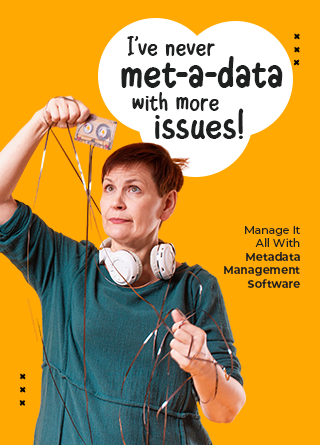
-(1).png.aspx "TechDogs-\"Manage It All With Metadata Management Software\" I've Never Met-a-data With More Issues!")
Most of us remember Andy Dufresne for his daring escape from Shawshank State Prison in the movie Shawshank Redemption. However, we want to highlight his role in building the prison library. For six years, Andy penned letters to the government requesting books and money to help establish a prison library. He persisted till the state gave in and sent him a $500 annual subsidy. He went on to build the finest prison library in New England. Yet, he could not have managed it without metadata management!
Metadata management organizes large datasets to ensure every asset is discoverable across the enterprise. Andy would have documented every book title, its genre, author, etc. to ensure each book would be easy to locate. Similarly, businesses need to create metadata policies and guidelines to get the most out of their digital assets. Metadata Management Software makes this easier by automating metadata discovery, integration, sharing and analysis throughout the organization.
Let’s understand what this tool does.
Understanding Metadata Management Software!
Data that describes and provides context for a business asset is known as metadata. Metadata is vital for identifying and tracking the millions of assets at the enterprise level. It represents the who, what, where, when, why and how of each asset. Here’s what we mean:
-
Who created or modified the asset?
-
What is the business need for the asset?
-
Where is the asset located?
-
Why is the business storing the asset?
-
When was the asset last used or accessed?
-
How is the asset being maintained?
Yet, with the amount of business data generated and stored daily, it becomes challenging to answer these questions. Metadata Management Software enables businesses to search and identify key attributes of assets through its metadata, making it simpler and faster.
For example, searchable metadata attributes such as Account Number or Customer ID can help businesses quickly identify a user within their massive database. With a robust metadata management strategy in place, businesses are able to understand and use their data much better. Apart from better data governance and quality, this tool also improves “time to insight” as contextual data are identified faster.
Talking about faster, it took Andy Dufresne 19 years to dig a tunnel and escape Shawshank (oops, spoiler alert!). However, the journey toward Metadata Management Tools took much longer.
Evolution Of Metadata Management Software
The amount of business data has exploded over time. As a result, businesses started adopting cloud storage and better data management approaches. A significant change resulted from this transition: the realization of how valuable metadata can be!
Generation 0: In the past, metadata was not really considered data. It was like a second-class citizen in the world of data. While metadata was necessary for systems to function, metadata management was not acknowledged at all. Businesses justified it merely by saying:

Generation 1
Luckily, metadata got some recognition in the 1980s. Although minimal integration was used, metadata was stored in separate data silos. Only structured and technical metadata was stored, while business metadata was almost completely ignored. This was also the time when the first metadata management solution was developed.
Generation 2
Businesses finally started collecting and integrating metadata from various sources in early 2000s, including ETL definitions, SQL code, etc. The mining for additional metadata led to the development of metadata management platforms with better capabilities. These tools made it easier for businesses to manage repositories of data assets.
Generation 3
That wasn’t the end: imagine a massive library where the information on every book is accessible in seconds! This is possible with modern metadata management solutions as they mine and organize metadata from various business sources in an automated manner. This means that the metadata life cycle is managed end-to-end and in real time.To summarize, Metadata Management Software can today provide meaningful context and information about business assets instantly. Yet, the question you are asking is “how?” – read on!
How Does Metadata Management Software Work?
Based on the metadata created by various systems, including your data warehouse, data integration tools, ERP platform, etc., Metadata Management Software constructs an enterprise model. It resolves conflicts between metadata by ensuring consistency among key attribute names. To help you merge metadata from two different systems, the tool even allows you to create custom metadata types and names. Hence, Metadata Management Software helps you attain a comprehensive understanding of your organizational data.
Additionally, Metadata Management Software allows you to edit and control data categorization for business assets. As Metadata Management Software organizes and tracks metadata, it can assist you in creating tags to identify sensitive business information. Then, by developing roles and policies based on these tags, access to critical data can be controlled. Metadata Management Software can be vital in ensuring that data governance, privacy regulations and compliance standards are met.
However, some of you may have outsourced data management or not undertaken metadata initiatives yet. How important is Metadata Management Software to you then? We believe that metadata management is to data-driven businesses what Ellis Boyd "Red" Redding was to Andy Dufresne!
.gif.aspx "TechDogs-\"How Does Metadata Management Software Work?\"A GIF Of Red From The Shawshank Redemption Movie")
Read on to know why we say that!
Importance Of Metadata Management Software
Metadata Management Software is vital because it enables businesses to easily leverage metadata to understand, aggregate, categorize and analyze business data. This helps identify numerous data quality issues simply through metadata analysis, saving businesses time and reducing issues caused by poor-quality data.
If metadata is not managed throughout the system lifecycle, inconsistent metadata silos that provide contradictory information will be created throughout the enterprise. Businesses would waste time trying to find the "right" metadata as they wouldn't be able to answer the who, what, where, when, why and how of their assets. For enterprises that produce massive amounts of data, this might be a real challenge. The clear and rich context that Metadata Management Software provides ensures that data becomes a valuable enterprise asset, not another headache to be managed.
Nikki Chang, who headed a data management group at Chevron, summed it up by saying, “Quality metadata makes everything we do easier, from internal communications to planning new applications to making better decisions.”
Considering this, you can bet that this tool has several benefits for you!
Benefits Of Metadata Management Software
By now, you must have realized how important it is to manage metadata if your business uses data. (Heck, doesn’t every business now?) So, here are some benefits of Metadata Management Software you need to know:
-
Improved Consistency
To prevent problems with data retrieval caused by conflicting terms, the tool aids in establishing a uniform definition of metadata identifiers and attributes throughout the organization. This also enables businesses to align better with data governance policies.
-
Automation
Metadata management solutions use automation to find errors, inconsistencies and other problems with business metadata.
-
Faster Insights
Businesses have more time to examine data and extract business value because contextual metadata helps them identify assets quicker, resulting in faster project delivery.
-
Reduced Operational Costs
Data initiatives see increased efficiency and reduced costs as automated and repeatable metadata management results in lower manual effort and greater productivity.
Did you know that 181 zettabytes of information will be created, captured, copied and consumed worldwide in 2025 – that’s almost twice as much as the amount in 2022 (97 zettabytes)? Naturally, metadata management is all set to get smarter to keep up with this increase in data – read on.
What’s The Future Of Metadata Management?
Businesses need to locate crucial assets among billions of others. This is possible with the aid of Metadata Management Software. Yet, as enterprise data grows, businesses want to expand on technical metadata by turning the jargon (system data, tabular information, etc.) into contextual metadata with real-world value. Instead of returning key identifiers, the tool will give information about the data asset in simple, understandable terms. With such tools, businesses will easily locate sensitive data that needs to be encrypted and secured. This will also benefit businesses that are under the purview of privacy laws such as the CCPA and GDPR. Moreover, metadata management solutions will be used by organizations to demonstrate the security and compliance of their data assets during audits.
.gif.aspx "TechDogs-\"What’s The Future Of Metadata Management?\"Andy Dufresne From Shawshank Redemption Saying Wow")
Summing It Up
Metadata is the key attribute of business assets, such as data type, storage location, size, software extension, etc. Data can be found and retrieved more easily, identified quickly and leveraged more effectively if its metadata is managed. By offering a centralized format for this information to be gathered, accessed and analyzed, metadata management tool enhances the value of metadata. As a result, data utilization, management and analytics become faster and more effective across business processes.
Frequently Asked Questions
What is metadata management software and why is it important?
Metadata management software organizes large datasets by providing context and structure to each asset, ensuring they are discoverable across the enterprise. It helps businesses create policies and guidelines for managing digital assets efficiently. This software automates metadata discovery, integration, sharing, and analysis, enabling businesses to understand and utilize their data effectively.
How does metadata management software work?
Metadata management software constructs an enterprise model based on metadata created by various systems, resolving conflicts and ensuring consistency among key attribute names. It allows for custom metadata types and names, assists in data categorization, and helps in creating tags to identify sensitive information. By developing roles and policies based on these tags, access to critical data can be controlled, ensuring data governance, privacy regulations, and compliance standards are met.
What are the benefits of using metadata management software?
Metadata management software offers several benefits, including improved consistency in metadata identifiers and attributes, automation for error detection and problem-solving, faster insights through contextual metadata, and reduced operational costs due to increased efficiency and productivity. These benefits are crucial for businesses to efficiently manage their ever-growing volumes of data and extract valuable insights from it.
Wed, Nov 16, 2022

Enjoyed what you read? Great news – there’s a lot more to explore!
Dive into our content repository of the latest tech news, a diverse range of articles spanning introductory guides, product reviews, trends and more, along with engaging interviews, up-to-date AI blogs and hilarious tech memes!
Also explore our collection of branded insights via informative white papers, enlightening case studies, in-depth reports, educational videos and exciting events and webinars from leading global brands.
Head to the TechDogs homepage to Know Your World of technology today!
Disclaimer - Reference to any specific product, software or entity does not constitute an endorsement or recommendation by TechDogs nor should any data or content published be relied upon. The views expressed by TechDogs' members and guests are their own and their appearance on our site does not imply an endorsement of them or any entity they represent. Views and opinions expressed by TechDogs' Authors are those of the Authors and do not necessarily reflect the view of TechDogs or any of its officials. While we aim to provide valuable and helpful information, some content on TechDogs' site may not have been thoroughly reviewed for every detail or aspect. We encourage users to verify any information independently where necessary.
Loading comments...