
Communication and Collaboration Software
Introducing Digital Rights Management (DRM) Software
Share
Overview
We are talking about Digital Rights Management (DRM) Software, a technology that gives netizens the ability to only access and download the content they are allowed to. This means that if any consumer (viewer) violates the terms of use, they won’t be able to access the content anymore. To help you understand how it all works, we begin with what digital rights are, how digital rights are managed and essentially how DRM Software does it all - in detail.
So, without further ado, join us as we unveil everything about Digital Rights Management (DRM) Software. Read on!
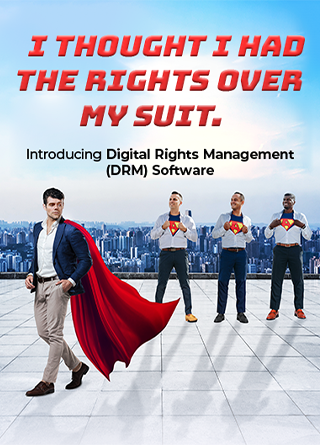
.png.aspx "TechDogs-\"Introducing Digital Rights Management (DRM) Software\" - I Thought I Had The Rights Over My Suit.")
Have you ever heard the term digital rights? Chances are you might be unaware but it's crucial for all the content creators out there to know this. Well, digital rights include the right to reproduce any content, the right to display, the right to make the work available (on any online platform or social media) and the right to use it in public communications.
Moving ahead, Digital Rights Management (DRM) is a set of restrictions that content providers set for their digital content to make it harder for anyone to copy or share it with others. During this whole process, DRM Software works behind the curtains as a superhero in disguise! How, you ask?
We all know that Superman was known as the protector of Metropolis and a symbol of hope throughout the world. Likewise, DRM Software is a ray of hope for all the content creators and producers of the digital world. This software empowers content creators and service providers to restrict how their content can be used. Superman uses a combination of his mental abilities and supernatural powers to overcome difficulties, threats and challenges. Similarly, DRM Software uses a set combination of laws and technologies to restrict how consumers can interact with digital content, giving content creators and service providers the ability to determine how their content can be used.
Well, that's not all about it; read on to unbox the whole concept of DRM Software!
What Is Digital Rights Management Software?
Before we decode the concept of DRM Software, we want to reiterate digital rights and digital rights management.
Digital rights are the extension of the Universal Declaration of Human Rights by the United Nations, as applied to the online world. Digital Rights Management (DRM) refers to digital technologies that manage access to digital content. It gives the content owner the power to restrict users' access to that content. However, just like the fictional world, supervillains of the digital world did their best to constantly come up with new and frightening scenarios like piracy! Little did they know, Digital Rights Management (DRM) Software (read Superman!) is here to protect content creators, service providers and brands.

DRM Software is essential because it allows content owners to restrict copyrighted material and grant access to only those who paid for it. This software is the backbone of Digital Rights Management because it allows content publishers and brands to sell their digital content in a way that makes it difficult for people to illegally share it. DRM Software has changed the (digital) world as it governs the use, modification and distribution of copyrighted work.
Just as every wonder of technology evolves with time, so did DRM Software – let's take a look.
Evolution Of Digital Rights Management (DRM) Software

In the words of Superman, "The 'amazing' can only be created by facing fear, risk and failure during the process." Even DRM Software became a lot more amazing during its evolution over time. Don't you believe us? Read it yourself!
So, there was an era when piracy in the music and movie industry was at its peak and it became a significant challenge for producers. The issue of piracy was like Lex Luther and Zod combined - the world needed a ray of hope. However, as the saying goes, every problem comes with an equal or greater opportunity, the humungous issue of piracy created the opportunity for digital rights management. Later, Digital Millennium Copyright Act gave it (read digital rights management) a legal component. Hurray!
Do you know that Electronic Publishing Resources, Inc., played a vital role in creating DRM? This company paved the way for secured content and used terminologies like 'middleware', 'encryption' and 'container' to flaunt the earliest attempts at creating DRM tools. Moving ahead, in 1998, more than 120 companies came together on something known as the Secure Digital Music Initiative to create an open framework for sharing encrypted music. Later, the technology called DigiBox became the first and most crucial part of modern Digital Rights Management Software. Since then, DRM Software has been protecting the livelihood of those creating online content and the rest is history…
After the glimpse into the brief history of DRM Software, let's head on to the next section and figure out how it works!
Working Of Digital Rights Management Software




"What makes Superman a hero is not that he has power but that he has the wisdom and the maturity to use the power wisely." – Christopher Reeves. Likewise, what makes DRM Software robust is, well, how it works. Read on to find out all about it!
-
The first effective strategy implemented by DRM Software is restrictive licensing. The content producers create a license that legally prevents users from using it for commercial and public distribution processes. For example, watermarks make sharing or using the image in unethical ways next to impossible.
-
DRM Software creates a super strong layer of digital infrastructure! It eventually enables users with a robust digital infrastructure by maintaining a line of visibility on how, why and when the content is shared.
-
The cryptography technique of DRM Software prevents content manipulation. Under this process, digital content is taken as the input and is generated as an encrypted output for user consumption.
So, that's how DRM Software works to help your content combat the external threats of the digital world. Now, let's hop on to the next section and learn how this software benefits you.
Benefits Of Digital Rights Management Software
Here we present the benefits of DRM Software (in chronological order, actually!)
-
IP Protection
DRM Software is always present online. Manufacturing companies and creators opt for DRM technology for pre-released products and images to trace down any unauthorized users from using it. This is done through IP tracking via the Internet.
-
Permission Management
DRM Software ensures certain control limits regarding who has permission to access your work. Various strategies like licenses, proxy servers, Virtual Private Networks, etc. in collaboration with DRM Software give you double-layer protection so that you are strong and never succumb to the Lex Luthers or Zods of the digital world.
-
Privacy Protection And Revenue Loss
We all know that Superman fights for truth and justice. In the same way, DRM Software fights for your privacy protection and revenue loss. The 'scrambling' technique of DRM Software gives your content robust protection and prevents users from making copies. Under this process, digital content is converted into code that can be decrypted only by devices or software with the key to unlock it!
That was all about the past and present of DRM Software. Now, brace yourself as we are about to unfold the future of this crucial software!
Future Of Digital Rights Management Software
Like every technology, Digital Rights Management regulations have gradually improved over the years. So, there's a ray of hope for even better and more specific rules in the future. For instance, the future will open gates for more secured measures like specific encryption, watermarking and restrictions on file formats. These technologies will assure the owners that their digital work will stay with the person who bought it.
Besides, the development of Artificial Intelligence (popularly known as AI) will give us a more strengthened DRM Software. Did you know that companies around the world are already investing millions to introduce new tools and DRM Software that integrate AI features? This technology will be incorporated to ensure privacy in designing, product development and limit the process of data collection along with data breaches and restrict the illegal usage of the content. Sounds super exciting, right!
Summing It Up…
"It's about what you do... It's about action. And every action you've taken has been selfish, destructive, in a word: evil. You don't fight for others, ‘Super boy’. You only fight for yourself."
DRM Software fights for everyone’s rights and justice! It's time for you to take action now and consider DRM Software as a priority. So far, it’s been clear that when it comes to digital content, it’s fair to say that the world is not quite ready to give up on DRM strategies. Digital Rights Management has become a fundamental part of digital content and its presence is not likely to fade away any time soon – as does the popularity of DRM Software!
Frequently Asked Questions
What is Digital Rights Management (DRM) Software?
Digital Rights Management (DRM) Software is a crucial tool that content creators and service providers use to manage access to digital content. It operates by imposing restrictions on how digital content can be accessed and used, aiming to prevent unauthorized copying, distribution, and sharing. Essentially, DRM Software serves as a protective shield for digital content, ensuring that content owners retain control over how their content is utilized. By leveraging a combination of laws and technologies, DRM Software empowers content creators to safeguard their intellectual property and maintain the integrity of their digital assets.
How does Digital Rights Management (DRM) Software work?
DRM Software employs various strategies to enforce restrictions on digital content. One primary method is through restrictive licensing, where content producers create licenses that legally dictate how the content can be utilized. Additionally, DRM Software establishes a robust layer of digital infrastructure to monitor and track the distribution of content, enhancing visibility and control over its usage. Cryptography techniques are also utilized to prevent unauthorized manipulation of digital content, ensuring that it remains protected from external threats in the digital environment. Overall, DRM Software works tirelessly to safeguard content integrity and combat piracy, thereby preserving the rights and interests of content creators.
What are the benefits of Digital Rights Management (DRM) Software?
DRM Software offers a multitude of benefits to content creators and service providers. Firstly, it provides robust intellectual property (IP) protection by tracing and preventing unauthorized use of digital content through IP tracking mechanisms. Additionally, DRM Software enables precise permission management, allowing content owners to control access to their work and implement multiple layers of protection against unauthorized usage. Moreover, DRM Software safeguards privacy and prevents revenue loss by employing scrambling techniques that encrypt digital content, making it inaccessible to unauthorized users. Ultimately, DRM Software serves as a powerful ally in the fight for content rights and ensures that creators can protect their digital assets effectively in the ever-evolving digital landscape.
Fri, Jul 29, 2022

Enjoyed what you read? Great news – there’s a lot more to explore!
Dive into our content repository of the latest tech news, a diverse range of articles spanning introductory guides, product reviews, trends and more, along with engaging interviews, up-to-date AI blogs and hilarious tech memes!
Also explore our collection of branded insights via informative white papers, enlightening case studies, in-depth reports, educational videos and exciting events and webinars from leading global brands.
Head to the TechDogs homepage to Know Your World of technology today!
Disclaimer - Reference to any specific product, software or entity does not constitute an endorsement or recommendation by TechDogs nor should any data or content published be relied upon. The views expressed by TechDogs' members and guests are their own and their appearance on our site does not imply an endorsement of them or any entity they represent. Views and opinions expressed by TechDogs' Authors are those of the Authors and do not necessarily reflect the view of TechDogs or any of its officials. While we aim to provide valuable and helpful information, some content on TechDogs' site may not have been thoroughly reviewed for every detail or aspect. We encourage users to verify any information independently where necessary.
Loading comments...