
Data Management
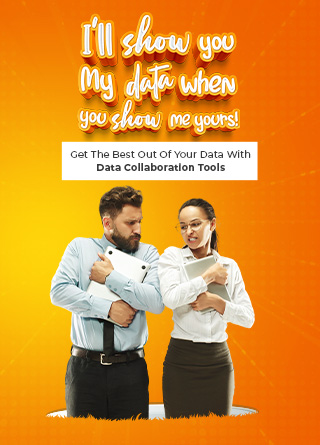
Get The Best Out Of Your Data With Data Collaboration Tools
Share
Overview
Don't you think businesses need a tool to break down data silos and leverage a central repository of data? Of course, they do need a tool, we mean even the Eternals needed Ajak (their spiritual leader) who bought them together to battle the evil.
Abracadabra! Data Collaboration Tool (read: the Ajak) is here to equip businesses with seamless data collaboration and make data available so multiple users can work with it simultaneously. Hail to Celestial hosts and those who lead them and hail to data collaboration and a tool that makes it possible. That being said, let's hop on to this exciting ride that reveals what, when and how of Data Collaboration Tools!
-(1).jpg.aspx "TechDogs-\"Get The Best Out Of Your Data With Data Collaboration Tools\"I'll Show You My Data When You Show Me Yours!")
If you have seen the Eternals movie, you must be aware that every Eternal had extraordinary powers and emerged with the sole purpose of reuniting to battle the evil Deviants. Each one was a powerhouse in its own right. However, we are talking about Ajak, the boss lady with superhuman strength, agility and a brain that could outsmart a supercomputer. She was the glue that held the Eternals together and the only one who could rally the troops to save the Earth from those dastardly Deviants. #TheAwesomeAjak
Quite similar to the fictional world of the Eternals, organizations have 'data' as the eternal source for everything they do and produce. It is the critical driver of innovation, strategy and performance across industries. Pretty similar to the Eternals, it is essential that your eternal source – data, is free from any silos. Data collaboration helps you gather and share data from various sources and empowers domain experts with insightful decisions. Given the amount of data, organizations have, doing it manually is a bit difficult, right?
That's when Data Collaboration Tools (read your Ajak) come into play. These tools help you share and analyze data quickly with other parties. With the help of Data Collaboration Tools, you can access data easily by connecting to various data sources, unifying the data sets, analyzing them and visualizing insights.
We are sure this brief introduction has raised your curiosity to know more about these tools, so don't hold back and join us to study these tools in detail.
What Are Data Collaboration Tools?

Today, data is more readily available than ever before. It means that businesses have more raw materials with which to work and more opportunities for their company to grow. However, businesses need Data Collaboration Tools to take full advantage of this data and its potential applications. These tools gather and share data from various sources. It involves integrating data sets from internal sales, marketing and customer service teams. Further, it empowers domain experts to make decisions and improve data analytics programs' quality. It also enables sharing of live, governed data and the ability to provide and access data sets or services from a third party.
The end of this section is the beginning of the evolution. So, let's head to the next section and explore how Data Collaboration Tools evolved.
How Did Data Collaboration Tools Evolve?


The concept of data collaboration has existed since the first spreadsheet was invented. People have been pooling and working with data collaboratively for more than 30 years. Nevertheless, Data Collaboration Tools have been through brief phases of evolution.
It all began in the 1970s when IBM and General Electric invented the first database. It was only during that phase when enough data had accumulated in databases that needed to be transferred between the bases emerged.
Later, data integration (the predecessor of data collaboration) grew out of ETL (extract, transform, load). ETL tools were designed for taking data from one source, changing that data until it can be recognized by another application and then loading it into that application. Data integration tools streamlined this whole process.
As data volume, variety and velocity increased exponentially; businesses were finding ways to bring it together in one place. Soon, companies realized there was a difference between simply sharing data and storing it in a central location from which other users could access it. So, businesses needed a process and tools to transfer data between individuals, teams, departments and partners. Just then, Data Collaboration Tools made a grand entry!
Data Collaboration Tools were different from traditional collaboration software such as Microsoft SharePoint. While these older collaboration tools helped users find and share documents, they didn't handle non-textual data well. These tools made it easy for employees to discover data, understand how it's used and work on ad hoc projects that involve sharing data with others. To date, these tools are helping organizations find the correct data, share it with others when they need it, and track where that data is stored.
Do you know what's next? It's the exciting process followed by Data Collaboration Tools to allow businesses to leverage data to its fullest. So, Eternals assemble and explore!
What Is The Process Of Data Collaboration Tools?
Here we present the process of Data Collaboration Tools:
-
On-point Document Management
Cloud document management is highly effective when tied with Data Collaboration Tools. This tool helps team members with the collective drafting and editing of documents or sharing individually created documents directly into social networking feeds or feedback.
-
Flawless Task Management
Data Collaboration Tools expedite projects and problem-solving and manage the necessary tasks to achieve resolution. These tools simplify processes, monitor project progress and keep goals on track and team members on the same page.
-
Security Measures
These tools provide flexible permissions at appropriate levels for controlled internal data access. Do you know what's more interesting? Some Data Collaboration Tools step in with additional authentications and security protocols to ensure locked-down data.
Maybe you're trying too hard; relax and let Data Collaboration Tools manage all your hassles.
How Are Data Collaboration Tools Beneficial To You?
Now we'll discuss how these tools can be beneficial to your organization:
-
Data Collaboration Tools are essential for data collection and analysis. These tools allow analysts to quickly share data, documents and other files with team members. They also enable team members to easily see who has read a specific document or file and when it was last accessed. It helps you keep everyone on the same page so that you can cut down on redundant information or people asking the same questions again and again.
-
Data Collaboration Tools make it much easier for authorized users to find the correct datasets when they need them. These tools also help people access information from anywhere and reduce the risk of human error in data collection.
-
Data Collaboration Tools allow businesses to share data across departments, partners and vendors in real-time. This way, everyone has the most recent data at their fingertips. These tools make it easy to share spreadsheets, documents and other files without having to send them around individually or store them on a server. They also eliminate the risk of misplacing or forgetting critical files by keeping track of every file and automatically updating when new versions are uploaded.
- The right Data Collaboration Tool helps you work smarter and faster, keeping track of all those pesky details while avoiding duplicate work and other inefficiencies. These tools are the key to unlocking value from your data by making it visible, accessible and actionable at every step. Today's Data Collaboration Tools are adaptive, user-friendly solutions that allow companies to store, analyze, collaborate on, share and manage their data so it's always accessible and up to date everywhere they need it.

Are you ready to delve into the exciting future of Data Collaboration Tools?
What Are The Future Trends Of Data Collaboration Tools?
International Data Corporation (IDC) predicts worldwide data will grow to 175 zettabytes, with as much data in the cloud as in data centers. Machine Learning (ML) will be used to analyze and extract insights from large and complex datasets, making it easier for different teams and organizations to collaborate and share information. Additionally, ML-powered Data Collaboration Tools will facilitate data integration and standardization, enabling more seamless collaboration among different data sources. Furthermore, ML will also help in data privacy and security, which is crucial in data collaboration. Self-shared, self-described and self-processed data will dominate the future of Data Collaboration Tools. A push toward automation will drive this trend.
As organizations shift toward digital and hybrid channels, there will be a need to invest in new digital capabilities and data-driven workflows. Besides, businesses will need to go their focus on the data cloud to deliver a personalized and seamless experience at every touchpoint and maintain strict data governance and security.
Let's Call It A Wrap!
Data is the lifeblood of any organization and every team needs its fair share. So, companies are turning to Data Collaboration Tools, like a trusty sidekick, to help teams share information smoothly and keep it safe from the bad guys. At a high level, these tools allow users to securely store and share files with collaborators without worrying about sending them insecure attachments or storing sensitive information in a central location where unauthorized individuals could access it.
Frequently Asked Questions
What Are Data Collaboration Tools?
Data Collaboration Tools are essential aids for businesses seeking to leverage their data effectively. In today's data-rich environment, these tools facilitate the gathering and sharing of data from various sources, enabling domain experts to make informed decisions and enhance data analytics programs. By integrating data sets from internal teams and enabling the sharing of live, governed data, these tools empower organizations to collaborate efficiently and derive valuable insights from their data.
How Did Data Collaboration Tools Evolve?
The evolution of Data Collaboration Tools traces back to the emergence of databases in the 1970s, which necessitated the transfer of data between different sources. As data integration became more complex with increasing volume, variety, and velocity of data, businesses sought tools to centralize and share data effectively. Traditional collaboration software, such as Microsoft SharePoint, paved the way but lacked the capability to handle non-textual data. Data Collaboration Tools emerged as a solution, enabling seamless sharing, storage, and tracking of data across individuals, teams, and departments.
What Is The Process Of Data Collaboration Tools?
Data Collaboration Tools streamline various processes essential for efficient collaboration. They facilitate on-point document management, allowing collective drafting and editing of documents while ensuring seamless sharing. Flawless task management capabilities expedite projects and problem-solving by simplifying processes and monitoring progress. Moreover, robust security measures ensure controlled internal data access and provide additional authentication protocols for enhanced data security.
Wed, Feb 1, 2023

Enjoyed what you read? Great news – there’s a lot more to explore!
Dive into our content repository of the latest tech news, a diverse range of articles spanning introductory guides, product reviews, trends and more, along with engaging interviews, up-to-date AI blogs and hilarious tech memes!
Also explore our collection of branded insights via informative white papers, enlightening case studies, in-depth reports, educational videos and exciting events and webinars from leading global brands.
Head to the TechDogs homepage to Know Your World of technology today!
Disclaimer - Reference to any specific product, software or entity does not constitute an endorsement or recommendation by TechDogs nor should any data or content published be relied upon. The views expressed by TechDogs' members and guests are their own and their appearance on our site does not imply an endorsement of them or any entity they represent. Views and opinions expressed by TechDogs' Authors are those of the Authors and do not necessarily reflect the view of TechDogs or any of its officials. While we aim to provide valuable and helpful information, some content on TechDogs' site may not have been thoroughly reviewed for every detail or aspect. We encourage users to verify any information independently where necessary.
Loading comments...