
Financial Technology
Digital Currency 101
Share
Overview
However, it was a Bitcoin wallet that Leonard, Howard and Raj used to store the coins they had mined all the way back in 2010 before digital currencies had become the talk of the town. The Bitcoin stored in the tiny flash drive would have been worth way more than ten bucks! (Surely you have heard of Bitcoin!)
Digital Currency has no physical attributes and is only available in digital form – but you knew that already! They work through electronic/digital wallets linked to designated blockchain networks that allow Digital Currency transactions. In this article, we will dig deep to understand what Digital Currencies are, their evolution, their importance and why everyone needs to know about them.
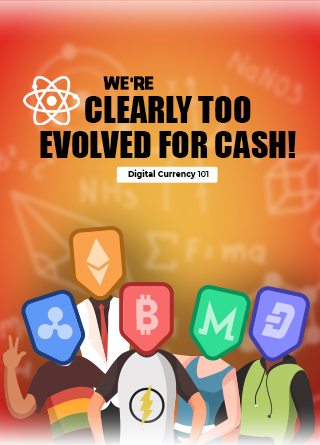
.png.aspx "TechDogs-\"Digital Currency 101\"-We're Clearly Too Evolved For Cash!")
Unlike national currencies, which are specific to a country or region, Digital Currency is available worldwide. You see, Digital Currency (also known as Cybercash) exists in an intangible form that cannot be felt or touched. It cannot be carried in your wallet or stored in a large heap (like the one The Joker sets fire to) as it has no physical manifestation!
However, the operation of Digital Currency is similar to that of fiat money. It is stored digitally in bank accounts and used for payments, with the exception that it cannot be withdrawn in the form of real cash. Digital Currency simplifies monetary transactions by eliminating the middleman, making transactions faster. Since some types of Digital Currency use cryptography (read: cryptocurrencies), transactions involving them are tamper-proof and censorship-resistant, which means they cannot be controlled by governments or private agencies.
Well, let's dive into the nitty-gritty of Digital Currency then!
What Is Digital Currency?
We’re sure the operation of digital money is an intriguing concept to learn about. Digital Currency is like cash in concept and can be used as a substitute for everyday transactions – although there are a few key differences. It is not the money you are used to. Dollars in your online account, for example, are not digital money because they take physical form when you withdraw them from an ATM. Bitcoin, for example, has no physical form and exists entirely as a digital medium.
Another key difference is that these currencies enable instant transactions that can be carried out seamlessly across borders. For example, a person in the United States can send a specific Digital Currency to a counterparty in India, if they are both connected to the same network. Interesting stuff, right?
Tag along as we take a brief trip back in time and learn about the history of Digital Currency.
The History Of Digital Currency
When someone mentions Digital Currency, the first thing that comes to mind is Bitcoin. For most people around the world, Bitcoin is the only Digital Currency they have ever heard of – however, Bitcoin didn’t appear out of nowhere!
Let us explain. Bitcoin is a new technology-enhanced iteration of an old idea. Many people came before Satoshi Nakamoto (the mysterious creator of Bitcoin) intending to create Digital Currency to power alternative economies but they all failed due to technical, regulatory and ideological reasons.
-
E-gold (1996)
The concept of Digital Currency emerged while the internet was still in its early stages. One such example is E-gold. Digital Currency backed by gold was a very successful venture until it became easy prey for criminals and hackers. Continuous cybercriminal attacks and the use of E-gold as a preferred currency by extortionists and money launderers led to its eventual downfall.
-
WebMoney (1998)
Except for the decentralization aspect, WebMoney was, in all practical senses, a form of Digital Currency. After E-gold was shut down, it became the next greatest option and started drawing many users – both good and bad. It rapidly turned to being used for nefarious purposes.
-
Bitcoin (2009)
Bitcoin was first introduced as a functioning decentralized Digital Currency in 2009. Unlike all preceding digital currencies, Bitcoin had the unique advantage of being decentralized in nature, which placed the entire platform under the control of a much larger community than an individual or corporation. Bitcoin’s protocol is open source, which prevents anyone from gaining a monopoly over the entire system. Bitcoin appears to have struck the right note, don’t you think? Let us know in the comments below.
Now that you’ve learned some history, it's time to learn the “how” of Digital Currency.
How Does Digital Currency Work?


Although the working of Digital Currency has a lot going on behind the scenes, given the different types that exist, we have tried to simplify it.
Let’s start with mining - the act of adding new blocks to the currency’s blockchain. Blockchain technology is a technique that stores blocks of data in such a way it is impossible to change or delete a previous entry in the “chain of blocks.” These blocks contain all the transactional data of the Digital Currency on a particular network. Mining can be done by individuals, companies or entities to extract Digital Currency. Miners play an important role in the ecosystem as they control the approval of a new block in a network, which results in them receiving new units of Digital Currency.
Next, you need to know that all Digital Currency is stored digitally on a network that can be accessed via mobile phones or computers. Every buyer and seller have a record of all transactions involving that Digital Currency, which makes up a block. When a new buyer enters the loop, the ledger is updated and a new block is added to the blockchain network.
Hence, Digital Currency operates with full transparency in a decentralized manner. With that out of the way, let’s look at the different types of Digital Currency!
What Are The Types Of Digital Currency?
Along with its technological foundation, Digital Currency can be adapted to suit a variety of purposes and has various forms. The three Digital Currency adaptations that have recently emerged are as follows:
-
Central Bank Digital Currencies (CBDCs)
These are the currencies issued by a country's central bank. CBDCs facilitate the implementation of monetary policies by eradicating middlemen and establishing a direct link between the government and the average citizen. CBDCs can be divided into different types based on their intended use and method of implementation in the economy. For example, retail CBDCs are intended to be used for daily retail transactions.
-
Cryptocurrencies
These are digital currencies that use cryptography to operate with full security and transparency. A crypto wrapper (wrapping a cryptocurrency is the ability to modify a cryptocurrency from one blockchain so that it can operate on another) around a Digital Currency enhances its security and makes transactions tamper-proof. Since 2017, cryptocurrencies' popularity as an investment class has skyrocketed, as has their value and the overall market capitalization of crypto markets. For example, Bitcoin (BTC), Ethereum (ETH), Litecoin (LTC), Cardano (ADA) and Ripple (XRP) are some of the common ones.
-
Stablecoins
These are types of cryptocurrencies that were created to combat the price volatility of conventional cryptocurrencies. Stablecoins is digital money whose price is tied to that of a fiat currency or a basket of goods to ensure their stability. In recent years, the market for Stablecoins has exploded, with over 200 Stablecoins having been released till date. For example, Tether (USDT) is pegged to US Dollars, while Paxos (PAXG) tracks the price of gold.
Surely, with so many types of Digital Currency there are bound to be some benefits – let's look at them!
The Advantages Of Digital Currency
The current financial infrastructure is a complicated web comprised of numerous entities. As these institutions function under different technological systems and regulatory frameworks, conducting a transaction between them costs time and money. The main benefit of Digital Currency is that it speeds up transactions, reduces costs and enables global payments easily. Some other advantages are:
-
Bye, Bye Middlemen
An obvious benefit of Digital Currency is that it eliminates the middlemen who typically charge a commission when dealing with money transfers. As digital money can be transferred or received at any time, there is no need for a middleman to facilitate the transaction between both entities.
-
Less Or No Fee
Digital money reduces or eliminates transactional costs. Credit cards, for example, charge a fee if you want to pay someone else in another country. However, when dealing in Digital Currency, this cost is reduced and the additional charges are omitted.
-
Permanence Of Records
Everything digital is permanent! Cash fraud is all over the news, however, Digital Currency is known to be accountable, secure and transparent. As all records and transactions are permanently stored, users can trust there will be fewer frauds.
-
No Inflation
Another advantage is that Digital Currency cannot be inflated to deal with economic catastrophes. In contrast to real cash, which can face the wrath of inflation because of economic factors, digital money is not subject to inflation as it has limited circulation.
Do you remember the bully James Corky Jones from The Simpson?

While the reference is intended to be ironic, it emphasizes how popular Bitcoin has become – and how James Corky saw the future coming. For those of us who cannot see the future, this is what’s next for Digital Currency.
The Future Of Digital Currency
The future is expected to be brighter than it is now. As more Digital Currencies emerge in the market, the legitimacy of such a system will gain traction in the eyes of the public.
-
Expectations For Exchange Traded Funds (ETFs)
Most Digital Currency geeks are eagerly awaiting the launch of ETFs, allowing people low cost of ownership and diversification. However, it may take some time because the U.S. Securities and Exchange Commission has been postponing its decision on ETFs for quite some time. If ETFs are approved (there are a couple of Bitcoin ETFs in the market), more traders will invest in Digital Currencies in the stock market instead of using exchange wallets. This will cause a huge increase in the market cap of the Digital Currency market.
-
Non-Fungible Tokens (NFT)
NFTs are digital assets that demonstrate products in both physical and digital worlds. It's useful for people who want to trade digital items using Digital Currency using a centralized platform. NFTs already are widely used in the arts and entertainment sectors. In fact, Tory Lanez, a Canadian rapper, recently sold 1 million copies of his latest album as an NFT for $1 each, making him the fastest platinum sales artist in history. Wow!
Too much to download? Let us summarize!
In A Nutshell
Bill Gates, the co-founder of Microsoft and philanthropist, once said, “Bitcoin is a technological tour de force.” There are a few other technologies that have the potential to change the future as Digital Currency. However, we must warn you to exercise extreme caution when investing in Digital Currencies and doing your research before cashing in. These currencies are very appealing to investors due to their low fees, transparent mechanism and instant transactions. With Raj Koothrappali from “The Big Bang Theory” planning to buy a tiger with his Digital Currency, what are you planning to use it for?
Frequently Asked Questions
What is Digital Currency?
Digital Currency, also known as Cybercash, refers to currency that exists in an intangible form and cannot be physically felt or touched. Unlike traditional national currencies, Digital Currency is not specific to any country or region and is available worldwide. It operates similarly to fiat money, being stored digitally in bank accounts and used for transactions, but it cannot be withdrawn as physical cash. Digital Currency streamlines monetary transactions by eliminating intermediaries, making transactions faster and more efficient. Some types of Digital Currency, such as cryptocurrencies, utilize cryptography, making transactions tamper-proof and censorship-resistant, thus bypassing government or private control.
What are the types of Digital Currency?
Digital Currency comes in various forms, each serving different purposes and leveraging different technologies. The three main types of Digital Currency are Central Bank Digital Currencies (CBDCs), cryptocurrencies, and stablecoins. CBDCs are issued by a country's central bank and facilitate direct transactions between the government and citizens, often aiming to streamline monetary policies. Cryptocurrencies utilize cryptography for security and transparency, with popular examples including Bitcoin, Ethereum, and Ripple. Stablecoins are digital currencies pegged to the value of fiat currency or other assets to maintain stability, with examples like Tether and Paxos.
What are the advantages of Digital Currency?
Digital Currency offers several advantages over traditional financial systems. One significant benefit is the elimination of intermediaries, reducing transaction costs and enabling direct peer-to-peer transactions. Digital Currency transactions are often faster and can be conducted globally with ease, eliminating the need for currency conversions or international transfer fees. Additionally, Digital Currency transactions are transparent, secure, and permanent, minimizing the risk of fraud. Furthermore, Digital Currency is not subject to inflation, providing stability in the face of economic fluctuations compared to traditional currencies. These advantages make Digital Currency an appealing option for individuals and businesses seeking efficient and cost-effective financial solutions.
Tue, May 31, 2022

Enjoyed what you've read so far? Great news - there's more to explore!
Stay up to date with the latest news, a vast collection of tech articles including introductory guides, product reviews, trends and more, thought-provoking interviews, hottest AI blogs and entertaining tech memes.
Plus, get access to branded insights such as informative white papers, intriguing case studies, in-depth reports, enlightening videos and exciting events and webinars from industry-leading global brands.
Dive into TechDogs' treasure trove today and Know Your World of technology!
Disclaimer - Reference to any specific product, software or entity does not constitute an endorsement or recommendation by TechDogs nor should any data or content published be relied upon. The views expressed by TechDogs' members and guests are their own and their appearance on our site does not imply an endorsement of them or any entity they represent. Views and opinions expressed by TechDogs' Authors are those of the Authors and do not necessarily reflect the view of TechDogs or any of its officials. While we aim to provide valuable and helpful information, some content on TechDogs' site may not have been thoroughly reviewed for every detail or aspect. We encourage users to verify any information independently where necessary.
Loading comments...