
Software Development
All You Need To Know About Application Server Software
Share
Overview
Application servers provide a foundation for designing, launching and running web-based application by streamlining services needed for their operation. The services include safety, cross-platform transactions, clustering for enhanced behavior, diagnosis and analytics capabilities. Application servers are used by nearly every business to host their web apps. This enables developers to stay focused on improving the application itself, rather than working out problems such as security concerns. We bet you (unknowingly or not!) use this software daily.
If you want to understand everything about Application Server Software, this article will walk you through everything you need to know!
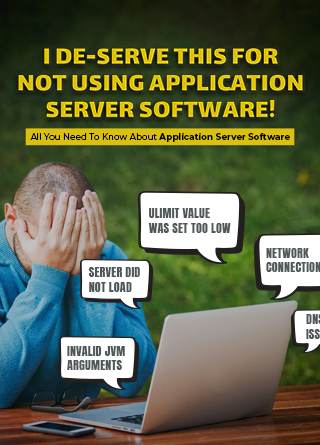
.png.aspx "TechDogs-\"All You Need To Know About Application Server Software\" I De-serve This For Not Using Application Server Software!")
Have you ever tried using an application only to be served several error messages? Yes, that was a server pun! The reason for this is that the application server is not functioning as expected. Hence, businesses need to rely on special software that helps them design, operate, install, diagnose and successfully host their web applications. Meet the savior – Application Server Software!
The range of applications that the Internet has enabled is immense. Although there has been a dramatic rise in the deployment of applications, since the early days they have relied on application servers. With the demand for more features and functionalities within the application, the size and complexity of the applications grew as well. Hence, there is a dire need for applications to streamline tasks such as extracting data from databases, exchanging messages, securing customer information, etc. This is where an Application Server Software can serve you with the best solutions!
Application Server Software: Explained
An Application Server Software is essentially a type of middleware platform that runs between the Operating System (OS) on one side, external resources (such as a Database Management System [DBMS], inter-platform communications services, etc.) on the other and the user on the third (Wow! We thought we were good at multitasking!). The goal of the software is to act as a central host for the user while facilitating their access to application services. Despite the varying and competing traffic of client requests, especially for applications with a large number of users, this software can boost the performance of the business application.
Yet, you must be thinking, can this software streamline my business application too? That’s what we will be covering in this article – but first, let’s briefly explore how these tools evolved.
History Of Application Server Software

The family of tools that we now call Application Server Software is the result of two originally independent lines of development that converged atop the World Wide Web. Sounds interesting, right?
-
The First Web Applications:
Hand-written codes were used to construct the first web applications. They were created as required and written in C, C++, Perl or other programming languages that were used at the time. These tools then gave way to the first integrated web development tools. They featured a slick interface design, simplified HTML templates and basic backend integration. The successors of this bloodline still look like their ancestors; typically offering a rich development platform to produce dynamic application interfaces, although they offered lower support for enterprise application integration.
-
The Rise Of N-tier Application Architectures:
N-tier architectures were a natural transition from the traditional client/ server framework for applications. Three-tier architectures included a backend system, a user interface and a middle-tier that contained the application server. The middle tier (middleware) was the central control behind combining data from the backend, application resources and user requests. This architecture oversaw security integrations and provided a unified platform for application development. This bloodline was great at backend integrations for application servers but not so good at creating presentable interfaces.
-
The Development Of Application Server Software:
This bloodline was created by the convergence of the two approaches. It resulted in companies being able to develop and deploy application servers as a strategic trend in the digital marketplace. Today, these tools offer a programming framework for building and deploying web applications as well as offering services to support applications within the host environment.
Well, the following section will walk you through the various types of Application Server Software and which one is best suited for which tasks. Read on!
Different Types Of Application Server Software
So, what are the options of this software available on the market that can help manage all types of complex applications? Here, we list out the types of Application Servers Software that will help in the organization, development and delivery of your business applications:
-
Active Application Server:
This server is used by developers to develop an environment for the server-side business logic, which is presented in the form of rules, protocols, components, etc. These servers are also known as stateful servers.
-
Web Information Server:
This server type is used to create web pages from a database using HTML templates. These servers are also termed stateless servers.
-
Component Server:
Certain applications need access to business databases as it helps with transaction processing and approving identification requests. It enables interactivity for client-side applications.
Okay, so now you know the types of Application Server Software! Let’s understand how this software works, shall we?
Topics For More Insights
How Does Application Server Software Work?

Application Server Software integrates web application development capabilities with a hosting environment in which to operate them. It is commonly a complex stack of various computing elements undertaking specific tasks which must work together to power web-based applications. Hell yeah, teamwork!
The Application Server Software, which being a middleware sits between the primary web-based server tier and the backend database, is essentially a go-between for the database server and the application users. It operates on certain protocols and Application Programming Interfaces (APIs) to process requests from the user, database and application itself. An Application Server Software helps developers design, install, operate and host business applications and services for end-users. It helps IT organizations support the hosting and delivery of high-end consumer or business applications – and let’s be honest, everyone uses apps!
You can bet that these accomplishments offered significant benefits to businesses. Let's look at how these tools enable businesses to rely on web applications to interact with consumers successfully.
What Are The Benefits Of Using Application Server Software?
There are few market leaders when it comes to Application Server Software like Apache Tomcat, Oracle WebLogic, IBM WebSphere, Red Hat Jboss eap, loaded with benefits. Let's have a look at those.
The process of deploying, running and managing apps has become highly complex due to their volume and intricate functionality. Hence, Application Server Software was developed for developers to simplify the task of creating web application. These solutions have organized and streamlined every step-in application development. Here are some of its inherent benefits:
-
Provides a framework for managing every element of the application so application services such as session management, synchronous and asynchronous client alerts, transactions, data encryption, etc. can be controlled.
-
It provides a simple setup for application servers in a centralized and unified location.
-
Any configuration change, such as transitioning the database, can be made from a single location.
-
Application Server Software makes it simple to deploy software patches and upgrades.
-
The solution allows you to route client request to various business servers, based on the request volume and server availability.
-
It allows for fault tolerance while also enabling recovery/ failover recovery for application servers.
-
It saves businesses a lot of time as they avoid having to install a copy of application configurations on each instance, as the data is synced centrally.
Isn’t that incredible? We’re sure if you are planning to deploy an application, then you will use an application server that cannot be managed without an Application Server Software. They are ubiquitous; yet we expect higher adoption in the coming years - read on to know why!
Future Of Application Server Software
The global application server sector is estimated to be valued at USD 40.96 billion by 2028, growing at a CAGR of 13.2 percent from 2020. The spread of mobile devices that can support more standalone and web-based application can be credited to the market's growth. The prevalence of computers as well as consumers' growing choice to rely on mobile applications is expected to add further growth to the industry. Intense competition in the Ecommerce sector and the rising demand for applications that can support sales integrations and better transaction experiences are expected to drive the market in the coming years. Unlike web servers, application servers will be able to serve the business requirements via multiple protocols and integrations within the application.
Summing It Up
The Application Server Software market is witnessing rapid growth. Key market players, such as Microsoft Corporation, International Business Machines Corp. (IBM) and Oracle Corporation, have established a strong global presence. Their solutions help businesses manage the entire range of tasks when it comes to application deployment, from design to upgrades.
At the same time, Application Server Software providers are aggressively developing technical integrations for additional functionalities to improve the end-user experience. If your application suffers from constant errors in the form of “DNS issues” or “Network connection to server lost” then you need Application Server Software!
Frequently Asked Questions
What is Application Server Software and why do businesses need it?
Application Server Software serves as middleware between the operating system, external resources, and users, facilitating access to application services. It aids in designing, operating, installing, diagnosing, and hosting web applications. As applications grow in complexity and demand more features, this software becomes essential for streamlining tasks such as data extraction, message exchange, and customer information security.
What are the types of Application Server Software available and their functionalities?
There are several types of Application Server Software available, including Active Application Server that’s used by developers to create an environment for server-side business logic presentation; Web Information Server that’s used to generate web pages from a database using HTML templates; and Component Server that facilitates access to business databases for transaction processing and client-side application interactivity.
What are the benefits of using Application Server Software?
Application Server Software simplifies the deployment, management, and running of web applications, offering benefits like streamlined application development, centralized configuration management, simplified deployment of patches and upgrades, fault tolerance, and time-saving centralized data synchronization. Its use is essential for successful application deployment and is expected to see higher adoption in the future.
Thu, Nov 17, 2022

Liked what you read? That’s only the tip of the tech iceberg!
Explore our vast collection of tech articles including introductory guides, product reviews, trends and more, stay up to date with the latest news, relish thought-provoking interviews and the hottest AI blogs, and tickle your funny bone with hilarious tech memes!
Plus, get access to branded insights from industry-leading global brands through informative white papers, engaging case studies, in-depth reports, enlightening videos and exciting events and webinars.
Dive into TechDogs' treasure trove today and Know Your World of technology like never before!
Disclaimer - Reference to any specific product, software or entity does not constitute an endorsement or recommendation by TechDogs nor should any data or content published be relied upon. The views expressed by TechDogs' members and guests are their own and their appearance on our site does not imply an endorsement of them or any entity they represent. Views and opinions expressed by TechDogs' Authors are those of the Authors and do not necessarily reflect the view of TechDogs or any of its officials. While we aim to provide valuable and helpful information, some content on TechDogs' site may not have been thoroughly reviewed for every detail or aspect. We encourage users to verify any information independently where necessary.
Loading comments...