

Digital Marketing
A Quick Guide To Hyperlocal Marketing
Share
Overview
Most of you expect things to be fast, simple and close by. Since people's expectations have changed, businesses also need to change how they reach customers.
This is exactly where Hyperlocal Marketing comes in. Instead of broadcasting messages to huge, general audiences, brands now focus on very small areas, sometimes just a couple of streets or a single neighbourhood.
It is all about showing up in the right place at the right moment when someone nearby actually needs you.
We will discuss Hyperlocal Marketing more in the article. Just grab a coffee (maybe from your local shop) and enjoy reading this article.
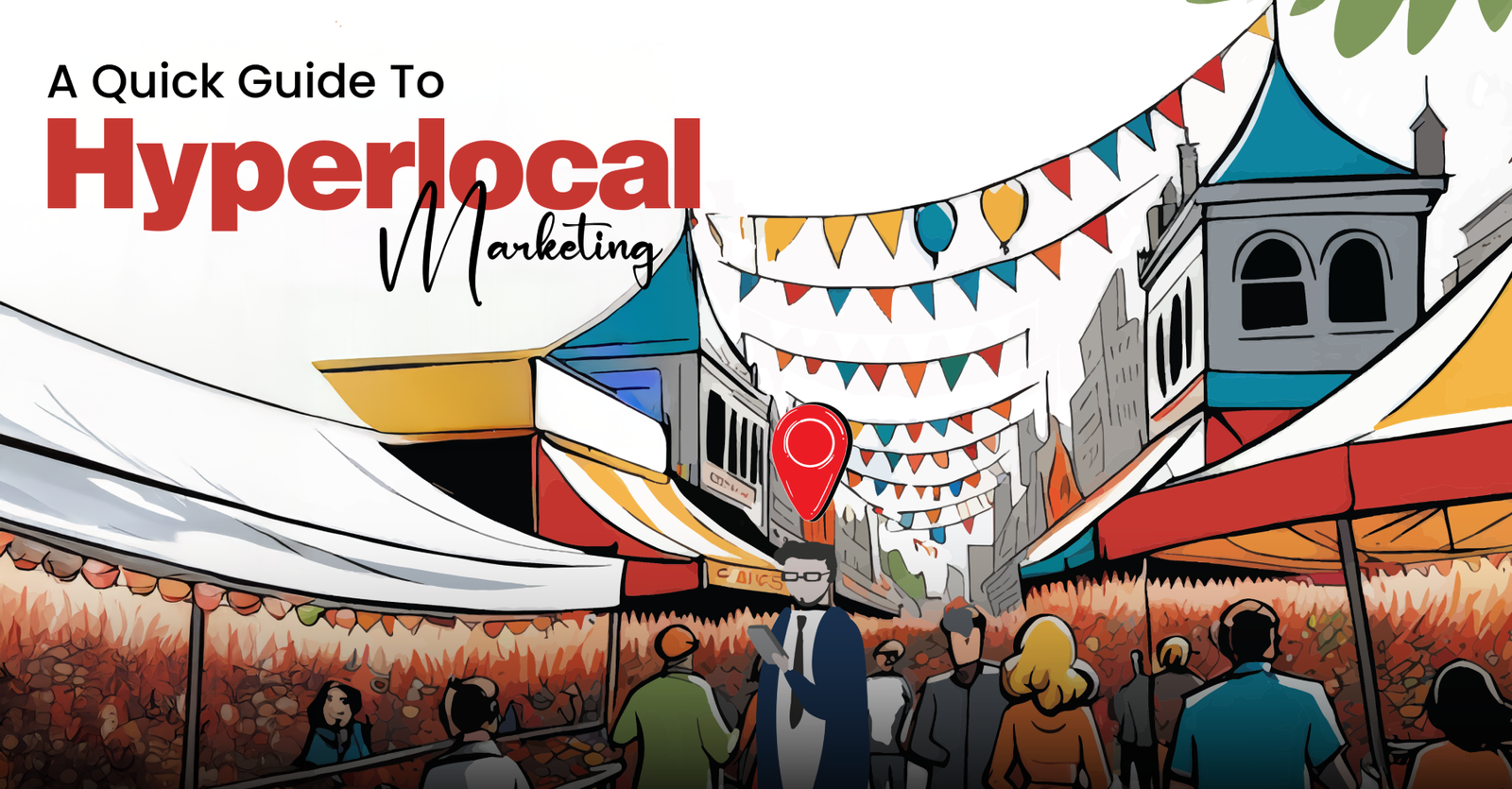
People now make quick, location-based decisions, and businesses need to meet them right where those decisions happen. When someone searches for a service nearby, the brands that appear instantly gain an immediate advantage. This shift has opened the door to a more focused, timely way to reach customers.
So, let's take a closer look at what Hyperlocal Marketing means, how it works and why it plays such an important role in today's business landscape.
What Is Hyperlocal Marketing?
Hyperlocal Marketing is a targeted location-based marketing strategy that focuses on reaching potential customers within a particular geographic area, often as precise as a few streets or neighbourhoods.
It capitalises on the growing trend of "near me" searches on mobile devices, where users actively seek products and services in their immediate vicinity.
Hyperlocal Marketing leverages one-to-one customer targeting at the household or device level.

To effectively target prospects in the desired geographic areas, this process requires affiliates to put in a lot of work into strategic customization and optimization.
For example, have you ever searched "shopping markets near me" on your phone? Hyper-local marketing is what puts those recommendations at the top of your search results.
Now that we know the basics, let's look at the real perks of using Hyperlocal Marketing.
What Are The Benefits Of Hyperlocal Marketing?
Below are the benefits of Hyperlocal Marketing.
-
Increased Foot Traffic
Hyperlocal Marketing targets customers who actively search for nearby businesses, driving more visits to physical locations.
Example: A restaurant using Google My Business (GMB) can attract local diners searching for "best pizza near me." -
Higher Conversion Rates
People who search for "near me" keywords usually have strong purchase intent, making them more likely to convert.
Example: A hardware store targeting urgent product searches like "plumbing supplies near me" can see higher sales. -
Stronger Brand Loyalty
Integrating community-driven marketing with local customers helps build trust and long-lasting partnerships.
Example: A boutique store offering exclusive deals to repeat customers builds loyalty. -
Cost-Effective Marketing
By focusing on a certain area, companies can get the most out of their ad revenue and reduce waste on irrelevant audiences.
Example: Running Facebook ads targeted at a 5-mile radius instead of a broad audience improves ROI. -
Better Customer Experience
Customer satisfaction is enhanced by personalized offers, real-time engagement, and relevant local content.
Example: A salon sending SMS appointment reminders to nearby customers boosts engagement.
At this point, you might be wondering how this strategy actually compares with regular traditional marketing. Let's break it down.
What Is The Difference Between Hyperlocal Marketing And Traditional Marketing?
We have categorized some of the features that differentiate Hyperlocal and Traditional Marketing.
| Features | Hyperlocal Marketing | Traditional Marketing |
| Target Audience | Broad geographic area (national, regional) | Particular geographic area (neighbourhood, zip code, a few streets) |
| Technology Use | GPS, geo-fencing, mobile targeting | TV, radio, print |
| Messaging | Local, personalized | Generic, brand-focused |
| Goals | Local sales, customer loyalty | Broad brand awareness |
| Measurement | Local traffic, engagement, conversions | Surveys, overall sales |
| Cost-Effectiveness | More cost-efficient | Higher spend, broad reach |
| Conversion Rates | Higher (location relevance) | Lower (less targeted) |
Hyperlocal Marketing is powerful, but it comes with a few hurdles you should keep in mind.
What Are The Challenges of Hyperlocal Marketing?
Hyperlocal Marketing has its own pros and cons, just like any other marketing channel or site. Here are some of the leading channels:
-
Lack Of Brand Consistency
You have to create content for very small areas to use Hyperlocal Marketing, which can lead to inconsistent messaging. Staying true to the brand's identity is harder when each location sets its own style or tone.
-
Intensifies Local Competition
Customers in the same neighborhood often compete more directly because Hyperlocal Marketing reaches the same small group. Many brands may run similar ads, content, or deals aimed at the same local area, making it harder to stand out.
-
Complicated ROI Measurement
Hyperlocal campaigns often produce results in small, specific places, which can make it hard to track their real effects. To get clearer ROI metrics, it's harder to measure foot traffic, conversions, or customer actions at a single location.
So why does Hyperlocal Marketing matter right now? Let's explore what makes it a big deal in 2025.
Why Hyperlocal Marketing Matters In 2025?
-
The Rise Of "Near Me" Searches
"Near me" searches have become very popular in mobile technology and location-based services. Using terms like "hardware shop near me" or "urgent bathroom sinks near me," people are looking for goods and services close to them.
Customers who are actively looking for what a business has to offer in their area can be reached through Hyperlocal Marketing. -
The Power Of Mobile Devices
People are always on their phones, and they expect to get knowledge and satisfaction right away. When customers need a product or service right now, Hyperlocal Marketing reaches them on their phones, taking advantage of the power of mobile.
Targeted social media efforts and location-based marketing ensure your message reaches the right people who are likely to buy when they see your ad. -
Evolving Consumer Behavior And Expectations
Consumers are savvier than ever and prioritise convenience. They expect businesses to find them, not the other way around. Hyperlocal Marketing caters to this by reaching customers where they already are – online and in their local area.
People value personalization and relationships even though they have a lot of choices. Businesses can make their messages more relevant to people in their area by using Hyperlocal Marketing. This helps build trust and a sense of community.
Before we wrap this up, let's bring everything together.
Conclusion
Hyperlocal Marketing stands out as a strong way for businesses to stay ahead in a world that is increasingly mobile-first. Its ability to deliver personalized, context-aware messaging makes it invaluable for driving local sales, strengthening customer relationships and enhancing real-time engagement.
Despite challenges like tracking hyper-specific ROI or managing localized content variations, the advantages outweigh the complexities.
Brands that fully embrace hyperlocal tactics will not only capture immediate consumer intent but also build long-term loyalty within the communities they serve.
Frequently Asked Questions
What Are The 3 C's Of Marketing?
The 3 C's of marketing refer to Company, Customer and Competitor.
These three elements work together to help a brand understand its strengths, identify what customers truly need and keep an eye on what competitors are doing in the market. When a business studies all three, it becomes easier to create strategies that stand out, serve real demand and stay ahead of the competition.
What Is LSM In Marketing?
LSM stands for Local Store Marketing. It focuses on promoting a specific store or location to the customers living or working nearby. Instead of large, nationwide campaigns, LSM uses hyperlocal tactics such as community events, neighbourhood offers, local ads, partnerships, and personalised outreach. The goal is to increase foot traffic, build loyalty and create stronger visibility within the store's immediate area.
What Are The Four Types Of Marketing?
The four types of marketing commonly referred to are traditional, digital, inbound, and outbound. Each plays a different role in how businesses reach customers. Traditional marketing relies on offline channels such as print, radio, and TV. Digital marketing focuses on online platforms such as social media, search engines and email. Inbound marketing attracts customers through valuable content and genuine engagement. Outbound marketing pushes messages outward through ads and promotions to capture attention.
Wed, Dec 3, 2025

Enjoyed what you read? Great news – there’s a lot more to explore!
Dive into our content repository of the latest tech news, a diverse range of articles spanning introductory guides, product reviews, trends and more, along with engaging interviews, up-to-date AI blogs and hilarious tech memes!
Also explore our collection of branded insights via informative white papers, enlightening case studies, in-depth reports, educational videos and exciting events and webinars from leading global brands.
Head to the TechDogs homepage to Know Your World of technology today!
Disclaimer - Reference to any specific product, software or entity does not constitute an endorsement or recommendation by TechDogs nor should any data or content published be relied upon. The views expressed by TechDogs' members and guests are their own and their appearance on our site does not imply an endorsement of them or any entity they represent. Views and opinions expressed by TechDogs' Authors are those of the Authors and do not necessarily reflect the view of TechDogs or any of its officials. While we aim to provide valuable and helpful information, some content on TechDogs' site may not have been thoroughly reviewed for every detail or aspect. We encourage users to verify any information independently where necessary.
Loading comments...