
Customer Engagement
Turning Business Calls Into Actionable Intelligence With Communication Automation
Share
Overview
Here is a brief introduction to Subhash:
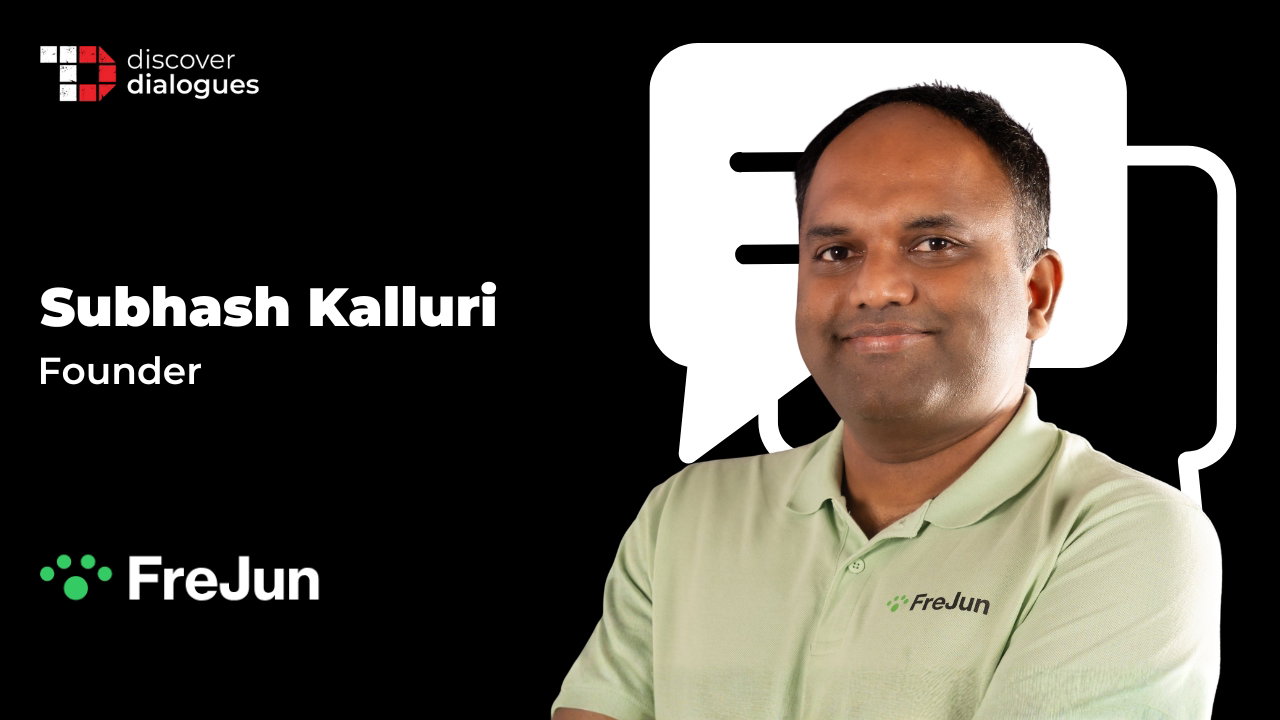
Subhash Kalluri is the Founder of FreJun, a business communication automation platform for sales, recruitment, and operations teams. With a background in biological sciences, research, sales, and international business development, he brings a cross-functional perspective to building AI-powered communication tools. He leads FreJun’s strategy, product vision, partnerships, and approach to voice infrastructure and enterprise automation.
TD Editor: You’ve been building a call automation platform for recruitment, sales, and operations teams. What communication gaps do you think automation solves best for these teams?
Honestly, the biggest gap is the same everywhere. People have conversations all day, and then all the context from those conversations just vanishes. Automation fixes that. It captures the call, drops it where the team already works, and makes it visible without anyone having to type up notes.
Recruitment is a good example. Recruiters burn hours dialing, updating candidate statuses, and chasing hiring managers for feedback. And while all that was happening, candidates lost interest because nobody got back to them fast enough. So what we do is let recruiters call straight from the ATS, Ceipal or Zoho Recruit, and the call logs itself. It can go straight to the hiring panel. And since every call has a recording and a summary, the panel already knows where the candidate fits before the interview even starts.
Sales is the exact same problem, just wearing different clothes. Representatives forget what was said. CRMs technically have a notes field, but nobody fills it in properly. So a lead goes cold, someone picks it back up six months later, and there is nothing there. You are starting the whole conversation from zero. That is a waste of everyone's time.
Once you capture every call, that stops. And the interesting part is the data becomes useful on its own. Your good calls? That is training material. Your bad ones show you exactly where the team needs coaching. You have the summary, you have the keywords, so you can trigger follow-ups automatically. And a manager can just open the CRM and see how a call actually went, recording and all, without pinging anyone for an update.
Operations is the same story. Support, CX, and order desks run on continuity, and the thing that breaks is always the handoff. One person has the whole context in their head; they are out, and the next person is flying blind. If the calls are captured and searchable, whoever picks them up already knows what happened.
So really, it all comes down to one thing. These tools turn conversations into something the whole company can use, instead of information stuck in one person's memory.
TD Editor: In sales and recruitment, phone conversations often carry more context than emails or messages. How can businesses use call automation without losing the human touch?
The mistake is thinking automation means replacing the conversation. It doesn't. The conversation is the one thing you never touch. What you automate is everything around it: the dialing, the note-taking, the logging, and routing the right call to the right person. That work is invisible, but it's what drains a representative's day and pulls their attention off the person on the line.
Take that load off, and something interesting happens. The human gets more human, not less. They come to the call prepared, present, and actually listening instead of half-focused because they're typing notes. The touch is never lost to automation itself. It's lost to robotic scripts and treating people like tickets. That's a choice, not a technology. Build it right, and the machine stays at the edges, handling the mechanical parts, while the person stays in the middle, where judgement and empathy actually matter. That's the whole idea behind FreJun. It sits quietly under the team's calls so the software carries the busywork and the human carries the conversation.
TD Editor: You have worked extensively in business development and pipeline management. What role does structured communication play in improving conversion rates and customer relationships?
Structure is just consistency made repeatable. It means the good instincts your best people have are executed every time by everyone without depending on anyone's memory. Most deals don't die from a bad pitch. They die quietly because someone forgot to ask the right question, forgot to log what was said, and forgot to follow up. Multiply that across a team, and it's a serious amount of lost revenue that nobody can even see.
When the frame holds, fewer things slip. And it shows on the customer's side just as much as yours. People can feel the difference between a company that's organized and one that passes them around and makes them repeat their story three times. That feeling is trust, and trust is what actually carries a deal from interest to decision. The point of structure is not to turn people into robots reading a checklist. It's the opposite. It clears away the mechanical part so a person's energy goes where it belongs, into the parts of the conversation that need real judgement.
TD Editor: From lead generation to follow-ups, where do you see companies losing the most efficiency in their communication workflows today?
The follow-up, almost every time. A company spends real money getting a lead to raise their hand, the first conversation goes well, and then nobody circles back at the right moment. The lead cools, and it's gone. That silence between a good first call and the second one is where most of the waste in the whole system sits.
The second leak is the handoff. A lead moves from marketing to sales or from one representative to another, and the context falls through the gap. The customer ends up re-explaining themselves, and the company looks disorganized at exactly the moment it needs to look sharp. The third is time. Skilled people spend hours a week updating records and copying notes instead of doing the one thing only they can do, which is talk to customers. None of these are strategy problems. They're plumbing problems. That distinction matters, because strategy is hard and slow to fix, but plumbing you can fix. That's the layer FreJun is built to close.
TD Editor: You’ve also worked on marketing campaigns, segmentation, and ROI-driven strategies. How can automated calling and communication data help teams make better marketing and sales decisions?
Calls are where customers tell you the truth. What they actually care about, what quietly worries them, and the real objection they raise right before they decide. Email gets filtered and polished. On a call, people say what they mean, often without realizing how much they're giving you. The tragedy is that most of that insight evaporates the second the call ends, because it was never captured in the first place.
Capture it, and then look across not one call but hundreds, and patterns rise to the surface. Which message actually lands. Which type of customer converts and which never will. The exact point in the conversation where people hesitate and drop off. That's the moment marketing and sales stop arguing from opinion and start working from the same set of facts. You stop spending on what doesn't work and double down on what does. It turns guessing into knowing, and that shift is worth more than almost any single campaign.
TD Editor: With your background in both R&D and business development, how important is it to translate complex product value into simple, customer-friendly communication?
It's everything, and it's harder than it sounds. Customers don't buy features; they buy an outcome, a change in their own situation. If the only way you can explain your product is in technical terms, that's usually a sign you haven't fully understood the customer's problem yet, because the moment you truly understand it, the simple version writes itself.
Coming from an R&D background, this is the discipline I care about most and the one I see people get wrong most often. It's easy to fall in love with how clever something is under the hood. But the cleverness is worthless if the person across the table can't grasp the value in the first minute. The real skill was never building something complicated. Anyone with enough time can add complexity. The skill is carrying that value across and setting it down in plain words the customer already uses so they feel understood rather than lectured at. If they get it instantly, the hard part is already done.
Thu, Aug 6, 2026

Liked what you read? That’s only the tip of the tech iceberg!
Explore our vast collection of tech articles including introductory guides, product reviews, trends and more, stay up to date with the latest news, relish thought-provoking interviews and the hottest AI blogs, and tickle your funny bone with hilarious tech memes!
Plus, get access to branded insights from industry-leading global brands through informative white papers, engaging case studies, in-depth reports, enlightening videos and exciting events and webinars.
Dive into TechDogs' treasure trove today and Know Your World of technology like never before!
Disclaimer - Reference to any specific product, software or entity does not constitute an endorsement or recommendation by TechDogs nor should any data or content published be relied upon. The views expressed by TechDogs' members and guests are their own and their appearance on our site does not imply an endorsement of them or any entity they represent. Views and opinions expressed by TechDogs' Authors are those of the Authors and do not necessarily reflect the view of TechDogs or any of its officials. While we aim to provide valuable and helpful information, some content on TechDogs' site may not have been thoroughly reviewed for every detail or aspect. We encourage users to verify any information independently where necessary.
Loading comments...