
Customer Engagement
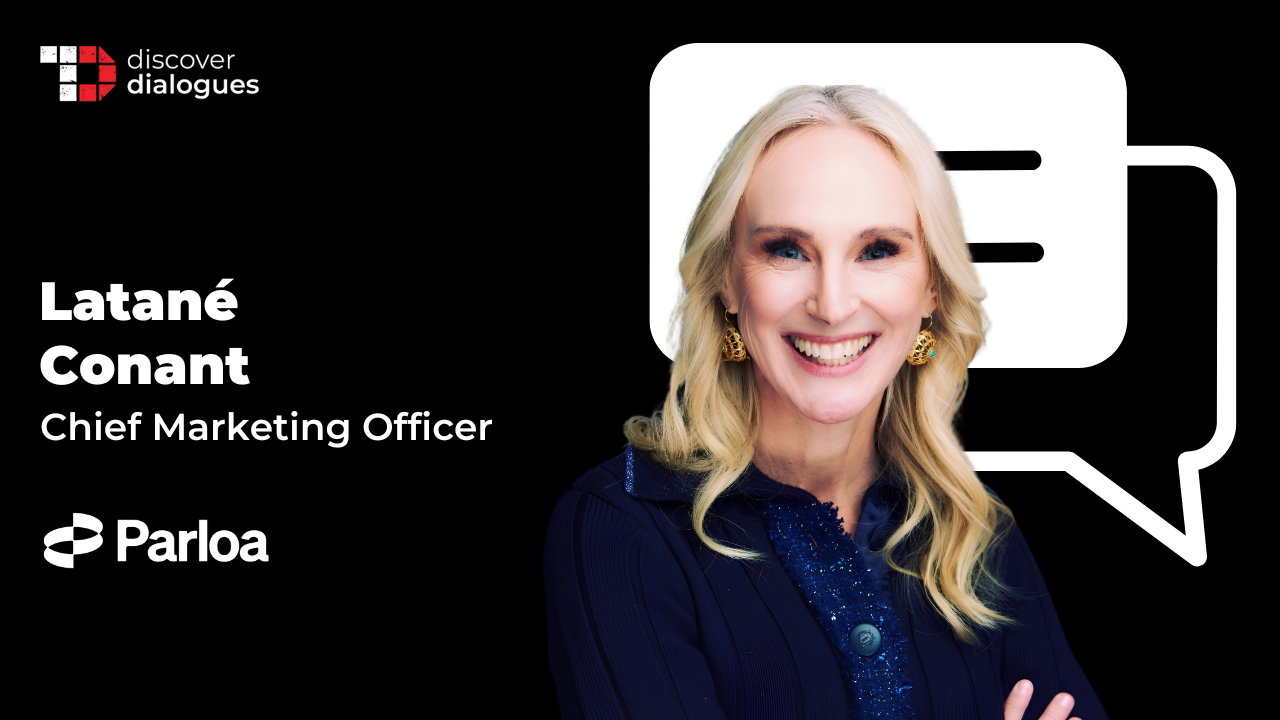
Latané Conant, Chief Marketing Officer At Parloa, On Why AI-Powered Customer Experience Must Start With The Problem, Not The Technology
Share
Overview
Latané also explores why customer lifetime value can serve as a shared measure of success across teams, how AI agents should be managed with the same discipline as human agents, and why human judgment remains important in complex customer interactions. She also shares how the CMO role is evolving beyond traditional marketing to connect customer insight, technology, revenue, and broader business outcomes.
Here is a brief introduction of Latané:
Latané Conant is Chief Marketing Officer at Parloa, where she is helping enterprises rethink customer service by using AI agents to create more responsive, personalized, and revenue-focused customer experiences. With a career spanning sales, marketing, revenue leadership, and customer success, she brings a cross-functional perspective to how businesses can strengthen customer relationships and drive sustainable growth.
Before joining Parloa, Latané played a key role in scaling 6sense, where she served as both Chief Marketing Officer and Chief Revenue Officer, and previously held leadership roles across sales, marketing, and customer success at Appirio. She is also the bestselling author of No Forms. No Spam. No Cold Calls. and the co-founder of CMO Coffee Talk, a community of more than 4,000 marketing leaders, and Empowered CXO, a platform focused on elevating women executives. Her work centers on AI-powered growth, customer experience, revenue transformation, and modern marketing leadership.
TD Editor: You have worked across sales, marketing, and revenue leadership throughout your career. How has that journey shaped your perspective on building sustainable growth and stronger customer relationships today?
I’ve spent my career looking at the customer from a few different seats, and one thing that becomes really obvious is that customers don’t care about your org chart. They do not experience sales, marketing, and service as separate functions. They experience one company and one brand.
That means sustainable growth cannot sit with one team. Sales, marketing, service, and product all need to work toward the same goal of understanding the customer, identifying where the friction is, and creating an experience that builds loyalty and strengthens the customer relationship over time. When each function optimizes only for its own metrics, you lose sight of the bigger relationship.
The opportunity is to connect those pieces and actually listen to what customers are telling you. Every conversation can reveal where the experience is breaking down, what customers value, and what will keep them coming back. When those insights move across the business, you make better decisions and build a company that is much closer to its customers.
TD Editor: Customer expectations continue to evolve as markets become more competitive. From your perspective, what helps brands create meaningful differentiation and turn customer relationships into long-term growth?
A lot of brands overcomplicate differentiation. At the end of the day, customers remember whether you made their life easier or harder, and ultimately, how they felt after they engaged with you.
That is why service is such an underused part of the brand. We spend so much money trying to understand customers through surveys, market research, win-loss, and competitive intelligence, while customers are telling us exactly what they think every single day. There is so much gold sitting in those conversations.
The difference now is that AI lets us actually use it. We can listen to every conversation, understand where the friction is and then do something about it. When a customer reaches out in a moment of need, that is a huge opportunity. If you know who they are, remember the context, and solve the problem, that is how you create customers for life. Differentiation comes down to how you show up in those moments.
TD Editor: Many organizations are investing heavily in AI, but fewer are translating that investment into meaningful business impact. What separates companies creating real value from AI from those still struggling to move beyond experimentation?
The companies creating real value are the ones that start with the problem, not the technology. There is so much pressure to “do something with AI,” and because of that, a lot of organizations jumped straight into experimentation without understanding where customers are getting stuck, what the business needs to improve, or what success should look like.
Know first, then do. Listen to the conversations you already have, identify where the friction is and what customers need, then build AI around those problems. This is why observability is so important, and it’s often a piece that’s considered after the tech is already in place.
The other piece is treating AI like something you have to manage, not something you deploy once and walk away from. Leaders need to know whether it is performing reliably, staying on brand, where it is failing, and how it is affecting the customer experience. The companies that take that approach are the ones that move beyond experimentation because they can connect AI to real outcomes like better experiences, stronger retention, and growth.
TD Editor: Marketing and revenue teams are increasingly expected to operate as connected functions. Based on your experience, where does this alignment typically break down, and what can leaders do to build a more unified approach to growth?
The problem is that everyone has their own scoreboard. Marketing has MQLs. Sales has pipeline. Service has handle time and CSAT, historically, which is odd as service should be more directly tied to revenue post-sale and is still a part of the customer journey. The point is, you can end up with every team hitting its number while the overall customer relationship is getting weaker.
The metric I keep coming back to is customer lifetime value because it gives everyone a shared outcome to work toward. Pipeline matters. Retention matters. Effort and satisfaction matter. However, those are signals that help you diagnose what is happening and where you need to act. Customer lifetime value is the real scoreboard.
A more unified approach starts when everyone is looking at the same customer relationship and working toward growing its lifetime value. Functional metrics tell you where to look and what needs to change, but customer lifetime value tells you whether those efforts are actually strengthening the relationship over time.
TD Editor: As automation and personalization become more common across customer interactions, how should businesses balance technology with human interaction while maintaining trust and consistency?
Businesses should think about AI agents the same way they think about human agents. You would never hire someone, give them access to your customers on day one, and just hope for the best. You train them, give them the right tools, and never stop coaching them to get better. AI needs that same discipline to be reliable, aligned with the brand, contextually aware of each customer, and able to deliver a positive customer experience.
When you get that right, consumers are actually very open to AI. Our Consumer Patience Index found 85% of consumers would continue using automation if it consistently solved their problems and 75% would even prefer automation if it could anticipate their needs and act proactively.
The goal is to let AI handle more of the experience well, while making it easy to bring in a human when judgment or complexity calls for it. When that happens, the person should have the full context, so the customer gets the help they need without having to start over.
TD Editor: Looking ahead, how do you see the role of the CMO evolving as marketing becomes more closely connected to revenue, customer experience, and emerging technologies?
The CMO has to fly at a higher altitude. It is not enough to own marketing anymore; the churn risk is simply too great. Look at the recent viral tweets between Lufthansa and a frustrated customer; nobody came out on top, and it was in front of a worldwide audience. You have to take accountability for business outcomes, understand the technology in play, and connect what you are learning about customers to broader business growth.
A big part of that is lighting up what I call the dark journey. Some of the richest customer data is sitting in conversations we have never been able to listen to at scale. AI changes that by surfacing where the friction is, what customers are asking for, and what the business needs to act on.
The role is becoming much less about managing a marketing function and much more about using customer insight to move the business. The CMO should be connecting what customers are saying to where the company invests, what it builds, and how it grows.
Tue, Oct 13, 2026

Enjoyed what you read? Great news – there’s a lot more to explore!
Dive into our content repository of the latest tech news, a diverse range of articles spanning introductory guides, product reviews, trends and more, along with engaging interviews, up-to-date AI blogs and hilarious tech memes!
Also explore our collection of branded insights via informative white papers, enlightening case studies, in-depth reports, educational videos and exciting events and webinars from leading global brands.
Head to the TechDogs homepage to Know Your World of technology today!
Disclaimer - Reference to any specific product, software or entity does not constitute an endorsement or recommendation by TechDogs nor should any data or content published be relied upon. The views expressed by TechDogs' members and guests are their own and their appearance on our site does not imply an endorsement of them or any entity they represent. Views and opinions expressed by TechDogs' Authors are those of the Authors and do not necessarily reflect the view of TechDogs or any of its officials. While we aim to provide valuable and helpful information, some content on TechDogs' site may not have been thoroughly reviewed for every detail or aspect. We encourage users to verify any information independently where necessary.
Loading comments...