
Data Management
Data As An AI Catalyst: Strategies For Democratization, Quality, And Governance
Share
Overview
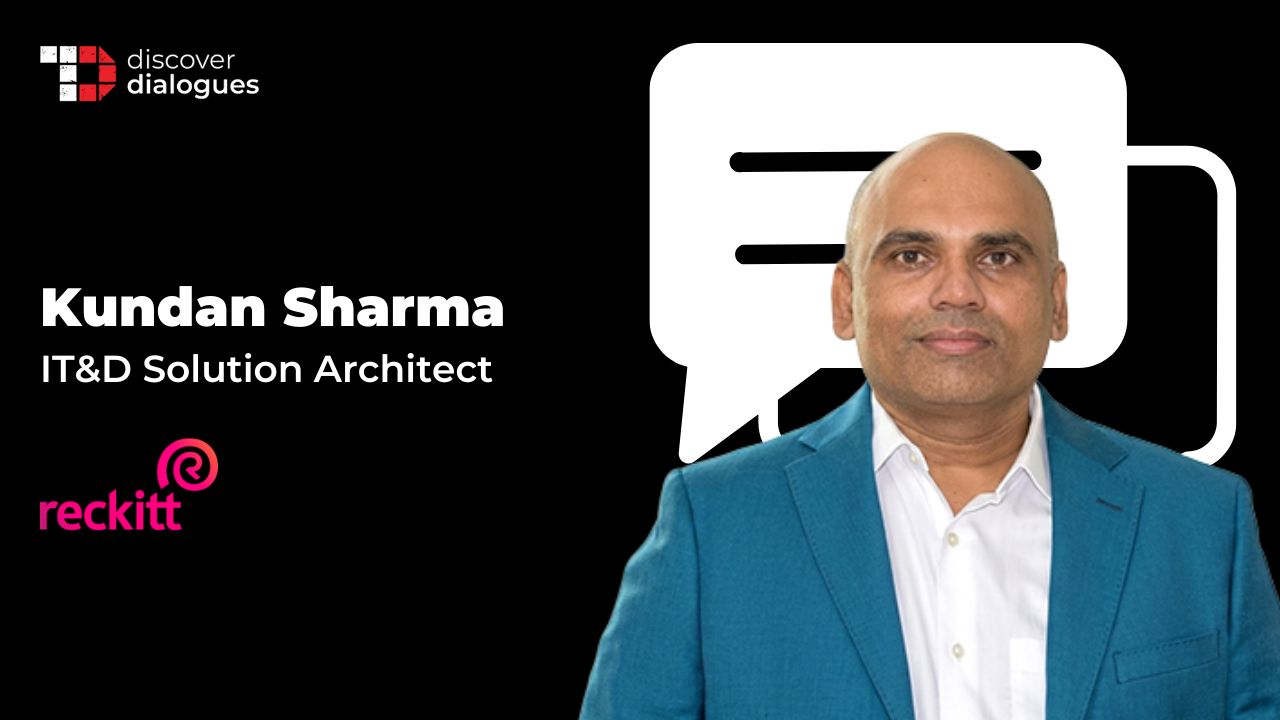
To explore this shift, we spoke with Kundan Sharma, an IT&D solution architect specializing in procurement transformation, process mining, and enterprise data strategy. Over the course of his career, Kundan has worked on large-scale digital transformation initiatives focused on procurement intelligence, working capital optimization, process visibility, and operational efficiency. His work sits at the intersection of AI, enterprise systems, and decision infrastructure, helping organizations turn fragmented operational data into measurable business outcomes, from revenue savings to more resilient procurement operations.
In this conversation, Kundan shares his perspective on data democratization, governance, AI-enabled decision-making, and why the future of enterprise AI depends less on algorithms alone and more on the systems that organizations build around their data.
TD Editor: Kundan, let’s start with the democratization. Everyone talks about it, but very few companies actually achieve it. What’s really blocking access to data within organizations?
To begin with, the real blocker isn't tooling - it's that data access threatens existing power structures. I saw this phenomenon directly in procurement transformation work: category managers had spent years building expertise around supplier data, spend analytics, and contract intelligence. When we introduced self-serve dashboards, the resistance wasn't about capability – it was about relevance. If anyone can query the data, what makes you the expert? If leadership reframes data sharing as a mark of seniority rather than a threat to it, adoption can be stalled regardless of how good the interface is.
What can actually break the cycle is tying democratization to outcomes that people care about. In one procurement transformation, we linked data accessibility metrics directly to working capital targets. Suddenly, teams had a reason to share context rather than hoard it because their bonus depended on the downstream decision quality, not just their output. That's the shift most organizations miss: democratization is an incentive design problem dressed up as a technology problem.
TD Editor: There’s also this persistent belief that more data automatically leads to better AI. But teams are starting to realize that this is not always true. How do you think about data quality in practice?
This is where I'd actually push back against the mainstream framing. The conversation has moved from "more data is better" to "clean data is better", but that's still not quite right. In process mining work, we had beautifully structured event logs from ERP systems: clean, timestamped, complete. And yet the models were misleading, because the data reflected compliant process behavior, how people recorded what they did, not what actually happened. The gap between the logged process and the real process was where all the risk lived, and no amount of data cleaning would surface it.
Quality, in my experience, is really about representativeness under variance. Does your data capture the edge cases, the workarounds, the exceptions that front-line teams have normalized? In one procure-to-pay transformation, we discovered that nearly 30% of purchase orders were being retrospectively approved, a governance failure that was invisible in the clean data but obvious once we mapped actual system behavior. That finding drove more savings than any model trained on the "clean" dataset alone. The real work isn't cleaning data; it's interrogating what the data is actually a record of.
TD Editor: Governance tends to enter the conversation as a constraint. But with AI, it feels more central, almost unavoidable. How do you approach it without slowing everything down?
The honest answer is you can't avoid slowing some things down, the trick is being deliberate about which things. In procurement, we were dealing with supplier confidentiality, price-sensitive data, and contractual obligations all flowing through the same pipelines. Bolting governance on at the end as a compliance checkpoint simply doesn't work. By the time legal reviews an AI-generated spend recommendation, the decision has already been socialized and half-actioned.
What worked for us was embedding governance directly into the data pipeline — lineage tracking, access tiering, validation rules that fired in real time rather than after the fact. But the real design challenge was calibrating what I call "good friction." A low-value repeat supplier transaction should flow through with almost no resistance. But if an AI model recommends re-routing spend away from a strategic supplier relationship, that needs a human in the loop with clear reasoning surfaced not just a confidence score.
We got this wrong initially. We applied uniform approval layers across everything and within weeks, teams were routing around the system entirely, building shadow spreadsheets, emailing approvals offline. That's the worst outcome because you've lost visibility completely. Once we tiered the friction to match the actual risk profile of each decision type, compliance rates went up and cycle times actually came down. The counterintuitive thing is that well-placed governance can speed things up because people trust the system enough to stay inside it.
TD Editor: There’s an interesting tension emerging between centralized data platforms and increasingly autonomous AI teams. How do you reconcile that?
I've seen both extremes fail. In one large transformation, we had a heavily centralized data platform - beautifully governed, impeccably documented, and completely disconnected from what product teams actually needed. Requests took weeks to fulfil. Teams started extracting data independently, which created exactly the fragmentation the platform was supposed to prevent.
The opposite is equally painful. Decentralized teams move fast, but they duplicate work constantly. I've seen three separate teams in the same organization build their own supplier master data extracts from the same ERP, each with slightly different logic, each convinced theirs was correct. That's not agility, that's waste with enthusiasm.
What actually worked was separating foundations from execution. You centralize the things that need to be consistent - data contracts, schemas, governance frameworks, and core infrastructure. But you let teams own their experimentation, model building, and iteration on top of those foundations. The critical piece is the interface between the two layers. If teams can rely on stable, well-defined data inputs with clear contracts on freshness, format, and coverage, they can move quickly without breaking the system. Without that clarity, every team ends up rebuilding the foundation layer themselves, which is where most of the duplicated effort actually lives. It's not a philosophical choice between central and decentralized - it's an engineering problem about where you draw the contract boundary.
TD Editor: AI is also changing who gets to interact with data. Suddenly, non-technical users can query systems directly. Does that actually democratize decision-making - or just introduce new risks?
What’s particularly striking is that AI is simultaneously opening access to data and amplifying the consequences of misunderstanding it. Natural language interfaces and AI copilots have made analytics far more accessible. Teams that once depended entirely on analysts, procurement managers, operations leads, and finance stakeholders can now explore data directly and get answers in real time. Often, such access leads to better decisions because the people closest to the business problem finally have direct access to the information they need. I’ve seen procurement teams uncover patterns and inefficiencies that traditional dashboards had completely missed because they brought stronger operational context to the analysis.
But accessibility also introduces a different category of risk. The problem is not that non-technical users ask poor questions; it’s that AI systems often present incomplete or ambiguous outputs with a level of confidence that feels authoritative. In one case I observed, a senior stakeholder relied on an AI-generated sourcing summary that appeared comprehensive but had unintentionally excluded a major supplier category due to a hidden filter in the dataset. The output looked polished, the language sounded certain, and the conclusion was wrong in a way that materially affected decision-making.
That’s why the conversation cannot stop at democratization alone. The real challenge is designing systems that expose uncertainty rather than conceal it. AI interfaces need to make assumptions visible, highlight missing or excluded data, surface confidence levels, and provide traceability behind recommendations. For high-impact decisions, there should also be validation mechanisms that help users interrogate outputs before acting on them. Otherwise, organizations risk replacing analytical bottlenecks with automated overconfidence.
To me, the most important distinction is this: access to data is not the same as understanding data. Democratization without transparency and safeguards simply shifts the risk to a wider group of people. But when AI systems are designed responsibly, they can genuinely transform how organizations make decisions by combining broad accessibility with clearer, faster, and more context-aware analysis.
TD Editor: Looking ahead, there’s a growing idea that data itself should be treated as a product. What does that actually mean in practice?
It’s a fundamental shift in mindset.
Traditionally, data has been treated as a byproduct of operations, something you collect, store, and occasionally analyses. In an AI-native organization, data becomes a core product with its own lifecycle, users, and quality standards.
Treating data as a product means defining ownership clearly. It means investing in usability, making datasets discoverable, well-documented, and reliable. It means thinking about internal stakeholders as “customers” of your data.
The companies that get this right don’t just have better AI; they have faster iteration cycles, more aligned teams, and a stronger foundation for innovation.
What separates them isn’t access to more data. It’s their ability to operationalize data, turning it into something that can be trusted, reused, and built upon at scale.
If the last decade of software was about building interfaces for humans, the next one may be about building interfaces for intelligence itself. And at the center of that shift is not just AI, but the systems that feed it: data that is accessible, reliable, and governed with intent.
Because in the end, AI doesn’t just reflect the data we have. It reflects the systems we build around it.
Mon, Jun 24, 2024

Enjoyed what you read? Great news – there’s a lot more to explore!
Dive into our content repository of the latest tech news, a diverse range of articles spanning introductory guides, product reviews, trends and more, along with engaging interviews, up-to-date AI blogs and hilarious tech memes!
Also explore our collection of branded insights via informative white papers, enlightening case studies, in-depth reports, educational videos and exciting events and webinars from leading global brands.
Head to the TechDogs homepage to Know Your World of technology today!
Disclaimer - Reference to any specific product, software or entity does not constitute an endorsement or recommendation by TechDogs nor should any data or content published be relied upon. The views expressed by TechDogs' members and guests are their own and their appearance on our site does not imply an endorsement of them or any entity they represent. Views and opinions expressed by TechDogs' Authors are those of the Authors and do not necessarily reflect the view of TechDogs or any of its officials. While we aim to provide valuable and helpful information, some content on TechDogs' site may not have been thoroughly reviewed for every detail or aspect. We encourage users to verify any information independently where necessary.
Loading comments...