
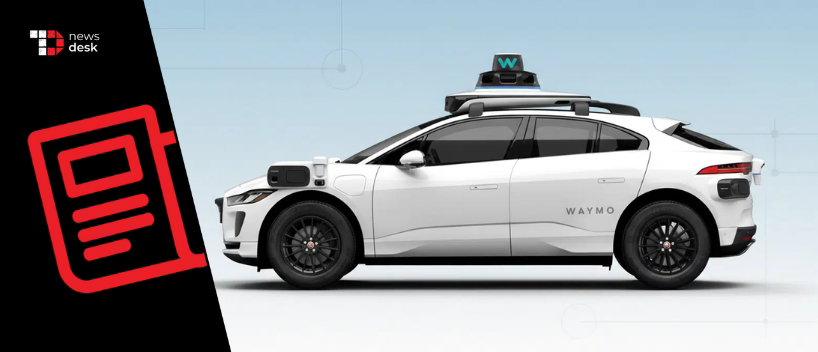
Waymo, the autonomous driving company majority-owned by Alphabet, has been valued at $126 billion following a reported financing round of roughly $16 billion, reflecting sustained investor confidence as its fully driverless robotaxi services continue expanding in select US cities.
TL;DR
- Waymo’s latest financing round is reported at approximately $16 billion.
- The deal values the company at $126 billion.
- A separate $5.6 billion capital injection occurred earlier in 2024.
- Waymo operates paid, fully driverless robotaxi services in limited US markets.
- Revenue, earnings, and profitability metrics remain undisclosed.
Waymo’s valuation milestone comes amid renewed scrutiny of whether autonomous vehicle companies can evolve from long-term research efforts into scalable commercial businesses. The latest financing round, reported by TechCrunch to be valued at around $16 billion, lifts Waymo’s valuation to $126 billion and further reinforces Alphabet’s long-standing commitment to the project.
This round is distinct from an earlier $5.6 billion capital raise completed in 2024. Together, the investments underscore Alphabet’s strategy of backing Waymo as a long-horizon platform play rather than a near-term profit generator.
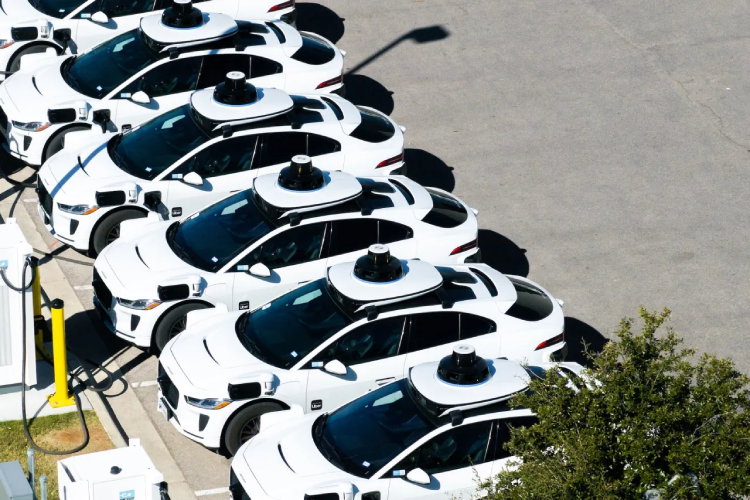
Unlike many autonomous driving companies that remain in testing or pilot stages, Waymo currently operates paid, fully driverless robotaxi services for the general public. These services are live in cities such as San Francisco, Phoenix, Los Angeles, and Austin, where riders can book trips without a human safety driver inside the vehicle.
A Waymo spokesperson said the new capital will be used to continue scaling the company’s commercial ride-hailing operations, expand its vehicle fleet, and support further technical development. However, the company did not disclose specific timelines for new city launches or broader geographic expansion.
Despite the headline valuation, Waymo has not published revenue figures, operating margins, or profitability metrics. Alphabet does not break out Waymo’s financial performance in its earnings reports, and the autonomous driving unit is widely understood to be operating at a loss as it continues to invest heavily in safety validation, software development, hardware integration, and regulatory approvals.
Topics For More Insights
Waymo’s valuation therefore reflects confidence in its technological maturity and deployment progress rather than its current financial performance. Its vehicles rely on the proprietary Waymo Driver system, which integrates lidar, radar, cameras, and machine learning models trained on years of real-world driving data. The company has previously said its fleet has driven tens of millions of autonomous miles on public roads, supplemented by large-scale simulation testing.
Competition in the autonomous vehicle sector remains intense, but only a small number of companies globally operate paid, fully driverless ride-hailing services without safety drivers, and typically only within constrained, geofenced environments. Many other players continue to rely on supervised testing or limited pilot programs.
Alphabet executives have consistently framed Waymo as a long-term investment. CEO Sundar Pichai has previously described autonomous driving as a transformative technology with applications across mobility, logistics, and urban infrastructure, but one that requires sustained capital and patience.
As a result, Waymo’s $126 billion valuation signals investor belief in its technical lead and regulatory progress, even as questions around scalability, unit economics, and eventual profitability remain unresolved.
