
Manufacturing Technology
U.S.-China Exchange Strategic Blows As The Global Semiconductor AI Race Grows
Updated on Fri, Oct 10, 2025
Share
As the AI, defense, and data industries increasingly rely on chips, countries are tightening control over semiconductor resources to limit who can design, build, and market them. This week, China and the U.S. each made major moves that could reshape the semiconductor industry's balance of power.
So, what did the two tech-heavy nations announce and what impact will it have? Let’s find out.
China Blacklists TechInsights After Huawei Chip Revelation
China’s Commerce Ministry has officially blacklisted TechInsights, a Canadian semiconductor research firm, citing national security concerns. The decision bars Chinese companies and individuals from working with or sharing data with TechInsights, a global leader in dissecting and analyzing advanced chip designs.
The move comes shortly after TechInsights published a report revealing that Huawei’s latest artificial intelligence chips contained parts sourced from outside mainland China. The report raised questions about China’s progress in semiconductor self-reliance, and drew global attention to Huawei’s supply chain.
Beijing labeled TechInsights as an “unreliable entity,” a designation typically reserved for foreign companies accused of harming national interests. The ban could make it even harder for analysts to track China’s chipmaking progress, as much of the information about domestic breakthroughs often comes from third-party teardowns, like those conducted by TechInsights.
The research firm’s findings echoed similar reports by SemiAnalysis, noting that Huawei’s “Ascend” AI chip relied on memory and manufacturing technology from Samsung Electronics and Taiwan Semiconductor Manufacturing Co. (TSMC). Interestingly, both companies recently faced U.S. export restrictions that limited their dealings with China.
Huawei has been under a U.S. trade ban since 2019 and is working to create alternatives to Western chip technology. However, TechInsights’ findings suggest that complete independence may still be out of reach. Analysts believe this latest incident could further deepen China’s determination to accelerate homegrown semiconductor innovation while adding to the opacity of an already secretive chip sector.
However, another major factor is its rivalry with the United States on the global scale, and with latest moves makes by US regulators and businesses, Chinese AI firms might have to steo up their game.
U.S. Senate Passes Bill Requiring NVIDIA, AMD To Prioritize Domestic Customers Over China
In a significant move shaping the global semiconductor race, the U.S. Senate passed the Guaranteeing Access and Innovation for National Artificial Intelligence (GAIN AI) Act, a bipartisan bill requiring advanced AI chipmakers like Nvidia and AMD to prioritize American customers before fulfilling overseas orders, particularly to China.
The legislation, folded into the annual defense policy bill, reflects growing concern in Washington over the availability of AI hardware amid rising competition with Beijing. Co-sponsored by Senator Jim Banks (R-Ind.) and Senator Elizabeth Warren (D-Mass.), the bill seeks to ensure that domestic startups, research labs, and small businesses are not just left waiting behind China for AI chips.
“Today, the Senate acted to make sure American customers — including small businesses and startups — aren’t forced to wait in line behind China’s tech giants when purchasing the latest AI chips,” said Senator Warren.

The proposal adds another layer to the U.S. government's existing export restrictions on shipments of AI chips to China. While proponents view the measure as a safeguard for U.S. innovation and national security, industry players warn it could create bottlenecks, slow growth, and push Chinese firms to accelerate their own chip development.
Nvidia, which has repeatedly adapted its products to comply with export rules, criticized the bill for targeting what it called a “nonexistent problem,” noting that the U.S. remains its largest market. Meanwhile, trade groups fear the legislation could hamper global competitiveness by limiting sales to one of the world’s biggest chip markets.
If enacted, the GAIN AI Act could signal a turning point in U.S. tech policy, one where access to chips becomes as strategic as the chips themselves. While AMD and Nvidia grapple with the GAIN AI bill, Intel has made an announcement that is giving it more foothold in the AI chips market.
Intel Launches Its Breakthrough 18A Semiconductor
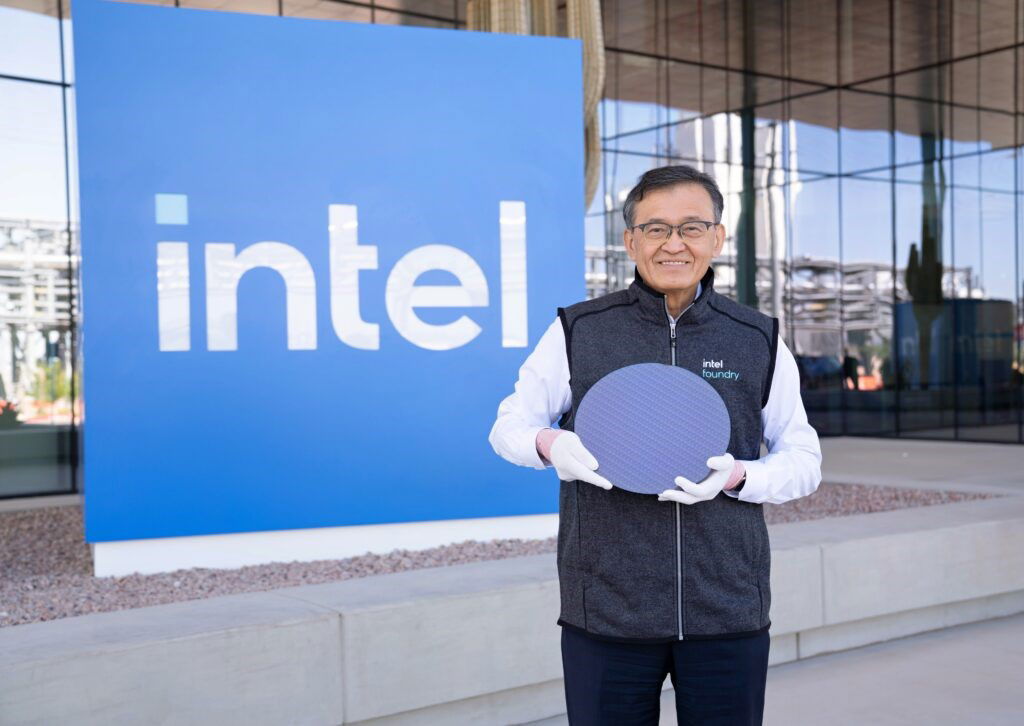
Intel has unveiled its next-generation processor, Panther Lake, marking a major milestone in the company’s comeback under CEO Lip-Bu Tan. The new chip, part of the Intel Core Ultra family, is the first to use the company’s 18A semiconductor process.
The processors, set to ship later this year, are being produced at Intel’s newly operational Fab 52 facility in Chandler, Arizona. “We are entering an exciting new era of computing, made possible by great leaps forward in semiconductor technology that will shape the future for decades to come,” Tan said in a company press release.
The company also revealed its first 18A-based server processor, the Xeon 6+ (Clearwater Forest), expected to debut in 2026. This dual announcement is Intel’s largest since Tan took over as CEO in March, signaling his focus on restoring the company’s engineering-first identity and strengthening its U.S. manufacturing roots.
Intel highlighted the domestic significance of its 18A process, calling it the most advanced semiconductor technology produced on U.S. soil. The move aligns closely with Washington’s push to rebuild local chipmaking capacity to address China’s rise.
The U.S. government’s 10% equity stake in Intel, announced in August after Tan’s meeting with President Trump, further underlines how national interests and innovation are becoming increasingly intertwined in the semiconductor race.
From Beijing’s ban on TechInsights to Washington’s chip priorities and Intel’s manufacturing revival, one thing is clear: the semiconductor race is no longer just about faster processors. It’s about technological independence, economic resilience, and a chance to shape the next era of computing.
Will the US government’s new policies help keep semiconductor innovation closer to home? Or will global demand prove too strong to resist with China emerging as a threat?
Share your thoughts in the comments below.
First published on Fri, Oct 10, 2025

Enjoyed what you read? Great news – there’s a lot more to explore!
Dive into our content repository of the latest tech news, a diverse range of articles spanning introductory guides, product reviews, trends and more, along with engaging interviews, up-to-date AI blogs and hilarious tech memes!
Also explore our collection of branded insights via informative white papers, enlightening case studies, in-depth reports, educational videos and exciting events and webinars from leading global brands.
Head to the TechDogs homepage to Know Your World of technology today!
Disclaimer - Reference to any specific product, software or entity does not constitute an endorsement or recommendation by TechDogs nor should any data or content published be relied upon. The views expressed by TechDogs' members and guests are their own and their appearance on our site does not imply an endorsement of them or any entity they represent. Views and opinions expressed by TechDogs' Authors are those of the Authors and do not necessarily reflect the view of TechDogs or any of its officials. While we aim to provide valuable and helpful information, some content on TechDogs' site may not have been thoroughly reviewed for every detail or aspect. We encourage users to verify any information independently where necessary.
Loading comments...