
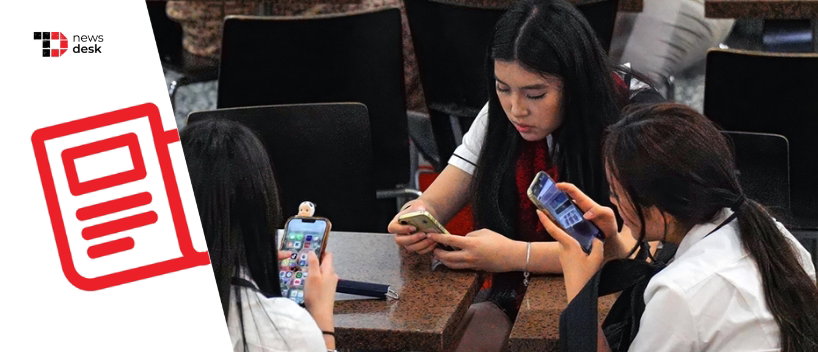
The UK government is moving from debate to real-world testing in its latest push to tighten child online safety. Rather than immediately imposing a nationwide under-16 social media ban, ministers will run a six-week pilot in 300 teenage homes across all four nations of the UK to test which restrictions actually affect sleep, schoolwork, and family life.
The pilot matters because it shifts the discussion from political symbolism to enforceability. It also lands as Britain gathers public feedback on a wider digital wellbeing consultation that covers a possible minimum social media age, age verification, AI chatbots, gaming harms, addictive product features, and overnight curfews.
TL;DR
- The UK will test social media restrictions in 300 teenage homes over six weeks before deciding on tougher national steps.
- Families will be split across four groups: app bans, one-hour daily caps, overnight curfews, and a control group.
- The pilot runs alongside a broader consultation on child online safety that closes on May 26, 2026.
- The government is testing both impact and enforceability, including how easily teens can bypass restrictions.
What The Government Is Testing
According to the Department for Science, Innovation and Technology, one group of parents will be shown how to disable selected social media apps entirely, effectively mimicking a ban at home. A second group will impose a one-hour-per-day cap on popular apps such as Instagram, TikTok, and Snapchat. A third group will block social media between 9 p.m. and 7 a.m., while a fourth group will continue with no changes and act as the control.
Parents and teenagers will be interviewed at the beginning and end of the trial. Officials want to measure the effect of restrictions on sleep, schoolwork, and family life, while also documenting the practical problems families face, including how hard it is to set controls and whether teenagers find workarounds.
Why This Pilot Matters
The trial comes after lawmakers rejected an outright under-16 social media ban in March, but kept the door open to future restrictions on specific platform features and functionalities. That means the government has stepped back from an immediate blanket prohibition, while still building the evidence base for more targeted regulation.
The urgency is clear. A House of Commons Library briefing, citing Ofcom data published in 2025, said 97% of children aged 13 to 15 own a mobile phone, 95% use social media, and 96% have their own social media profile. Those figures highlight why ministers are now focusing on practical interventions instead of broad headlines alone.
Topics For More Insights
- One-Fifth Of Australian Teens Still Use TikTok And Snapchat Despite Social Media Ban
- UK Gov Explores Under-16 Social Media Ban & Phone-Free Schools
- Reddit Challenges Australia’s Social Media Ban, As It Tests Verified Profiles
- TikTok Survives In The US As Australia Tightens Social Media Ban On Teenagers
What The Evidence Still Cannot Prove
The science remains contested. Reuters reported that British teenagers themselves are conflicted about tighter controls, acknowledging the harms of endless scrolling and harmful content while also arguing that social media is central to how they communicate and learn. That tension helps explain why the government is combining the household pilot with a separate Wellcome Trust-funded scientific study involving around 4,000 students aged 12 to 15 in 10 Bradford secondary schools.
That larger study will examine anxiety, sleep quality, wellbeing, bullying, body image, and school absences. Professor Amy Orben of the University of Cambridge said large randomized controlled trials are needed because policymakers still lack critical insight into which interventions work in practice for young people and their families.
What Did Stakeholders Say?
Technology Secretary Liz Kendall said the government is determined to give young people the childhood they deserve and that the pilots will provide the evidence needed to decide the next steps. The broader message from ministers is clear: Britain is no longer asking only whether social media can harm teenagers, but which restrictions can realistically reduce that harm without pushing young users into less visible corners of the internet.
