
The remark highlights Tesla’s cautious entry into the robotaxi and robotics manufacturing domains, both of which are central to its long-term strategy and trillion-dollar valuation.
TL;DR
- Elon Musk said initial production of the Cybercab and Optimus will be “agonizingly slow.”
- Production is set to begin in under 100 days at Tesla’s Austin Gigafactory.
- Cybercab testing is now underway on public roads in five U.S. states.
- Volume production of Cybercab is expected in 2026, with Optimus output likely to start by year-end.
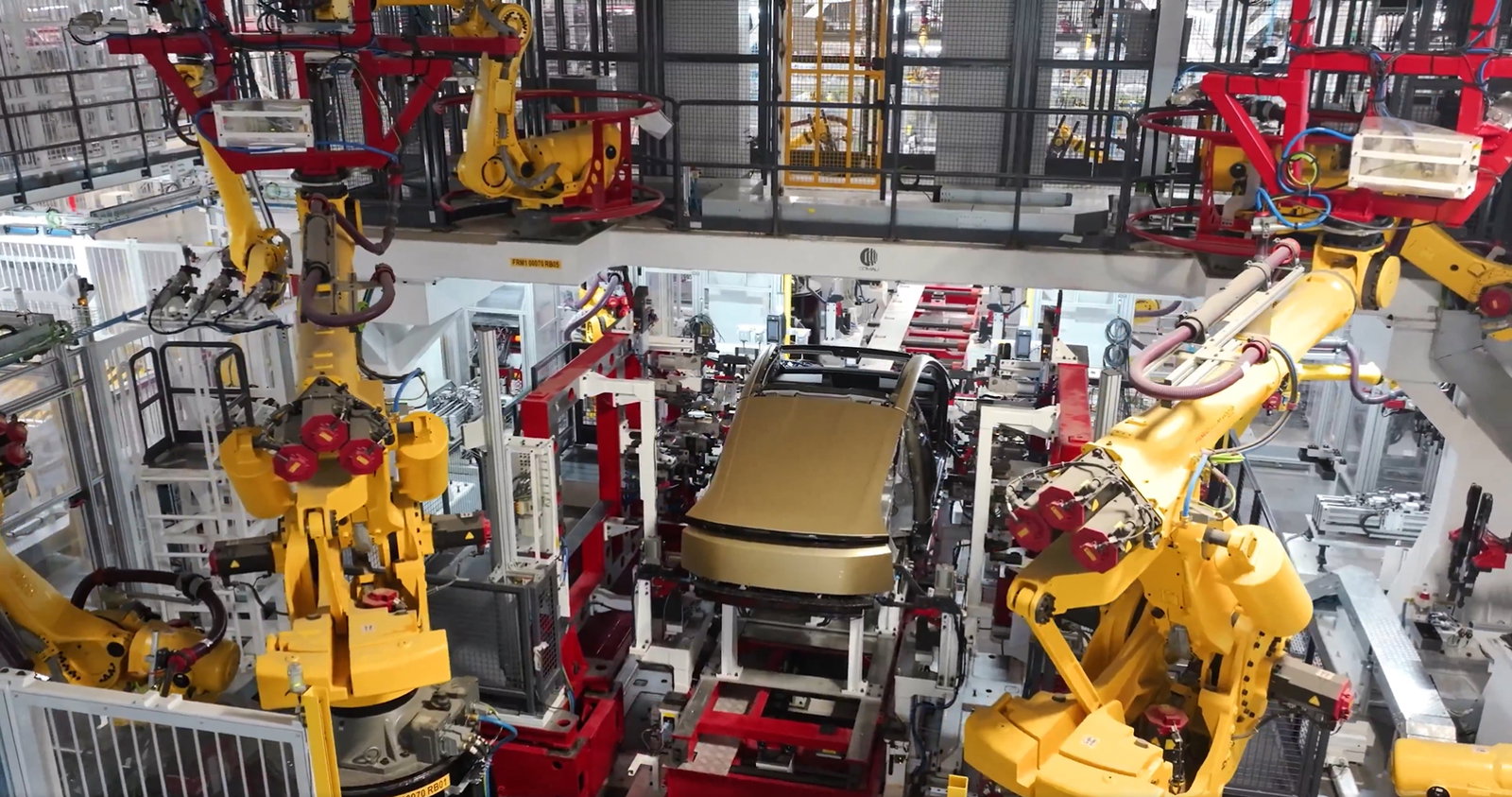
"Tesla Cybercab production starts in less than 100 days from today, which will use Tesla's revolutionary unboxed manufacturing process for the first time. One Cybercab will be able to roll off the production line in under 10 seconds versus 34 seconds for Model Y, with a long term cycle time goal of ~5 seconds," read a post on X by entrepreneur, Tesla investor and Model Y owner Sawyer Merritt.
The post drew the attention of Tesla CEO Elon Musk, who replied saying that the production speed of Cybercab and Optimus will depend on their complexity, adding that manufacturing pace is “inversely proportional to the number of new parts and steps involved.”
“For Cybercab and Optimus, almost everything is new, so the early production rate will be agonizingly slow, but eventually end up being insanely fast,” Musk wrote.
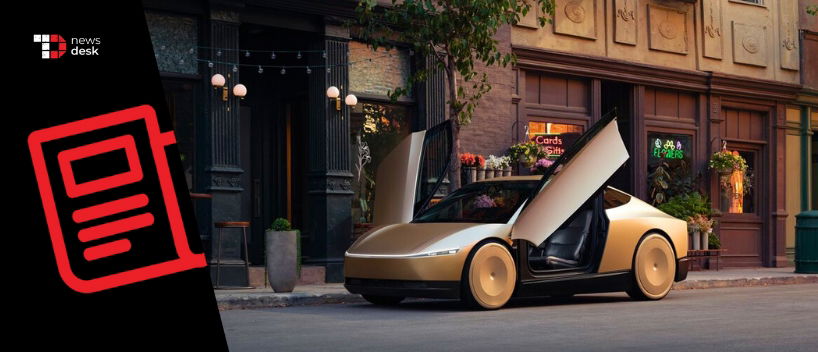
The comments followed growing anticipation around the Cybercab’s April production start, marking the company’s first vehicle designed entirely for autonomous, unsupervised driving, which is expected to be made with no steering wheel, pedals, or mirrors.
Tesla’s Next-Gen Manufacturing Process
Tesla will deploy its new “unboxed” manufacturing process for the first time with the Cybercab. Musk explained that while the long-term target is a 5-second cycle time for the Model Y and 10-second cycle for Cybercabs, early production will be much slower.
A social media post outlining the process suggested that one Cybercab could eventually “roll off the production line in under 10 seconds,” compared to 34 seconds for the Model Y. Musk acknowledged the estimate but cautioned that “initial production is always very slow and follows an S-curve.”
Testing Across Five U.S. States
The Cybercab is already being tested on public roads in Massachusetts, New York, Texas, California, and Illinois. The latest sightings occurred in Danvers, MA, with reports of testing also in Peabody and nearby towns.
Tesla had previously confirmed that limited robotaxi services were already running in Austin, Texas, using modified Model Y vehicles equipped with its Full Self-Driving (FSD) software and a human monitor in the passenger seat.
In December, Musk revealed that the company was now testing robotaxis without safety monitors in the front seat, signaling increasing confidence in its self-driving capabilities.
Topics For More Insights
Optimus And The Future Of Tesla
Beyond robotaxis, Musk reiterated that the Optimus humanoid robot project remains “central” to Tesla’s mission. He has often said that Optimus could eventually dwarf Tesla’s vehicle business, creating vast economic value by taking on “tasks that humans are unwilling to perform.”
Optimus production is slated to begin towards the end of 2026—"hopefully"—aligning with the company’s vision of scaling both products in tandem.
Market Outlook
Tesla’s valuation, which recently topped $1.39 trillion, is heavily tied to investor confidence in its AI-driven technologies, particularly autonomous driving and robotics.
Despite slower revenue growth in its EV segment, investors continue to view robotaxi and AI projects as long-term catalysts.
The company recently showcased the Cybercab at the China International Import Expo in Shanghai, marking its Asia-Pacific debut, as it looks to strengthen its global autonomous fleet ambitions.
