
The race to commercialize autonomous mobility has entered a new phase as Tesla and Waymo each expand their robotaxi operations in key U.S. cities.
Tesla has launched driverless robotaxi rides in Austin with no human safety driver, while Waymo has opened its driverless service to the public in Miami.
TL;DR
- Tesla begins offering fully driverless paid robotaxi rides in Austin with no safety driver in the front seat.
- The company plans to gradually increase fully driverless vehicles in its fleet.
- Some vehicles still have human monitors or chase cars for safety.
- Waymo opens its public robotaxi service in Miami across a 60-square-mile area.
- 10,000 residents on the waitlist are being added gradually.
- The initial service area spans 60 square miles, including Brickell, Wynwood, Coral Gables, and the Design District, with Miami International Airport coming "soon.”
Tesla’s Fully Driverless Debut In Austin
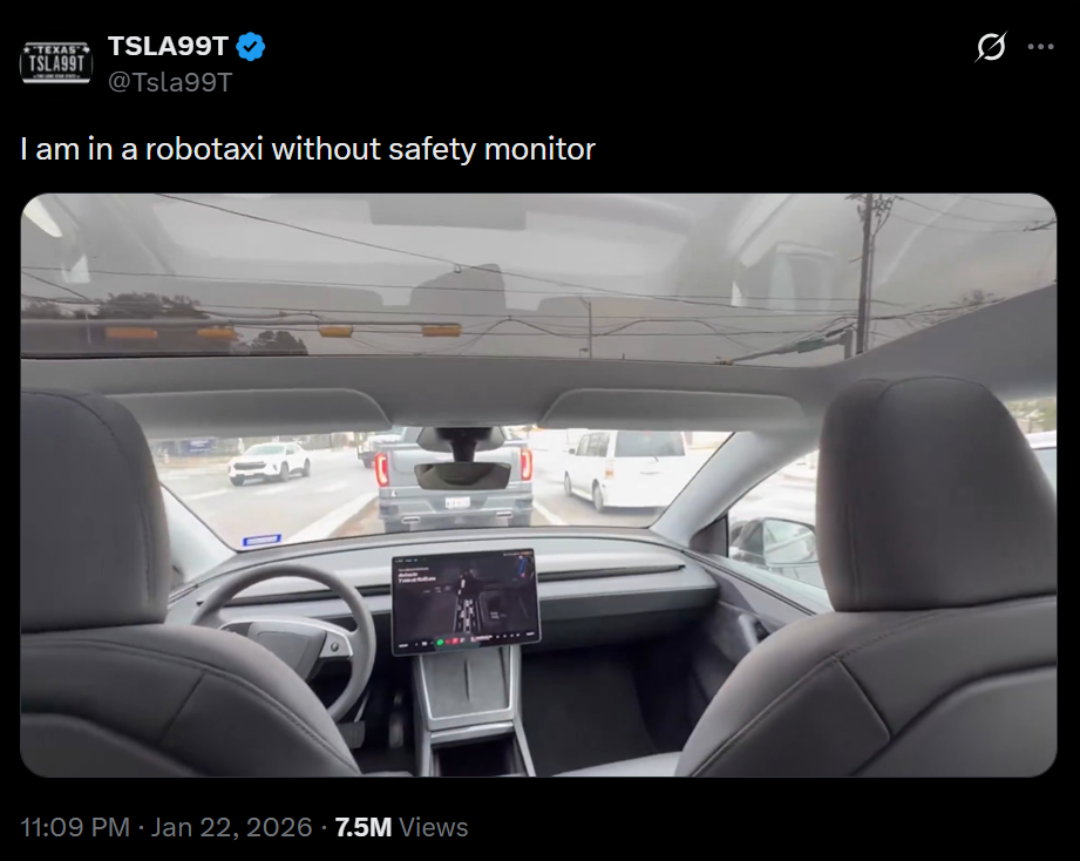
Tesla has officially started offering paid robotaxi rides in Austin, Texas, with vehicles operating without a human safety driver in the front seat.
The development was confirmed by Elon Musk through a post on X, saying, “Just started Tesla Robotaxi drives in Austin with no safety monitor in the car. Congrats to the @Tesla_AI team!” He added, “If you’re interested in solving real-world AI, which is likely to lead to AGI imo, join Tesla AI. Solving real-world AI for Optimus will be 100X harder than cars.”
Tesla first deployed its robotaxis in Austin last June with human operators, before expanding testing in December to driverless mode. The company has now begun a commercial rollout that mixes fully unsupervised vehicles with those monitored by safety drivers.
"Starting with a few unsupervised vehicles mixed in with the broader robotaxi fleet with safety monitors, and the ratio will increase over time," said Tesla’s AI lead, Ashok Elluswamy, who also confirmed the Austin development.
Riders report that Tesla is charging for the robotaxi service, and some vehicles appear to have a chase car following as a precautionary measure.
Meanwhile, other riders have posted videos of rides with no human safety drivers.
Tesla's Priced Robotaxi Rides
While competitors such as Zoox and Waymo initially offered free rides during early trials, Tesla’s decision to charge suggests confidence in its technology and operational readiness.
Ahead of the launch, Musk also stated it’s “probably true” that the upcoming Cybercab model could cost less than 20 cents per mile by 2030, referring to ARK Invest’s Big Ideas 2026 report.
The company aims to make one Cybercab every 10 seconds using its “Unboxed” manufacturing process, eventually reaching one every five seconds. Production for Tesla’s first fully autonomous vehicle is set to begin in April.
Tesla’s push for autonomy in Austin underscores its commitment to achieving full self-driving capability and broadening its mobility ecosystem. If successful, the rollout could position Tesla as a direct challenger to Waymo and Cruise in the commercial robotaxi space.
Topics For More Insights
Waymo Expands Its Driverless Network To Miami
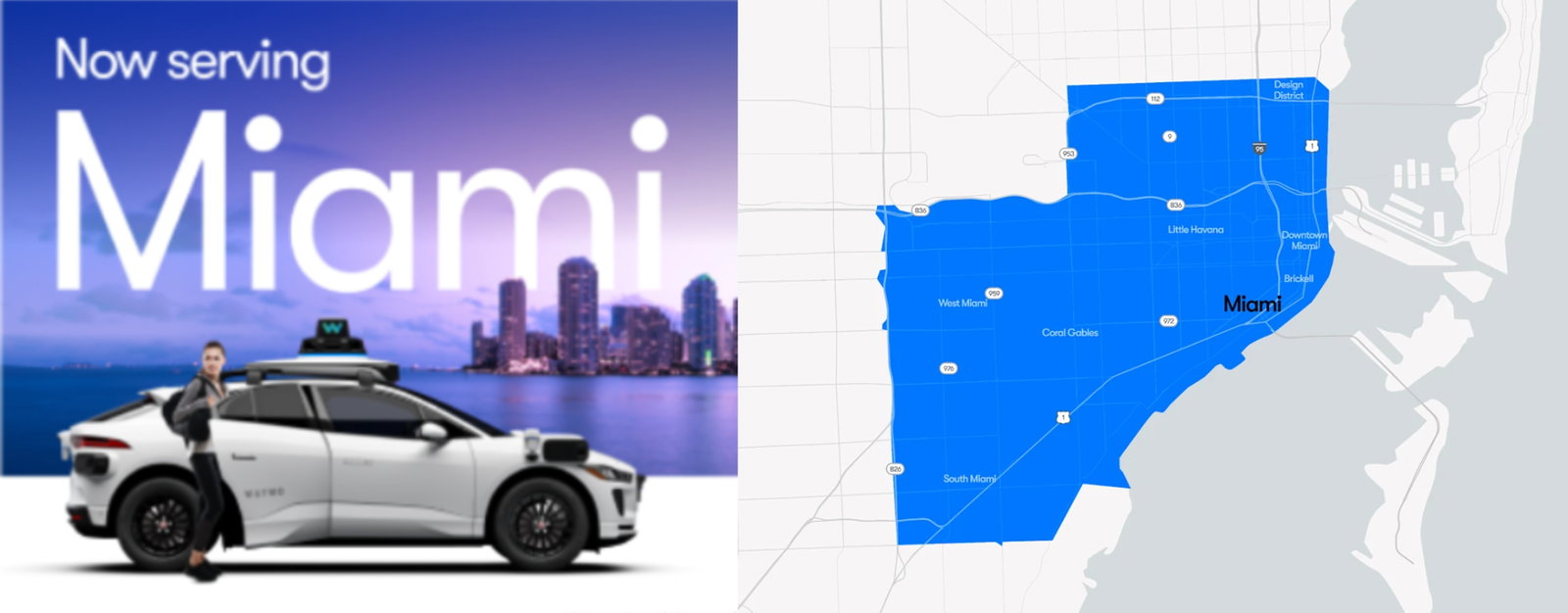
While Tesla celebrates its sans-safety driver robotaxi deployment, Waymo has opened its fully autonomous ride-hailing service to the public in Miami.
In an official release, the company said it will gradually add nearly 10,000 residents from its waitlist to ensure a smooth experience.
The 60-square-mile initial service zone includes high-traffic areas such as the Design District, Wynwood, Brickell, and Coral Gables, with plans to expand to Miami International Airport “soon.”
“Miami is a city defined by its energy, myriad of global cultures, and its forward-looking spirit, and Waymo is proud to add to that momentum,” said Tekedra Mawakana, co-CEO of Waymo. “We’re excited to offer its residents and visitors a safe, reliable, and magical way to move around and look forward to earning their trust with every ride.”
Waymo’s driverless operations in Miami follow months of mapping and safety testing on public roads. The company previously deployed the vehicles with human operators before removing them entirely in November. Local officials, including Miami-Dade County Commission Chairman Anthony Rodriguez, welcomed the launch, emphasizing its role in building a more connected and innovative transportation network.
According to Waymo, its vehicles have already driven more than 127 million fully autonomous miles, achieving a tenfold reduction in serious injury crashes compared to human drivers.
The company highlights that its vehicles can handle Miami’s diverse conditions, from harsh sunlight to sudden tropical downpours, while maintaining reliability and safety.
Two Visions, One Future Of Mobility
Tesla and Waymo are approaching autonomy from different ends of the innovation spectrum.
As both companies expand, they collectively signal a pivotal shift in how cities, regulators, and consumers approach transportation. From Austin to Miami, autonomous vehicles are no longer a test-bed concept—they are becoming part of the urban fabric.
