
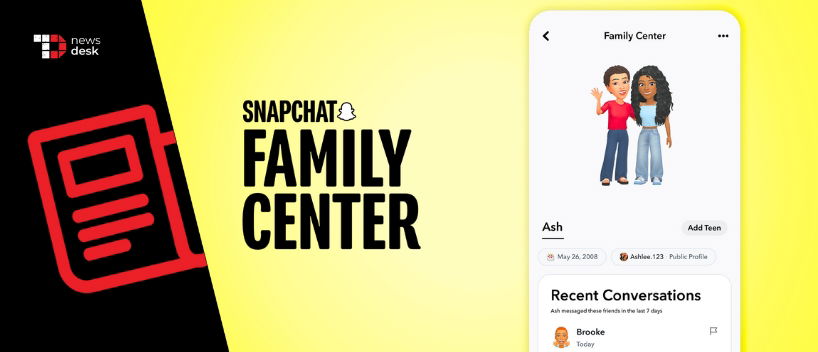
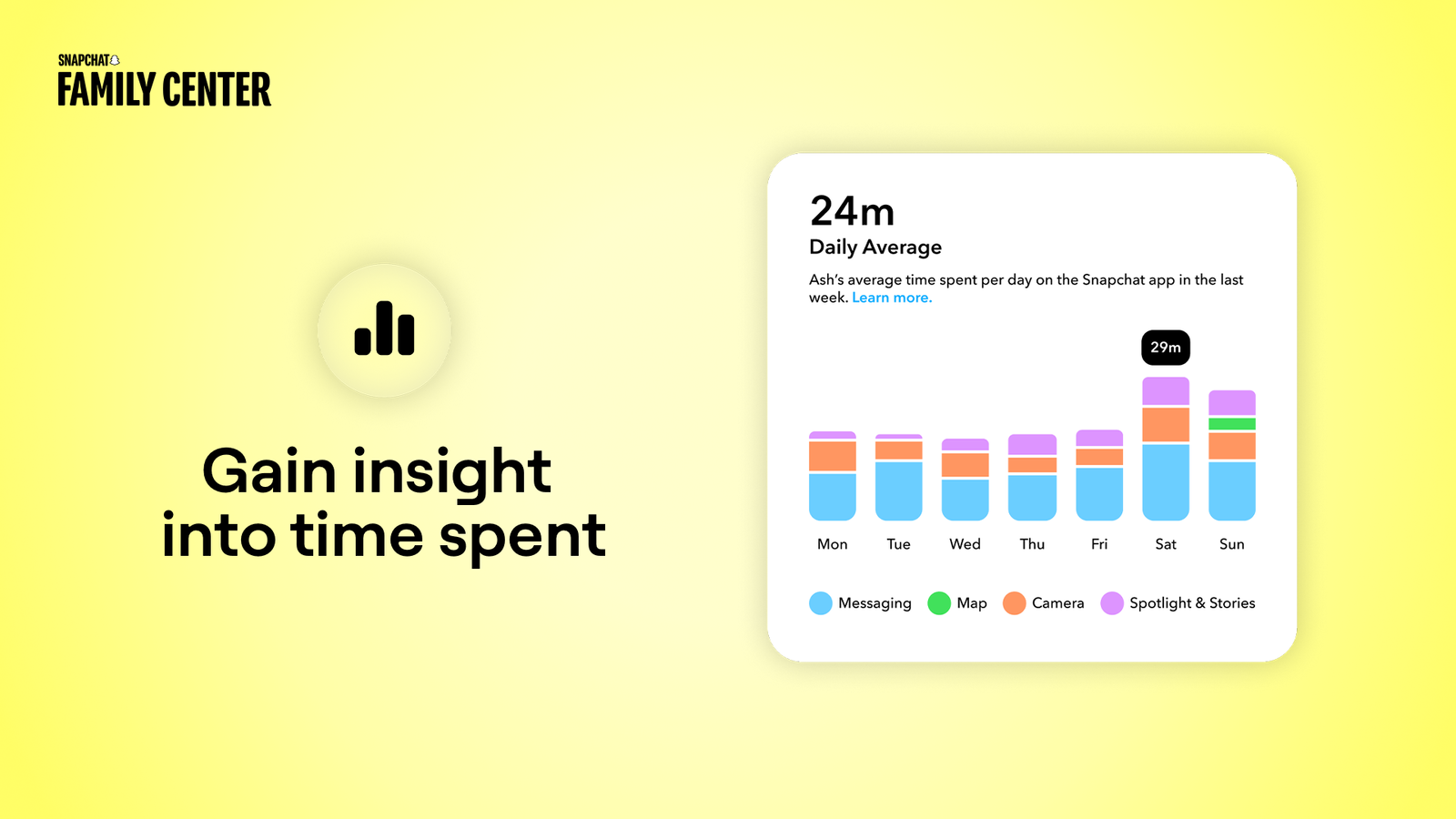
The update allows parents to see the average amount of time their teen spends on Snapchat each day over the previous week and how that time breaks down across various parts of the platform.
Parents can now understand whether their teens are chatting or snapping with friends, creating with the camera, exploring on Snap Map, or watching content on Spotlight and Stories. Snap says this update aims to help families foster conversations about healthy screen time and digital habits.
TL;DR
- Snap adds new parental control features to its Family Center tool.
- Parents can now see their teens’ average daily time on Snapchat and how it’s spent across app features.
- They can also view how their teen might know new friends added on the platform.
- The launch follows Snap’s settlement in a social media addiction lawsuit days before trial.
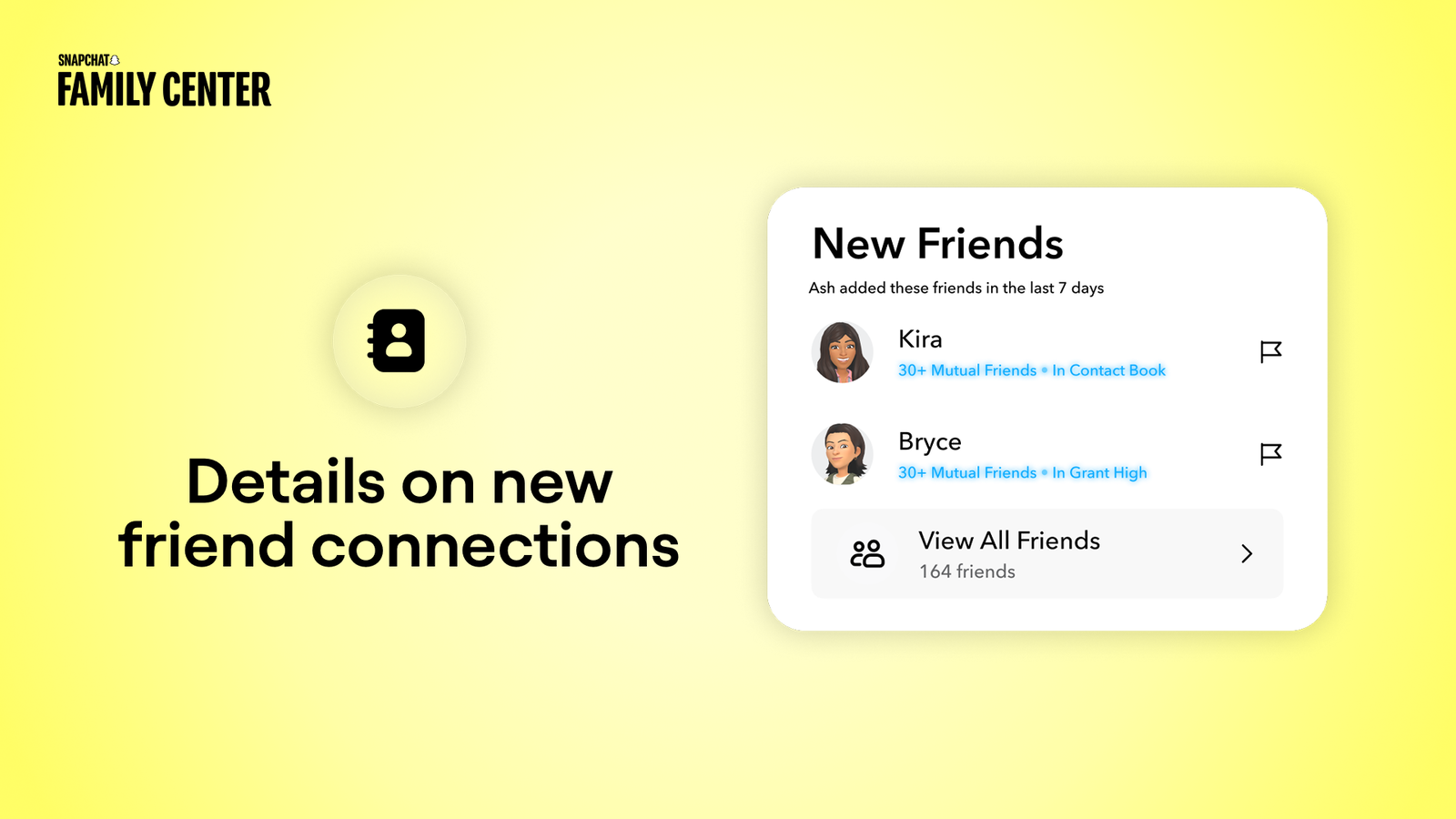
The update also brings new transparency around friendships.
Parents can now see how their teens might know new users they’ve added, whether they share mutual friends, are saved as contacts, or belong to common communities.
Snap refers to these as “trust signals,” designed to give parents confidence that their teens are connecting with people they actually know offline.
“These trust signals make it easier for parents to understand new connections and have greater confidence that their teen is chatting with someone they know in real life,” said Snap in its release. “If a parent or guardian sees a new friend they aren’t familiar with, they have the information they need to start a productive conversation.”
Strengthening Safety Tools And Education
To complement these features, Snap has added new safety and educational resources within Family Center. The company released a new video guide for parents and embedded The Keys: A Guide to Digital Safety directly into the tool. This interactive course helps families learn about online risks and encourages open discussions about digital safety.
Family Center, first launched in 2022, was created in response to growing regulatory pressure on social media platforms to better protect minors.
Since then, Snap has expanded it to include options for viewing who teens have recently interacted with, setting content restrictions, disabling the My AI chatbot, sharing locations within the family, and reporting concerning accounts on behalf of teens.
Snap also said parents will soon be able to disable access to its AI-powered search engine, Perplexity, further extending its parental control suite.
Topics For More Insights
Legal Context: Snap’s Recent Lawsuit Settlement
The timing of these new features coincides with Snap’s recent legal developments. Two days before the announcement, Snap reached a settlement in a social media addiction lawsuit brought by a 19-year-old identified as K.G.M., who alleged that Snapchat’s algorithms and features fostered addictive behaviors and harmed users’ mental health.
The settlement came just before the case was set to go to trial in Los Angeles Superior Court. The lawsuit also named other tech giants, including Meta, YouTube, and TikTok, which remain defendants in the ongoing case.
According to reports, the outcome could shape how U.S. courts view social media design liability under Section 230 of the Communications Decency Act, which currently shields platforms from responsibility for user-generated content.
Snap, however, continues to face other similar lawsuits. Documents from ongoing cases revealed that some employees had expressed concern about the app’s impact on teen mental health nearly a decade ago, though the company has since stated that these examples were “cherry-picked” and taken out of context.
What’s Next For Snap
Snap’s expansion of Family Center underscores its continued effort to rebuild trust with parents and regulators. The company said it remains committed to creating “a safe and positive online experience” for teens while empowering caregivers with meaningful oversight tools.
As scrutiny over social media’s role in youth well-being grows, Snap’s approach could serve as a model for how major platforms balance safety, privacy, and user autonomy.
