
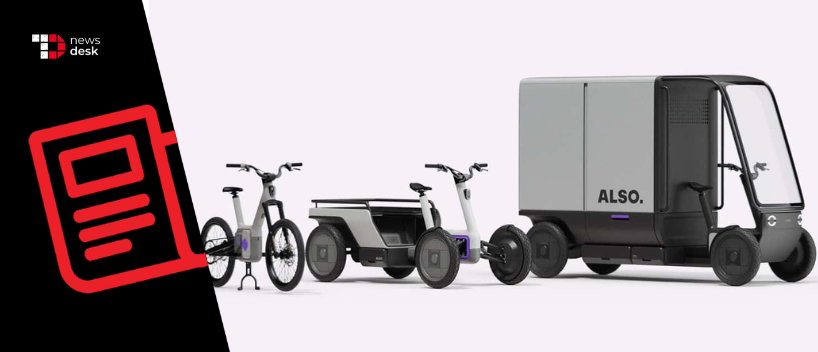
Rivian-backed micromobility startup Also has moved beyond general plans for small electric vehicles and into a defined commercial autonomy deal. The company said DoorDash is investing in its new $200 million Series C round and entering a multi-year agreement to help develop and accelerate autonomous delivery using compact electric vehicles built for dense urban environments.
TL;DR
- Also raised $200 million in a Series C round led by Greenoaks, with DoorDash participating as a strategic investor.
- DoorDash and Also signed a multi-year commercial agreement focused on autonomous delivery.
- DoorDash Labs head Stanley Tang will join Also as a board observer.
- The partnership targets last-mile logistics challenges across mixed urban infrastructure.
Also announced on March 31, 2026 that DoorDash is backing the company financially and commercially as it develops autonomous delivery vehicles. The partnership includes a strategic investment, a multi-year collaboration, and a shared goal of deploying small, purpose-built EVs for goods movement in dense urban environments.
The funding round, reported at $200 million, includes participation from DoorDash, Prysm Capital, and Greenoaks, valuing the company at approximately $1 billion. This marks a significant milestone for Also, which was spun out of Rivian in 2025 to focus on lightweight electric mobility solutions.
The agreement gives DoorDash a direct role in shaping the development of these autonomous vehicles. Stanley Tang, co-founder of DoorDash and head of DoorDash Labs, will join Also as a board observer, signaling a deeper strategic alignment between the two companies.
Chris Yu, co-founder and president of Also, said the partnership focuses on solving delivery challenges in spaces where traditional vehicles struggle, including areas between roads, bike lanes, and sidewalks. He noted that small autonomous EVs are better suited for these environments.
Topics For More Insights
Stanley Tang said last-mile delivery remains a complex physical-world problem, where factors such as curb access, merchant coordination, and customer handoff play a critical role. He added that Also’s vehicles are being designed to help DoorDash scale autonomous delivery more efficiently.
This effort aligns with DoorDash’s broader push into automation. The company previously introduced its autonomous delivery robot, Dot, designed to operate across sidewalks, bike lanes, and roads. DoorDash has stated that last-mile logistics is particularly difficult to automate due to the variability of real-world environments and the complexity of final delivery interactions.
Despite the announcement, several details remain undisclosed. The companies have not confirmed launch markets, deployment timelines, production volumes, or the specific autonomy technology stack that will be used. It is also not confirmed whether the vehicles will integrate Rivian’s internal autonomous systems.
What is clear is Also’s broader strategy. The company is developing small electric vehicles for both goods and passenger movement, with initial launches planned in the United States before expanding globally. Its current product lineup includes an electric bike and a delivery-focused quad vehicle.
The partnership positions Also and DoorDash to address one of the most challenging segments of logistics. By focusing on compact, autonomous EVs designed for urban delivery, the companies aim to improve efficiency in last-mile operations while reducing reliance on traditional delivery methods.
As the autonomous delivery space continues to evolve, this collaboration represents a concrete step toward integrating purpose-built electric vehicles with real-world logistics networks.
