
TL;DR
- VW and Rivian complete winter testing for software-defined vehicle platform
- Milestone unlocks $1 billion investment from Volkswagen into Rivian
- Joint venture targets scalable EV architecture across multiple VW brands
- Rivian expands ambitions with Uber robotaxi deal worth up to $1.25 billion
- R2 SUV launch and autonomy roadmap now central to Rivian’s growth
Volkswagen And Rivian Advance Software-Defined Vehicle Strategy With Successful Winter Testing
Volkswagen’s partnership with Rivian has reached a critical inflection point, as their joint venture successfully completed winter testing of its software-defined vehicle architecture.
The milestone validates months of engineering work across the U.S. and Europe, where teams tested performance in both desert heat and extreme snow conditions.
The tests focused on ensuring seamless interaction between hardware and software, particularly for systems like all-wheel drive, traction control, and over-the-air updates.
Hundreds of validation cycles later, the platform proved reliable under harsh driving environments, setting the groundwork for broader deployment.
This software backbone is expected to power a wide range of future electric vehicles across Volkswagen’s ecosystem, including its core brand, Scout trucks, and Audi models. Customers are expected to benefit from advanced infotainment and highly automated driving features that can continuously improve through updates.
Volkswagen CEO Oliver Blume said, “We are accelerating toward the future. With the successful completion of the winter tests, our joint venture once again demonstrates the speed and precision of its work. The close integration between the joint venture, our brands, and the Group follows a clear objective: to excite people with products and technologies that set new standards. This is how we are driving development forward across the Volkswagen Group – with the ambition to become the global automotive tech driver.”
The initiative is also central to Volkswagen’s broader turnaround strategy, especially after years of internal software challenges. By tapping Rivian’s expertise, the automaker is aiming to close the gap with competitors that are already strong in software-driven mobility.
Topics For More Insights
- Volkswagen Plans Up To 50,000 Job Cuts In Germany By 2030 Amid Profit Decline And Cost Pressures
- Rivian And Volkswagen To Create New $5 Billion Company For Next-Gen Vehicle Software
- Rivian Notes An Increase In the Cost Of Revenue For Each Vehicle Produced
- Zoox Expands Across Las Vegas, San Francisco, Austin & Miami & Launches New Features
Rivian Secures Fresh $1 Billion As Volkswagen Doubles Down On EV Software Bet
The successful testing milestone does more than validate technology, it unlocks capital. Volkswagen is now releasing another $1 billion investment into Rivian, pushing its total commitment toward a deal that could reach $5.8 billion by 2027.
Of this latest tranche, $750 million comes as equity, while the remaining $250 million may be structured as equity or convertible debt. Rivian also gains access to additional funding avenues, including up to $1 billion in borrowing starting later this year and another $460 million tied to future vehicle launches.
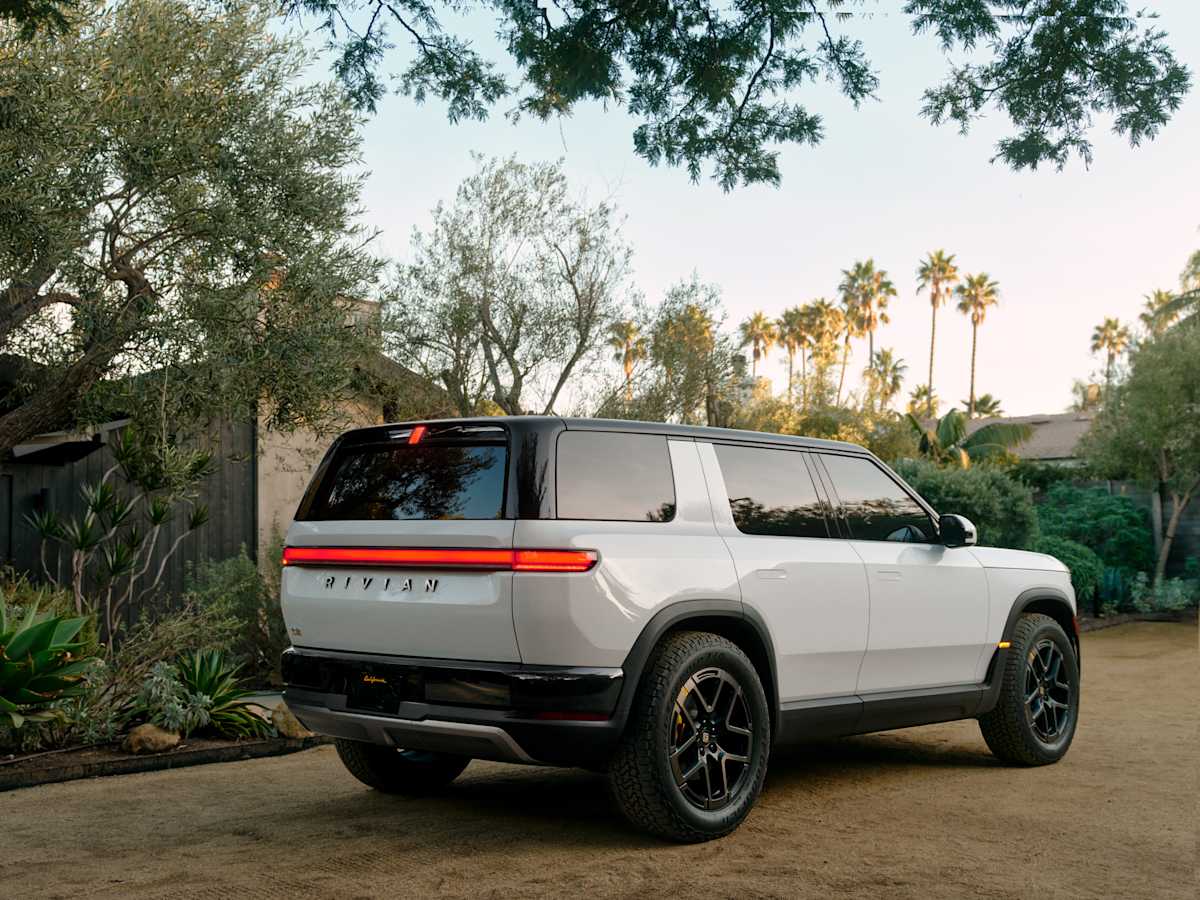
This comes at a pivotal moment for Rivian, just ahead of the commercial rollout of its R2 SUV. The company is betting heavily on the model to scale production and expand its market reach, with leadership calling it one of its most important launches yet.
At the same time, Volkswagen is investing not just in technology, but in talent. Engineers from its brands will undergo specialized training at Rivian locations to accelerate internal software capabilities and integration across future models.
Rivian Expands Beyond Automaking With Uber Robotaxi Deal And Autonomous Push
While its Volkswagen partnership strengthens its vehicle platform, Rivian is simultaneously pushing into autonomous mobility through a major deal with Uber.
The two companies plan to deploy at least 10,000 fully autonomous R2 robotaxis, with the potential to scale up to 50,000 vehicles. Initial launches are expected in San Francisco and Miami by 2028, expanding to 25 cities across North America and Europe by 2031.
Uber has committed up to $1.25 billion in investment, tied to performance milestones, with an initial $300 million already allocated. The robotaxis will operate exclusively on Uber’s platform, marking a significant step toward large-scale commercial autonomy.
The company’s third-generation autonomy platform, expected to debut with the R2 lineup, combines 11 cameras, 5 radars, and LiDAR, powered by in-house chips delivering 1600 TOPS of compute performance. This system is designed to continuously learn from real-world data, fueling rapid improvements in autonomous capabilities.
As these developments converge, Rivian is no longer just an EV maker. It is positioning itself at the center of a broader shift toward software-defined, autonomous mobility, with Volkswagen and Uber acting as key accelerators in that journey.
