
NVIDIA has revealed DLSS 5, its next-generation graphics technology that blends handcrafted rendering with generative AI (GenAI) to dramatically improve realism in video games.
The announcement was made by NVIDIA CEO Jensen Huang during his sold-out keynote speech at NVIDIA's GTC 2026, the company's premier global AI conference, which is being held from March 16 to March 19, 2026, in San Jose, California.
The company positioned the technology as a major milestone in computer graphics.
The new technology introduces a real-time neural rendering model designed to enhance scenes with photoreal lighting and materials. By combining artificial intelligence (AI) with traditional rendering techniques, NVIDIA aims to narrow the gap between real-time gameplay graphics and cinematic visual effects.
TL;DR
- NVIDIA introduced DLSS 5 at GTC 2026 and called it its biggest graphics breakthrough since real-time ray tracing in 2018.
- The technology uses a real-time neural rendering model that infuses pixels with photoreal lighting and materials.
- DLSS 5 launches this fall and will be supported by major studios including Bethesda, CAPCOM, Ubisoft, Tencent and Warner Bros. Games.
NVIDIA DLSS 5 Uses AI Neural Rendering To Deliver Photoreal Lighting And Materials
NVIDIA’s latest graphics innovation aims to close the long-standing gap between real-time game rendering and cinematic visual effects.
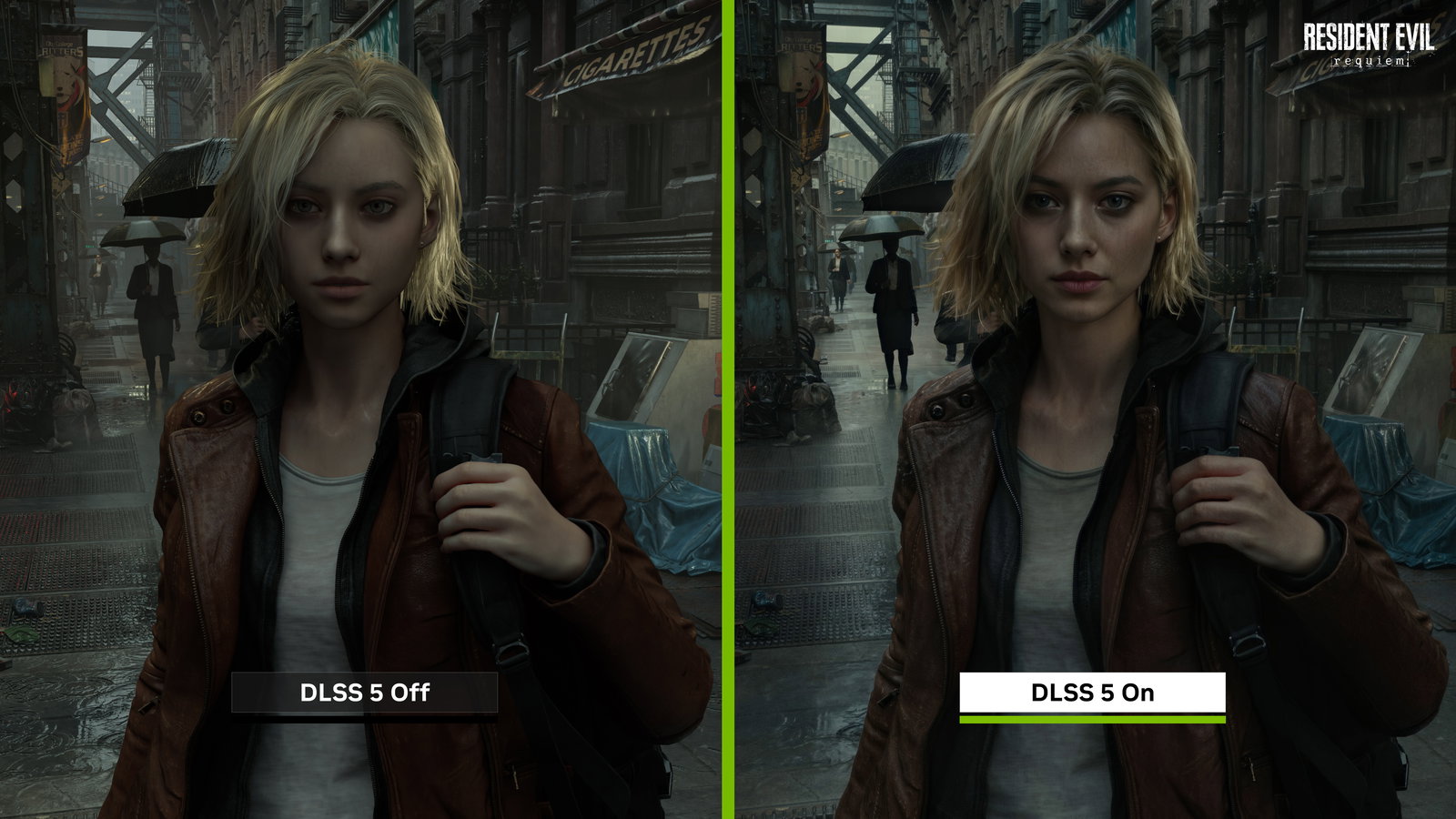
DLSS 5 introduces a neural rendering model capable of infusing each frame with realistic lighting and material properties while remaining anchored to the original 3D scene.
The technology processes color and motion vectors from a game frame and uses an AI model to apply lighting and material enhancements that remain consistent across frames.
This enables smooth gameplay at up to 4K resolution while delivering visual realism that previously required offline rendering used in Hollywood visual effects pipelines.
“Twenty-five years after NVIDIA invented the programmable shader, we are reinventing computer graphics once again,” said Jensen Huang, founder and CEO of NVIDIA. “DLSS 5 is the GPT moment for graphics, blending handcrafted rendering with generative AI to deliver a dramatic leap in visual realism while preserving the control artists need for creative expression.”
The Evolution Of DLSS Shows How AI Is Transforming Game Graphics
DLSS has steadily evolved since its debut in 2018 as an AI powered upscaling technology designed to improve performance in games. Over time it has expanded beyond resolution scaling to include frame generation and advanced AI assisted rendering.
The technology is now integrated into more than 750 games and has become one of the most widely adopted features in modern PC gaming. Earlier this year, NVIDIA introduced DLSS 4.5, which uses AI to generate 23 out of every 24 pixels seen on screen.
DLSS 5 shifts the focus further toward visual fidelity. The AI model is trained end to end to understand complex scene elements such as characters, hair, fabric and translucent skin, along with lighting conditions like front lighting, back lighting and overcast environments.
With this deeper scene understanding, the system can render complex effects including subsurface scattering on skin, fabric sheen and detailed light interactions on hair, while maintaining the structure and intent of the original scene created by game developers.
Developers retain control over the output. DLSS 5 provides detailed controls for intensity, color grading and masking so artists can decide where enhancements are applied while preserving each game’s unique visual style.
Major Game Studios And Publishers Line Up To Support DLSS 5
NVIDIA confirmed that some of the biggest publishers and game developers are preparing to support DLSS 5. Partners include Bethesda, CAPCOM, Hotta Studio, NetEase, NCSOFT, S-GAME, Tencent, Ubisoft and Warner Bros. Games.
The technology will appear in a growing list of titles including AION 2, Assassin’s Creed Shadows, Black State, CINDER CITY, Delta Force, Hogwarts Legacy, Justice, NARAKA BLADEPOINT, NTE Neverness to Everness, Phantom Blade Zero, Resident Evil Requiem, Sea of Remnants, Starfield, The Elder Scrolls IV Oblivion Remastered and Where Winds Meet.
Todd Howard, studio head and executive producer at Bethesda Game Studios, described the early results after testing the technology in Starfield.
“Bethesda has such a rich history pushing graphics with NVIDIA, going all the way back to Morrowind, with that incredible water,” said Howard. “When NVIDIA showed us DLSS 5 and we got it running in Starfield, it was amazing how it brought it to life. We’ve played it. We can’t wait for all of you to do so as well.”
Jun Takeuchi, executive producer and executive corporate officer at CAPCOM, said the technology could help deliver more cinematic experiences in games.
“At CAPCOM, we strive to create experiences that feel cinematic, compelling and deeply believable, where every shadow, texture and ray of light is crafted with intention to enhance atmosphere and emotional impact,” said Takeuchi. “DLSS 5 represents another important step in pushing visual fidelity forward, helping players become even more immersed in the world of Resident Evil.”
DLSS 5 is expected to arrive this fall, signaling NVIDIA’s push toward neural rendering as the next era of computer graphics and game development.
