
The new feature, called Copilot Cowork, is described as "a new way of getting work done," and is designed to transform Copilot from a conversational assistant into an execution-focused system capable of completing real work tasks across applications.
The move expands Microsoft's AI workplace ambitions by integrating Anthropic’s technology into its Copilot ecosystem, signalling a deeper collaboration between the two companies and reflects growing demand for AI agents that can independently execute complex workplace tasks with enterprise-grade safeguards.
TL;DR
- Microsoft unveiled Copilot Cowork, powered by Anthropic’s Claude Cowork technology.
- The feature allows Copilot to execute multi-step tasks across Microsoft 365 instead of only generating responses.
- Anthropic’s Claude models will now join OpenAI models inside Copilot.
- The service is entering testing and will reach early-access users later this month.
Microsoft Integrates Anthropic’s Claude Cowork Into Copilot To Launch Copilot Cowork
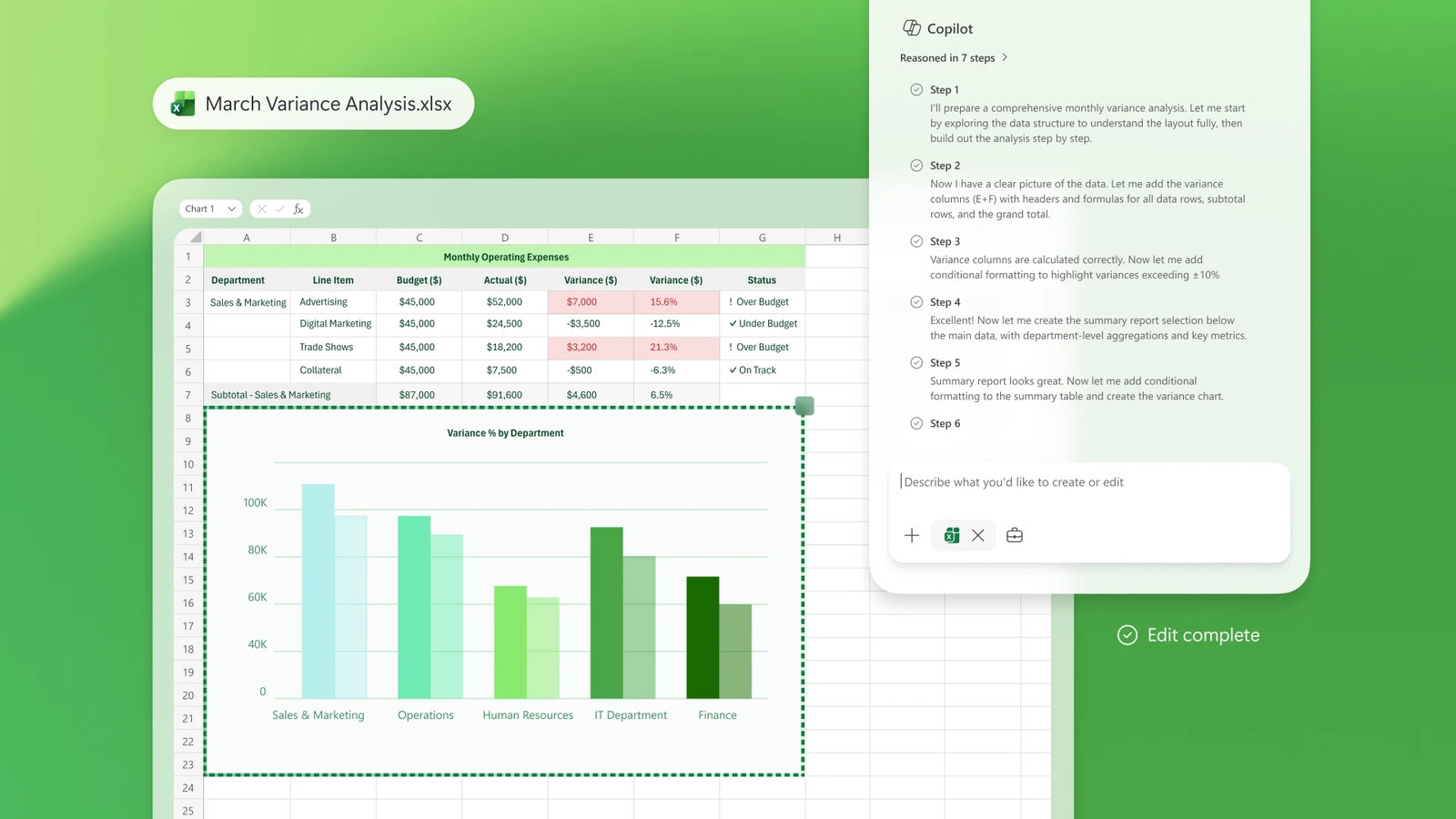
Copilot Cowork allows users to delegate multi-step assignments such as building presentations and spreadsheets, creating apps, compiling financial data, coordinating schedules, sending emails, or organizing large volumes of information.
Instead of responding to a single prompt, the system breaks requests into structured steps and carries them out over time while keeping users informed of progress.
Microsoft says the goal is to move beyond simple question-and-answer interactions. Cowork introduces a model where tasks can run for minutes or even hours while coordinating actions across multiple tools and files.
According to Microsoft’s Jared Spataro, who leads the company’s AI-at-Work initiatives, the system operates within Microsoft’s secure cloud environment and acts strictly on behalf of the user.
“We work only in a cloud environment and we work only on behalf of the user. So you know exactly what information it has access to,” Spataro told Reuters.
Copilot Evolves From Chat Assistant To Task Execution Engine
The introduction of Copilot Cowork reflects Microsoft’s push to turn AI assistants into autonomous agents capable of executing workflows.
When a user assigns a task, Cowork converts the request into a plan and executes it in the background. The process includes checkpoints where users can review progress, approve actions, or modify instructions before the system continues.
The tool draws context from across Microsoft 365 services including Outlook, Teams, Excel, and files stored within the ecosystem. Powered by what Microsoft calls Work IQ, the system can analyze emails, meetings, messages, and documents to understand the broader context of a user’s work.
"Wave 3 of Copilot will now work alongside you in Word, Excel, PowerPoint, and Outlook, creating, editing, and refining high-quality content from start to finish inside a document, spreadsheet, presentation, or email. And it uses Work IQ to stay grounded in the context of your work, so edits always reflect what is current and relevant across your files, meetings, chats, and relationships," said Spataro in Microsoft's official release.
For example, Cowork can reorganize a busy calendar by identifying low-priority meetings and suggesting schedule changes, prepare briefing documents and presentation decks ahead of client meetings, or compile company research into reports and spreadsheets.
Rather than producing isolated outputs, Microsoft says Cowork coordinates the workflow behind those outputs, ensuring files, analysis, and communication are aligned across teams.
Copilot Cowork Enters Testing As AI Agent Race Intensifies
Copilot Cowork is currently being tested with a limited set of customers as part of a research preview. Microsoft plans to roll it out to early-access users through its Frontier program later this month before expanding availability more broadly later in the year.
The company has not disclosed pricing yet, but some usage will be included in the $30-per-user, per-month Microsoft 365 Copilot subscription for enterprise customers, with additional usage available separately.
The launch arrives amid rising industry interest in AI agents capable of performing autonomous work. Anthropic’s recent releases of tools and plug-ins for Claude have sparked widespread debate about the impact of AI on traditional software and white-collar jobs.
Topics For More Insights
- Anthropic Launches Code Review Tool To Check Flood Of AI-Generated Code
- Microsoft, Google, Amazon Say Anthropic Claude Remains Available To Non-Defense Customers After DoD Supply-Chain Risk Designation
- Pentagon Targets Anthropic With Rare Supply-Chain Risk Label!
- OpenAI And Anthropic Could Close The Door On NVIDIA’s Major Investments
Microsoft Diversifies AI Strategy Beyond OpenAI
The integration also reflects Microsoft’s broader strategy to diversify the AI models powering its products.
Anthropic’s Claude Sonnet models will now be available to Microsoft 365 Copilot users alongside OpenAI’s GPT models, giving the platform what Microsoft describes as a “multi-model advantage.” The company says Copilot can select the most suitable model depending on the task being performed.
This move deepens Microsoft’s relationship with Anthropic at a time when investors have raised concerns about Microsoft’s heavy reliance on OpenAI technology. OpenAI currently represents a large portion of Microsoft’s cloud contract backlog.
Microsoft has invested nearly $14 billion in OpenAI since 2019 and owns a 27 percent stake in the company. At the same time, executives have signaled that the company is working toward greater independence in AI development, including building its own advanced models.
Microsoft has also committed up to $5 billion in a broader computing partnership with Anthropic, further strengthening ties between the two companies.
