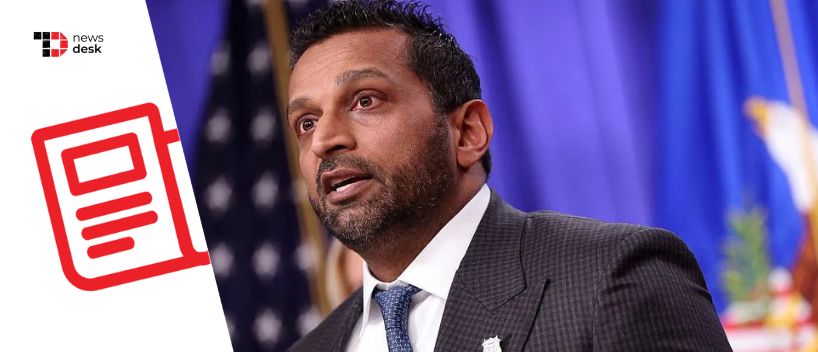
Iran-linked hacking group Handala says it breached FBI Director Kash Patel’s personal Gmail account and leaked photos, documents, and emails online. What is confirmed so far is narrower than the headline suggests: the FBI says Patel’s personal email information was targeted, the exposed material is historical, and no government information was involved. The breach claim is therefore real enough to matter, but not yet broad enough to support claims of an FBI systems compromise or a fully authenticated leak archive.
TL;DR
- Handala claimed it hacked Patel’s personal Gmail and published files, while the FBI confirmed malicious actors targeted his personal email information.
- The FBI said the data is historical and contains no government information.
- TechCrunch verified some leaked emails, but the full cache and exact scope of the breach are still not independently confirmed.
What Has Actually Been Verified?
TechCrunch reported that Handala posted photographs of Patel and linked to a cache of files that appeared to come from his personal Gmail account. In a statement to TechCrunch, the FBI said it was aware of malicious actors targeting Patel’s personal email information and had taken steps to mitigate associated risks. Reuters and AP separately reported that the bureau described the exposed data as historical and unrelated to government information. That means the story is no longer just a hacker boast, because the FBI has acknowledged the targeting and the exposure of non-government material.
TechCrunch also went further than most outlets in testing the authenticity of the material. It said it verified several emails in the leaked cache using message headers and cryptographic signatures, which strongly suggests that at least some of the emails are genuine. TechCrunch also found examples of emails sent from Patel’s former Justice Department address in 2014 to his Gmail account that appeared authentic. That is an important distinction: it supports the authenticity of parts of the leak, but it does not show that current FBI or DOJ systems were breached.
What Remains Unclear?
Several important questions are still unresolved. Reuters said it could not independently authenticate the full set of messages, even though the Gmail address cited by the hackers matched an address linked to Patel in earlier breach records. AP also noted it was unclear when the alleged intrusion occurred. Public reporting so far does not establish the precise intrusion method, the full volume of authentic material, or whether every file released by Handala is legitimate. Those gaps matter, because hack-and-leak operations often mix real material with selective framing meant to maximize public impact.
Just as important, there is no evidence in the reporting reviewed so far that FBI networks were compromised. The confirmed issue is Patel’s personal account, not bureau infrastructure. That distinction should remain central to the story, especially because the group’s own public messaging appears designed to create the impression of a wider institutional penetration than what has actually been verified.
Topics For More Insights
Why This Matters
The deeper significance of the incident lies in who Handala is and how U.S. authorities describe its role. In a March 19 press release, the Justice Department said four seized domains were used by Iran’s Ministry of Intelligence and Security to support psychological operations, claim hacking activity, post stolen data, and threaten targets. The DOJ and FBI linked Handala’s infrastructure to those operations, and Reuters separately reported that Handala is considered one of several personas used by Iranian cyberintelligence units. That makes this breach part of a broader pressure campaign, but officials have not publicly said the Patel incident was direct retaliation for the domain seizures.
So the strongest version of this story is not that Iranian hackers broke into the FBI. It is that an Iran-linked group appears to have compromised the FBI director’s personal account, leaked at least some authentic historical material, and used that exposure in a public influence operation. That is serious enough on its own, and it is stronger journalism than stretching the available facts.
