
Enterprise Solutions
Google To Allow Gmail Address Changes As WeTransfer Co-Founder Launches An Alternative
Updated on Mon, Dec 29, 2025
Share
This week, three seemingly unrelated developments across consumer email, creative tools, and gaming hardware point to a common undercurrent: tech companies rethinking control, simplicity, and long-term trust.
TL; DR
-
Google is gradually rolling out the ability for users to change their Gmail address while keeping existing emails and files intact.
-
WeTransfer co-founder Nalden launches Boomerang, a new file-sharing service focused on simplicity, minimal data use, and no forced logins.
-
Boomerang offers flexible tiers, from free 1GB transfers to paid plans with expanded storage and security features.
-
LG introduces UltraGear evo, a new gaming monitor lineup featuring the world’s first on-device 5K AI upscaling technology.
Gmail Finally To Let Users Change Their Email Address Without Losing Data
For anyone who created a Gmail address years ago and later regretted the username choice, help may finally be on the way.
According to a Hindi-language version of Gmail’s support documentation, Google is gradually rolling out the ability for users to change the primary Gmail address linked to their Google account. Crucially, this change would not result in losing access to existing email, files, or services.
If implemented as described, users will be able to switch to a new@gmail.com address while keeping their old address active as an alias. Both addresses will continue to work for signing in to Google services. The trade-off: once the change is made, users won’t be able to create another Gmail address tied to the same account for 12 months.
At the time of writing, the English-language support page still states that Gmail addresses cannot be changed, instead suggesting workarounds such as changing the display name or migrating data to a new account.
WeTransfer Co-Founder Launches A Simple Alternative To WeTransfer
When WeTransfer launched in 2009, it became popular for one simple reason: it worked. No logins, no friction, just fast file sharing. That simplicity, according to co-founder Nalden, has slowly eroded.
Nalden has been openly critical of WeTransfer’s direction since its acquisition by Bending Spoons, a Milan-based firm known for acquiring and restructuring consumer apps. Following the deal, WeTransfer laid off roughly 75% of its staff, changed how transfer links functioned, and sparked backlash after proposing to use user content for AI training.
Speaking to TechCrunch, Nalden didn’t mince words:
Bending Spoons doesn’t really care about people. Even though I get that it is their private equity strategy, I notice that since I left [WeTransfer] in 2019, there were a lot of updates that were basically killing the product, in my point of view.”
Nalden is now building Boomerang, a new file-transfer service designed to recapture WeTransfer’s original ethos: no accounts required, minimal data collection, and no advertising.
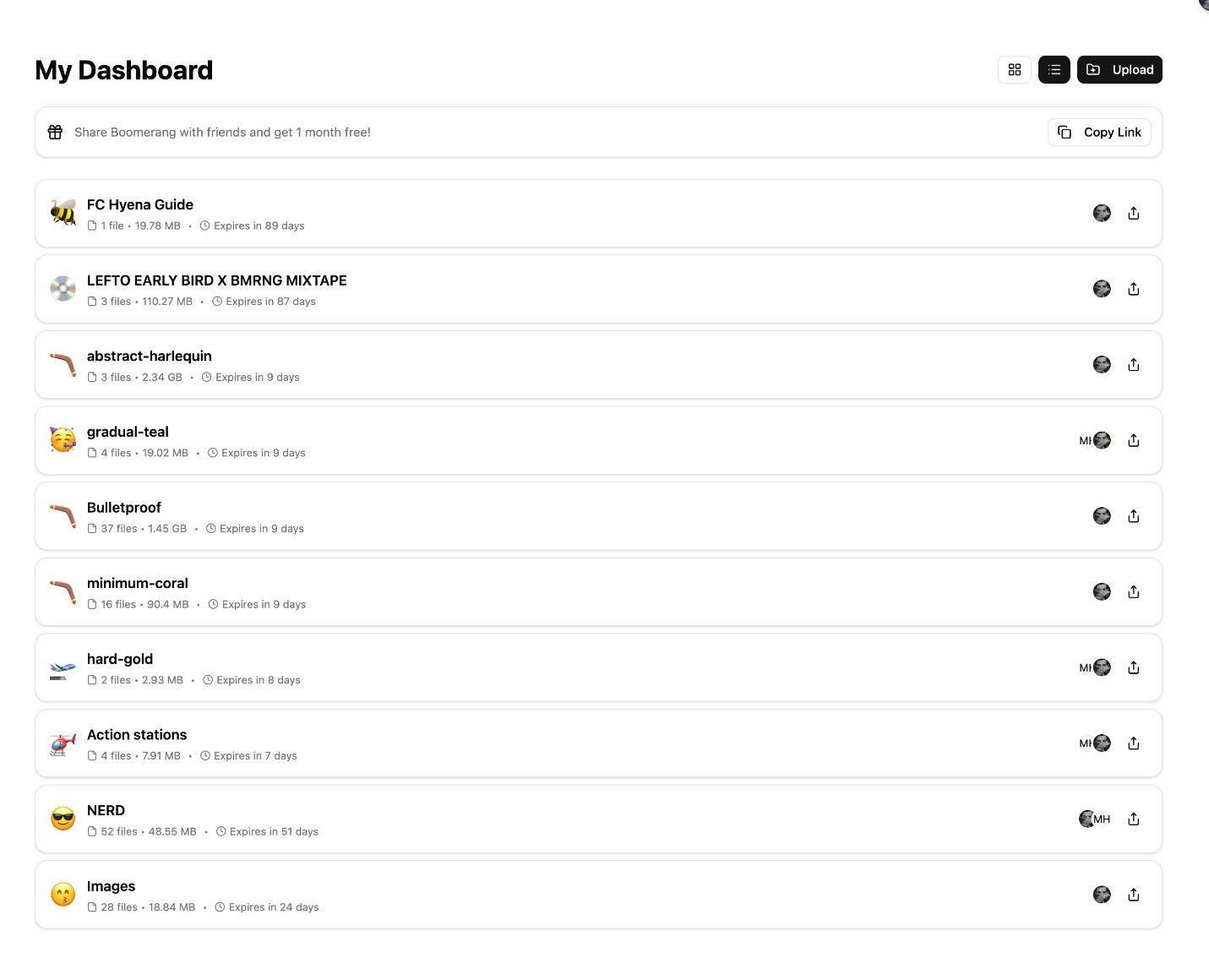
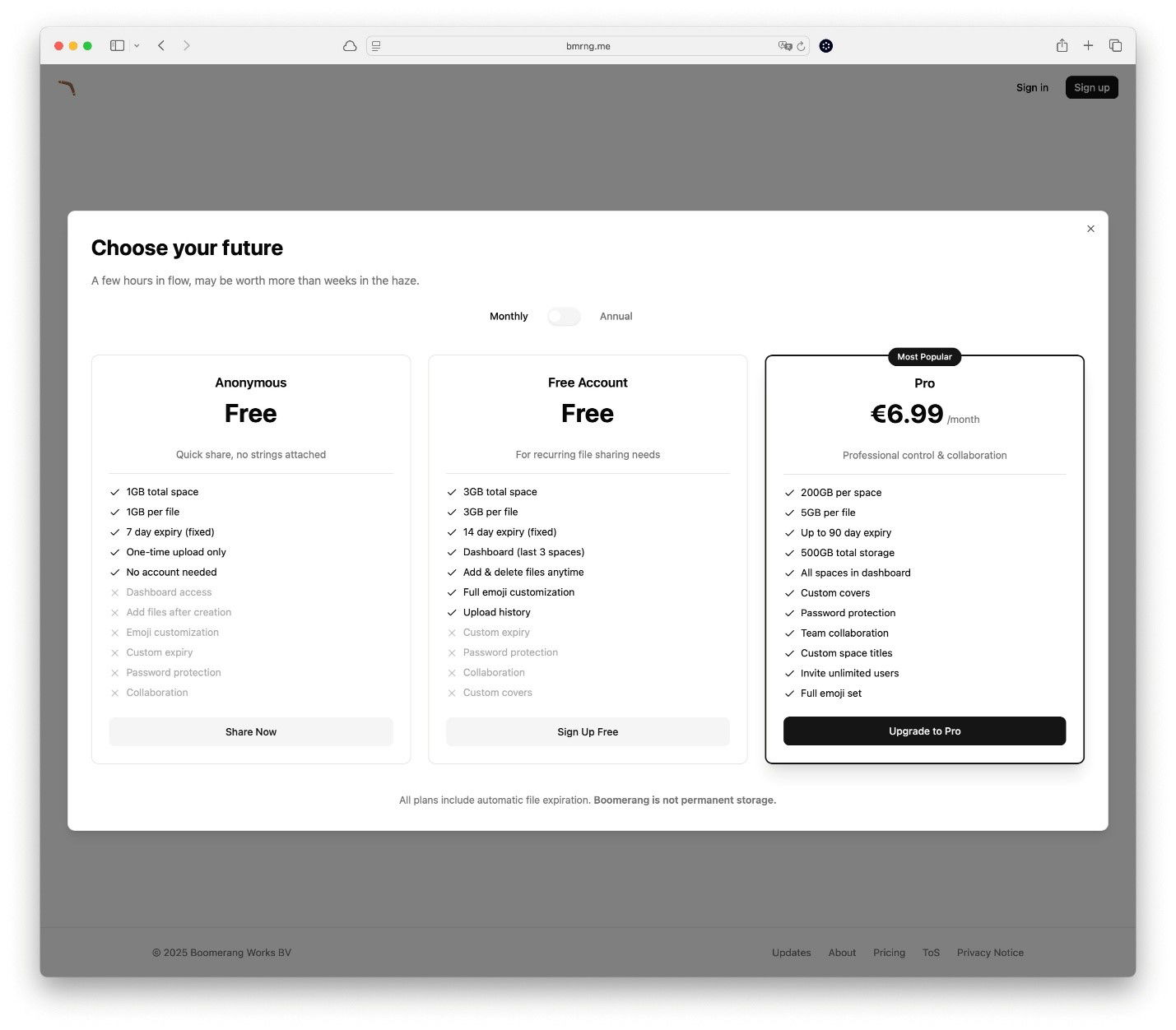
Boomerang allows users to transfer files without logging in, with a 1GB file size limit and a seven-day expiration for casual use.
Creating a free account expands those limits to 3GB of total storage and 3GB file uploads, along with practical additions such as upload history, the ability to add or delete files at any time, and custom emojis for file-sharing pages.
For users who need more headroom, Boomerang offers a € 6.99-per-month paid tier that unlocks 200GB per folder, 500GB total storage, and a 5GB file size limit. Paid users also get custom folder covers, password protection, file expiration options of up to 90 days, and unlimited user invites per folder.
Nalden says he won’t offer advertising or collect unnecessary user data. He feels advertising adds complexity, and with Boomerang, he wants to collect as little information as possible.
“I just want to offer a tool that works for users. It’s like buying a hammer. You possibly don’t want to buy a fancy hammer, but a hammer that just works,” he noted.
Interestingly, while AI plays a role behind the scenes in building the platform, Nalden has no plans to surface AI features to users. In a market racing to add intelligence everywhere, Boomerang is trying to do otherwise.
Topics For More Insights
LG Announces New UltraGear Evo Gaming Monitors With AI Upscaling
While some companies are simplifying, others are pushing technical boundaries with very few compromises.
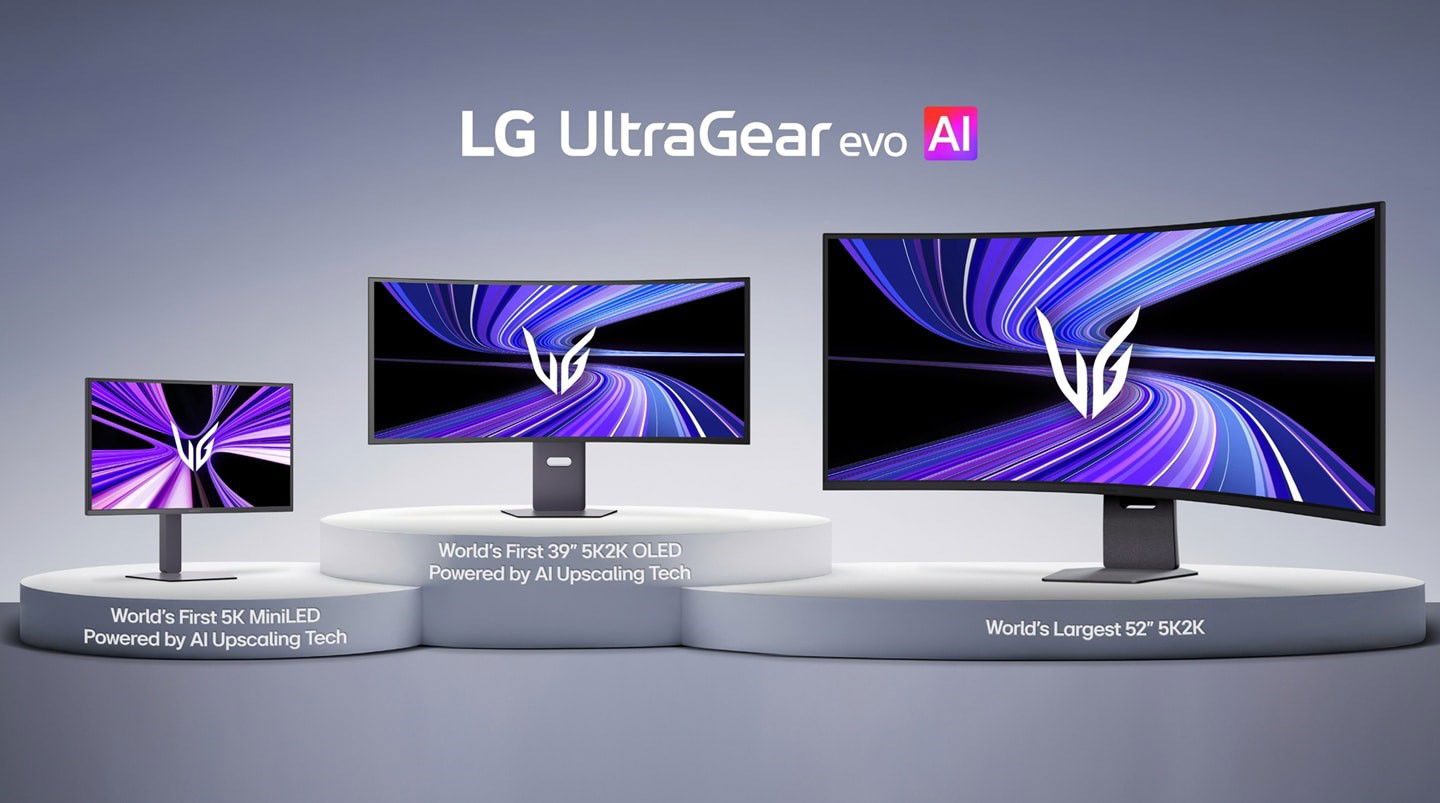
LG Electronics has announced the global debut of UltraGear evo, its new premium gaming monitor lineup, set to launch at CES 2026. The headline feature is ambitious: the world’s first on-device 5K AI Upscaling technology, designed to deliver 5K-class clarity without requiring gamers to upgrade their GPUs.
The lineup spans OLED, New MiniLED, and ultra-wide formats, led by three flagship models:
-
27GM950B: The world’s first 27-inch 5K New MiniLED gaming monitor, built to minimize blooming with 2,304 local dimming zones and peak brightness up to 1,250 nits.
-
39GX950B: A 39-inch 5K2K OLED monitor with AI Scene Optimization, AI Sound, Dual Mode refresh rates (165Hz at 5K2K or 330Hz at WFHD), and ultra-fast response times.
-
52G930B: A massive 52-inch 5K2K monitor with a 240Hz refresh rate and immersive 1000R curvature, offering a panoramic alternative to traditional 16:9 displays.
Beyond gaming, LG also hints at broader applications, suggesting this AI-assisted resolution leap may extend well beyond entertainment.
From Gmail rethinking digital identity, to a founder reclaiming simplicity, to LG using AI to eliminate long-standing hardware trade-offs, these stories converge on one idea: users are no longer impressed by complexity alone.
First published on Mon, Dec 29, 2025

Enjoyed what you've read so far? Great news - there's more to explore!
Stay up to date with the latest news, a vast collection of tech articles including introductory guides, product reviews, trends and more, thought-provoking interviews, hottest AI blogs and entertaining tech memes.
Plus, get access to branded insights such as informative white papers, intriguing case studies, in-depth reports, enlightening videos and exciting events and webinars from industry-leading global brands.
Dive into TechDogs' treasure trove today and Know Your World of technology!
Disclaimer - Reference to any specific product, software or entity does not constitute an endorsement or recommendation by TechDogs nor should any data or content published be relied upon. The views expressed by TechDogs' members and guests are their own and their appearance on our site does not imply an endorsement of them or any entity they represent. Views and opinions expressed by TechDogs' Authors are those of the Authors and do not necessarily reflect the view of TechDogs or any of its officials. While we aim to provide valuable and helpful information, some content on TechDogs' site may not have been thoroughly reviewed for every detail or aspect. We encourage users to verify any information independently where necessary.
Loading comments...