
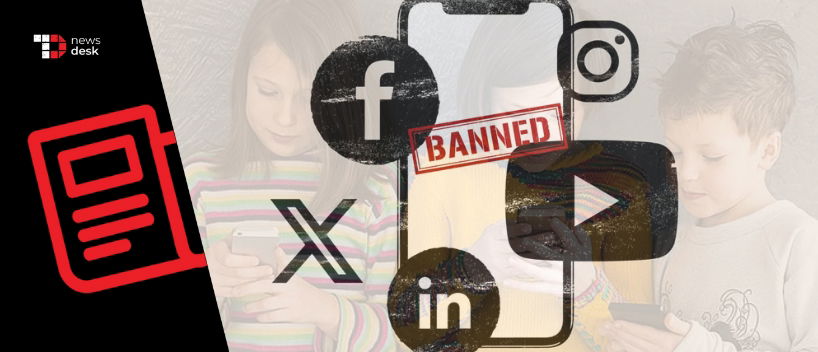
France’s National Assembly has voted to approve legislation that would ban children under the age of 15 from using social media platforms, marking one of Europe’s most decisive legislative moves yet to curb minors’ online activity amid growing mental health and safety concerns.
TL;DR
- France’s lower house approved a bill banning social media use for under-15s.
- The measure goes beyond parental consent and establishes a legal prohibition.
- Lawmakers cited bullying, addiction, and mental health risks.
- The bill now moves to the Senate for consideration.
What Lawmakers Voted On And Why
On January 26, France’s National Assembly voted in favor of a bill that would ban children under the age of 15 from accessing social media platforms. The vote represents a clear legislative step toward restricting minors’ online presence rather than simply tightening existing age rules.
Lawmakers supporting the bill argued that social media platforms have failed to protect children despite years of voluntary commitments and existing minimum age requirements. They pointed to rising levels of cyberbullying, exposure to violent or sexual content, and links between excessive social media use and deteriorating mental health among young users.
The bill was adopted by a large majority in the lower house, underscoring growing cross-party consensus that self-regulation by technology companies has not been sufficient.
What The Ban Would Do In Practice
The legislation establishes a legal ban on social media use for children under 15, placing the onus on platforms to prevent access by underage users.
Unlike earlier proposals centered mainly on parental consent, the bill creates a clearer prohibition and strengthens the state’s ability to require compliance from digital platforms. Companies operating social networks in France would be expected to enforce age restrictions more rigorously, though the law does not yet specify the technical methods to be used.

Lawmakers emphasized that details related to enforcement mechanisms and penalties would be clarified at later stages of the legislative process or through implementing regulations if the bill becomes law.
Topics For More Insights
Political Backing And Broader Context
The vote aligns with President Emmanuel Macron’s repeated calls for stronger protections for children online. Macron has previously warned that social media poses a risk to young people’s mental health and development if left largely unchecked.
French lawmakers have also cited international developments when debating the bill. Australia’s recent decision to approve a ban on social media use for children under 16 has been frequently referenced as evidence that stricter national measures are both possible and politically viable.
France has already positioned itself as a leading voice in digital regulation, having backed tougher European Union rules on online platforms, data protection, and content moderation.
Concerns And Criticism
While the bill enjoys strong political support, critics have raised questions about feasibility and enforcement. Some lawmakers and digital rights advocates argue that implementing a strict age-based ban could prove technically complex and risk unintended consequences, such as increased data collection for age verification.
Social media companies have long argued that reliable age verification at scale remains difficult without raising privacy concerns. These objections, however, did not prevent the bill from passing the lower house.
What Happens Next
The bill will now be sent to France’s Senate, where it will be debated and may be amended. Approval by the upper house is required before the legislation can become law.
If adopted, the measure would place France among the most restrictive jurisdictions globally when it comes to minors’ access to social media, signaling a significant shift in how governments approach youth protection in the digital age.
