

A personal AI assistant called Clawdbot went viral for demonstrating long-term conversational memory and agent-like behavior. Now rebranded as Moltbot, the product has sparked wider discussion around security, impersonation risks, and the emerging class of memory-driven AI assistants, according to reporting by TechCrunch.
TL;DR
- Clawdbot gained rapid attention for persistent memory across conversations.
- The product has been renamed Moltbot, primarily due to legal and naming issues.
- Moltbot exhibits early agentic characteristics rather than simple chatbot behavior.
- Security and privacy concerns center on long-term memory storage.
- Scam-related incidents and impersonation attempts emerged around the viral moment, though not attributed to Moltbot itself.
Clawdbot surfaced abruptly across social platforms as users shared conversations showing an AI assistant that could remember personal details across days and sessions. Unlike most consumer AI tools, which rely on short-lived context windows, Clawdbot appeared to maintain continuity, referencing earlier discussions without repeated prompts.
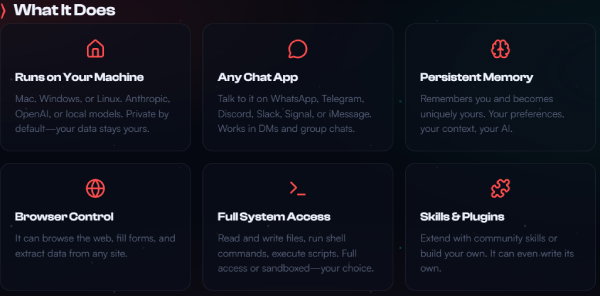
This persistent memory created the impression of an assistant that evolves alongside the user. Conversations did not reset, and the system could pick up unfinished threads or recall preferences shared previously. That behavior set Clawdbot apart from mainstream chat-based AI products and helped fuel its rapid spread.
The virality was largely organic. Screenshots and short videos circulated on social platforms, often framed as examples of a more personal AI. As interest grew, so did scrutiny around how much information the assistant was storing, where that data lived, and what safeguards were in place.
Amid this surge in attention, the company announced that Clawdbot would be rebranded as Moltbot. While the team has publicly framed the change as part of the product’s evolution, reporting indicates that legal and trademark considerations were the primary reason for the rename. The new name also provides distance from the viral moment as the company works toward a more durable product identity.
Functionally, Moltbot continues to focus on long-term memory as its core differentiator. The assistant is designed to store information users choose to share and recall it in later interactions. This places Moltbot closer to what the industry increasingly refers to as agentic AI, systems that maintain state, context, and limited initiative over time rather than responding only to isolated prompts.
Some users have described Moltbot as proactive, noting that it can revisit earlier goals or topics without being explicitly asked. The company has not described the system as autonomous, but its behavior goes beyond traditional chat interfaces and reflects a broader shift toward AI assistants that feel continuous and personal.
Security and privacy concerns have followed naturally. Persistent memory increases the sensitivity of stored data, especially as conversations accumulate over time. The company has said users can manage what Moltbot remembers, including removing stored information, but detailed public disclosures about encryption standards, storage architecture, or retention timelines remain limited.
Topics For More Insights
Scam-related and impersonation concerns also surfaced alongside Clawdbot’s virality. Reports emerged of lookalike bots, cloned accounts, and social-engineering-style interactions circulating in parallel with the product’s rise. While these incidents have not been attributed to Moltbot’s official product or infrastructure, they underscored how memory-driven AI assistants could be exploited if copied or misrepresented.
Researchers and commentators have noted that assistants capable of recalling personal details may lower the barrier for long-term manipulation or impersonation if abused. These concerns reflect broader industry risks rather than confirmed wrongdoing by Moltbot, but they have become part of the conversation surrounding the product.
Despite widespread attention, the company behind Moltbot has not disclosed user numbers, revenue, funding, or a clear monetization strategy. That lack of transparency suggests the assistant remains in an early stage, even as it attracts outsized public interest.
Moltbot’s rise illustrates both the appeal and the tension of next-generation AI assistants. Long-term memory and agent-like behavior promise more useful and personal interactions, but they also amplify questions around trust, security, and responsibility.
For now, Moltbot stands as a prominent example of how quickly an experimental AI product can capture attention, and how fast that attention can turn into scrutiny when new capabilities push against existing expectations of safety and control.
