
Manufacturing Technology
Chinese EV Maker Xiaomi Sees Profit Jump 81%, While Others Also Report Growth
Updated on Tue, Nov 18, 2025
Share
A large part of this is down to adoption rates rising, governments offering tax credits and other benefits, charging infrastructure improving, and new players entering the arena.
This includes customer electronics maker Xiaomi, which is known for its smartphones.
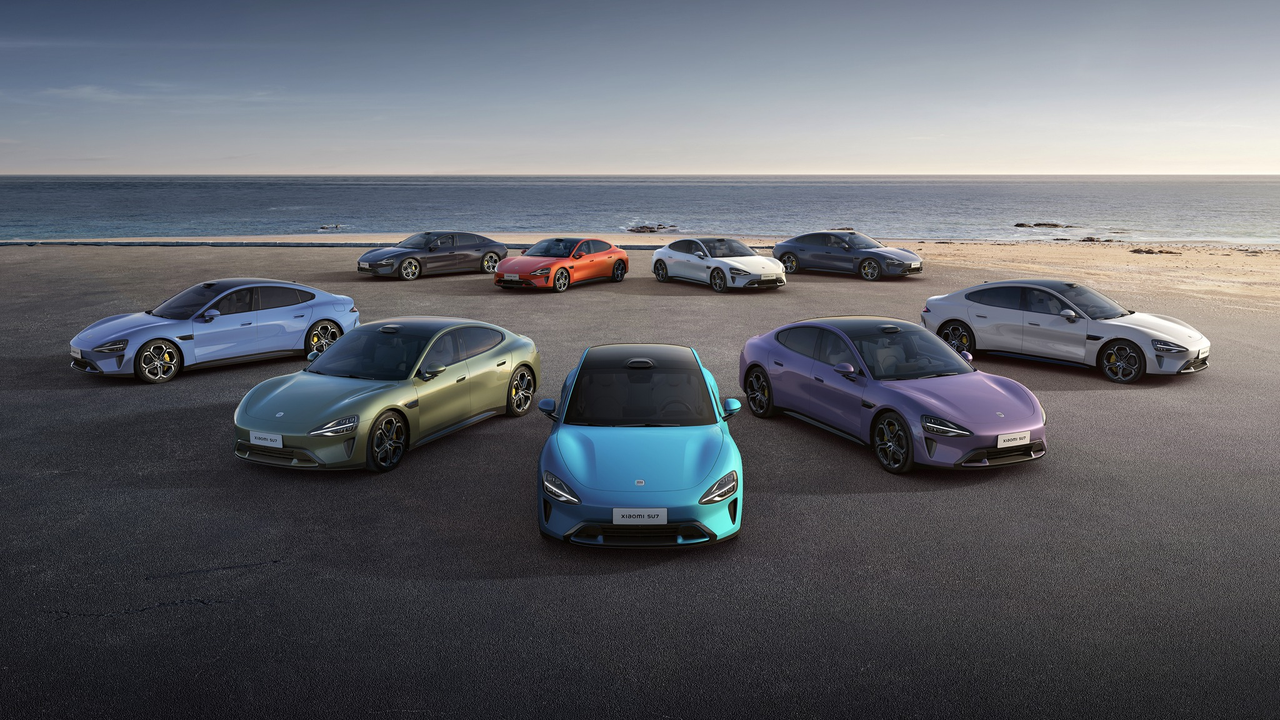
Xiaomi’s SU7 had already outshone Tesla’s Model 3, as far as demand goes, and the smartphone-maker-turned-automaker will also challenge Tesla’s Model Y sales with its YU7 SUV, boasting 240,000 “locked-in” orders within 18 hours of opening sales.
Its demand has grown so much that the company reported an 80.9% growth in its third-quarter profit.
Of course, not all of it was down to EV sales; the company credits the growth to its AI efforts and other new initiatives as well.
The company exceeded its average estimate of 10.3 billion yuan ($1.45 billion) by hitting 11.3 billion yuan ($1.59 billion).
This is considering an exchange rate of $1 = 7.11 yuan.
While company-wide revenue for the quarter ended September grew 22.3% to 113.1 billion yuan ($15.90 billion), Xiaomi’s EV business generated 28.3 billion yuan ($3.98 billion) in revenue in the September quarter, picking up from 20.6 billion yuan ($2.9 billion) in the second quarter and 18.1 billion yuan ($2.55 billion) in the first quarter.
Meanwhile, XPeng forecast its fourth-quarter revenue below estimates amid fierce competition, expecting its fourth-quarter revenue to be between 21.5 billion yuan ($3.03 billion) and 23 billion yuan ($3.24 billion), which is significantly lower than analysts' average estimate of 26 billion yuan ($3.66 billion).
The numbers left the Chinese automaker’s U.S.-listed shares to fall 8%, despite more than doubling in the year and achieving record deliveries in October.
Along with XPeng, fellow Chinese automaker NIO also posted record October sales.
As per reports, NIO’s compact EV brand Firefly is looking to grow in right-hand drive markets that won’t come with punitive tariffs on Chinese EVs. The company is ready to deliver its vehicles as early as next year, having just developed its first batch of right-hand drive models for export to Singapore.
Firefly aims to enter Thailand and Britain in 2026 and is in talks with distributors in the region, shared Daniel Jin, the CEO of Firefly and VP of NIO. “We will significantly ramp up our efforts in countries without tariff barriers in the short term,” said Jin, who named key markets such as Britain, Australia, New Zealand and Southeast Asia.
Coming to the biggest brand coming out of China, BYD, the company is leading the EV boom in South American countries such as Uruguay and Peru.
While Peru doesn’t have any Tesla showrooms, it’s been seeing an influx of Chinese brands, including BYD, Geely, and GWM, which sell vehicles at 60% of what a Tesla costs, as well as Toyota, Kia, and Hyundai.
BYD plans to open a fourth dealership in Lima by the end of the year, while Geely operates more than a dozen in Peru.
However, EVs span a small part of the total vehicle sales in the country. Where 135,394 new cars were sold in Peru in the first nine months of 2025, the sale of hybrids and EVs amounted to just around 7,256 units, marking a 44% rise.
In other developments, BYD has informed some of its suppliers that it wants to curb the use of in-house financial notes issued on Dilian, an electronic platform it launched in 2018, and move to payments made with commercial paper or bank notes, as per people familiar with the matter.
The proprietary promissory notes, which have been a pivotal part of the company’s rise, have also been criticized by the company’s parts makers.
However, the sources did not reveal any specific reasons for the change.
Do you think Chinese EV brands can beat U.S.-based automakers not just globally but also in the U.S.?
Let us know in the comments below!
First published on Tue, Nov 18, 2025

Enjoyed what you read? Great news – there’s a lot more to explore!
Dive into our content repository of the latest tech news, a diverse range of articles spanning introductory guides, product reviews, trends and more, along with engaging interviews, up-to-date AI blogs and hilarious tech memes!
Also explore our collection of branded insights via informative white papers, enlightening case studies, in-depth reports, educational videos and exciting events and webinars from leading global brands.
Head to the TechDogs homepage to Know Your World of technology today!
Disclaimer - Reference to any specific product, software or entity does not constitute an endorsement or recommendation by TechDogs nor should any data or content published be relied upon. The views expressed by TechDogs' members and guests are their own and their appearance on our site does not imply an endorsement of them or any entity they represent. Views and opinions expressed by TechDogs' Authors are those of the Authors and do not necessarily reflect the view of TechDogs or any of its officials. While we aim to provide valuable and helpful information, some content on TechDogs' site may not have been thoroughly reviewed for every detail or aspect. We encourage users to verify any information independently where necessary.
Loading comments...