
The 2026 Consumer Electronics Show in Las Vegas (January 6 to January 9) has firmly shifted from gadget spectacles to a showcase of real world computing and applied Artificial Intelligence (AI).
From powerful AI silicon and premium laptops to humanoid robots and interactive toy bricks, CES felt more like a preview of the next decade than a trade show. Nearly every announcement shared a common theme: AI everywhere.
Here's what was introduced.
TL;DR
-
Dell revives its XPS 14 and 16 laptops with Intel’s new 10th-generation Core processors, blending premium design and AI-optimized performance.
-
NVIDIA unveils Vera Rubin, a six-chip AI supercomputer delivering faster, more efficient large-scale computing for next-gen models.
-
Intel launches Panther Lake, an 18A-based processor platform that promises 60% higher performance and built-in AI acceleration for next-gen PCs.
-
Boston Dynamics debuts Atlas publicly, signaling a shift from research labs to real-world industrial applications for humanoid robots by 2028.
-
Lego introduces Smart Brick, a sensor-powered 2x4 brick merging physical play with interactive, screen-free intelligence.
Dell Revives The XPS Brand With Next Generation Premium Laptops
Dell used its CES press preview to admit it had made a mistake by discontinuing the XPS brand. The company announced the return of the XPS 14 and XPS 16, featuring refreshed designs and improved performance powered by Intel’s Core Ultra Series 3 (Panther Lake) processors.
According to Dell executives, the return of XPS reflects the company’s commitment to premium computing experiences, blending creative productivity, sleek form factors, and competitive battery life.
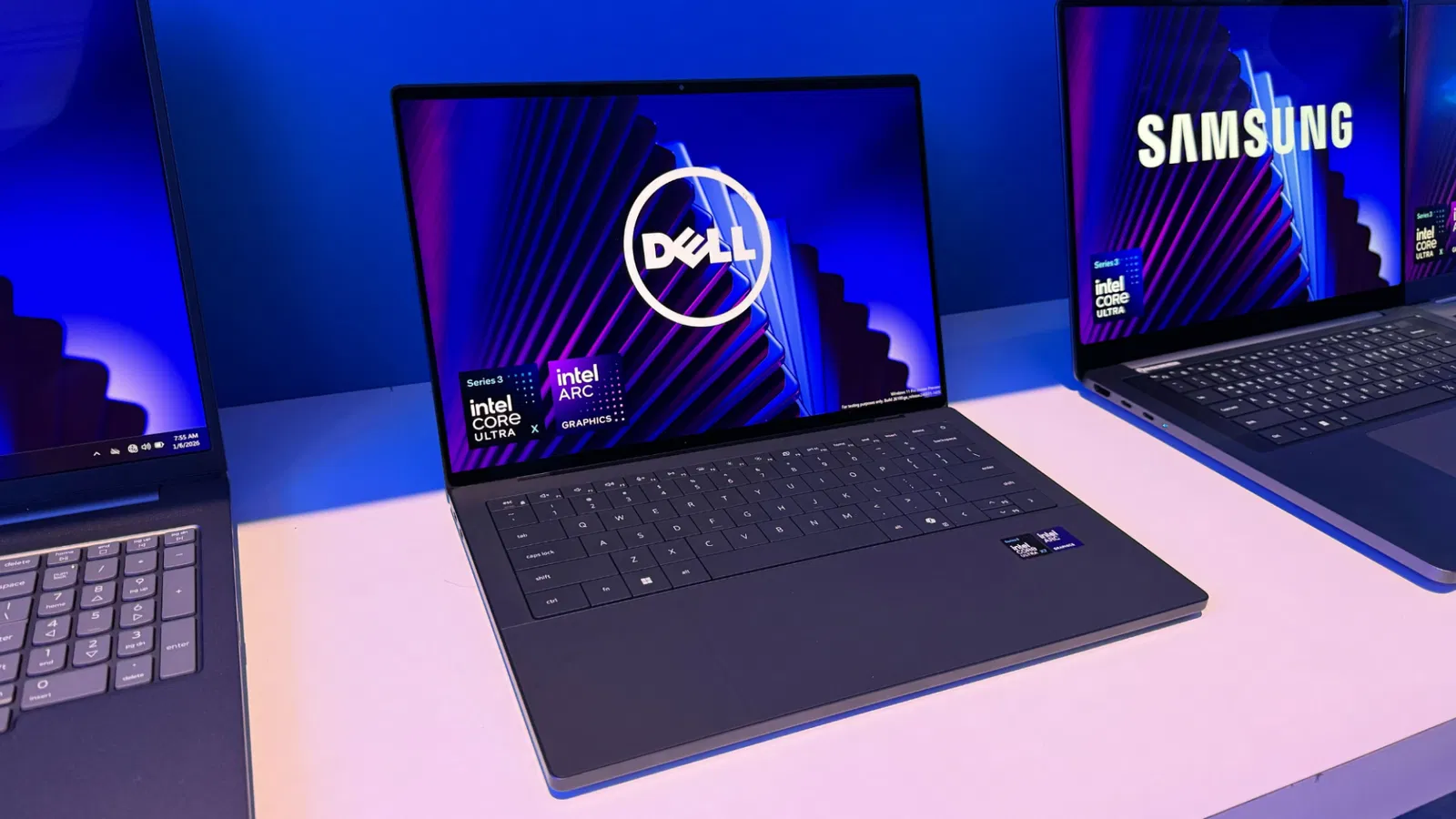
Dell Chief Operating Officer Jeff Clarke said on stage that bringing XPS back was about listening to customer passion and loyalty to the brand name. The revived lineup aims to appeal to professionals and creatives who felt the brand’s absence was felt in 2025.
Dell’s candid acknowledgement of past missteps speaks volumes. This is not just a product launch, but a brand repositioning, and it may remind competitors that legacy matters when buyers choose premium hardware.
The new XPS laptops are expected to become available throughout early to mid‑2026, as OEM partners integrate the Panther Lake platform into wider systems.
NVIDIA Unveils The Vera Rubin AI Compute Platform
NVIDIA’s big CES moment came with the launch of its Vera Rubin AI platform, a next-generation rack-scale AI system composed of six tightly integrated components, including the Vera CPU and Rubin GPU.
NVIDIA positions Vera Rubin as a major step forward in AI compute efficiency, with the Rubin GPU alone delivering five times the AI training performance of its predecessor architecture.
At the keynote, NVIDIA CEO Jensen Huang said, “The ChatGPT moment for physical AI is here, when machines begin to understand, reason and act in the real world”, emphasizing the company’s strategy beyond generative chat models into AI that interacts with physical systems like robotics and autonomous vehicles.
What sets NVIDIA apart at this CES is not raw silicon performance, but the vision of AI extending into the physical world. This pivot from purely data center AI to physical AI (robotics, vehicles, and agents that operate in real environments) signals the next frontier of competition.
Products based on Vera Rubin are expected to begin shipping through NVIDIA’s ecosystem partners in the second half of 2026.
Boston Dynamics’ Atlas Makes Its Public Debut
Hyundai‑owned Boston Dynamics took the Las Vegas stage with a first public demonstration of the humanoid robot Atlas. The robot walked, waved, and turned its head as an engineer controlled it remotely, signaling a new phase in Boston Dynamics’ evolution from research prototypes into industrial applications.

Boston Dynamics’ general manager for humanoid robots welcomed the robot on stage, saying, “For the first time ever in public, please welcome Atlas to the stage,” as the robot’s fluid movement and potential were showcased.
The company also reaffirmed that a production version designed for vehicle assembly is planned for deployment at Hyundai’s electric vehicle manufacturing facility in Georgia by 2028.
This Atlas demonstration was a message: humanoid robotics is inching toward practicality. Competitors like Tesla’s Optimus have raised eyebrows, but Boston Dynamics now has the runway and industrial partners to make humanoid robots commercially viable over the next decade.
Topics For More Insights
Intel’s Panther Lake Chips Promise To Reinvigorate The PC With AI‑Capable Silicon
Intel officially launched Panther Lake, featuring its Core Ultra Series 3 processors built on the advanced 18A process. The company pitched these chips as AI‑ready computing platforms for everything from laptops to handheld PCs, offering significant improvements in performance, graphics, and efficient local AI inference.
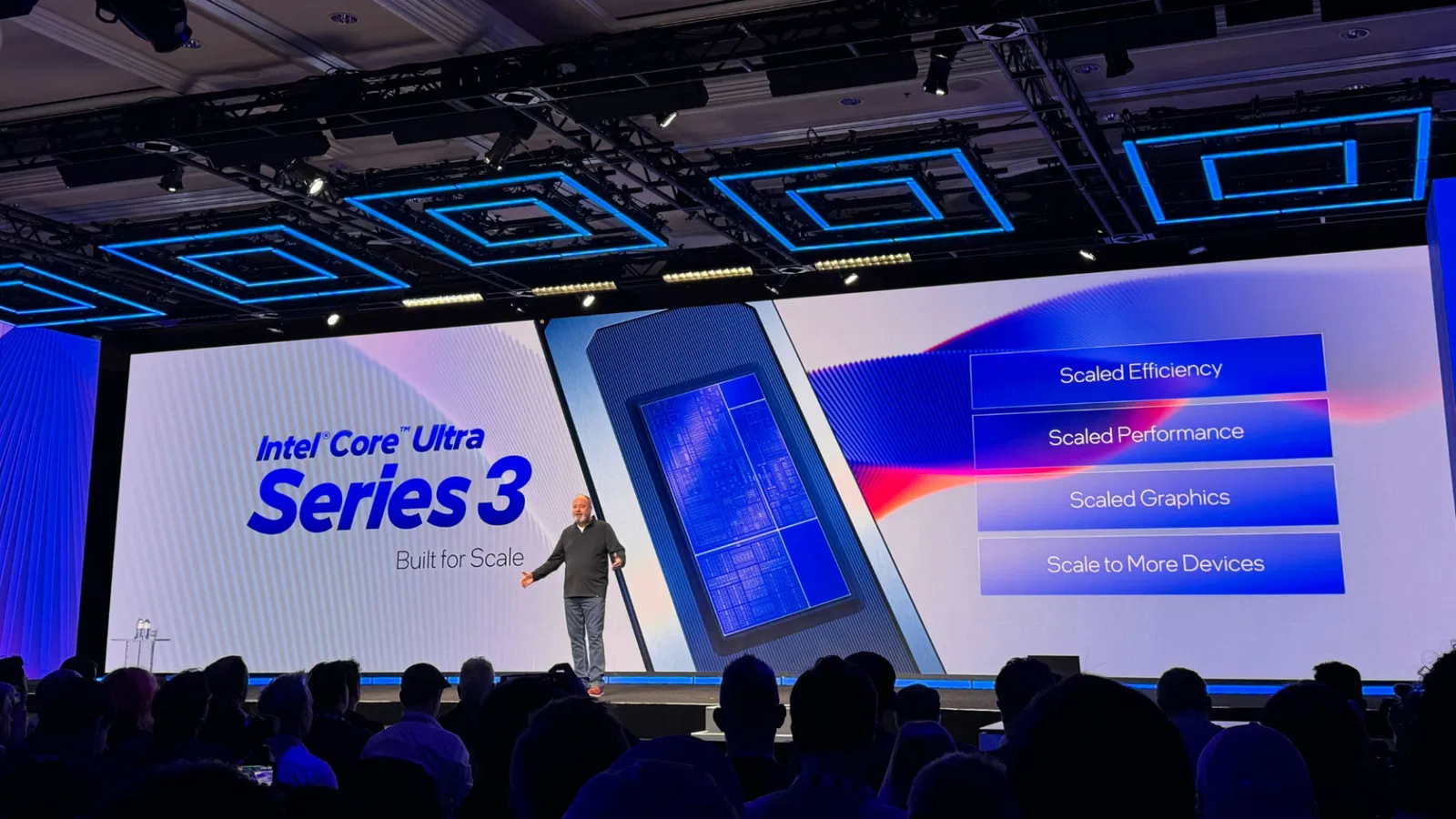
While Intel’s pressers focused largely on numbers, analysts noted that Panther Lake’s gaming performance is roughly 76 percent faster than the previous Lunar Lake generation, hinting at a competitive return to form for Intel in client silicon.
Intel’s Panther Lake feels like a comeback attempt, but this time with a smarter angle. Local AI performance is likely the tipping point at which traditional PC makers can compete with cloud-based architectures.
Intel partners are expected to announce systems using Panther Lake throughout early to mid‑2026.
Lego’s Smart Brick Redefines Play With Interactive Intelligence In Physical Toys
One of CES’s most surprising highlights came from Lego, with the reveal of its Smart Brick, a standard 2x4 brick enhanced with micro sensors, a speaker, LEDs, and proximity detection.
Lego’s Chief Product Officer, Julia Goldin, said this was “one of the most significant evolutions in the Lego system since the minifigure in 1978”, emphasizing that the Smart Brick can respond with contextual audio and light effects depending on movement, color, and interaction with other bricks.
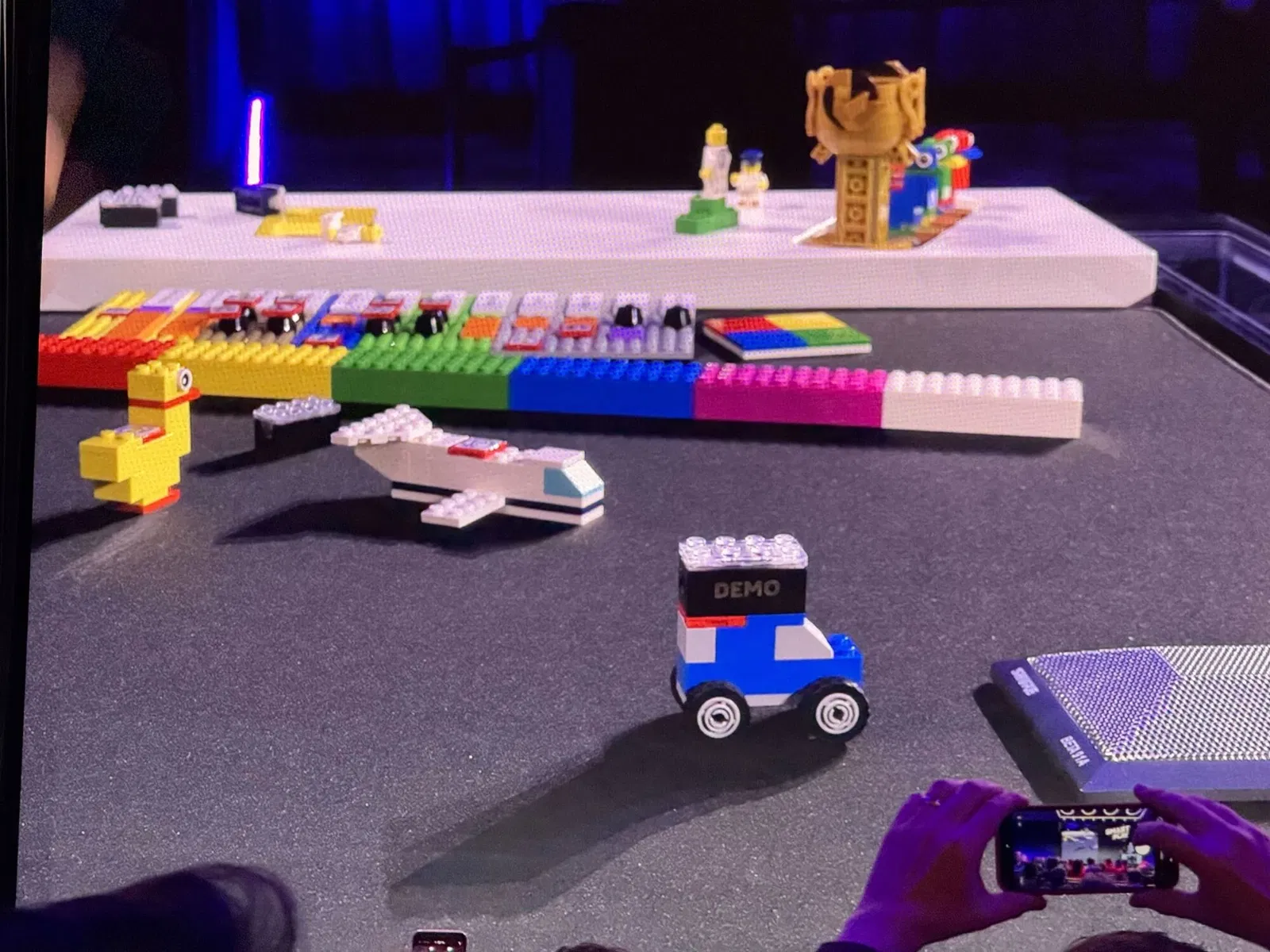
The Smart Brick will appear first in Lego Star Wars themed sets, playing sound effects like lightsabers and iconic music, and will roll out starting in March 2026.
Lego’s Smart Play platform is a brilliant fusion of physical and interactive experiences, adding a new layer of intelligence to classic toys without relying on screens. It’s playful, clever, and exactly the kind of innovation that makes CES fun again.
What CES 2026 Means For Tech In 2026
CES 2026 did not feel like a show about what might come, but rather what is already arriving. AI compute, robots, silicon, and physical play all showcased how artificial intelligence is being embedded across devices and experiences.
From NVIDIA’s platform-level vision to Lego’s playful hardware, technology is no longer just smart; it is responsive and active in the physical world.
Stay updated with the latest CES updates on our website.
