
Cyber Security
Bundestag Hack, OpenAI Risk Alert And U.S. Cyber Indictments Heighten Tensions
Updated on Tue, Dec 16, 2025
Share
Germany’s parliament suffered a suspected cyberattack during President Volodymyr Zelenskyy’s visit. OpenAI warned that its next-generation AI models may pose “high” cybersecurity risks, and the U.S. Department of Justice unveiled new charges linked to Russian-backed hacking groups.
Together, these developments highlight how cybersecurity has evolved from a technical concern into a cornerstone of international stability.
TL; DR
-
Germany’s Bundestag experienced a suspected cyberattack that disrupted email systems during a high-profile diplomatic visit by Ukraine’s President Zelenskyy.
-
OpenAI cautioned that future AI models may significantly heighten cybersecurity threats if misused, leading to the creation of a new internal Frontier Risk Council.
-
The U.S. Justice Department charged a Ukrainian national for aiding Russian-linked hacker groups targeting U.S. and European infrastructure.
Bundestag Breach During Zelenskyy’s Berlin Visit
Germany’s lower house of parliament, the Bundestag, suffered a widespread email outage lasting more than four hours during President Volodymyr Zelenskyy’s official visit to Berlin.

The Financial Times first reported that the disruption appeared to be linked to a suspected cyberattack, though Reuters noted it could not independently verify the report.
The outage occurred while German Chancellor Friedrich Merz was hosting meetings with Ukrainian and U.S. officials, raising speculation of coordinated interference intended to disrupt communications during a critical diplomatic event.
German authorities, including the Federal Office for Information Security (BSI), have yet to confirm the source or scale of the attack. However, experts believe that such incidents are increasingly deployed for psychological and symbolic impact rather than direct data theft.
According to the Financial Times, the outage began as Zelenskyy entered the Bundestag for talks, underscoring the striking timing of the disruption amid critical diplomatic engagement.
The Bundestag was previously targeted in 2015 by hackers linked to Russian intelligence.
This latest breach serves as a reminder that despite years of hardening defenses, critical political infrastructure remains a high-value target.
OpenAI Flas Its Own Frontier Risks
In the private sector, OpenAI issued a rare and candid admission that its next wave of artificial intelligence models could inadvertently increase cybersecurity vulnerabilities if exploited by malicious actors.
According to the company, these systems could theoretically assist in discovering zero-day vulnerabilities, automating malware generation, or aiding complex social-engineering attacks at a scale beyond human capacity.
In response, OpenAI announced the formation of a Frontier Risk Council, initially focused on cybersecurity, and later broadened its mandate to include dual-use concerns. It also plans to enhance its internal “red teaming” processes and partner with industry and government experts for safety evaluations.
The disclosure comes amid mounting global scrutiny over how rapidly advancing AI can serve both defenders and attackers. OpenAI warned that its upcoming models could pose a “high” cybersecurity risk and outlined how it’s investing in defensive cybersecurity tools and governance structures, such as the Frontier Risk Council.
U.S. DOJ Indicts Russian-Linked Hackers
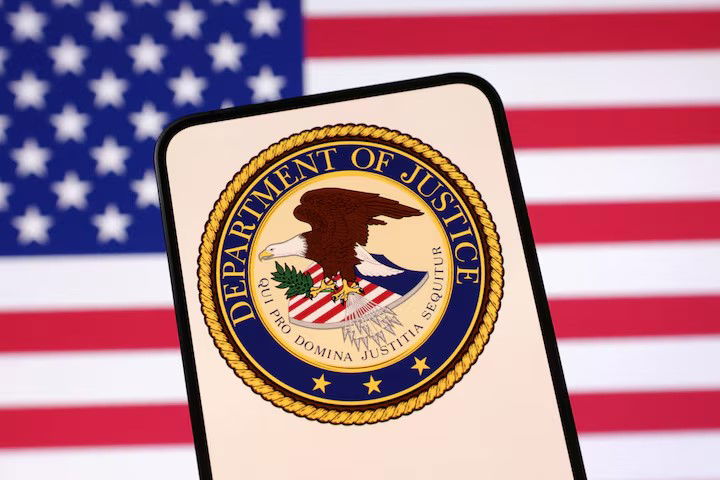
Across the Atlantic, the U.S. Justice Department announced new charges against Victoria Eduardovna Dubranova, a Ukrainian national accused of helping coordinate cyberattacks on critical infrastructure on behalf of Russian interests.
Prosecutors allege that Dubranova was involved with CyberArmyofRussia_Reborn (CARR) and NoName057(16), groups responsible for distributed denial-of-service (DDoS) campaigns targeting sectors such as energy, food, and water supply systems.
In the same announcement, John Eisenberg, Assistant Attorney General for the National Security Division, stated, “Today’s actions demonstrate the Department’s commitment to disrupting malicious Russian cyber activity—whether conducted directly by state actors or their criminal proxies.”
The DOJ also announced a $10 million reward for information leading to the identification of her co-conspirators. The charges align with the broader U.S. “persistent engagement” strategy that blends legal and diplomatic tools to deter cyber aggression.
Observers believe this case will intensify U.S.–Russia tensions at a time when Moscow’s digital operations have already expanded across Europe and North America.
Topics For More Insights
The Bigger Picture
These three developments, spanning Berlin, San Francisco, and Washington, paint a clear picture of how cyber threats are now interwoven with AI evolution and geopolitical maneuvering.
Experts warn that the rapid integration of AI tools into cybersecurity could amplify both defensive and offensive capabilities. The same algorithms that can scan for vulnerabilities can also exploit them.
Policymakers are responding. The European Union is accelerating enforcement of its Cyber Resilience Act, while the U.S. has empowered the National AI Safety Board to oversee risks associated with dual-use models.
For enterprises and governments alike, the message is unmistakable: cybersecurity is a national strategy today.
European Union institutions have increasingly linked cybersecurity efforts to broader goals of digital autonomy and strategic sovereignty within the bloc’s tech policy framework.
What do you think about these developments?
Let us know in the comments below!
First published on Tue, Dec 16, 2025

Enjoyed what you've read so far? Great news - there's more to explore!
Stay up to date with the latest news, a vast collection of tech articles including introductory guides, product reviews, trends and more, thought-provoking interviews, hottest AI blogs and entertaining tech memes.
Plus, get access to branded insights such as informative white papers, intriguing case studies, in-depth reports, enlightening videos and exciting events and webinars from industry-leading global brands.
Dive into TechDogs' treasure trove today and Know Your World of technology!
Disclaimer - Reference to any specific product, software or entity does not constitute an endorsement or recommendation by TechDogs nor should any data or content published be relied upon. The views expressed by TechDogs' members and guests are their own and their appearance on our site does not imply an endorsement of them or any entity they represent. Views and opinions expressed by TechDogs' Authors are those of the Authors and do not necessarily reflect the view of TechDogs or any of its officials. While we aim to provide valuable and helpful information, some content on TechDogs' site may not have been thoroughly reviewed for every detail or aspect. We encourage users to verify any information independently where necessary.
Loading comments...