
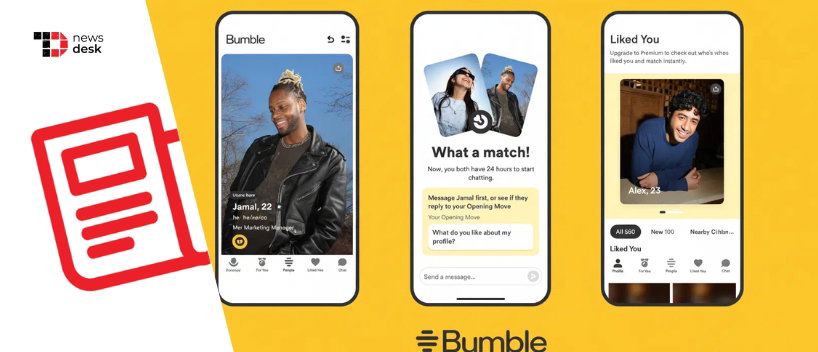
Bumble has unveiled Bee, a new artificial intelligence powered dating assistant designed to act more like a personal matchmaker than a chatbot. The tool learns about users through private conversations and uses that information to suggest better matches, as the company attempts to move beyond swipe driven dating.
The launch comes as Bumble looks to reshape how people meet on its platform, focusing on compatibility and intent rather than rapid swiping.
TL;DR
- Bumble introduced Bee, an AI dating assistant designed to improve matchmaking through deeper user insights.
- Bee learns about users through private conversations instead of relying solely on profile data.
- The assistant powers a new feature called Dates that surfaces compatible matches.
- The launch is part of Bumble’s broader product reset aimed at addressing swipe fatigue and slowing user growth.
How Bumble’s AI Assistant Bee Works
Unlike many AI features being added to consumer apps, Bee is not designed to generate pickup lines or manage conversations for users. Instead, Bumble positions it as a matchmaking assistant that learns about people through a guided conversation inside the app.
During onboarding, Bee asks users a series of questions related to their lifestyle, interests, communication style, and relationship intentions. The AI analyzes these responses and builds a deeper understanding of the user’s preferences.
This information is then used to surface potential matches that align with those signals rather than relying only on photos or brief profile descriptions.
The company believes this approach can lead to more meaningful connections by prioritizing compatibility and shared values.
The New ‘Dates’ Feature Powered By Bee
Bee will initially power a new experience inside the app called Dates. Instead of endless swiping, the feature introduces curated match suggestions.
In this experience, Bee identifies two users who appear compatible based on their responses and preferences. The assistant then explains why the match could make sense, highlighting shared interests or relationship goals.
This approach attempts to replicate the role of a real-world matchmaker by offering context around why two people might connect.
Bumble says the feature is currently being tested internally and is expected to enter beta testing soon.
Topics For More Insights
Why Bumble Is Rethinking Swipe-Based Dating
The launch of Bee reflects broader changes taking place across the dating app industry. Many users, particularly younger audiences, have reported fatigue with traditional swipe-based apps where conversations rarely lead to real connections.
Bumble is attempting to address this challenge by redesigning parts of the platform and introducing what it has described as a new product direction sometimes referred to as Bumble 2.0.
The redesign includes deeper profiles, more structured storytelling about users, and tools that emphasize compatibility over quick decisions based on photos.
CEO Whitney Wolfe Herd has indicated that the company wants to shift dating away from endless browsing and toward more thoughtful connections.
Industry Pressure And Bumble’s Growth Challenges
The timing of Bee’s launch also coincides with a challenging period for the company. Bumble recently reported quarterly revenue of about $224 million, slightly ahead of analyst expectations, but the number of paying users declined to roughly 3.3 million.
This decline highlights a broader challenge facing dating apps as engagement slows and competition intensifies.
To address this, Bumble has significantly reduced marketing spend and is focusing more on product innovation to drive growth.
Artificial intelligence has become a central part of that strategy.
With Bee, Bumble is betting that smarter matchmaking powered by AI could help restore excitement around online dating while encouraging more meaningful interactions between users.
