

AI wearables are quickly becoming the next big step in personal technology, moving beyond screens and voice commands. They’re designed to blend into everyday life to help without constant interaction. Amazon is the latest big tech player to explore this space with its new AI wearable experiment.
TL;DR
- Amazon is trying out Bee, a small AI wearable that listens and sends conversation summaries.
- Bee doesn’t need voice commands and works in the background, unlike Alexa.
- Amazon wants AI to work everywhere, not just at home, by expanding beyond Alexa.
- Privacy is a big concern, since the device listens all the time and controls are still unclear.
- Bee shows Amazon’s move into AI wearables, focusing on memory and context instead of screens.
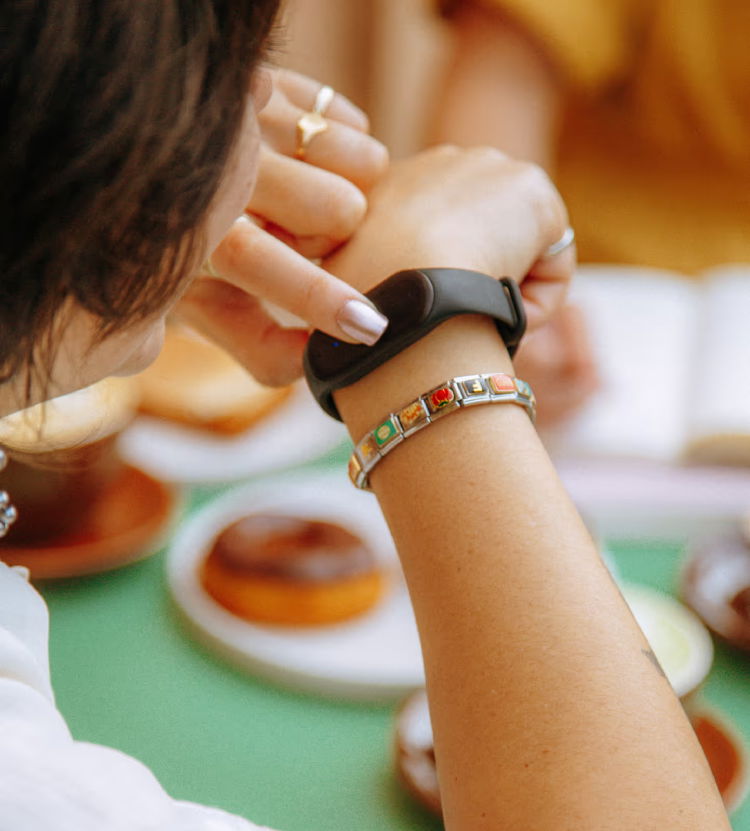
Amazon is giving us a first look at Bee, its new AI-powered wearable, just days after quietly acquiring the startup behind it. Bee is a small, always-on device that listens to conversations, understands context, and surfaces summaries or reminders through a connected app.
Before the acquisition, Bee positioned itself as a tool to help users recall conversations, manage commitments, and reduce cognitive overload. Amazon’s interest aligns with its broader push into ambient computing, where AI quietly works in the background instead of waiting for commands.
At CES 2026, Bee was showcased as an AI companion that listens continuously, captures conversations, and delivers summaries or reminders through a companion app. Without a screen, the device operates passively rather than responding to direct voice commands.
Amazon was particularly drawn to Bee’s contextual AI capabilities over traditional voice assistants, seeing the potential for a system that can function continuously without prompting.
For Amazon, the move is a clear signal that it wants to extend Alexa’s reach far beyond the home. While Alexa remains the go-to assistant for home automation, Bee represents a more personal, on-the-go evolution of the technology. Together, the two could bridge Amazon’s ecosystem across environments from living rooms to commutes and offices.
Of course, the device also raises questions about privacy and consent. Bee relies on continuous listening, and while users can supposedly control when it’s active, it’s not yet clear how that will work in real-world settings with multiple people around.
However, the approach also raises familiar questions around privacy and consent. Bee’s design relies on continuous listening, and while the company has said users can control when the device is active, the hands-on report noted that it remains unclear how such controls will function in everyday settings involving multiple people.
Topics For More Insights:
Amazon hasn’t shared how Bee could fit in with its other products. For now, it offers a glimpse of the company’s experiments with AI wearables focused on memory and context rather than traditional interactions. The hands-on experience suggests Amazon is still figuring out what an always-listening AI device should be, and whether people are ready for it.
With the race for AI wearables heating up, Amazon is staking its claim in the personal AI space. If Bee lives up to its promise, it could redefine what it means to have a personal assistant, right there by your side, all the time.
