
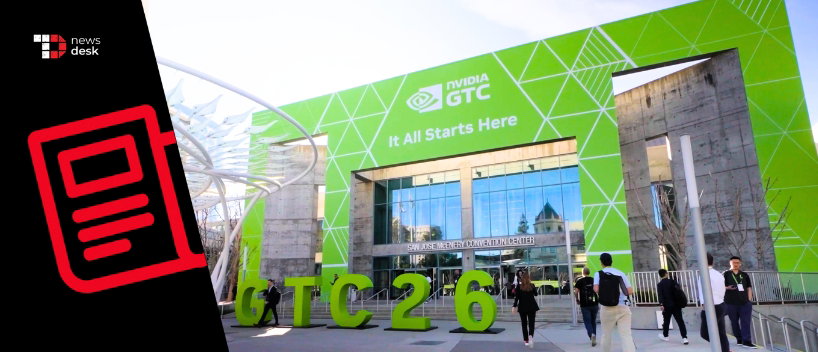
The event is part of NVIDIA GTC 2026, the company’s flagship global AI conference, taking place from March 16 to March 19, 2026, in San Jose, California.
At a packed SAP Center earlier in the week, NVIDIA founder and CEO Jensen Huang set the tone by framing tokens as the fundamental building blocks of modern AI, powering everything from scientific discovery to autonomous machines operating in the physical world.
The conference itself reflects that scale, featuring over 450 sponsors, 1,000 sessions, and 2,000 speakers.
By Day 2, NVIDIA had already outlined how AI infrastructure is becoming more specialized and embedded across sectors.
Day 3 builds on that momentum, shifting the focus toward measurable outcomes, highlighting how partners, open models, and accelerated computing are actively transforming industries rather than just enabling them.
Day 3 of NVIDIA GTC 2026 underscored a clear trend, AI is becoming more open, more efficient, and more deeply integrated into critical industries. From enterprise transformation to healthcare and genomics, NVIDIA’s latest announcements show how AI is evolving from capability to necessity.
TL;DR
- NVIDIA honored Americas partners driving AI adoption across industries
- Nemotron models and NeMo libraries are accelerating healthcare AI with lower costs and latency
- BioNeMo platform is enabling faster genomic research and breakthrough therapies
- AI is becoming more open, scalable, and deeply embedded in real-world workflows
NVIDIA Recognizes Americas Partners Driving Enterprise AI Adoption
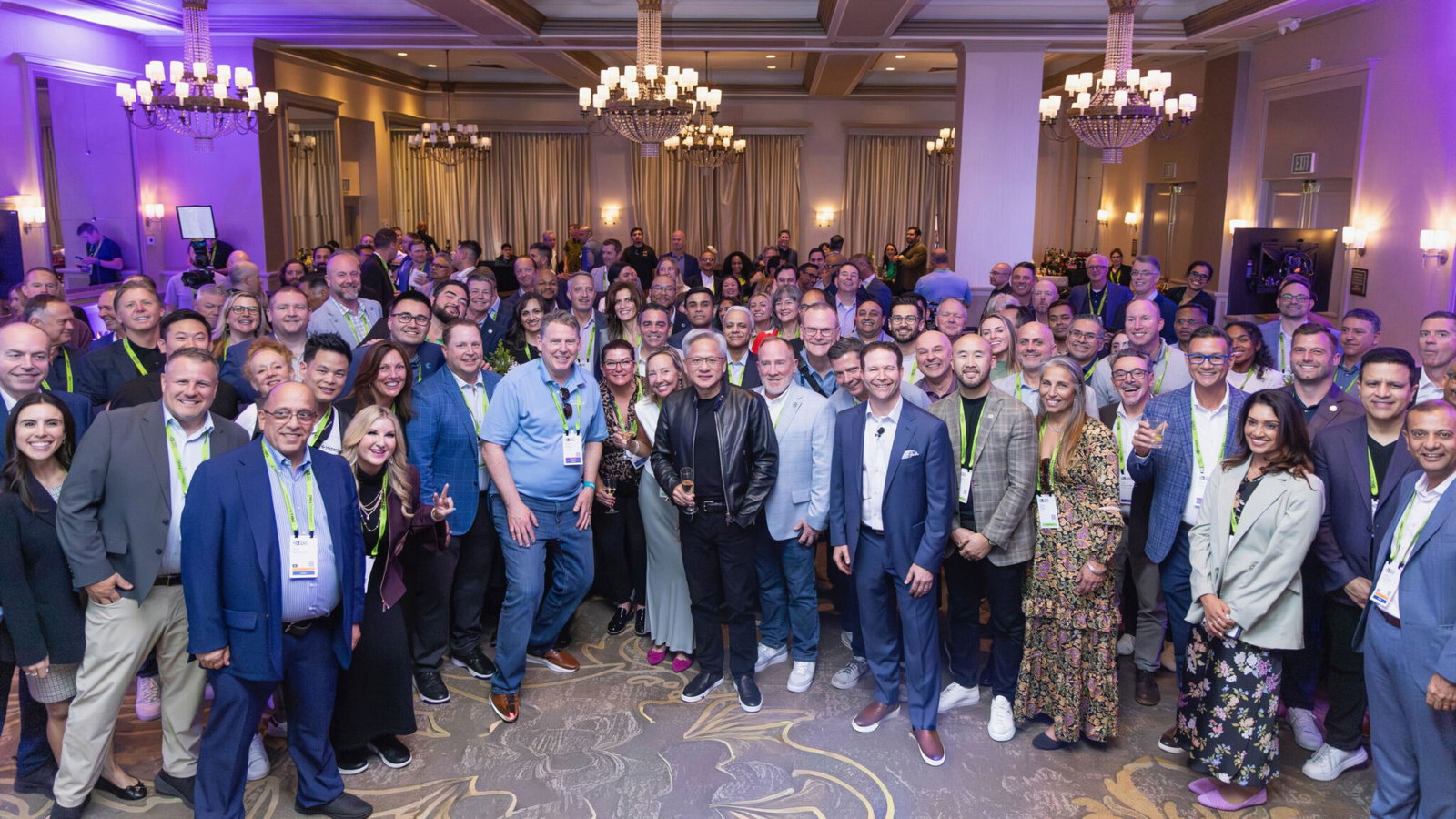
NVIDIA kicked off Day 3 by spotlighting its 2026 Americas NVIDIA Partner Network award winners, recognizing organizations that are pushing AI from experimentation into full-scale production.
These partners are leveraging NVIDIA’s full-stack platform, combining accelerated computing, networking, and AI software to deliver real business outcomes.
The recognition spans a wide mix of contributors, including AI specialists, consulting firms, networking leaders, and global system integrators. Together, they are helping enterprises modernize infrastructure, streamline operations, and introduce new AI-driven products and services.
Their impact is already visible across sectors such as healthcare, financial services, telecommunications, retail, and government. By embedding AI into workflows, these partners are enabling organizations to improve efficiency and solve complex challenges that directly affect businesses and communities.
Regional and distribution partners are further extending this reach by delivering localized expertise and making AI infrastructure accessible to organizations of all sizes. The broader message is clear, AI adoption is no longer limited to large enterprises, but is becoming widely distributed across the economic landscape.
NVIDIA Nemotron And NeMo Fuel Scalable Digital Health AI Solutions
Healthcare emerged as a major focus, with NVIDIA introducing advancements through its Nemotron open models and NeMo libraries.
These tools are designed to help clinicians, researchers, and developers build customized digital health agents directly within their own infrastructure.
As healthcare data continues to grow rapidly, from imaging to patient records, traditional AI models are struggling to keep pace. NVIDIA’s approach addresses this with high-efficiency, low-latency models that reduce dependency on closed systems while lowering operational costs.
The results are already measurable. A recent implementation showed a 75% reduction in latency and a 64% drop in operating expenses using Nemotron-based speech models for clinical documentation.
Adoption is expanding quickly. Companies are using these tools for everything from patient interaction models to mental health support systems and medical data synthesis. The broader shift toward open models is also gaining traction, with 82% of healthcare leaders now viewing open source as critical to their strategy.
This shift allows organizations to maintain data control, ensure transparency, and improve reproducibility, all while achieving high accuracy in complex AI-driven healthcare applications.
Topics For More Insights
- NVIDIA GTC 2026 Day 2: The AI Future Moves From The Cloud To Your Desk
- NVIDIA Expands AI Partnerships With Oracle, OpenAI And AWS!
- Huang Predicts $1 Trillion In Blackwell And Vera Rubin Orders By 2027!
- NVIDIA Launches DGX Station GB300 To Bring Data Center-Level AI To Desktops!
- NVIDIA GTC: DLSS 5 Delivers A Real-Time AI Graphics Breakthrough Since 2018's Ray Tracing
NVIDIA BioNeMo Accelerates Genomics And AI-Driven Drug Discovery
Beyond healthcare delivery, NVIDIA is also pushing boundaries in life sciences through its BioNeMo platform.
This suite of GPU-accelerated tools is designed to dramatically reduce the time required for genomic analysis and therapeutic discovery.
One of the standout developments includes a massive expansion in genomic datasets. New initiatives are scaling biological data collection to levels that were previously unmanageable, enabling researchers to process vast amounts of DNA data in significantly less time. Tasks that once took decades can now be completed in under two years.
The platform is also enabling breakthroughs in virtual cell modeling. By simulating biological cell behavior using AI, researchers can reduce reliance on costly lab experiments while accelerating drug discovery.
Additionally, new datasets in functional genomics are helping scientists better understand gene behavior in living systems. With GPU acceleration, analysis that previously took days can now be performed almost in real time.
These advancements signal a major shift in how life sciences research is conducted, moving from slow, resource-heavy processes to faster, data-driven discovery powered by AI.
