
A fresh analysis of the global subscription app market shows that while AI apps monetize quickly, they struggle to retain subscribers long term.
TL;DR
- AI-powered apps convert users to paying customers 52% better than non-AI apps.
- Despite strong early monetization, AI apps churn about 30% faster than non-AI apps.
- Annual retention for AI apps sits at 21.1%, compared to 30.7% for non-AI apps.
- AI apps also record higher refund rates, suggesting volatility in user satisfaction.
- Photo and video apps lead AI adoption, while gaming and travel lag behind.
AI-Powered Apps Are Spreading Across App Stores But Still Trail Non-AI Apps
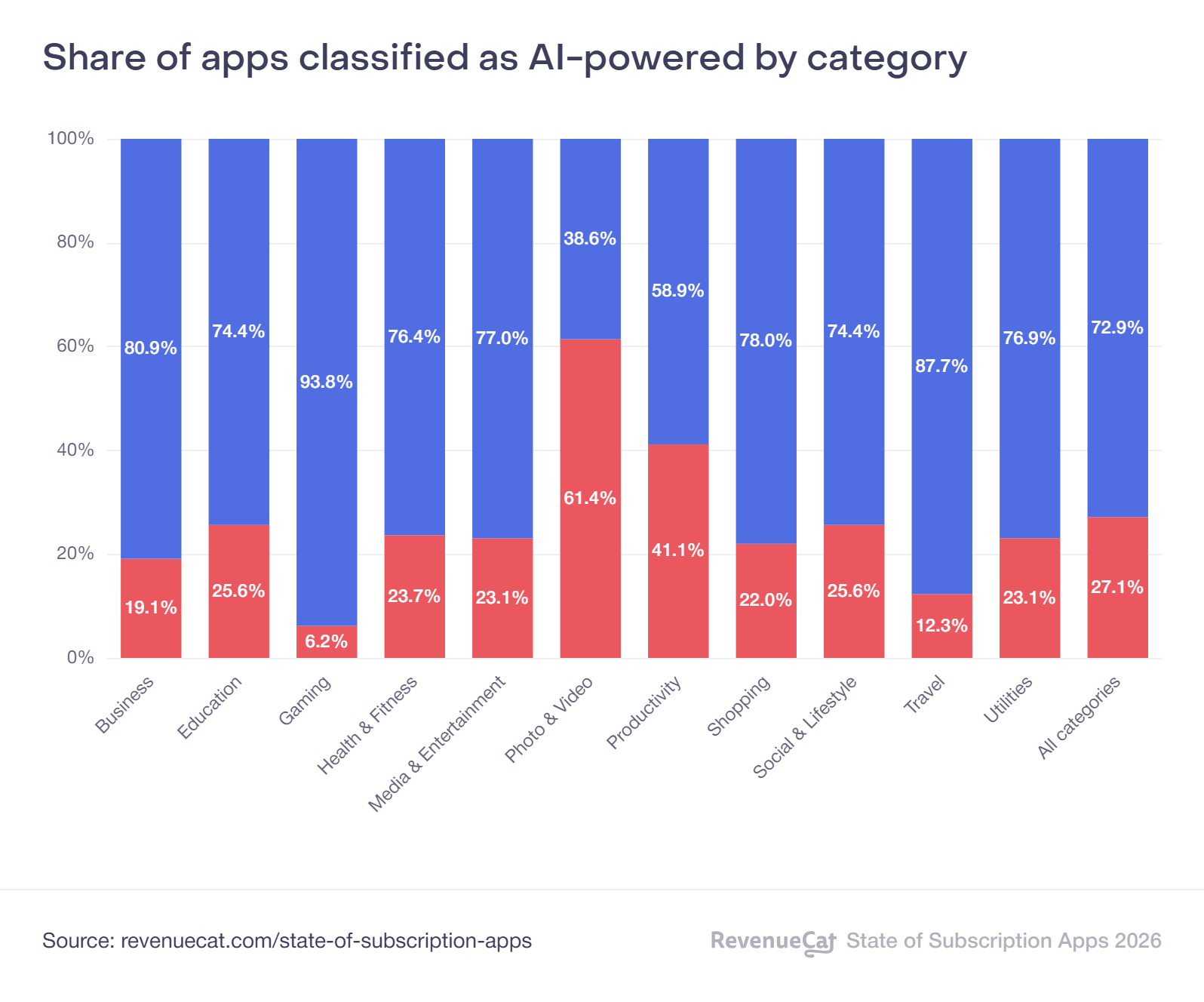
According to RevenueCat’s 2026 State of Subscription Apps Report, AI-powered apps currently account for 27.1% of subscription apps, while the remaining 72.9% are still non-AI products.
The analysis is based on data from developers using RevenueCat’s subscription management tools, which process more than one billion in-app transactions and generate over $11 billion in annual revenue.
The AI category includes well-known chatbot services such as ChatGPT and Gemini, along with any app that promotes AI-driven functionality as part of its offering.
Adoption varies significantly across sectors. Photo and video apps represent the largest share of AI-powered products at 61.4%, while gaming shows the lowest presence at just 6.2%. Travel apps account for 12.3% of AI apps, and business apps sit at 19.1%.
Despite the uneven spread, roughly one in four apps now markets itself as AI-powered, highlighting how quickly developers are integrating the technology.
AI Apps Convert Users Better, But Retention Remains A Major Weak Spot
While AI features appear to attract paying users faster than traditional apps, they struggle to maintain subscriber loyalty over time.
RevenueCat’s data shows that AI-powered apps convert users from free trials to paid subscriptions 52% better than non-AI apps. Median trial-to-paid conversion sits at 8.5% for AI apps compared to 5.6% for their non-AI counterparts.
AI apps also generate roughly 20% more revenue per install, with a median monetization rate of 2.4% compared to 2% for non-AI apps.
However, the long-term picture looks less favorable.
Annual retention for AI-powered apps stands at just 21.1%, significantly lower than the 30.7% retention rate seen in non-AI apps. Monthly retention tells a similar story, with AI apps retaining 6.1% of subscribers compared to 9.5% for non-AI alternatives.
The only area where AI apps slightly outperform competitors is weekly retention. AI apps record a weekly retention rate of 2.5%, versus 1.7% for non-AI apps, though weekly subscription plans remain less common.
AI Experimentation May Be Fueling Subscriber Churn
One reason behind the weaker retention could be the rapidly evolving nature of AI technology itself.
As new tools and models appear frequently, users often experiment with multiple AI apps in search of better capabilities. This constant switching may reduce long-term loyalty toward a single service.
The trend is also reflected in refund data. AI-powered apps show a median refund rate of 4.2%, compared to 3.5% for non-AI apps. The upper bound for refunds is also higher, reaching 15.6% versus 12.5% for non-AI apps.
According to the report, these figures point to “greater volatility in realized revenue and deeper issues in user value, experience, and long-term quality.”
Topics For More Insights
- Anthropic Launches Code Review Tool To Check Flood Of AI-Generated Code
- Nvidia’s Jensen Huang Says Markets ‘Got It Wrong’ On AI Threat To Software Companies
- AI Boosts Software Development But AI Slop Costs Firms Millions & Cuts Productivity
- Meta Connect: Meta Invites Outside Developers To Build Apps For Its Smart Glasses
Early Monetization Is Strong, But Sustaining Value Remains The Real Test
Despite the retention challenge, AI apps still outperform many traditional apps in overall revenue potential.
The report shows that AI apps generate higher realized lifetime value from paying users. Median monthly RLTV stands at $18.92 for AI apps, compared with $13.59 for non-AI apps. On an annual basis, AI apps reach $30.16 versus $21.37.
In other words, AI features can drive strong early monetization and higher spending per user. The difficulty lies in sustaining that value long enough to keep subscribers engaged.
The broader takeaway is clear. Artificial intelligence may be powerful at attracting users and boosting early revenue, but developers still face the challenge of proving long-term value once the novelty wears off.
