
Artificial Intelligence
Understanding Test-Time Training: How AI Learns While Working
Share
Introduction
Practically, you start by deploying a model, feeding it data, and expecting it to perform.
However, the real world rarely stays consistent. User behavior shifts, data formats evolve, language changes, and edge cases appear without warning. Traditional AI systems struggle here because they are built on a simple assumption: learning happens during training, and inference is just execution.
That assumption is starting to crack.
Test-Time Training (TTT) challenges the notion that a model should remain static once deployed. Instead of freezing learning at deployment, TTT allows an AI system to make small, targeted adjustments while it is actively being used.
The model does not wait for retraining cycles or labeled data updates. It adapts in real time, using the inputs it receives to improve its responses.
This shift matters because modern AI is increasingly expected to operate in dynamic environments.
So, with that thought, let’s get into the Test-Time Training.
TL;DR
-
Test-Time Training updates AI during inference, helping models adapt to shifting real-world data.
-
It improves robustness and reasoning without full retraining or new labeled datasets.
-
It works via lightweight self-supervised updates on selected parameters.
-
Trade-offs include added compute, stability risks, security exposure, and higher deployment complexity.
What Is Test-Time Training (TTT) In AI?
Test-Time Training (TTT) is a technique where an AI model makes small, controlled updates to itself during inference, meaning while it is actively handling real-world inputs. Instead of freezing the model at deployment, TTT allows it to adapt to the data it is currently seeing, using learning signals that do not require new labeled datasets.
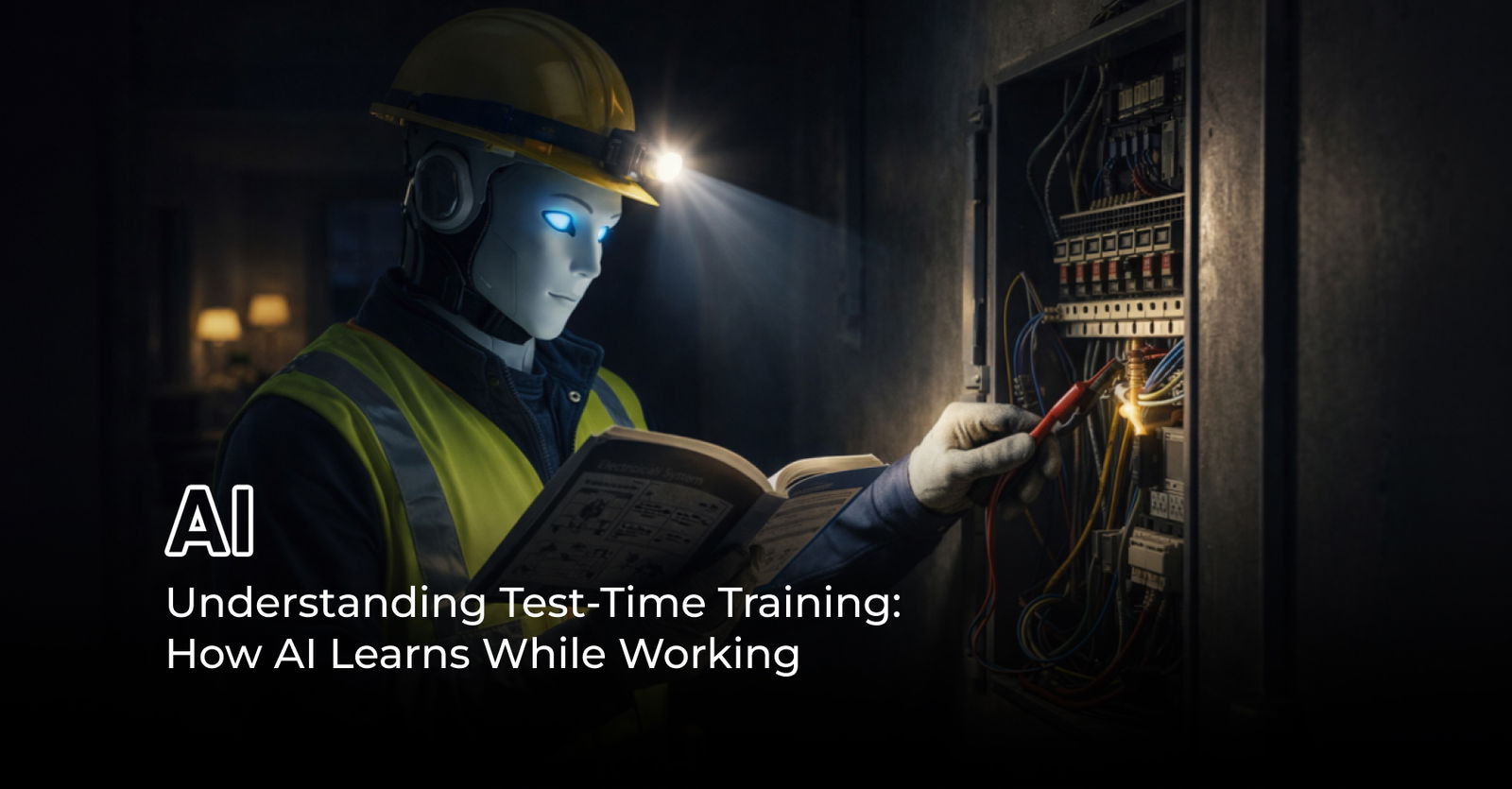
The researchers demonstrated that applying TTT during inference reduced performance degradation caused by distribution shifts by up to 99% in certain vision tasks, with consistent gains across multiple corrupted and shifted datasets.
TTT is designed for that gap. During inference, the model uses self-supervised or auxiliary objectives derived from the input itself to update certain parameters. It is a quick adaptation that improves robustness and reliability in dynamic environments.
TTT is often confused with fine-tuning and in-context learning. Fine-tuning typically requires labeled data and longer training cycles. In-context learning changes behavior through prompts without changing parameters. TTT is different because it updates parameters at test time, but in a limited and carefully constrained way.
Understanding what Test-Time Training is only sets the foundation. The real value emerges in how models adapt safely and efficiently during inference.
Let’s get to that.
How Test-Time Training Works
Here’s how the process typically unfolds:
-
The Model Receives A New Input
This could be a user query, an image, a sensor reading, or any real-world data point that may differ from training data.
-
An Internal Learning Signal Is Generated
Alongside producing an output, the model evaluates a self-supervised objective. This might involve reconstructing missing input elements, predicting masked values, or verifying consistency across internal representations.
-
A Small, Controlled Update Is Performed
Using this signal, the model applies a brief optimization step. These updates are tightly constrained and typically limited to specific components, such as normalization layers, adapter modules, or fast-changing parameters.
-
Knowledge Is Preserved By Design
Core knowledge remains untouched. The goal is alignment, not relearning, ensuring the model does not drift or overfit during inference.
-
The Final Output Is Generated
The model produces its response using the adapted state, often within milliseconds, making the approach practical for real-time systems.
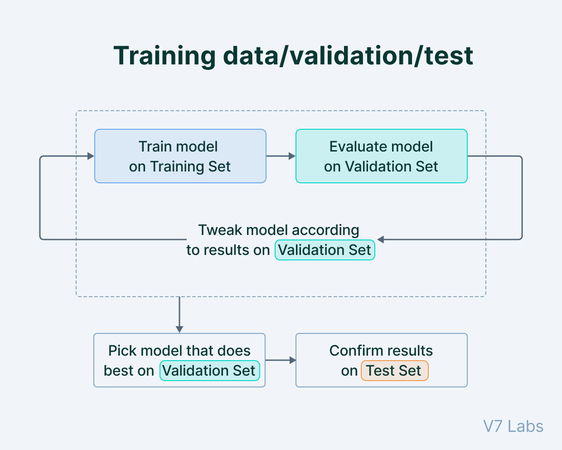
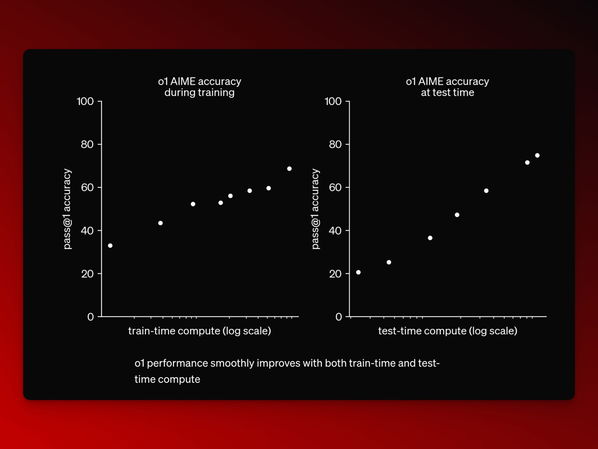
Unlike test-time compute methods that require additional processing cycles, Test-Time Training improves results by allowing the model to adapt to current conditions, helping it remain effective even as data shifts.
However, why does it matter all of a sudden? Let’s understand it by examining its benefits and use cases.
Benefits Of Test-Time Training
Here’s how it benefits:
-
Better Robustness To Distribution Shift
Darestani et al. (ICML 2022) showed Test-Time Training closed about 87–99% of the distribution-shift performance gap across multiple real MRI shifts (anatomy, dataset, modality, acceleration).
-
Stronger Performance On Unfamiliar Reasoning Tasks
MIT’s 2025 study reported that Test-Time Training can deliver a sixfold improvement in accuracy by temporarily updating model internals during deployment.
-
More Stable Edge AI In The Wild
Microsoft Research highlighted that drift in real camera-stream deployments can drop accuracy by as much as 22%, which is exactly the scenario where “learn while running” approaches help.
-
Less Dependence On Constant Retraining
Mallick et al. (MLSys) saw production models see accuracy drops up to 40% despite frequent retraining, showing why adaptation at serving time matters.
-
Better Results Even With Messy Data
Databricks’ test-time optimization approach (TAO) pushed Llama 3.1B on FinanceBench from 68.4% to 82.8%, proving how test-time improvement loops can lift real benchmarks.
So where does this show up in practice? Let’s look at the applications.
Use Cases of Test-Time Training
Here are the real-life applications of Test-Time Training:
-
Enterprise Copilots Doing Complex Reasoning
MIT’s test-time training work targets “unfamiliar, difficult problems,” where standard prompting often falls short.
-
Medical Imaging Across Hospitals And Scanners
MRI reconstruction is a concrete example where TTT helped handle domain shifts without retraining on the target domain.
-
Edge Video Analytics (Traffic, Retail, Safety)
Microsoft’s edge drift work describes why continuous adaptation is critical when models are specialized to camera streams.
-
Finance QA And Compliance-Style Benchmarks
Databricks used its test-time approach to lift a smaller open model to competitive benchmark performance.
-
Industry Take
Databricks Chief AI Scientist Jonathan Frankle sums up the core pain point behind these methods, “Nobody shows up with nice, clean fine-tuning data.”
Thus, by enabling adaptation during inference, Test-Time Training helps AI systems perform consistently where static models often struggle. While Test-Time Training unlocks adaptability and resilience, it also introduces new trade-offs that must be carefully managed in real-world deployments.
Topics For More Insights
Limitations And Concerns Of Test-Time Training In AI
Here are the limitations of Test-Time Training:
-
Computational Overhead
TTT performs additional optimization steps during inference, which increases compute usage and latency. In high-throughput or real-time systems, even small delays can impact performance and cost efficiency.
-
Stability And Over-adaptation Risks
If updates are not tightly constrained, models may adapt too strongly to noisy or unrepresentative inputs. A CVPR 2022 study on online test-time adaptation shows that entropy minimization can silently degrade in non-i.i.d. streams (data sequences in which data points are not independent of each other and/or are not drawn from the same probability distribution over time), harming accuracy over time. This can cause performance drift, in which short-term improvements erode long-term reliability.
-
Security And Manipulation Concerns
Since the model updates itself based on incoming data, adversarial or malicious inputs could influence behavior at test time. A 2023 PMLR paper shows that an adversary can craft samples in the test batch to introduce malicious behavior into the adapted model. This is especially risky in sensitive or mission-critical deployments.
-
Increased Deployment Complexity
Teams must decide when Test-Time Training should activate, which parameters can adapt, and how results are monitored. These controls add operational overhead compared to static inference pipelines.
For these reasons, Test-Time Training is best treated as a carefully governed capability, applied where adaptability clearly outweighs the added complexity.
Conclusion
Test-Time Training represents a meaningful shift in how AI systems operate in the real world. Instead of relying solely on past knowledge, models can adapt as conditions change. This makes AI more resilient, more reliable, and better suited for dynamic environments where static assumptions quickly break down.
At the same time, Test-Time Training is not a universal solution. It introduces computational, stability, and security considerations that require careful design and governance. When applied selectively and thoughtfully, however, it brings AI systems closer to a long-standing goal: learning while working.
Frequently Asked Questions
How To Improve Time-Based Test Performance Using AI Training Tools?
Time-based test performance improves when AI tools like Sana Labs, Knewton Alta, and Duolingo enable adaptive learning, real-time feedback, and targeted practice. These platforms identify weak areas instantly, adjust difficulty dynamically, and help optimize speed without compromising accuracy.
What Are AI Platforms That Provide Real-Time Feedback During Time Test Training?
Platforms such as Sana Labs, 360Learning, Cornerstone, Cognii, and EdApp provide real-time feedback using continuous evaluation and adaptive scoring. They analyze responses in real time, deliver corrective signals, and refine training paths to improve speed, consistency, and decision-making accuracy.
What Are The Top Use Cases For Time Test Training In AI?
Top use cases include competitive exam preparation, real-time decision systems, autonomous driving simulations, fraud detection, customer support automation, and edge AI systems, where rapid response under time pressure is critical for accuracy, safety, and overall system reliability.
Wed, Jan 7, 2026

Liked what you read? That’s only the tip of the tech iceberg!
Explore our vast collection of tech articles including introductory guides, product reviews, trends and more, stay up to date with the latest news, relish thought-provoking interviews and the hottest AI blogs, and tickle your funny bone with hilarious tech memes!
Plus, get access to branded insights from industry-leading global brands through informative white papers, engaging case studies, in-depth reports, enlightening videos and exciting events and webinars.
Dive into TechDogs' treasure trove today and Know Your World of technology like never before!
Disclaimer - Reference to any specific product, software or entity does not constitute an endorsement or recommendation by TechDogs nor should any data or content published be relied upon. The views expressed by TechDogs' members and guests are their own and their appearance on our site does not imply an endorsement of them or any entity they represent. Views and opinions expressed by TechDogs' Authors are those of the Authors and do not necessarily reflect the view of TechDogs or any of its officials. While we aim to provide valuable and helpful information, some content on TechDogs' site may not have been thoroughly reviewed for every detail or aspect. We encourage users to verify any information independently where necessary.
Loading comments...